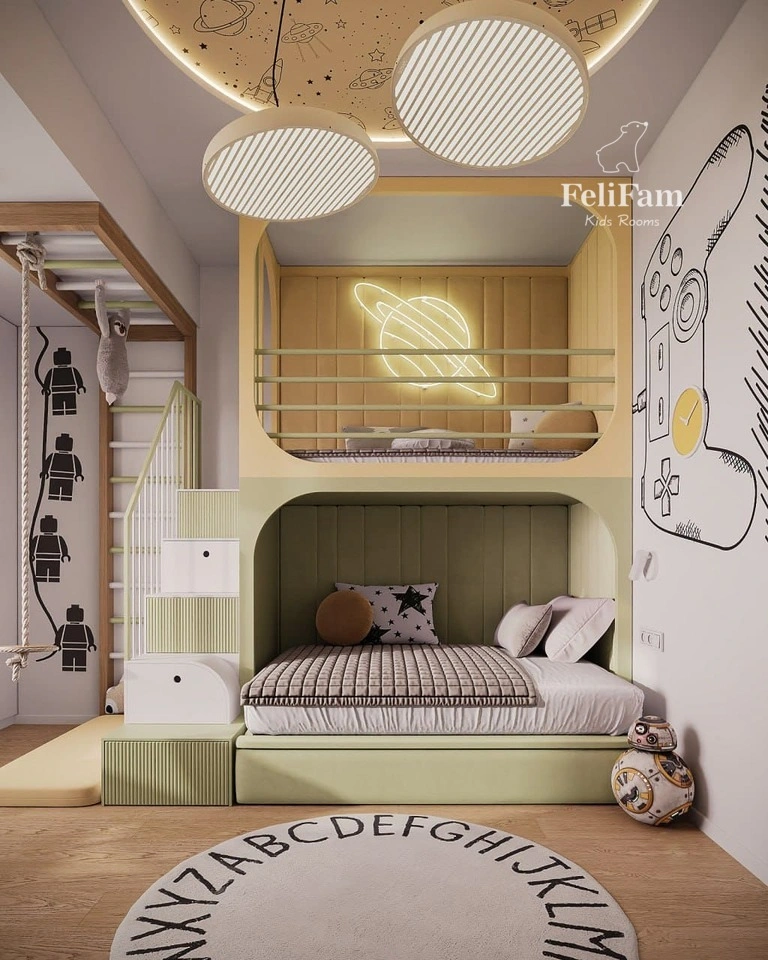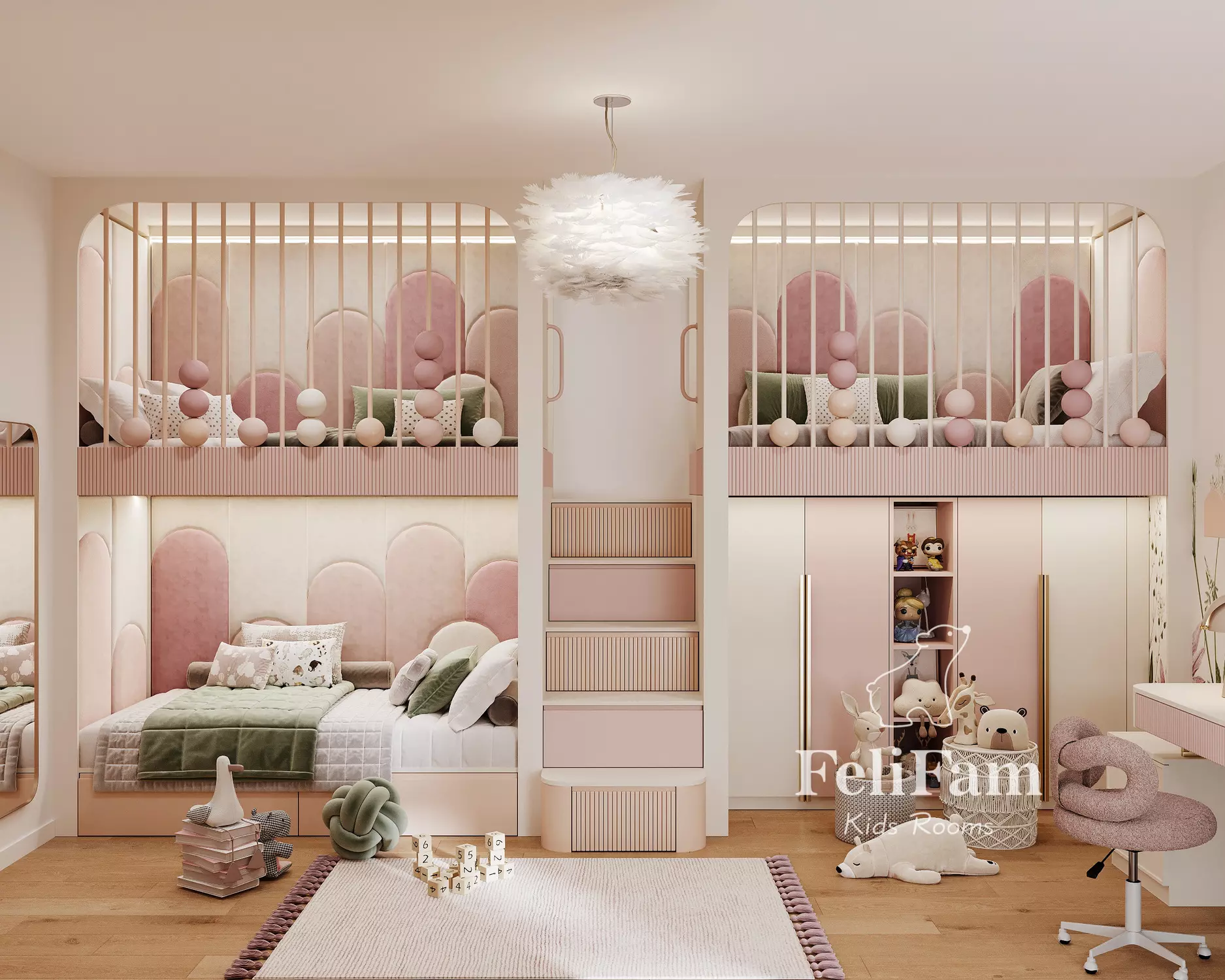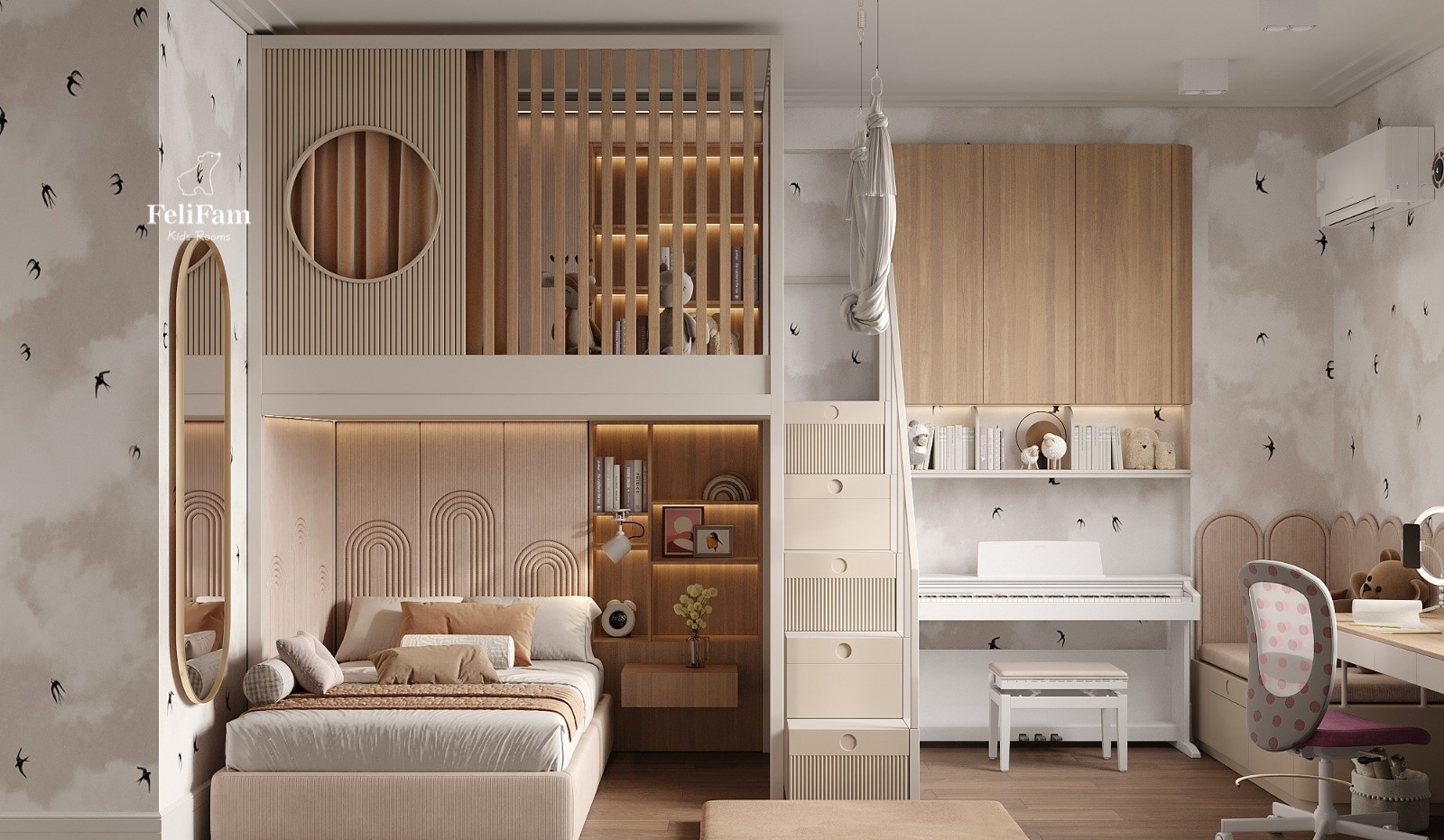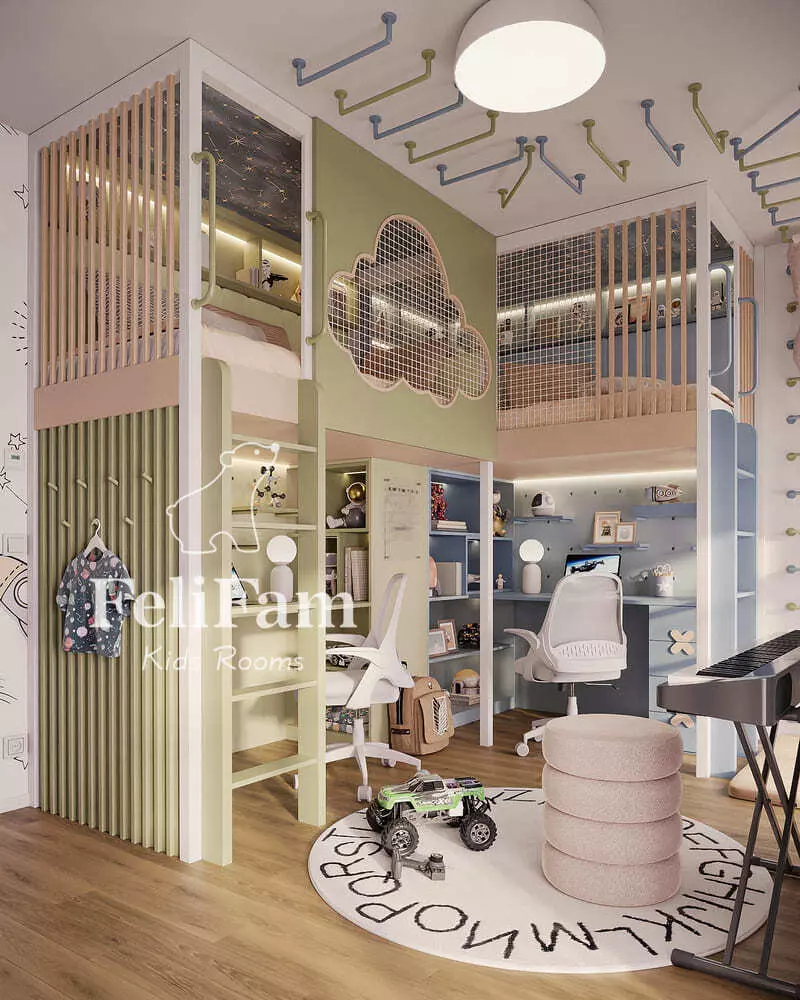



Proper workspace setup for a child is not just about comfort—it also supports effective learning and fosters independence. A thoughtfully designed workspace helps maintain focus, promotes good posture, and encourages creativity. At FeliFam studio, we always pay special attention to the child’s workspace when designing a room, so we’re happy to share practical tips for a comfortable and stylish interior.
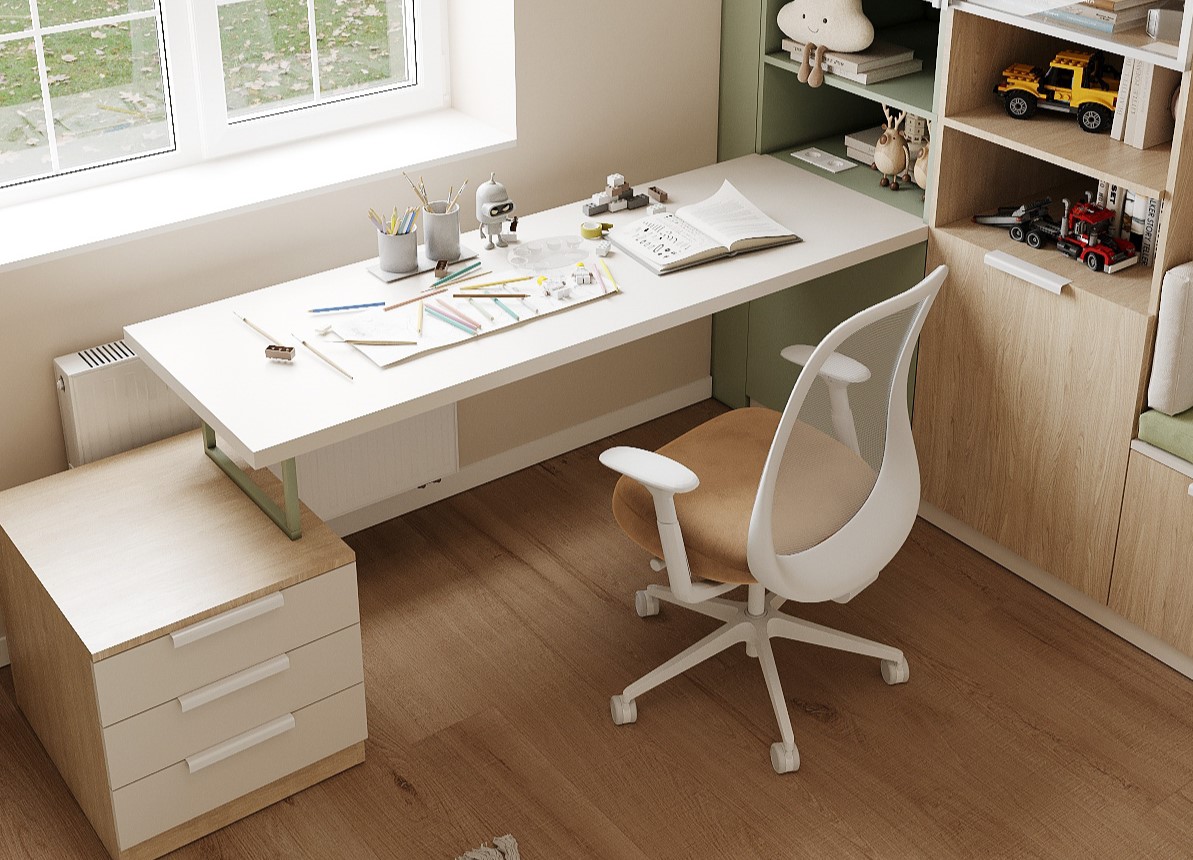
Key Requirements for a Child’s Workspace
Functionality and Comfort
The workspace should be versatile and convenient for various activities: studying, reading, drawing, and creative projects. It’s important to provide enough storage for stationery, books, a laptop, and other materials so the workspace remains organized and efficient.
Ergonomic Furniture
The desk and chair should be height-adjustable to match the child’s growth. An ergonomic workspace supports good posture, reduces fatigue, and allows for prolonged concentration during activities.
Quality Lighting
The ideal setup places the desk near a source of natural light. If that’s not possible, lamps with adjustable brightness are recommended. Soft, non-glare lighting creates a cozy atmosphere and helps maintain focus even in the evening.
Safety and Order
Rounded furniture edges, hidden cables, and thoughtful placement of electrical appliances reduce the risk of accidents. Organizing the workspace with easy access to all necessary items promotes discipline and creates a comfortable study area.
Adaptability and Inspiration
The workspace should grow with the child: the ability to rearrange furniture, update décor, or refresh elements keeps interest in learning alive. Using colors, accessories, and décor according to the child’s preferences makes the study area motivating and inspiring.
Workspace Setup: Ergonomics, Safety, and a Personalized Approach
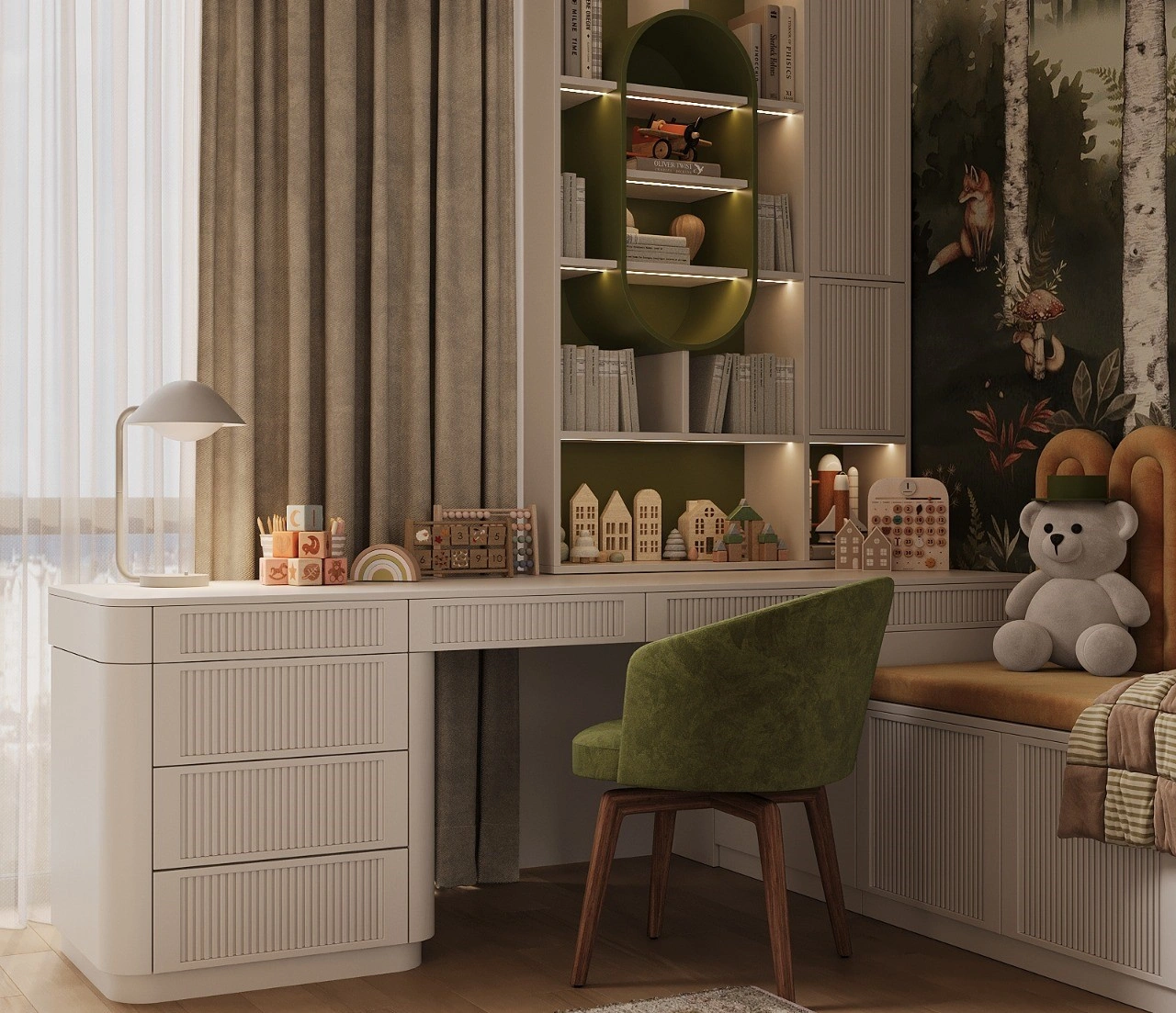
When creating a child’s workspace, we always consider age, height, habits, and future needs. Ergonomics plays a key role: the right dimensions and well-planned setup make studying comfortable, support posture, and help the child focus easily.
- Desk width: 100–140 cm
- Depth: 55–70 cm
- Height: 72–75 cm or adjustable
- Lighting: LED with soft diffusion, dimmable option
- Outlets and cable management: hidden cables
- Integrated elements: shelves, drawers, magnetic or perforated panels, LED lighting, niches for backpack and gadgets, decorative accents
Visual Design of the Workspace: an Atmosphere That Motivates
The workspace should harmonize with the room’s style while remaining visually “light” so as not to overwhelm the child during study. We create an atmosphere that makes it pleasant to focus, learn, and be creative.
- Calm color palette: pastel, natural tones to avoid excessive visual stimulation.
- Accent elements: panels, subtle textures, perforated or magnetic boards matching the room’s tone.
- Material combination: lacquered or matte MDF, warm wood, soft textiles.
- Personal touches: space for creativity, collections, favorite items, without visual clutter.
- Balanced lighting: warm side light and structured overhead light for overall comfort.