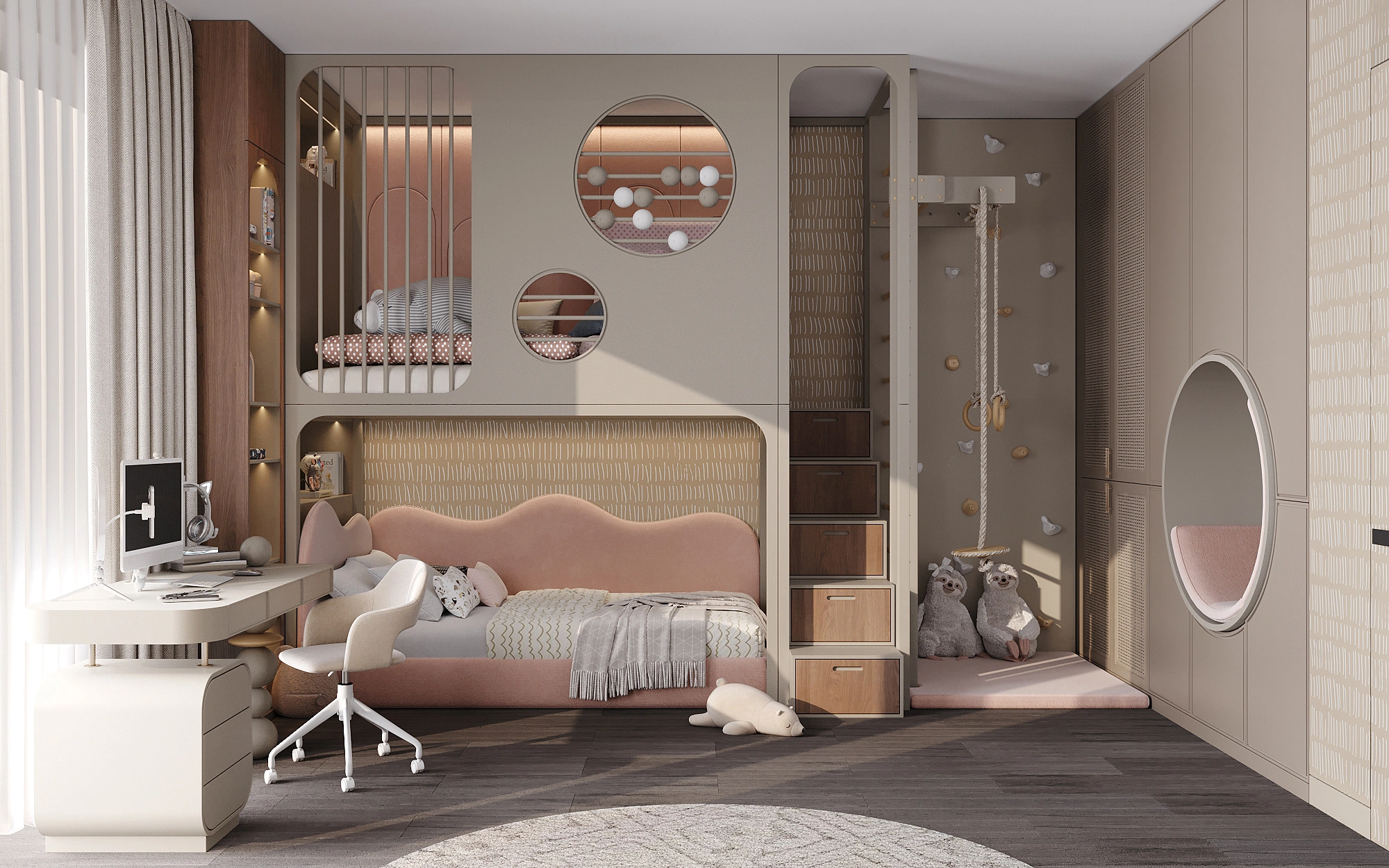



A shared kids room always requires finding the right balance between comfort, functionality, and each child’s personal space. Proper space planning allows every child to have their own sleeping area, study zone, storage, and place to relax. The process always starts with technical space planning.
In this article, we explore layout solutions for shared children’s rooms for two kids and show how they are implemented in real interior projects. You will see how technical planning transforms into a thoughtful, functional, and aesthetically balanced space.
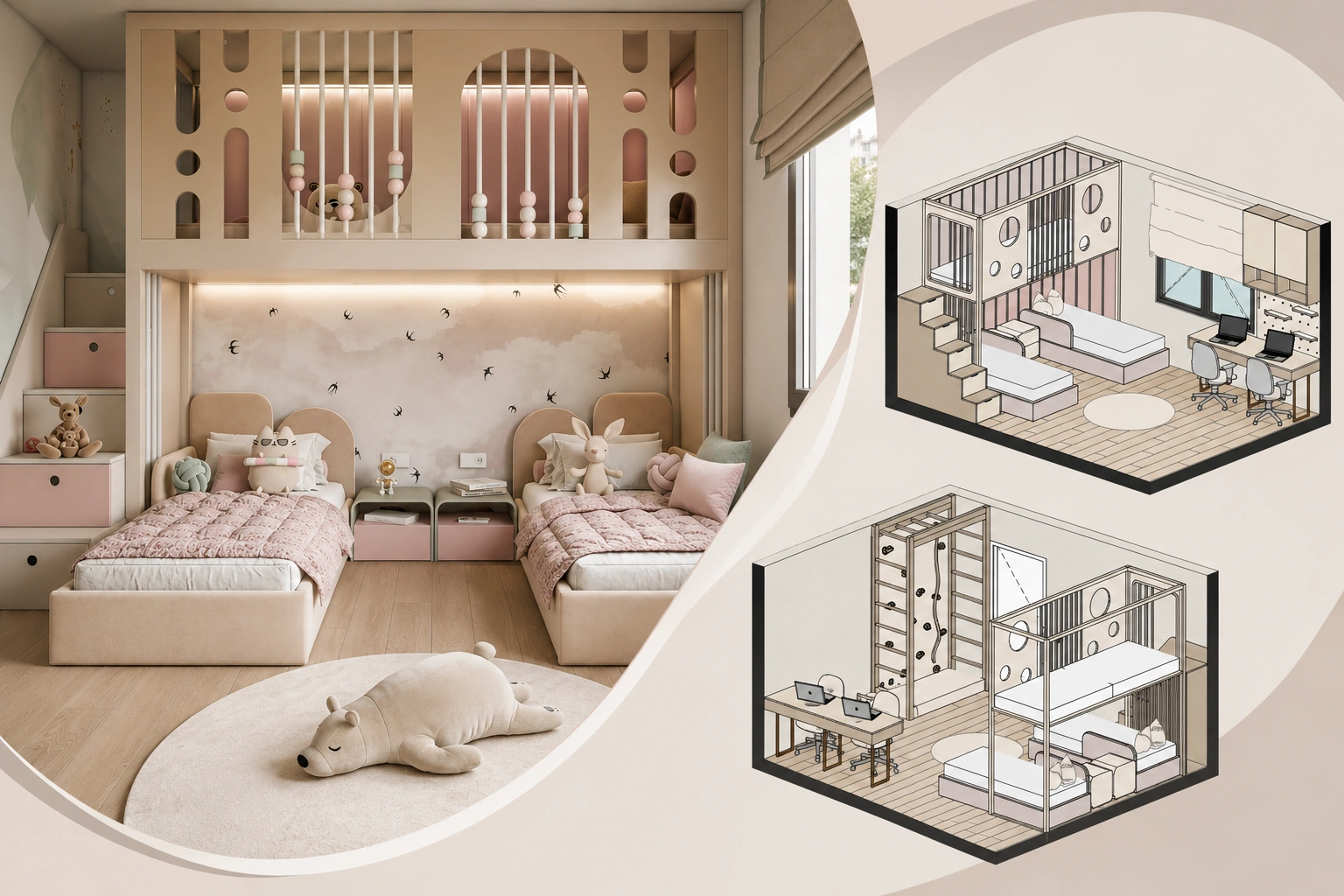
Project №1. Shared kids room for two girls
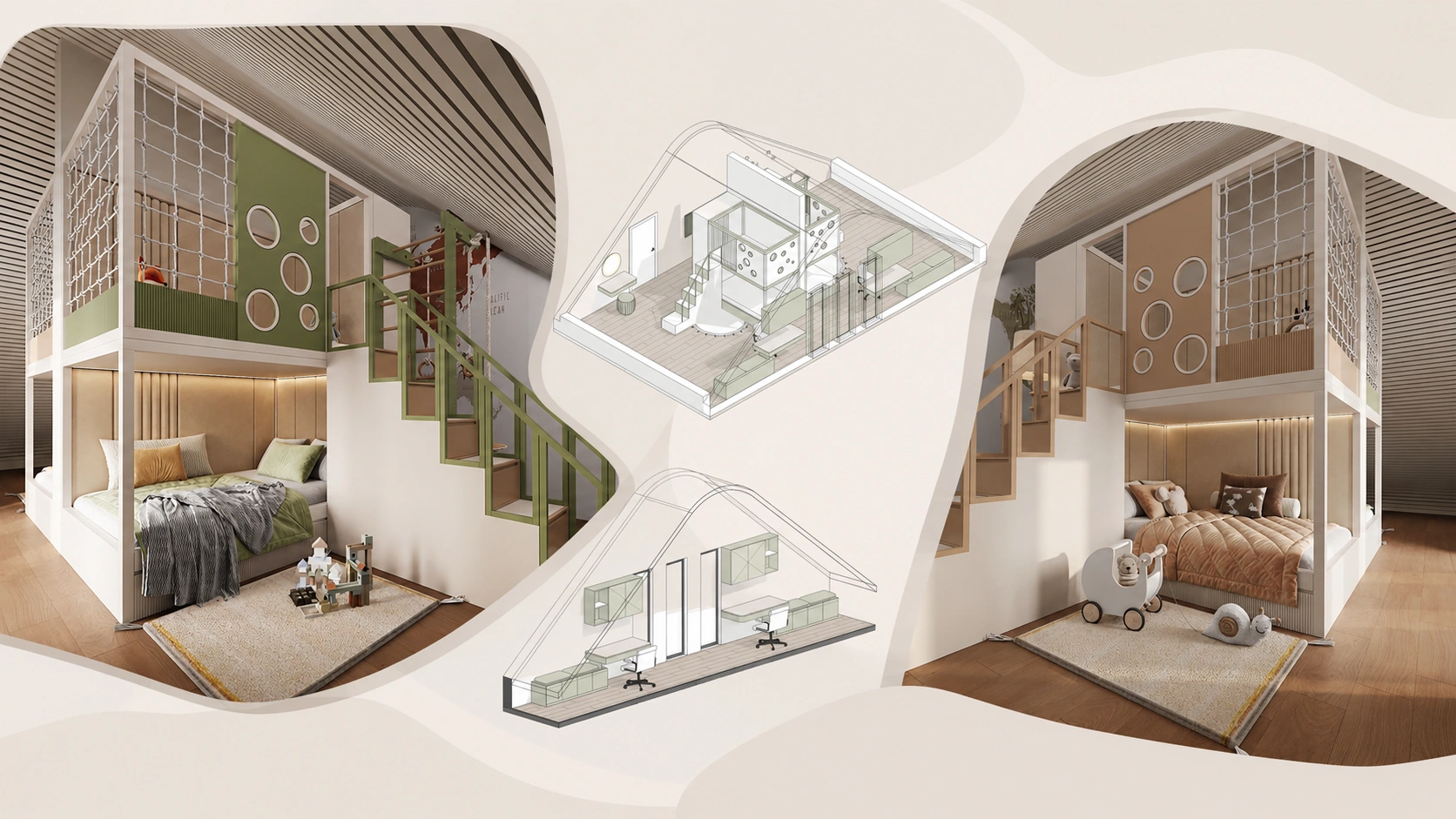
This project demonstrates how to design a shared kids room without compromising comfort. By using vertical space, the central area of the room is freed up for play and daily activities while maintaining full functionality. A symmetrical furniture layout creates a sense of balance, and each child gets a dedicated space for sleeping, studying, and storage.
Key design solutions
- Two separate beds — each child has a personal sleeping and private zone.
- Upper-level play area — efficiently uses vertical space without occupying floor area.
- Double workspace by the window — equal access to natural light and comfortable study conditions for both children.
- Open central space — enough room for active play, movement, and shared activities.
- Clear zoning without partitions — functional areas are defined through layout while keeping an open-plan feel.
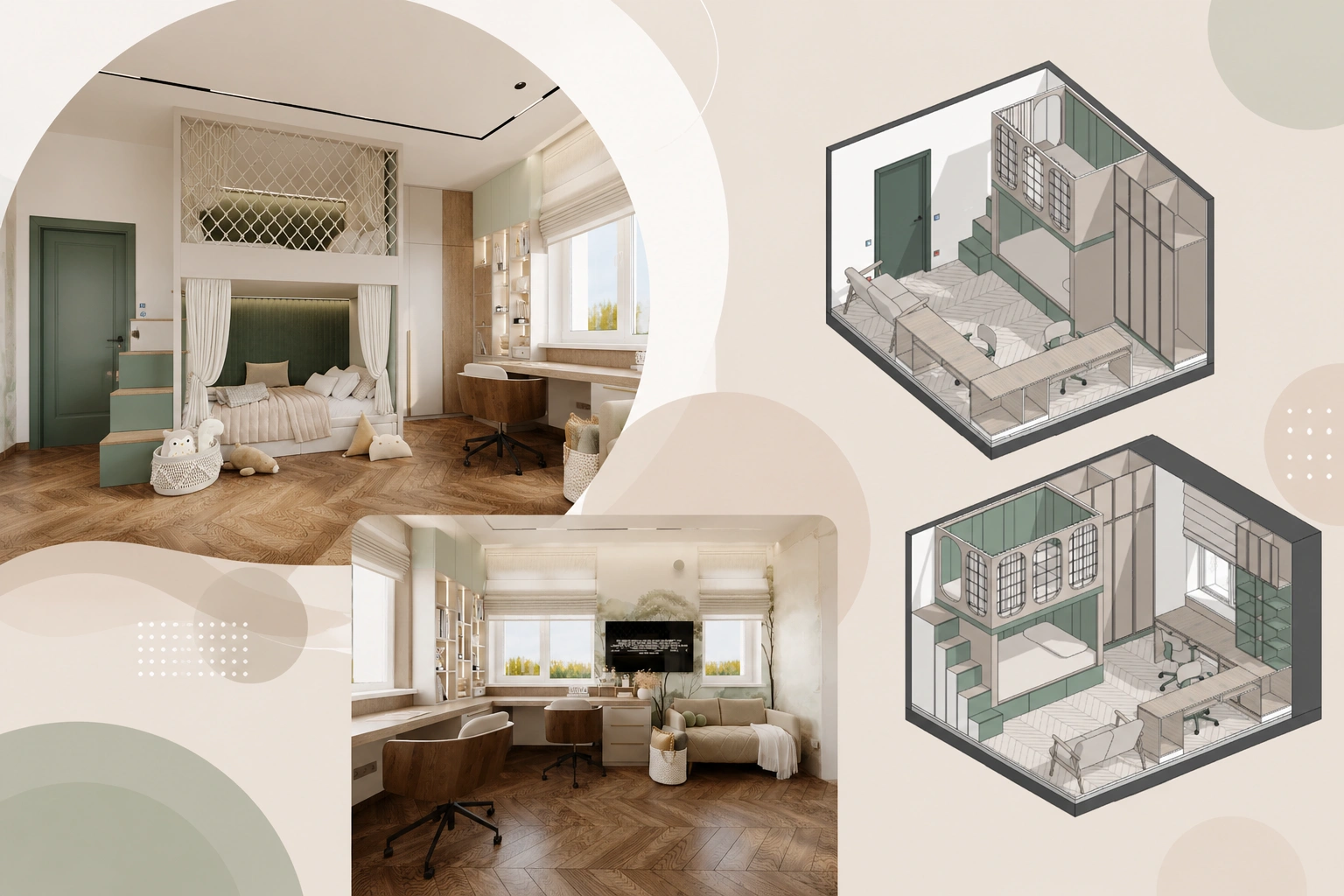
Project №2. 16 m² shared kids room
In this project, the space is divided so that each child has a dedicated functional area while the room remains open and comfortable. The upper level is used for one sleeping area, while the lower level accommodates another bed, freeing up space for study, relaxation, and shared activities.
Key design solutions
- Use of vertical space — increased functionality without losing floor area.
- Large storage system — spacious wardrobes and shelving for both children.
- Dedicated relaxation zone — a sofa creates a comfortable shared area.
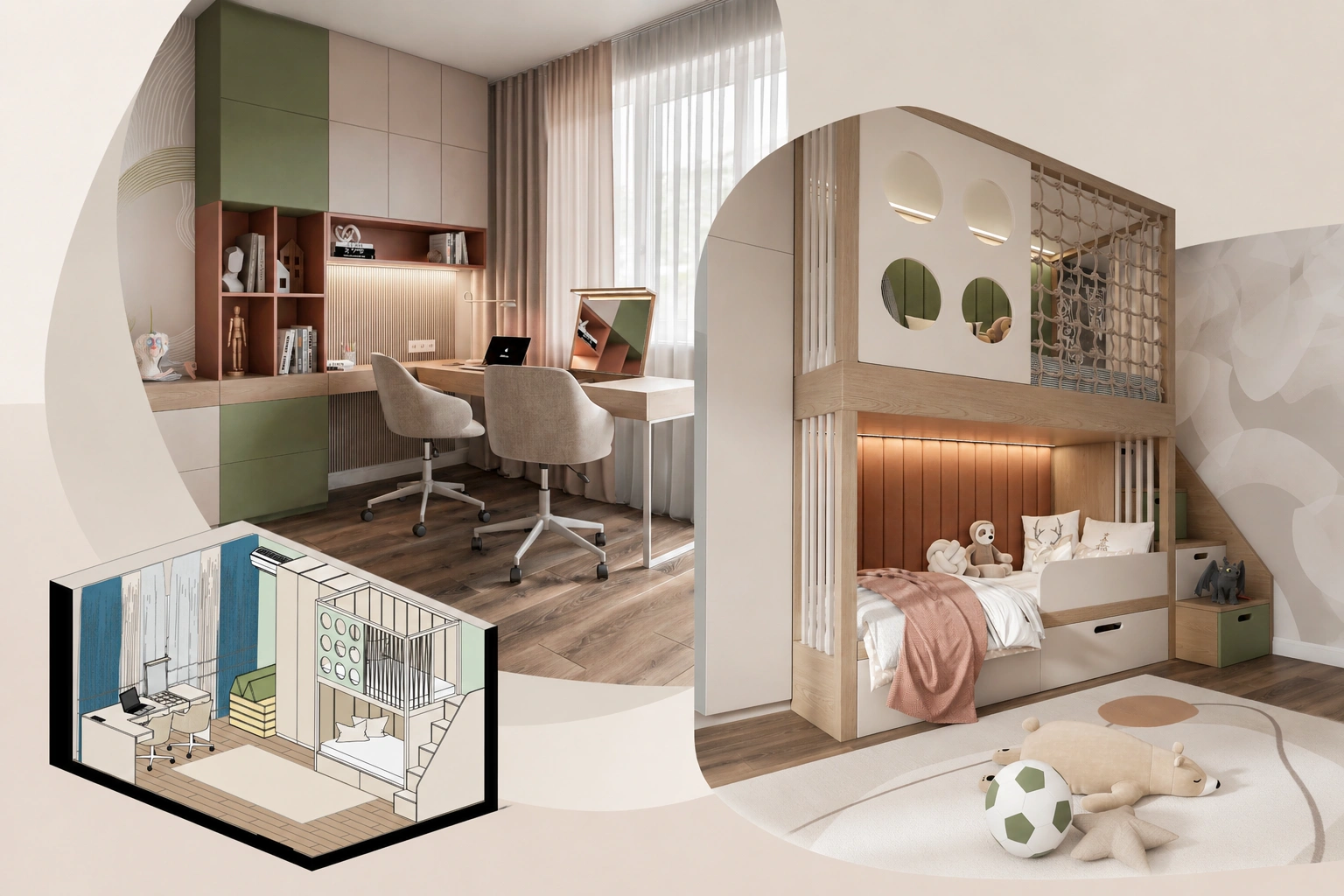
Project №3. Cozy shared room for a brother and sister
This project shows how to create a comfortable shared kids room for children of different genders, where each child has their own personal space. Thoughtful zoning allows for separate sleeping, studying, and storage areas, while shared zones remain functional for play and relaxation.
Key design solutions
- Bunk bed solution — separate sleeping areas for each child.
- Two study stations — individual workspace for learning and focus.
- Separation of private and shared zones — balanced coexistence in one room.
- Well-planned storage systems — sufficient space for each child’s belongings.
- Open play area — uncluttered and functional environment.
Project №4. Large shared kids room
The spacious 53 m² room allowed not only separation of zones between two children but also the creation of individual personal territories for each. The sleeping area is placed in a central two-level module, while individual study and storage areas are arranged on both sides of the room.
Key design solutions
- Separate sleeping areas — each child has a private relaxation zone.
- Individual study desks — focused learning without distraction.
- Clear division of private and shared spaces — balance between privacy and interaction.
- Efficient storage solutions — enough space for both children’s belongings.
- Large open area — space for play, activity, and family time.
Project №5. Shared kids room for two boys
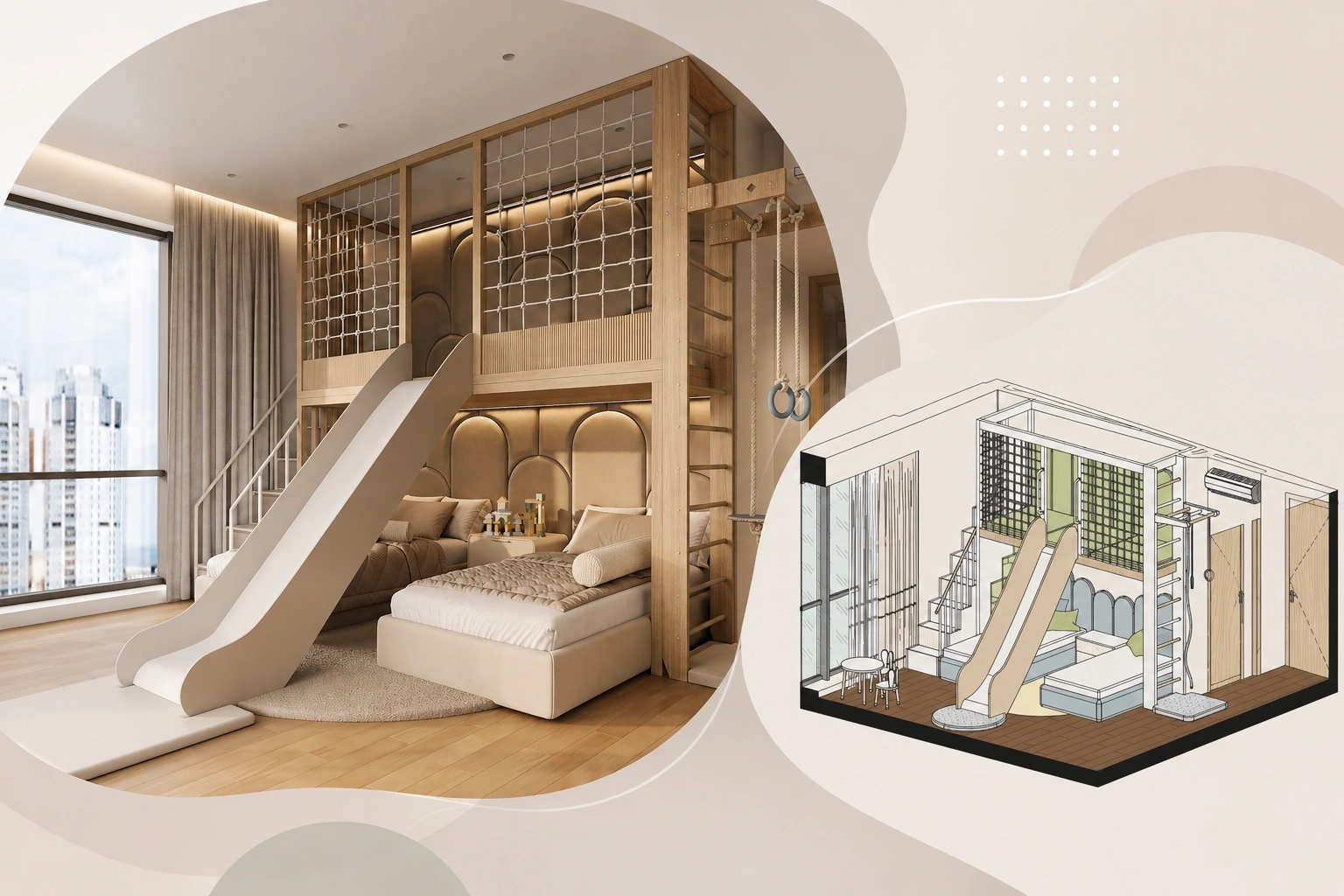
This project demonstrates how to organize a comfortable shared space for two boys, where each child has their own area. A central two-level structure provides separate sleeping zones, while a shared play area encourages active engagement and development.
Key design solutions
- Separate sleeping areas — individual comfort zones for each child.
- Shared upper-level play zone — space for interaction and active games.
- Slide and sports elements — encourage physical activity at home.
- Functional zoning — balanced combination of private and shared spaces.
Conclusion
Designing a shared kids room for two children is primarily about creating a space where each child has their own place for sleeping, studying, resting, and storing personal belongings.
It is not only about separate beds, wardrobes, or desks. The most important goal is to create a sense of personal territory where each child feels comfortable, independent, and secure.
Well-planned space organization allows efficient use of every square meter, resulting in an interior that combines functionality, aesthetics, and comfort. Such spaces easily adapt as children grow and remain practical for many years.
That is why professional space planning should begin before selecting furniture or finishes. A well-developed design project takes into account children’s lifestyle, age, interests, and future needs, creating a space that works today and stays relevant over time.