





A wardrobe in a children’s room is a convenient solution that allows you to effectively organize the storage of clothes, shoes and accessories, freeing up more space for games and learning. However, this approach has not only obvious advantages, but also certain disadvantages that should be taken into account. Before starting planning, it is important to weigh all the pros and cons in order to arrange a space that will be as functional and comfortable as possible for the child.
Advantages of arranging a dressing room in a children’s room
A dressing room in a children’s room has a number of significant advantages that make it an attractive solution for organizing space.
Convenient storage. A dressing room allows you to organize children’s clothes, shoes and accessories, ensuring order and convenience in everyday use. Thanks to thoughtful organization, all things are in their place, and finding them becomes easier for both parents and the child.
Saving space in the room. A separate dressing room allows you to hide all things in a closed space, which creates visual order in the room.
Long-term solution. A dressing room is an investment in comfort that remains relevant even as the child grows up. Over time, it can be easily adapted to the changing needs of a teenager.
Teaching a child to be tidy. Having a dressing room helps a child learn to organize their things and maintain order. This is an important habit that forms responsibility and discipline from an early age.
Disadvantages of arranging a dressing room in a children’s room
Need for additional space: A dressing room requires a separate space, which can be a difficult task in small rooms.
Financial investment: Arranging a dressing room requires a larger financial investment in development and implementation. However, in the long run, it may be more cost-effective than purchasing storage systems, cabinets or chests of drawers.
Limited functionality: Children’s needs change over time, so a dressing room that seems optimal for a baby may become unsuitable when the child grows up. This may require additional costs for redevelopment or adaptation of the space. However, an optimally designed and implemented dressing room can maintain its functionality for a long time, which makes it a profitable solution.
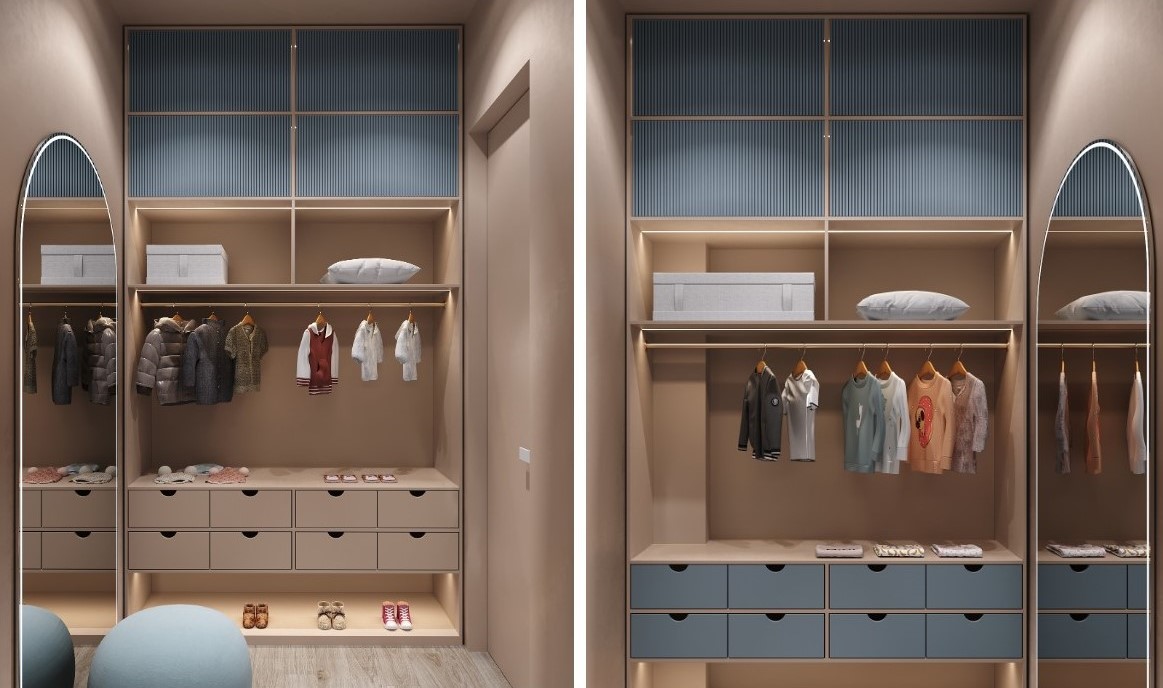
Tips for arranging a dressing room
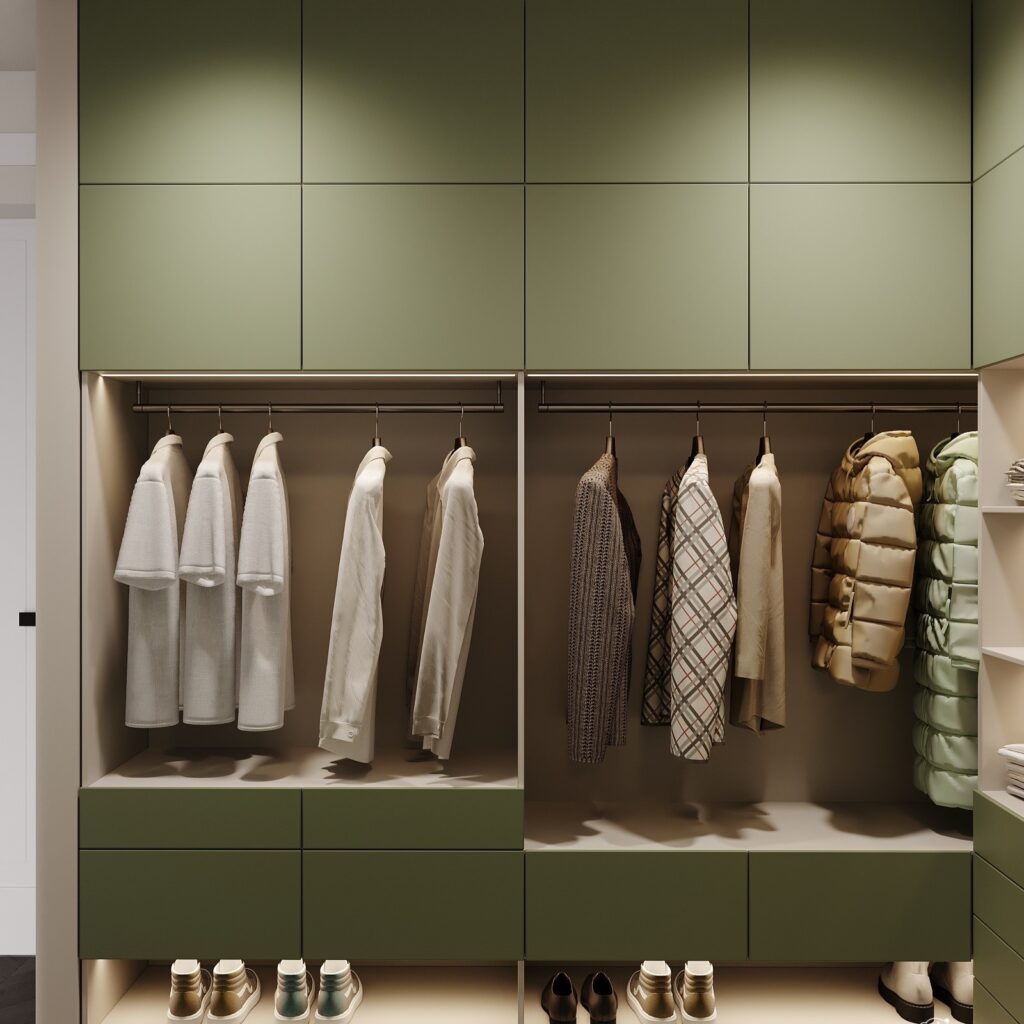
Optimal room size: A dressing room is advantageously arranged in rooms with an area of 10-12 m². In small rooms, you should choose compact solutions, such as open shelves or folding wardrobes.
Shelves and hangers: For convenient storage, it is recommended to combine open shelves and closed modules for clothes. Shelves are convenient for storing shoes, bags, accessories and seasonal clothing. It is better to place them at eye level so that things are easily accessible.
Dimensions and configuration: When planning a dressing room, consider not only its area, but also the height of the ceiling. High ceilings make it possible to install additional shelves for storing things that are used less often.
Additional elements: To improve the functionality of the dressing room, do not forget about built-in drawers for small items, such as accessories, underwear or socks. Integrating a mirror into the door or wall of the dressing room is also useful for quick checks of appearance.
Lighting: Don’t forget about good lighting in the dressing room. A convenient option would be built-in lighting in the shelves or lighting on movable brackets.
The decision to arrange a dressing room in a child’s room depends on the size of the room, the budget and the age of the child. In spacious rooms, a dressing room can be a great option for organizing space, while in small rooms it is better to choose more compact solutions. It is important to consider the level of independence of the child, because the dressing room requires regular maintenance of order.

