





For every child, their room is a little world where they wake up, dream, play, learn, and gradually grow. Children’s bedroom design is much more than creating a pretty picture. It’s about daily comfort, a sense of safety, and a place they always want to return to.
At FeliFam Studio, we have been designing children’s spaces for years, where every detail is carefully considered and every decision has a purpose. In this article, we share the most common mistakes and practical tips to help you create a comfortable and safe children’s bedroom design where growing up is a joy.
5 most common mistakes in children’s bedroom design
Design for the picture
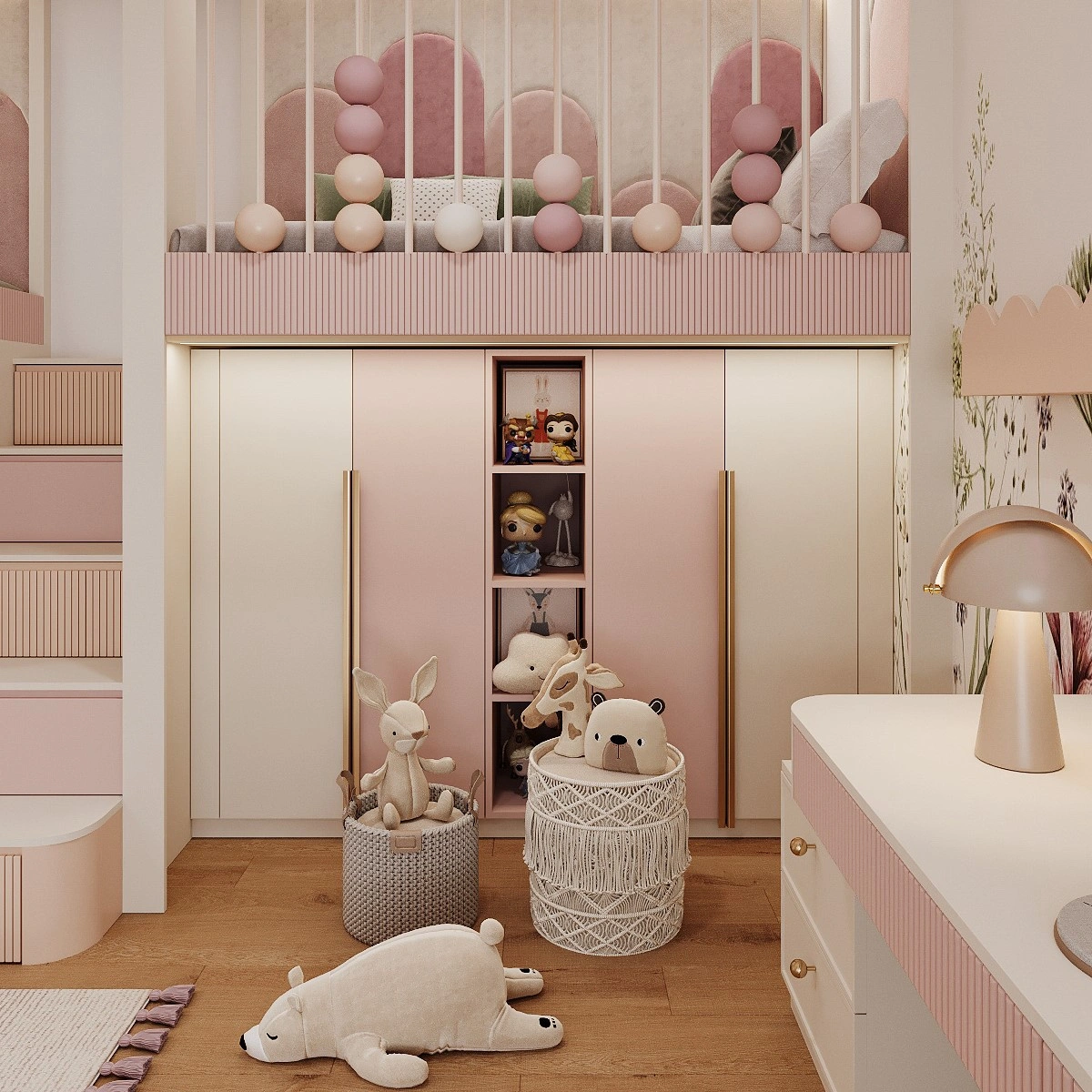
What happens: The interior looks impressive in renderings and photos, but in everyday life, it’s difficult for the child to study, play, or keep things organized. The space doesn’t take into account the child’s real habits, movements, and needs, so it quickly becomes impractical.
Solution: Working with a professional children’s designer helps turn ideas from references into a thoughtful children’s bedroom design tailored to your child. The designer adapts solutions to the room’s actual size, the child’s age, and the family’s lifestyle, making the space comfortable for daily use.
Space without potential
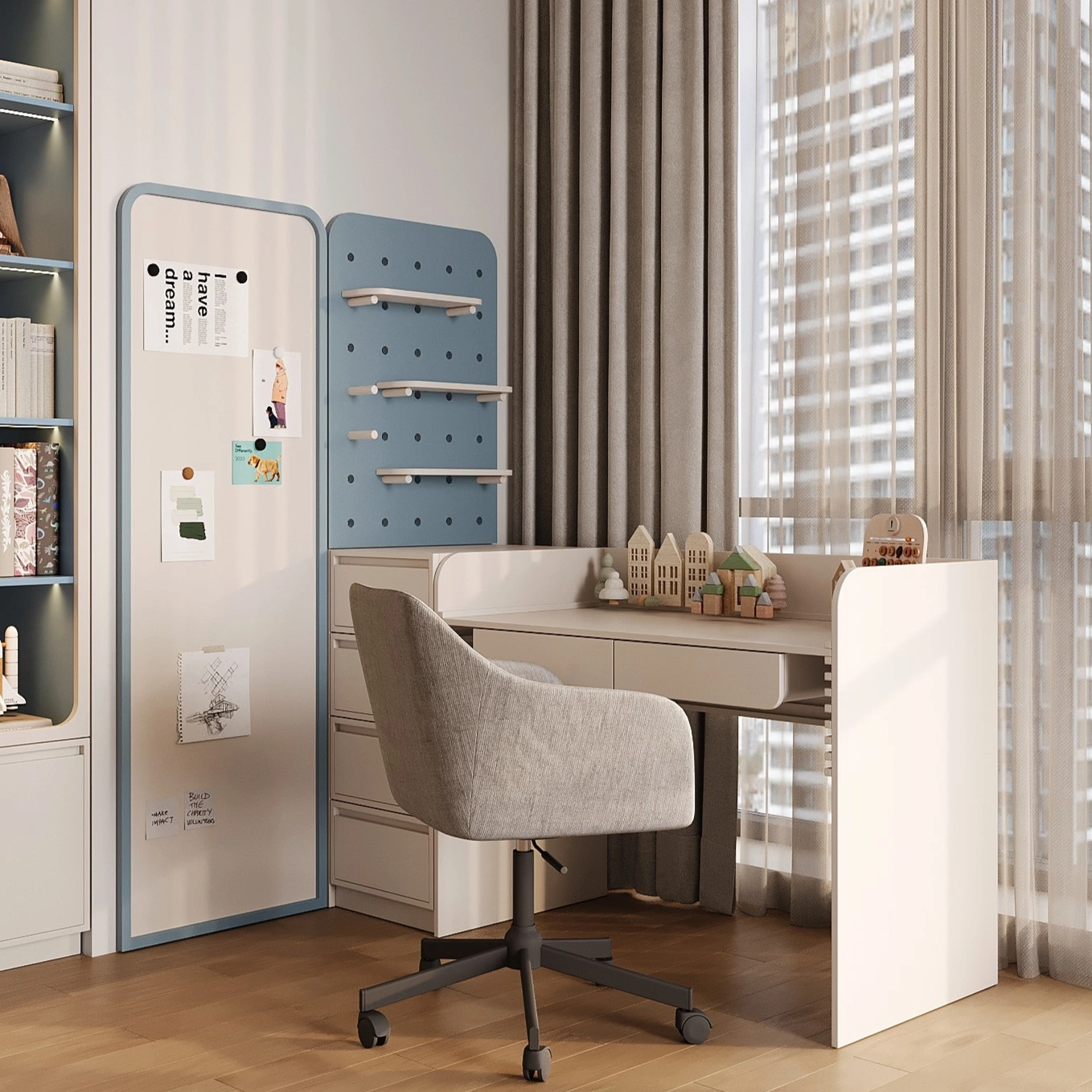
What happens: The layout, furniture, and overall design suit only the child’s current age. After a few years, the space no longer meets their growth, interests, or needs, leading to costly and complicated changes.
Solution: Use adaptable furniture and a neutral color base that stays relevant over the years. Accent wallpaper or decorative elements can be placed on a single wall for easy updates as the child grows.
Lack of clear zoning
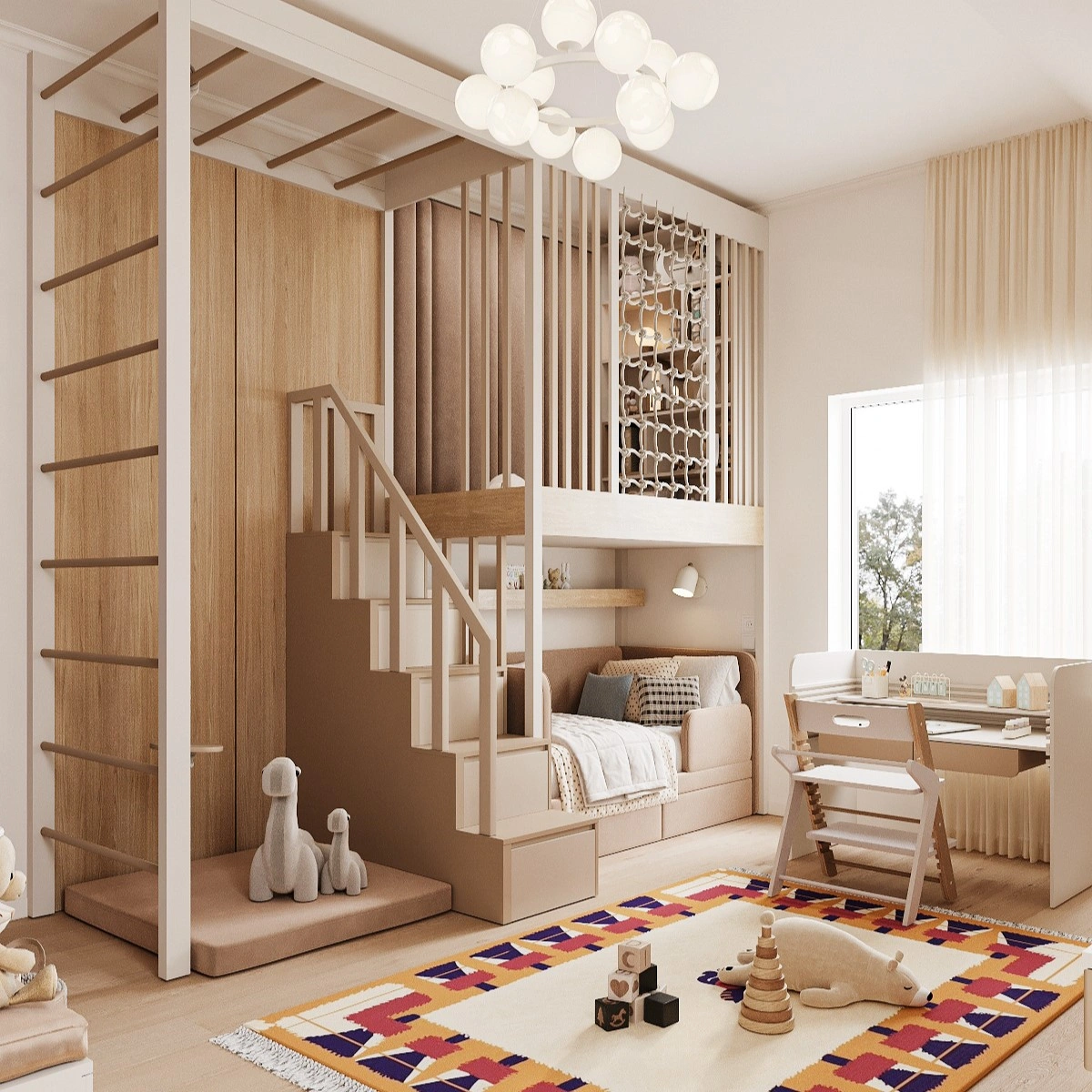
What happens: The room lacks clear structure. Areas for sleeping, studying, and playing are not separated, making it hard for the child to focus, rest, and keep things organized.
Solution: Structure the space clearly by defining functional zones according to the child’s daily routines. Use planning solutions, furniture, lighting types, and visual accents to create natural zones in the room.
Lighting without scenarios
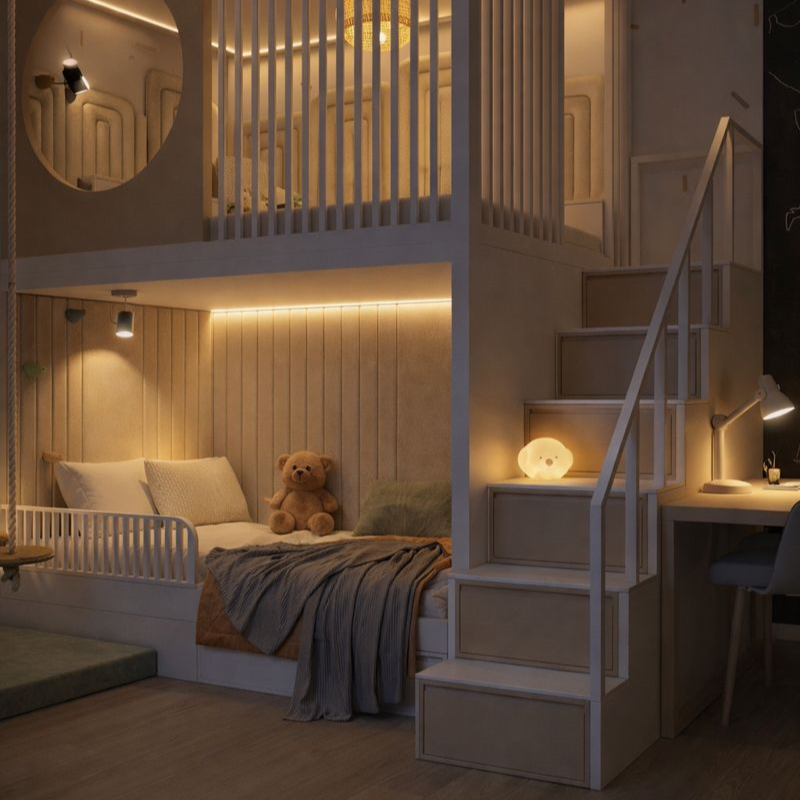
What happens: There is only one main light source or the lighting doesn’t match the different zones. The child lacks enough light for studying, while evening lighting does not create a sense of calm and comfort.
Solution: Plan multiple lighting levels for different functions. The study area should have around 400–500 lux, while general lighting can be 200–300 lux. Evening scenarios can include soft, diffused light to help the child relax and prepare for sleep.
Furniture that can’t keep up
What happens: Furniture lacks strength and adaptability. It quickly wears out, loses stability, or fails to meet the changing needs of a growing child.
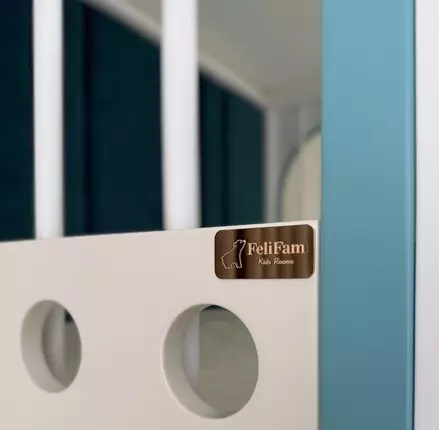
Solution: Choose high-quality, durable furniture designed for daily use, not mass-market options. Custom furniture from FeliFam allows full adaptation of structures, materials, and details to the child’s needs and the specific room.
Final recommendations for the perfect children’s room
- Plan ahead. Implement solutions that will stay relevant for years, considering the child’s growth and changing needs.
- Choose functionality over looks. Reference images can inspire, but the design must work in your room and for your family.
- Create clear zones. Separating areas for sleeping, studying, playing, and storage helps maintain order and balance.
- Think about lighting scenarios. Combine general, task, and soft evening lighting to suit different activities throughout the day.
- Invest in quality furniture. Furniture should withstand active daily use, be safe, reliable, and maintain its appearance over time.
- Trust professionals for complex projects. Designing a children’s room requires time, attention to detail, and many decisions not always visible at first. Entrusting this process to experts frees up time for the most important thing — family moments together.
Children’s bedroom design is an investment in comfort, safety, and harmonious development. Most problems arise not from a lack of ideas but from poorly thought-out solutions at the start, which later interfere with daily life.

