


Narrow children’s rooms are a common format in modern apartments, where every square meter matters. Despite their non-standard shape, these spaces can be comfortable, functional and truly beautiful — the key is to plan and design them thoughtfully.
A professional approach allows you to turn a challenging layout into an advantage: optimize storage, highlight the architecture of the room and create expressive zones for sleeping, playing and studying.
In our practice, we often work with similar layouts and know how to make such rooms harmonious and spacious.
Today we will look in detail at the key principles we follow in our work and share solutions that truly work in narrow kids’ rooms.
Features of narrow children’s rooms and how to turn them into advantages
A narrow room has a completely different planning logic compared to a square or wider rectangular layout. Here, it is important to consider not only dimensions, but also proportions, movement dynamics and how a child interacts with each zone.
Elongated geometry → A clear, logical room structure
The long shape sets a linear movement scenario. This means furniture should work along the walls, without blocking light and keeping the passage comfortable. Any bulky or deep elements can quickly overcrowd the room.
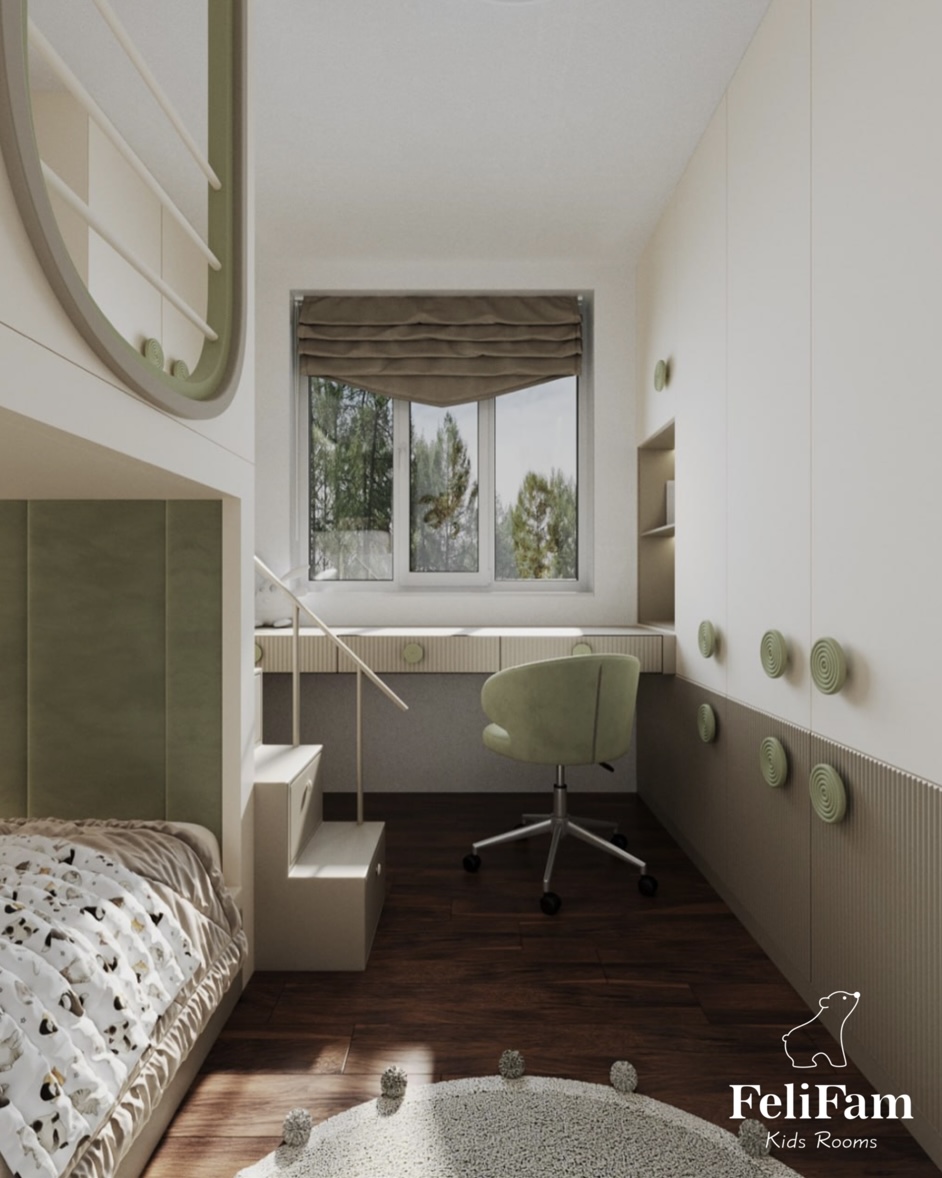
Solution: Use a linear composition along one or both long walls. This creates natural movement and allows key zones to be arranged sequentially — without visual clutter or chaotic transitions.
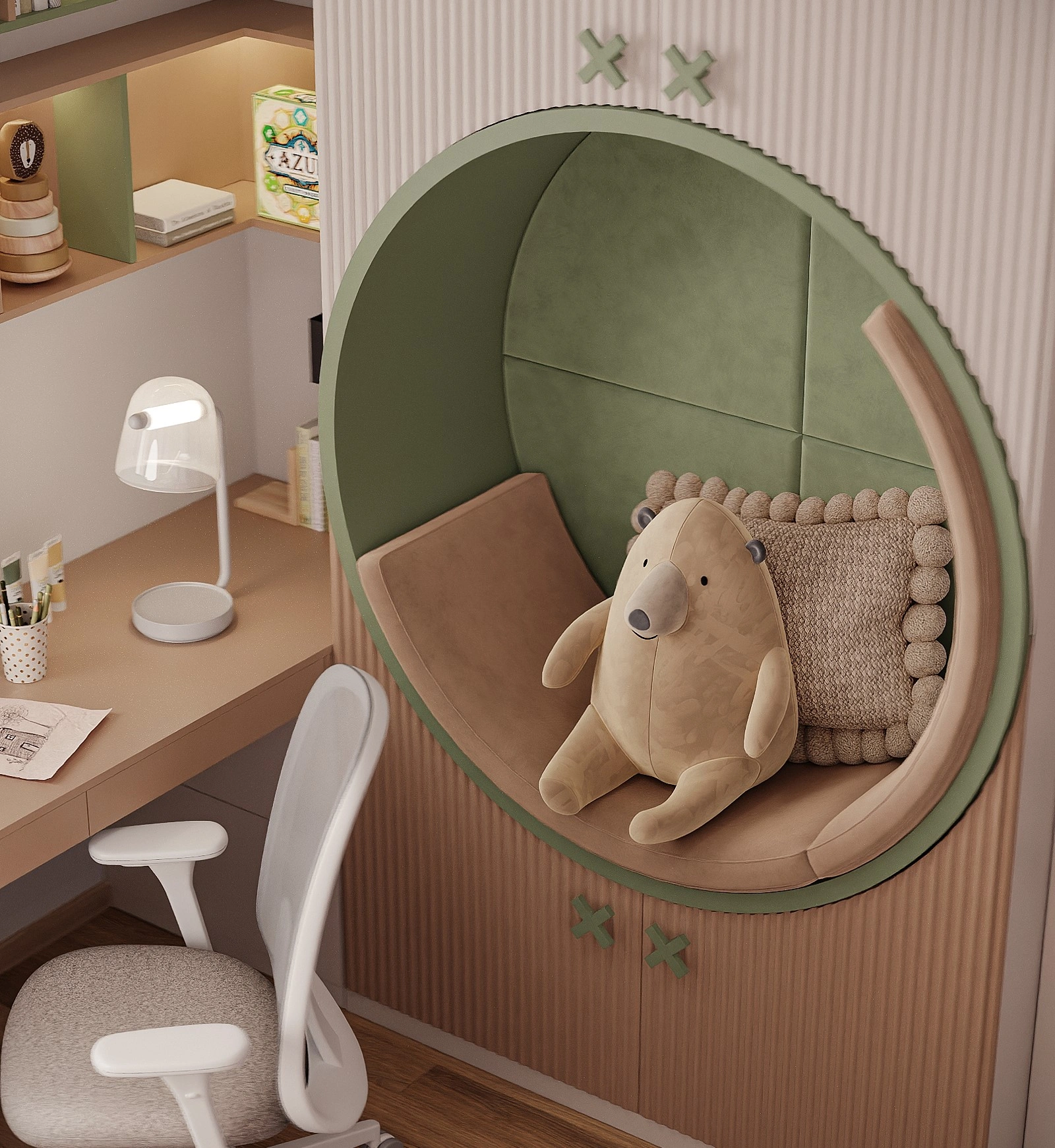
When working with narrow rooms, our designers often integrate built-in cozy nooks. Such niches support the geometry of the space and easily blend into any style while adding architectural depth. Children especially love these “hideouts” — perfect for reading, playing or relaxing. A built-in corner doesn’t overload the narrow layout; instead, it helps structure the long wall and adds a warm, comfortable accent.
Limited width → A perfect reason for delicate ergonomics
In narrow rooms, the correct depth of furniture is crucial — wardrobes, desks or podiums. The wrong depth instantly eats up space and disrupts ergonomics.
Solution: Shallow wardrobes, integrated workstations, bunk constructions and neat wall-systems help maintain a comfortable passage and avoid visual overload. In such projects, we often use custom furniture, as made-to-measure solutions are a common practice today. This allows every element to adapt precisely to the room’s geometry and achieve maximum functionality without losing lightness.
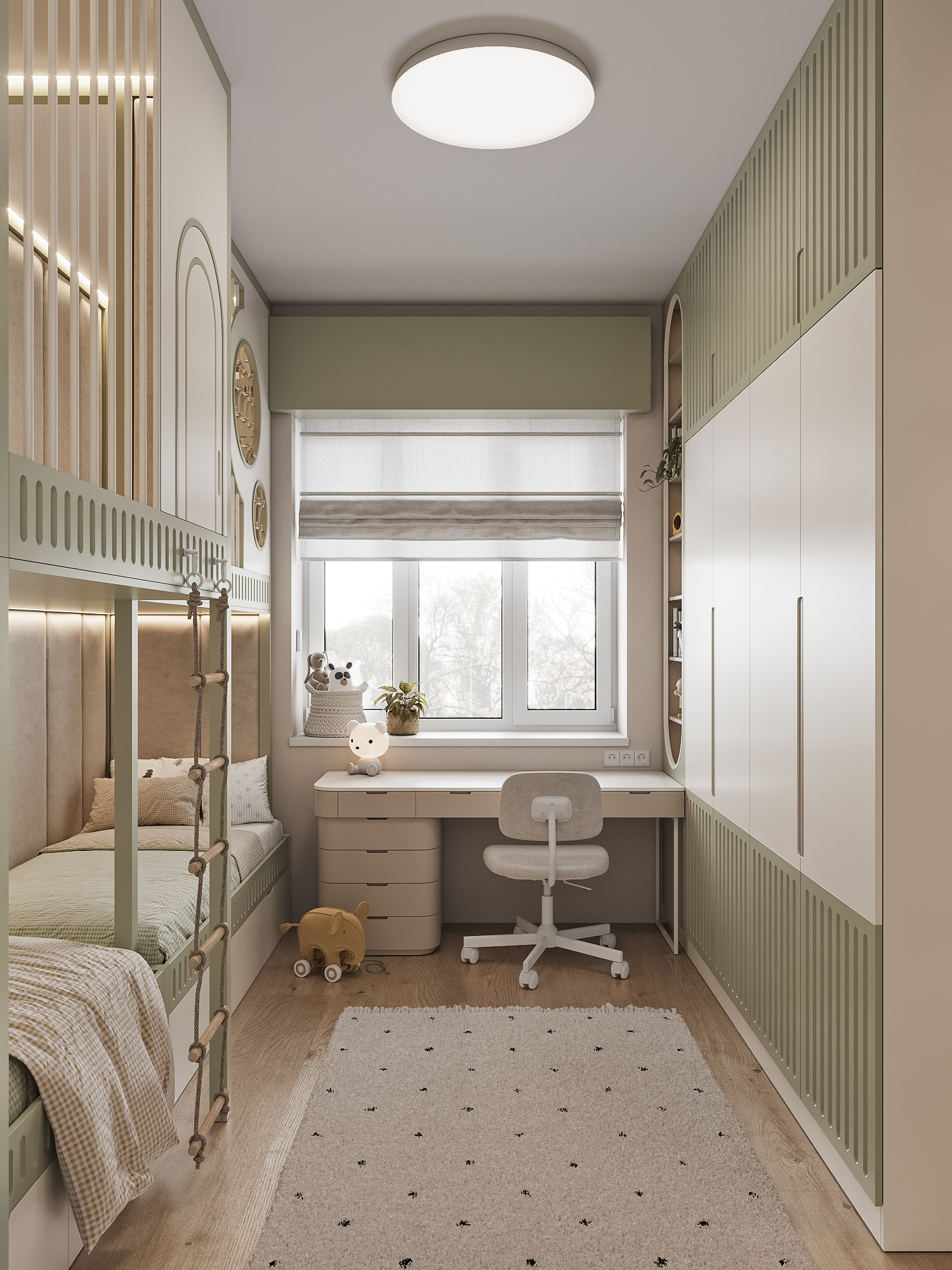
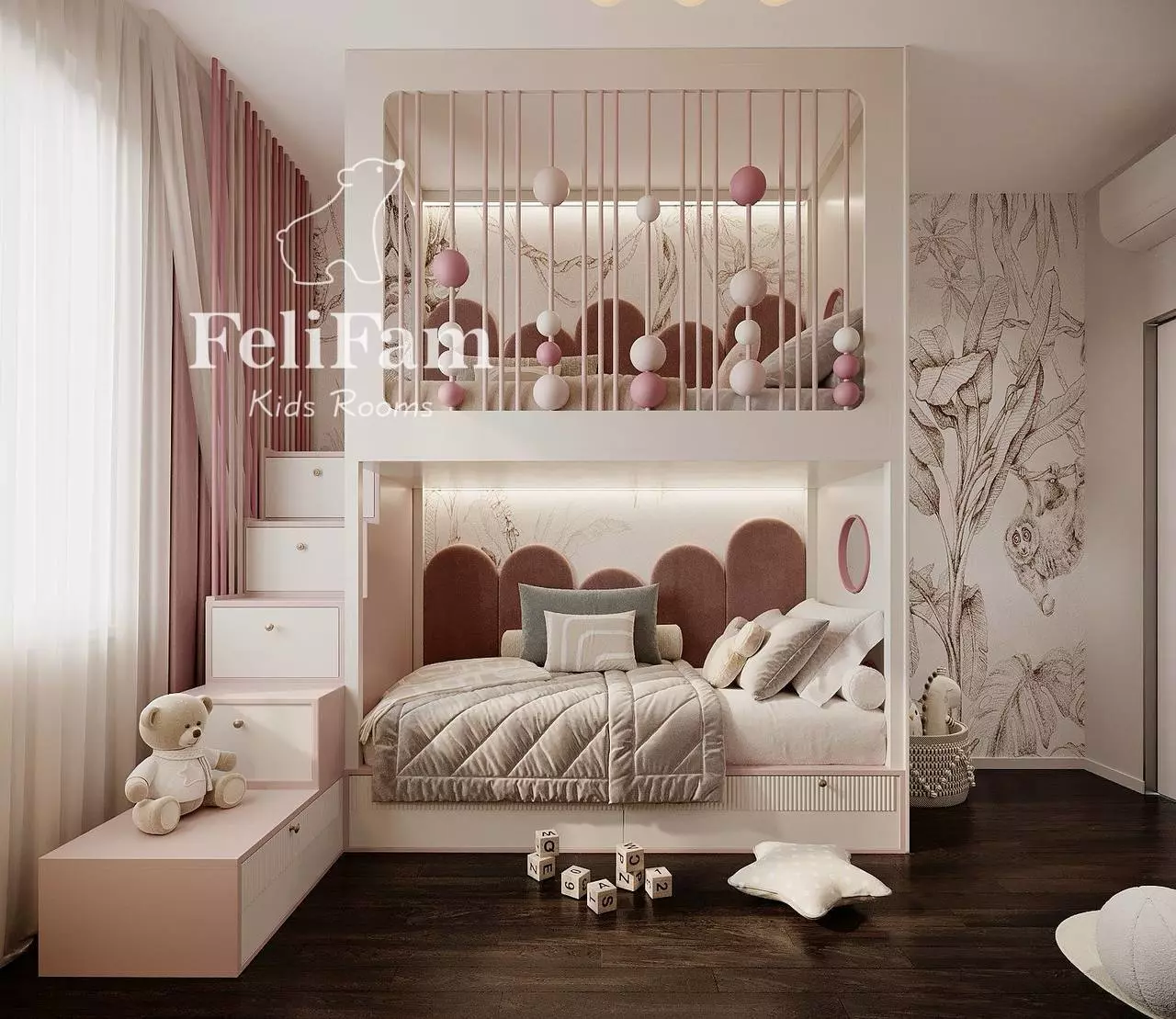
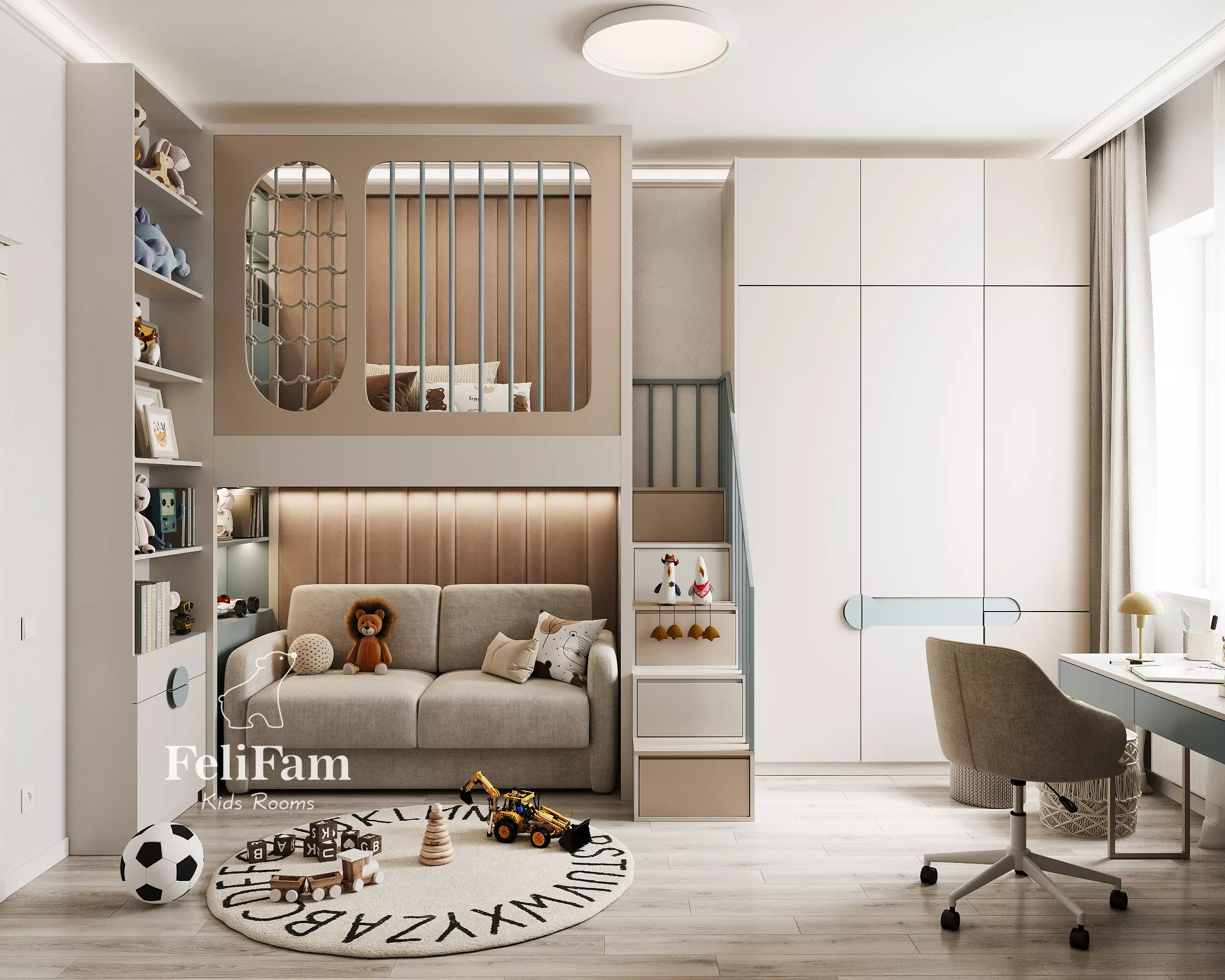
An excellent solution for narrow children’s rooms is the use of bunk or two-level structures. This approach helps create an additional play area while cleverly engaging vertical space. Storage can be integrated into these constructions, keeping the floor free and maintaining a sense of openness even in a compact room.
Higher requirements for light and color → A visually wider space
Narrow rooms often lose the feeling of volume: shadows become deeper, light spreads unevenly, and rich or dark shades can visually compress the space. Because of the elongated shape, the room may appear darker, and the side walls — closer than they really are.
Solution: Work with light and color as instruments of spatial correction. Light palettes, soft neutral tones and vertical or horizontal rhythms visually expand the room. Multi-level lighting — a combination of general, local and decorative — eliminates shadow zones and gives the space depth and softness.
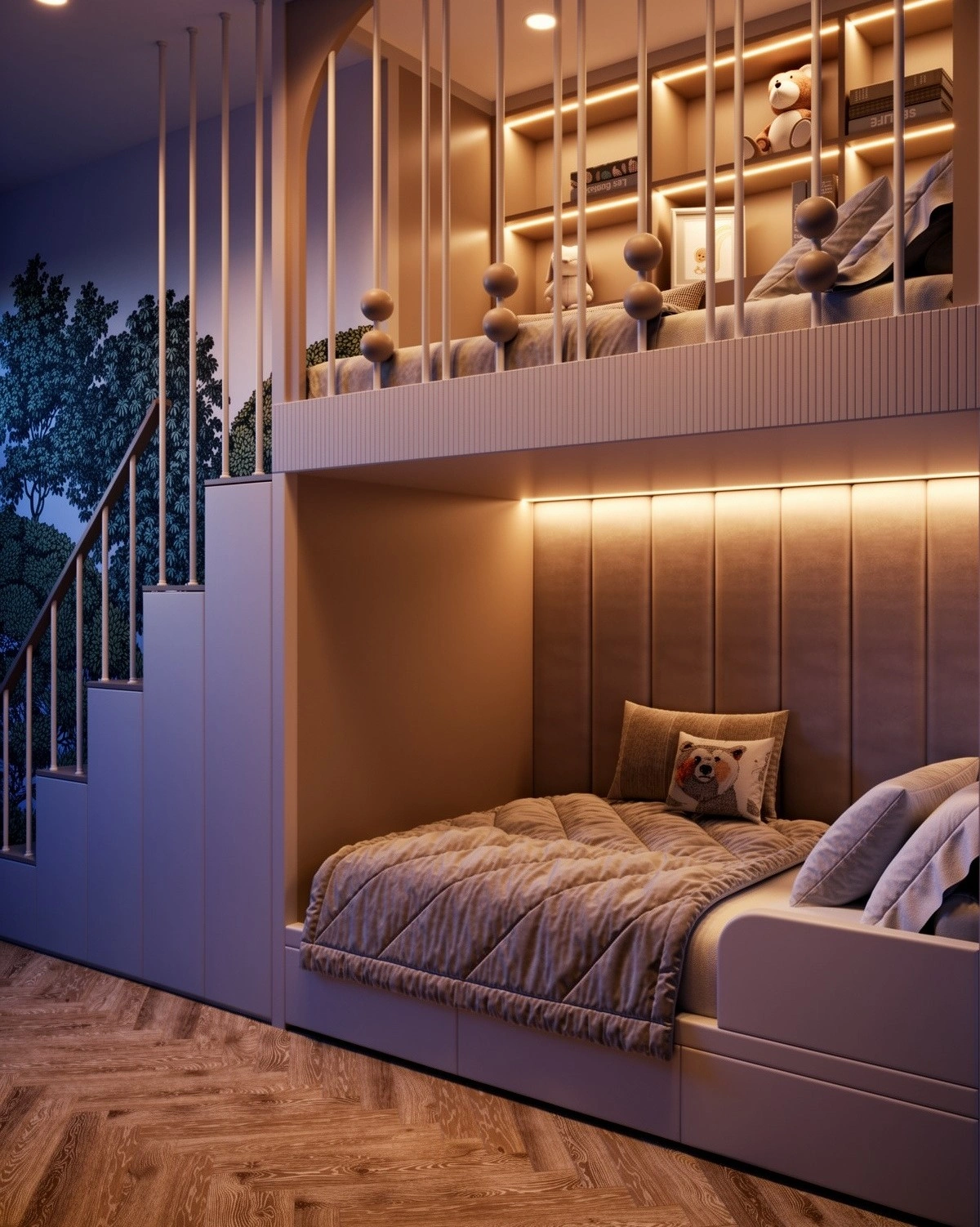
Natural light should be concentrated near the study area, providing comfort for reading, writing and focusing. Along the length of the room, it is worth adding well-planned artificial lighting — linear fixtures, spotlights or LED strips that fill the space evenly and visually widen the narrow geometry. Such accents create warmth, add depth and make the interior truly layered and alive.
Smart planning: where to begin
Planning a narrow kids’ room always starts with a precise analysis of the space. Before choosing furniture or stylistic solutions, it’s important to understand the room’s logic and real possibilities. Detailed measurements — width, depth, height, window and door placement, niches or projections — form the basis. This helps determine where the sleeping, study, play and storage zones can appear.
Next, it is important to analyze how the child uses the space: how they move, where they spend most of their time, how much room they need for studying or active play. In narrow rooms, chaotic placement should be avoided, so core functions are best arranged sequentially along the long wall — creating a clear rhythm and intuitive flow.
Special attention should be paid to zoning. Even in a compact room, you can create a well-structured environment: a separate sleeping corner, a neat study area and an open play zone. This organization prevents visual clutter and keeps a balance between functionality and lightness.
Furniture: what works best in narrow rooms
Properly selected furniture is the key to comfort and functionality in a narrow kids’ room. Here, proportions, depth and multifunctionality are more important than style alone.
1. Shallow and well-designed storage systems
Shallow wardrobes and wall-systems help maintain a comfortable passage and avoid consuming precious space. Floor-to-ceiling wardrobes work particularly well — they enhance verticality and offer maximum storage without looking heavy.
2. Furniture with integrated functions
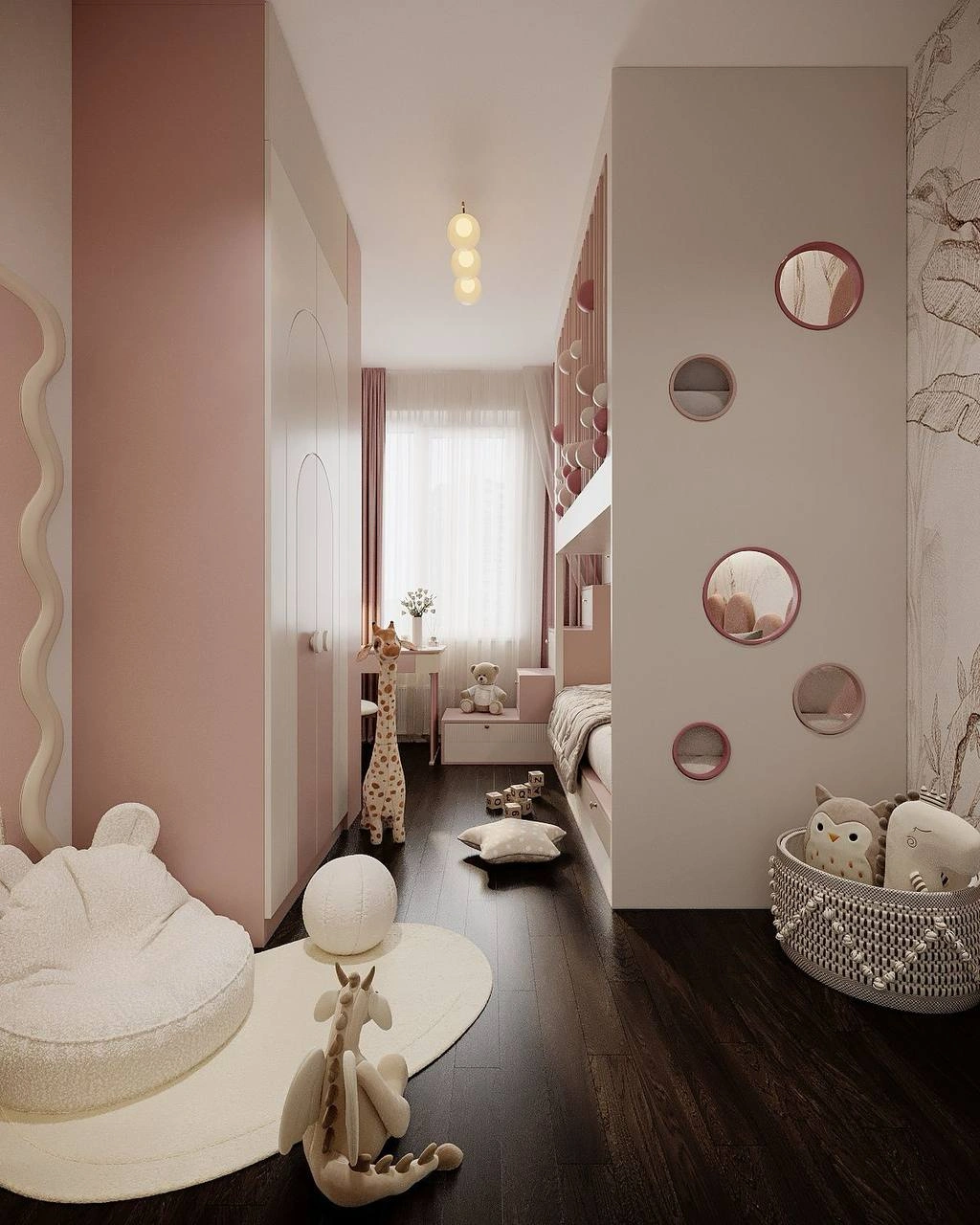
Two-in-one constructions — such as beds with storage, work areas built into wall-systems or podiums with drawers — prevent the room from filling up with separate pieces. This keeps order and makes the room visually lighter.
3. Two-level solutions
Vertical space is your best ally in narrow rooms. Bunk beds, play zones above wardrobes or suspended structures add valuable functional area. Storage can also be integrated into these solutions, making them even more practical.
4. A desk integrated into the wall-system
The best option is when the desk forms part of a bigger structure — an extension of a wardrobe, a niche or a segment of a large storage system. This saves space, maintains order and looks cohesive.
Visual techniques that expand the space
- Light palette and soft tones
Light shades reflect more light, making the room appear wider. Warm neutrals, milky tones and soft beige-greys work especially well. - Horizontal and vertical rhythms
Horizontal lines visually widen the room, while vertical lines increase height. These techniques work in furniture, wall panels, textiles and décor. - Material consistency
When flooring, walls and large furniture surfaces are kept in similar tones or textures, the room feels calmer and visually more open. - Mirrors and reflective surfaces
A well-placed mirror can significantly enhance the sense of width. In children’s rooms, it’s best used in safe forms — built into wardrobes, doors or decorative panels. - Minimalism on large planes
Clean walls, light textiles and neutral curtains prevent visual overload. In narrow rooms, one accent works better than several competing elements.
A narrow kids’ room may seem challenging at first, but with the right approach, it transforms into a harmonious, functional and beautiful environment. Smart planning, well-chosen furniture and thoughtful work with light and color allow you to use every centimeter wisely and create a space where a child feels free, comfortable and inspired.