





A wardrobe in a child’s room is a practical solution that helps efficiently organize clothing, shoes, toys, and accessories, freeing up more space for play and learning. Our designers always recommend setting up a separate wardrobe area, even in small rooms, because it is: Convenient; Functional; Safe; Stylish.
A dedicated storage space for clothes and toys ensures order in the child’s room and creates a sense of organization. A well-planned system of cabinets, shelves, and drawers helps the child easily find what they need and teaches independence from an early age.
The first wardrobes appeared in medieval Europe. Initially, they were not intended for clothes but for storing weapons, fabrics, and valuables.
In the past, a wardrobe was a room for private conversations. Aristocrats used it not only to store clothes but also as a private space to discuss confidential matters.
In old British houses, wardrobes were often built near fireplaces. This helped maintain warmth and prevented clothes from being damaged by humidity.
Having a wardrobe reduces stress: research in neuropsychology and cognitive science shows that an organized environment lowers cortisol levels and improves attention.
Tips for Setting Up a Children’s Wardrobe
Optimal Size
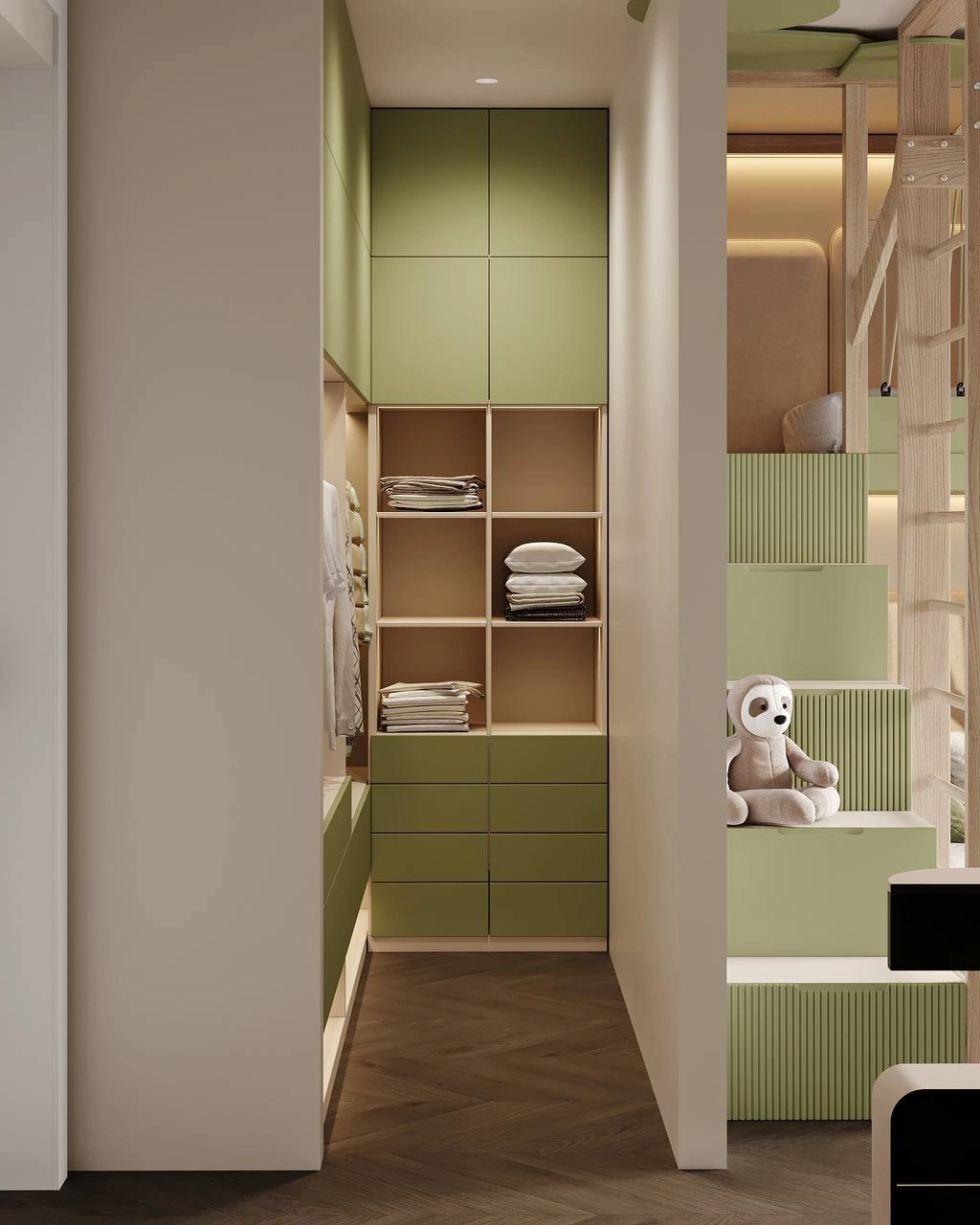
The optimal size of a children’s wardrobe depends on the child’s age, the amount of clothing, and the overall room area. However, there are guidelines that help create a comfortable and functional space.
Minimum functional area — 2.5–3 m². This format works for small rooms when the wardrobe is integrated into a niche or corner. It accommodates basic clothing, shoes, underwear, and a few shelves for toys. The most convenient layout is “L” or “U” shaped along the wall.
Optimal comfortable area — 4–6 m². This is a full wardrobe with a passageway and clear zoning. It can include two zones: one for the child’s everyday clothes (with rod heights of 90–120 cm) and one for seasonal or “extra” items. This option works well for one or two children.
Premium format — 7–10 m² or more. In spacious rooms, the wardrobe can be designed as a separate “mini-boutique” with a mirror, ottoman, lighting, and décor. This adds a sense of aesthetics and independence to the child’s room.
Furniture Placement
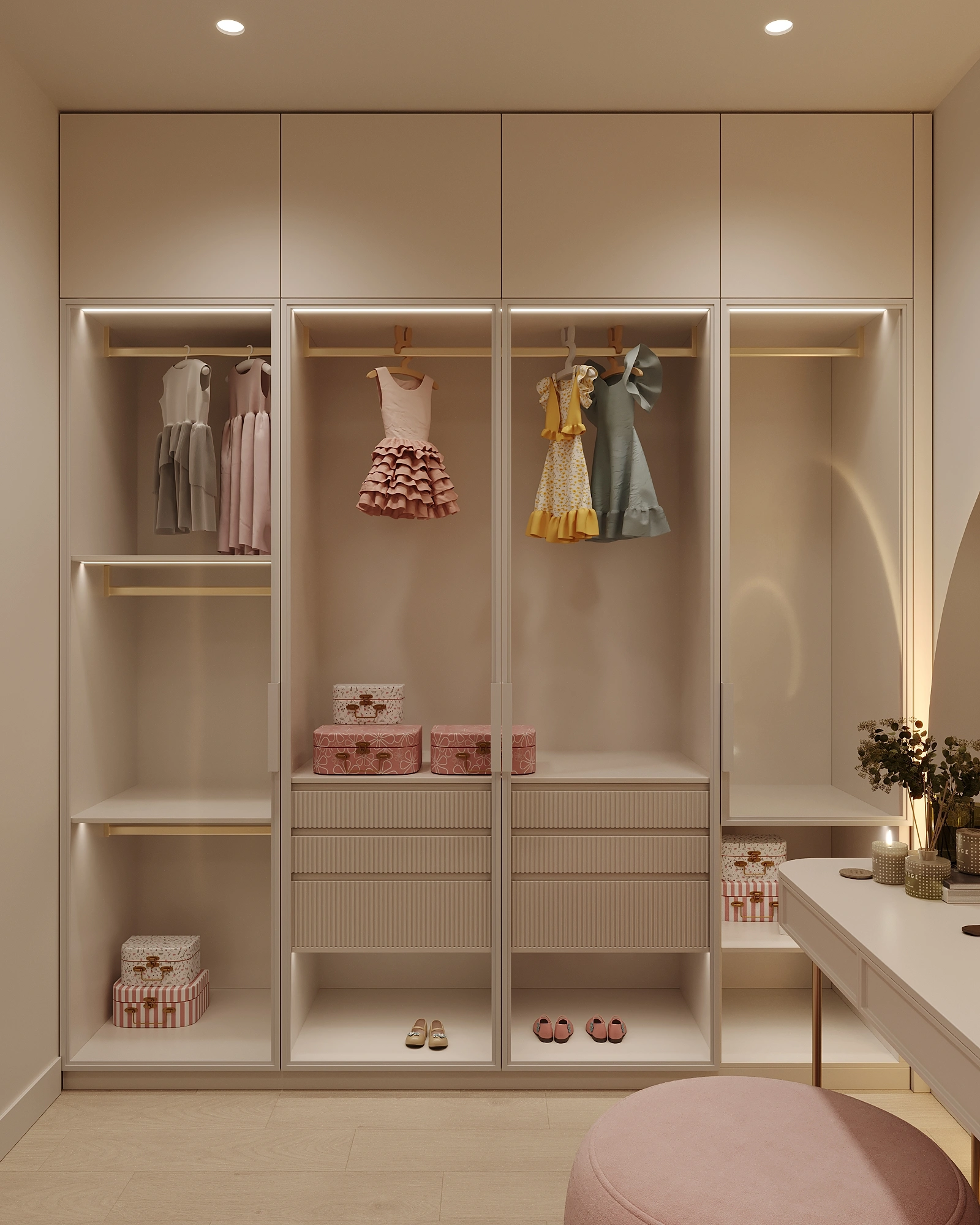
Furniture placement in a children’s wardrobe should be logical and safe so that the child can easily access items and maintain order.
Storage zones:
Lower level (up to 90 cm): daily items — baskets, drawers, shoes.
Middle level (90–120 cm): main zone — rods, shelves, organizers.
Upper level (above 150 cm): seasonal clothing, boxes, “growing into” items.
Lighting
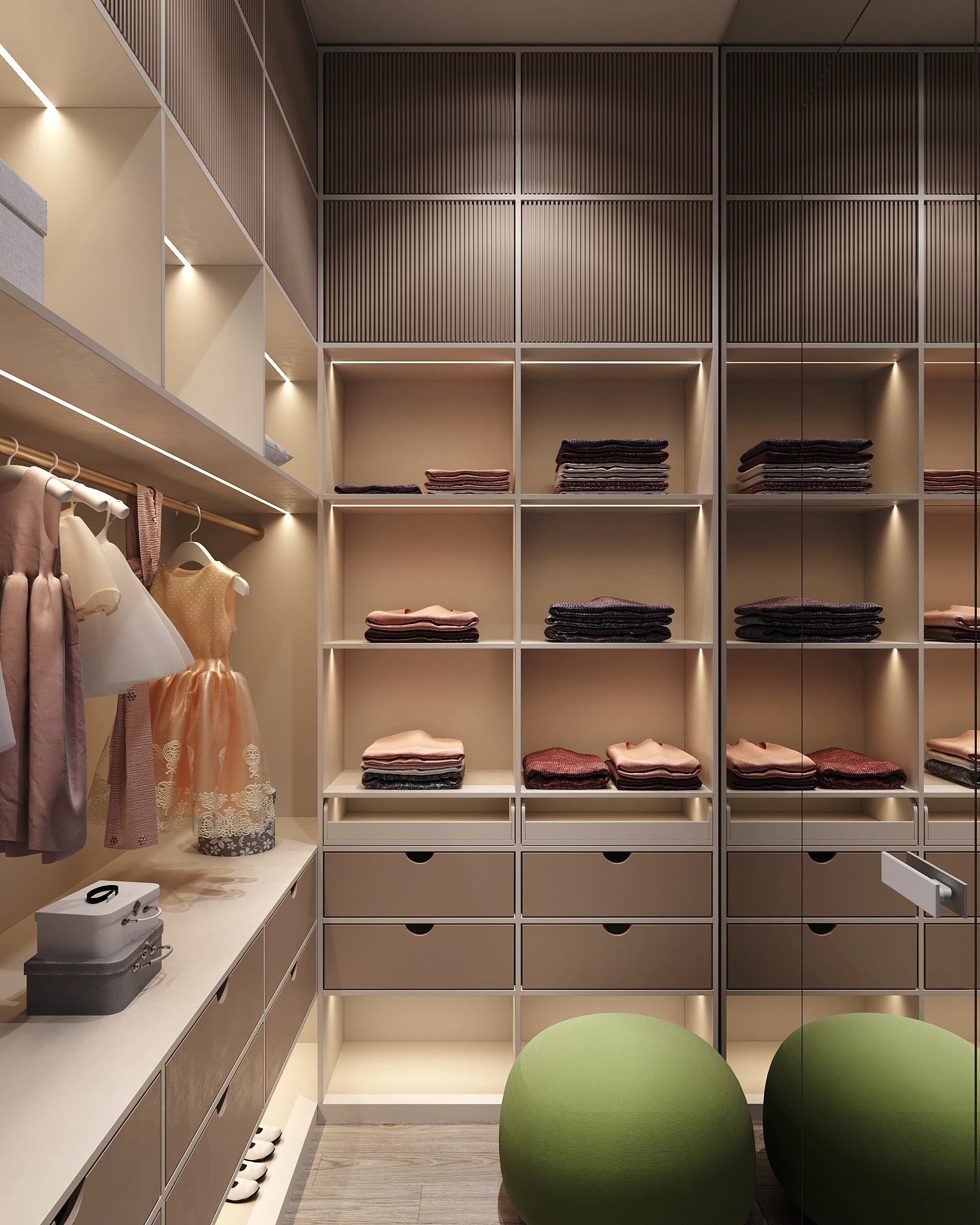
Lighting in a children’s wardrobe should be soft, even, and safe for the child’s eyes. It creates a cozy atmosphere and makes it easy to find items. Warm light (2700–3000 K) is recommended as it does not distort colors or strain vision.
Main lighting can be provided by a compact ceiling lamp or LED panel, and for convenience, add inside-cabinet lighting — for example, built-in LED strips under shelves or along rods. Spotlights near mirrors or automatic lights that turn on when doors open also work well.
All equipment should be safe: only LED lights with minimal heat, hidden wires, and reliable insulation. This approach makes the wardrobe functional and pleasant to use even for the youngest children.
Safety
Safety is a key aspect of designing a children’s wardrobe. Furniture should have a stable structure and be securely anchored to walls to prevent tipping. Corners of cabinet fronts and shelves should be rounded, and drawers equipped with soft-close mechanisms.
Only certified materials with low formaldehyde emissions, non-toxic paints and coatings, and odorless finishes should be used. Mirrors or glass surfaces should be made of tempered glass or have protective film to prevent shattering.
Special attention should be paid to electrical safety: all cables should be hidden, and lighting fixtures protected from heat and touch. This approach ensures maximum safety while maintaining aesthetics and functionality.
Children’s Wardrobe Design Projects by FeliFam
FeliFam Studio has extensive experience in designing and implementing children’s wardrobe projects. Each project is developed individually, considering the child’s needs, room size, parents’ wishes, and current trends.
Based on our experience, involving a professional designer in planning a children’s wardrobe is highly recommended. Thoughtful zoning, accurate measurements, and correct furniture placement create a maximally functional, safe, and convenient space.
Implementing a wardrobe design project is best done with custom-made furniture. Made-to-order furniture is created according to precise dimensions and aesthetic and functional preferences, allowing the design to come to life exactly as envisioned.
Explore our children’s wardrobe projects to find ideas for your own space.
Children’s Wardrobe Projects by FeliFam
Each project is created individually — with attention to aesthetics, functionality, and safety.
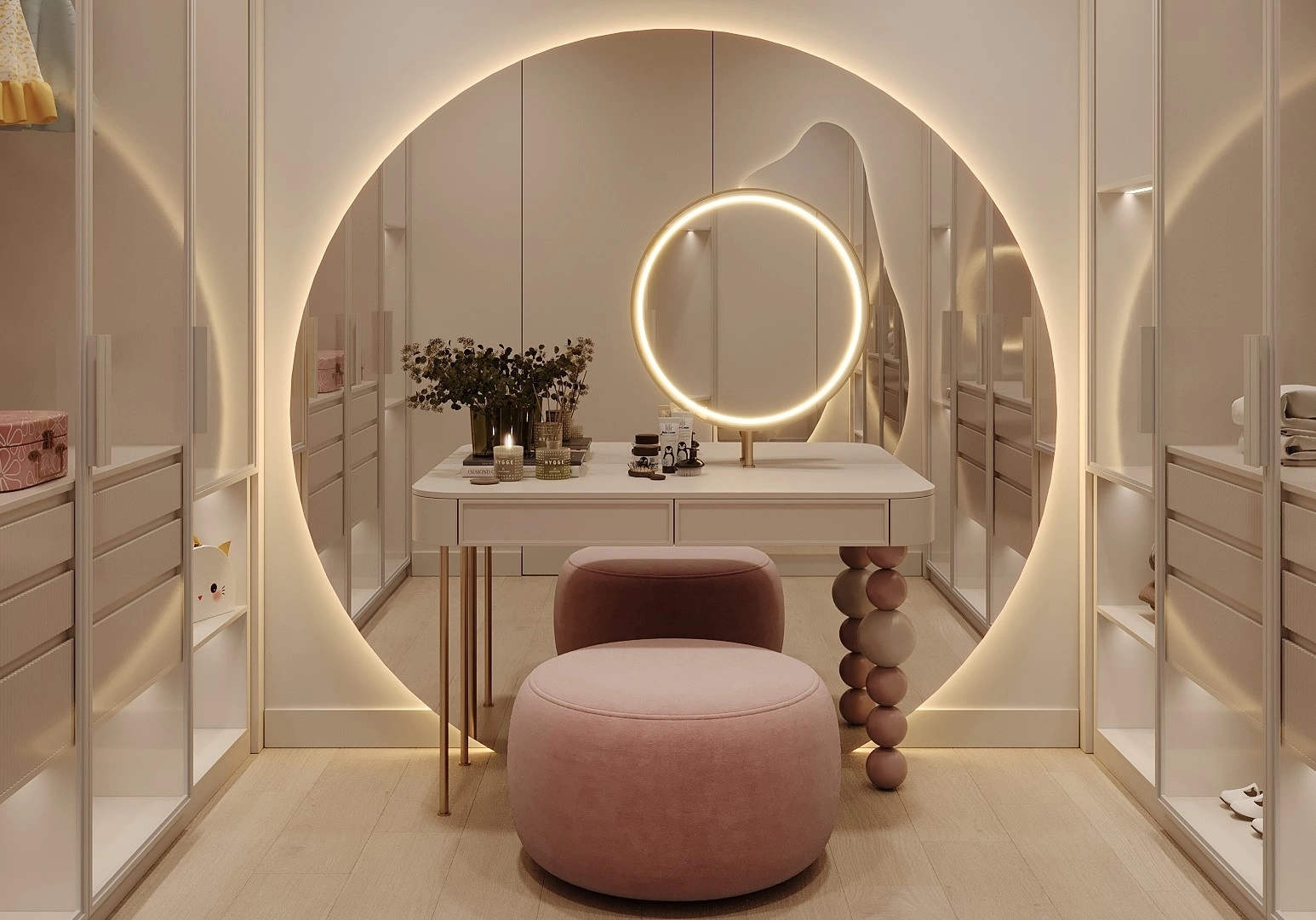
Premium wardrobe for a girl
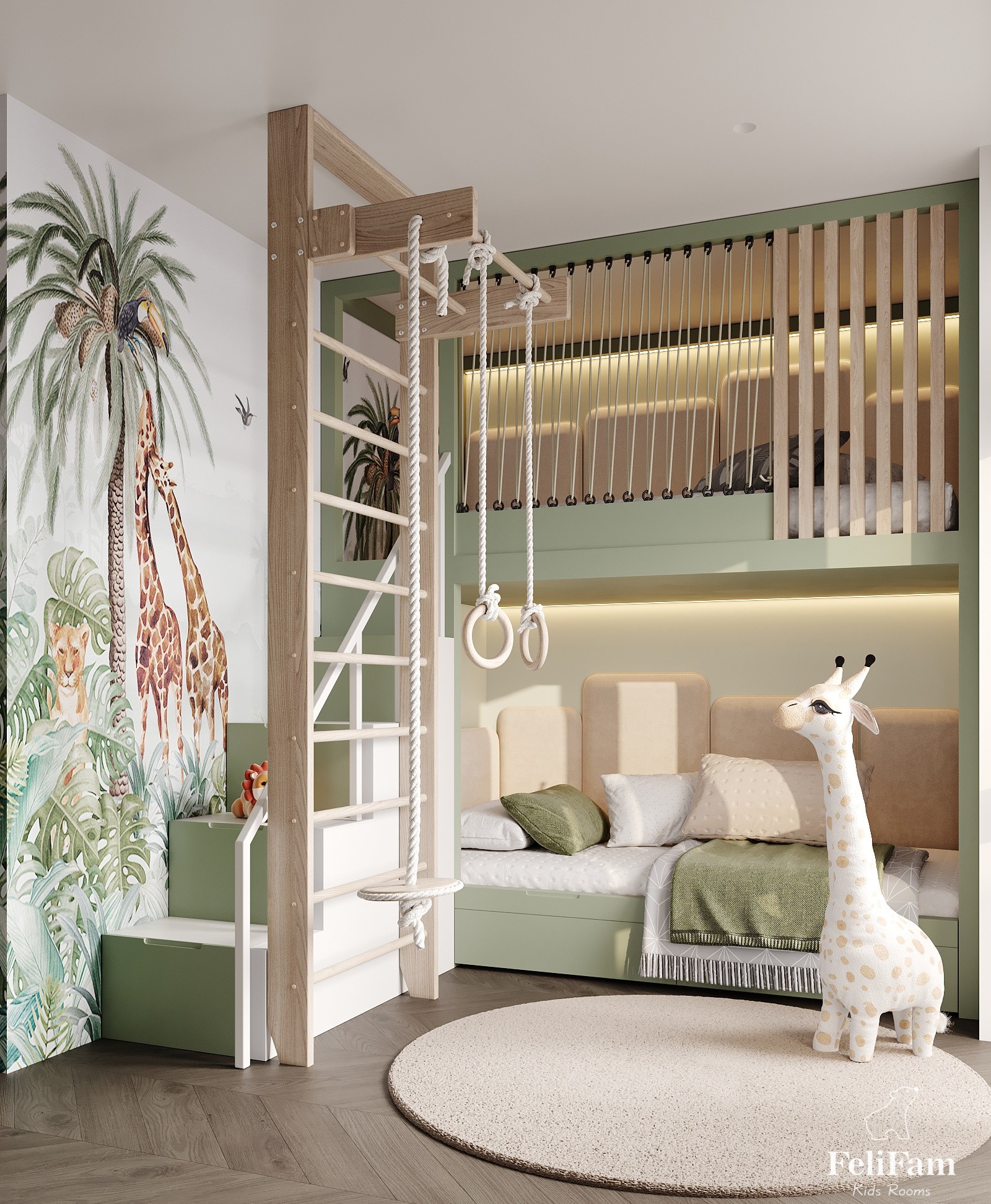
Wardrobe in a 15 m² room
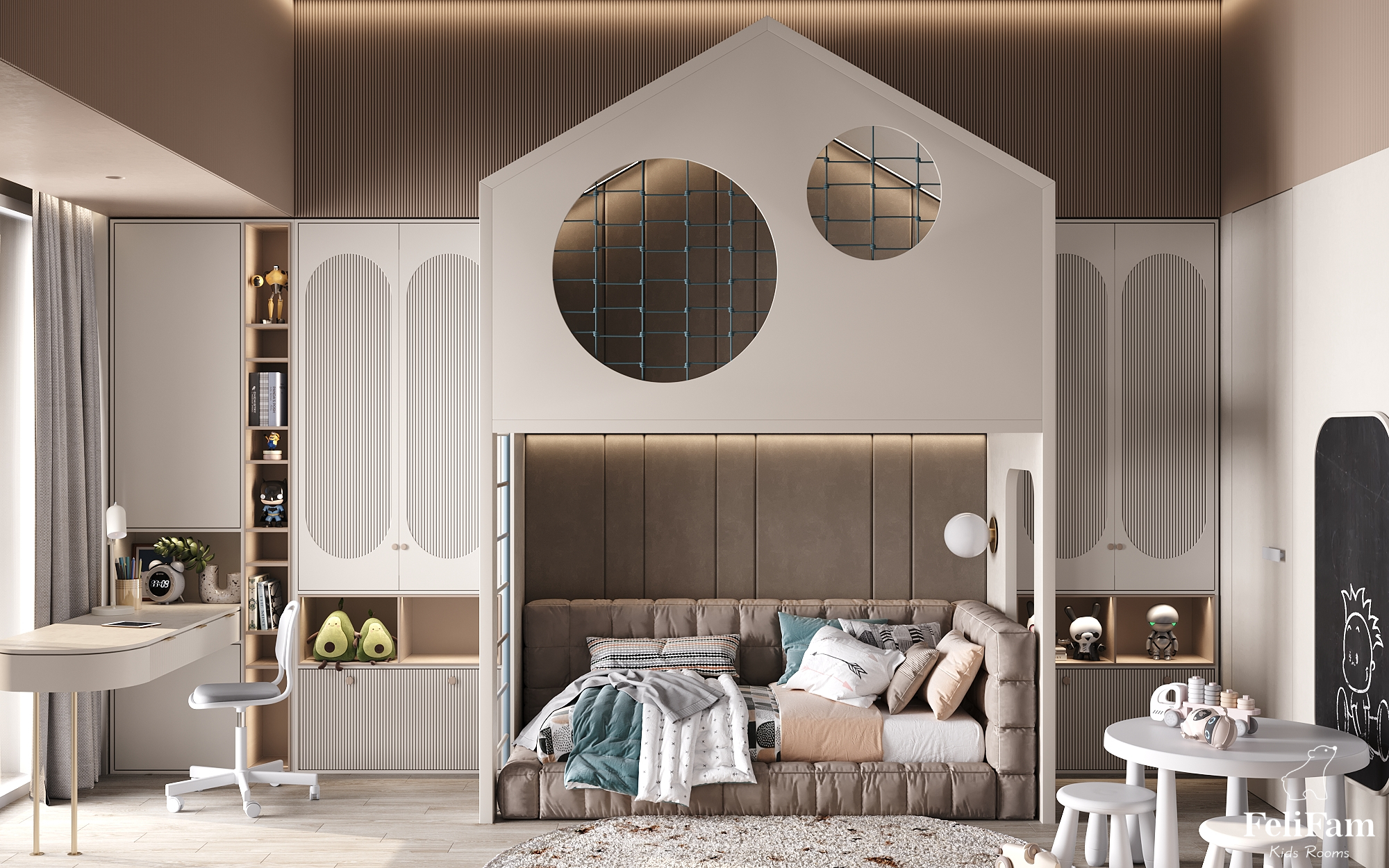
Stylish wardrobe in blue tones
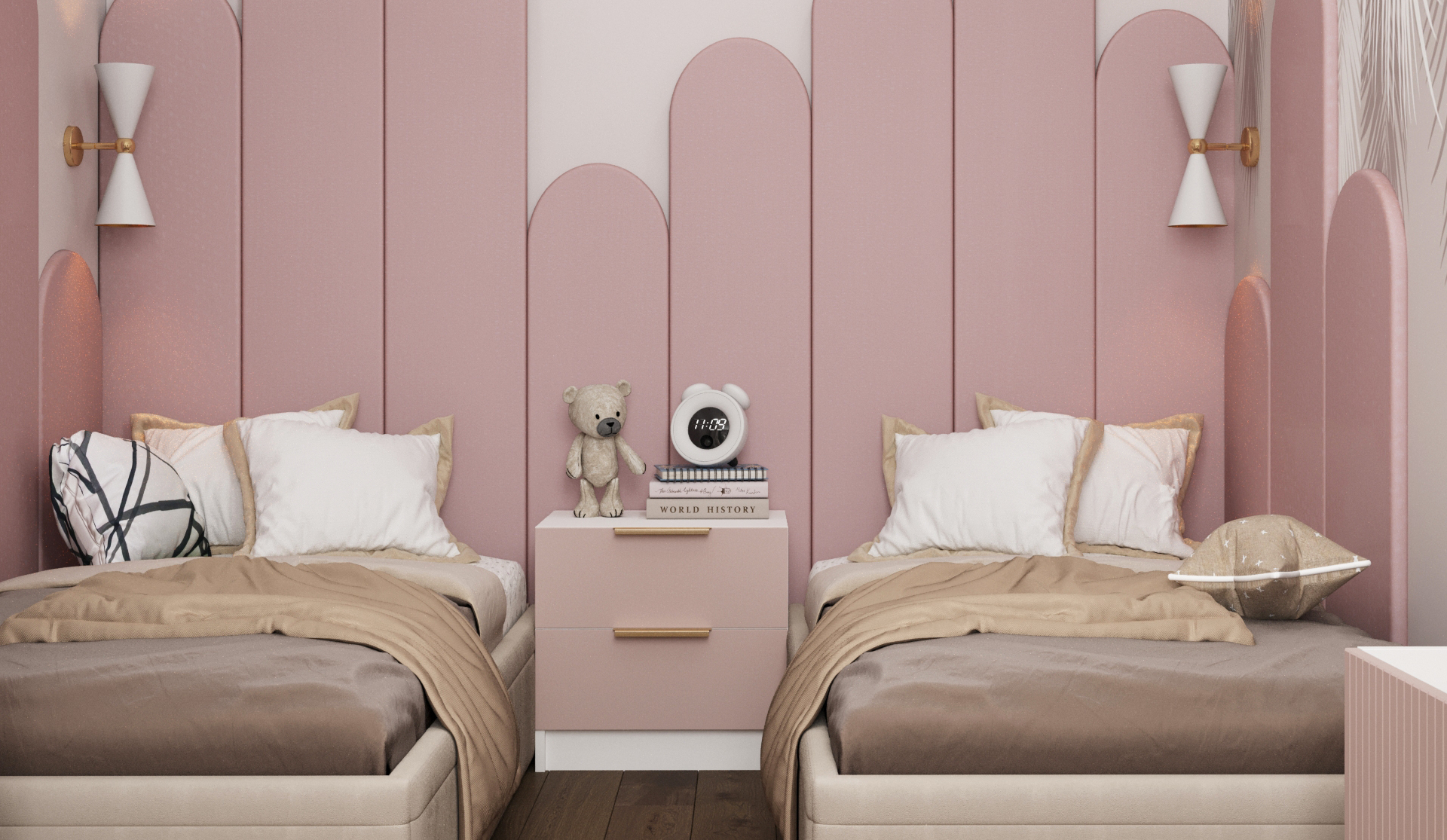
Wardrobe for two girls

