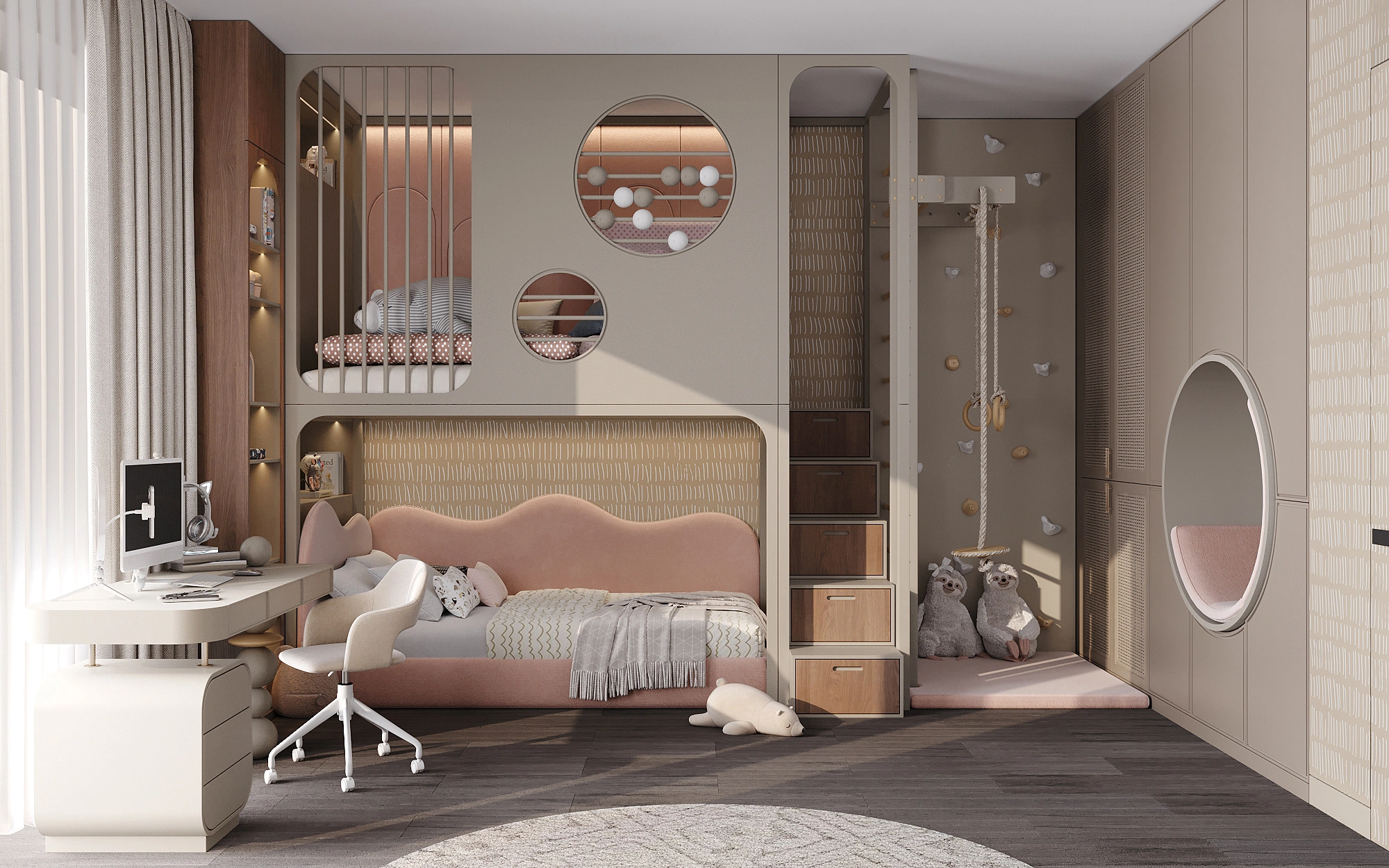



At first glance, children’s bedroom interior design may seem quite similar to adult interiors — just with brighter colors and different decor. However, this is not entirely true.
In a kids’ room, it is essential to combine aesthetics, safety, and functionality while considering the child’s age, interests, and needs. That is why the approach to kid interior design is fundamentally different from designing adult spaces.
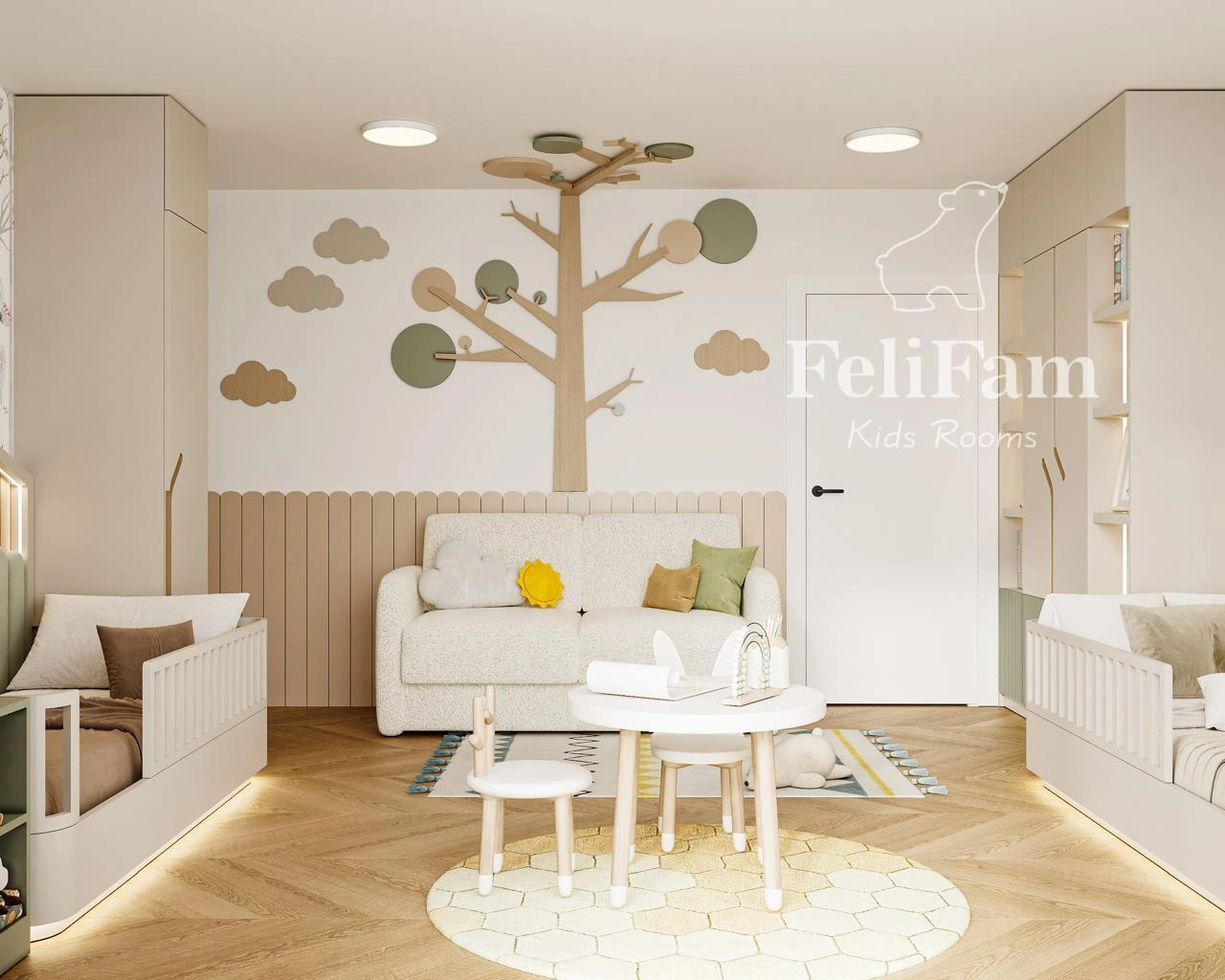
Starting with Functionality
In a kids’ room, functionality plays a key role, as the space must adapt to different life scenarios of the child. Every element of a contemporary children’s bedroom should be carefully designed to remain comfortable, safe, and practical at every stage of development.
Thoughtful zoning
Proper zoning helps children feel calmer and builds healthy habits. A sleeping area supports rest and recovery. A study area creates focus and comfort during learning. A play area allows free movement, imagination, and creativity. A storage area helps develop organization habits.
A “grow-with-me” space
Just as children outgrow their clothes, they also outgrow their rooms. That is why flexibility must be built into kid interior design from the very beginning. The space should be designed not only for changing interests but also for physical growth and long-term adaptability.
This can include height-adjustable furniture, modular systems that are easy to transform, and multifunctional elements that change purpose depending on the child’s age.
Changing interiors without renovation
Children’s interests naturally change over time, and this is a healthy part of development. That is why it is important to design a kids’ room that can be updated without major renovation. Neutral or pastel tones in furniture and wall finishes allow easy adaptation to new interests. The atmosphere can always be refreshed with themed decor, stickers, or posters.
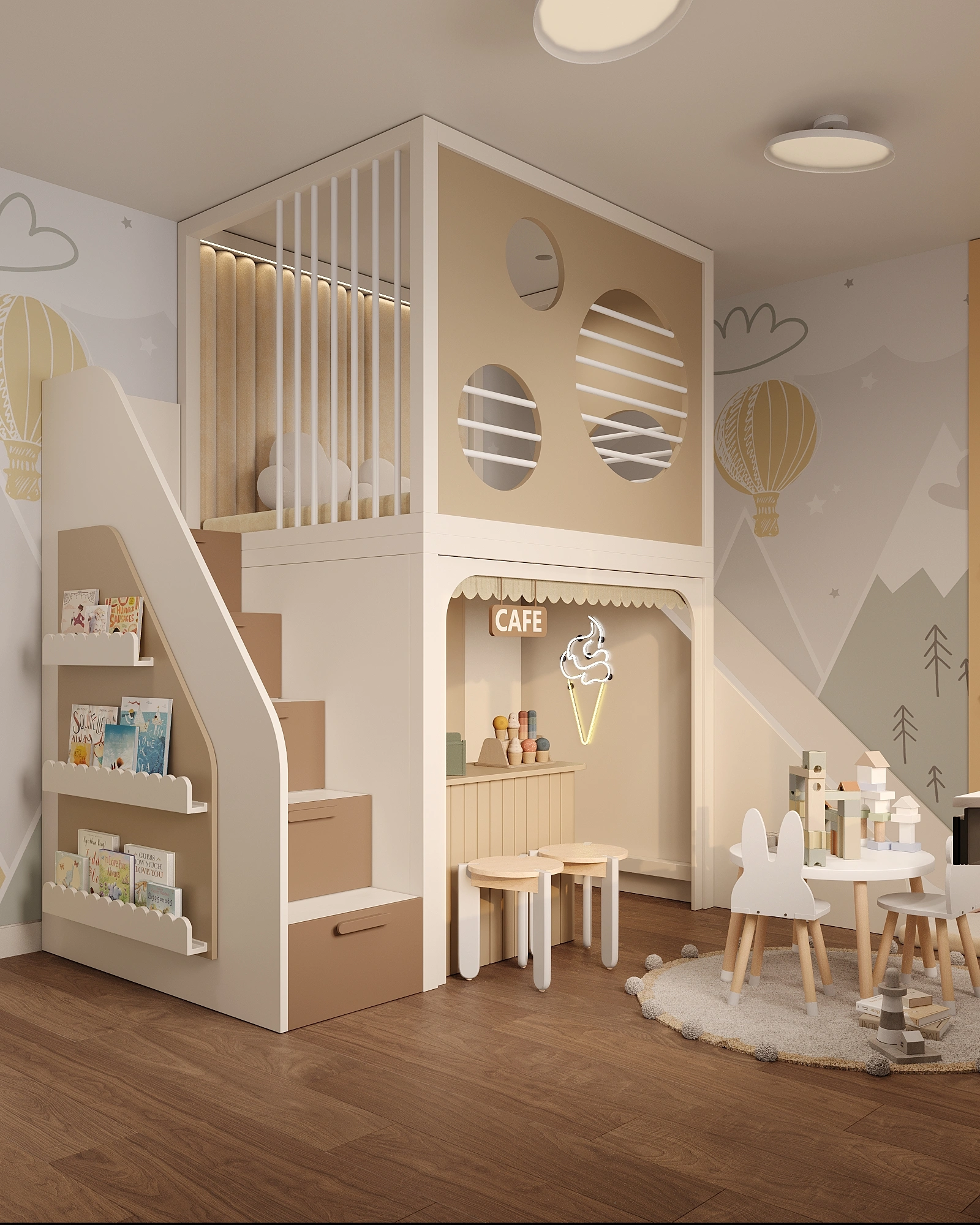
Safety as a Core Principle
Safety in a children’s room is not a luxury — it is a basic requirement. Designers are expected to create a safe environment for children of any age by default.
Eco-friendly materials
A kid interior should use materials that are safe for a child’s health, including natural or certified finishes, non-toxic paints, and furniture that meets environmental standards.
No sharp edges
All furniture and interior elements must be safe for everyday use. Rounded forms are preferred, or protective solutions can be used. To maintain aesthetics, it is better to plan custom-made solutions in advance.
Secure installation
Wardrobes, shelves, and other large elements must be securely fixed to walls to minimize the risk of tipping and ensure safety during active play.
Safe lighting
Lighting in a kids’ room should be carefully planned based on the placement of light sources. The main lighting should evenly illuminate the entire space without harsh shadows. The study area requires a separate light source placed from the side or above for comfortable reading and writing. It is also important to avoid placing lamps in active play zones to reduce the risk of injury or damage.
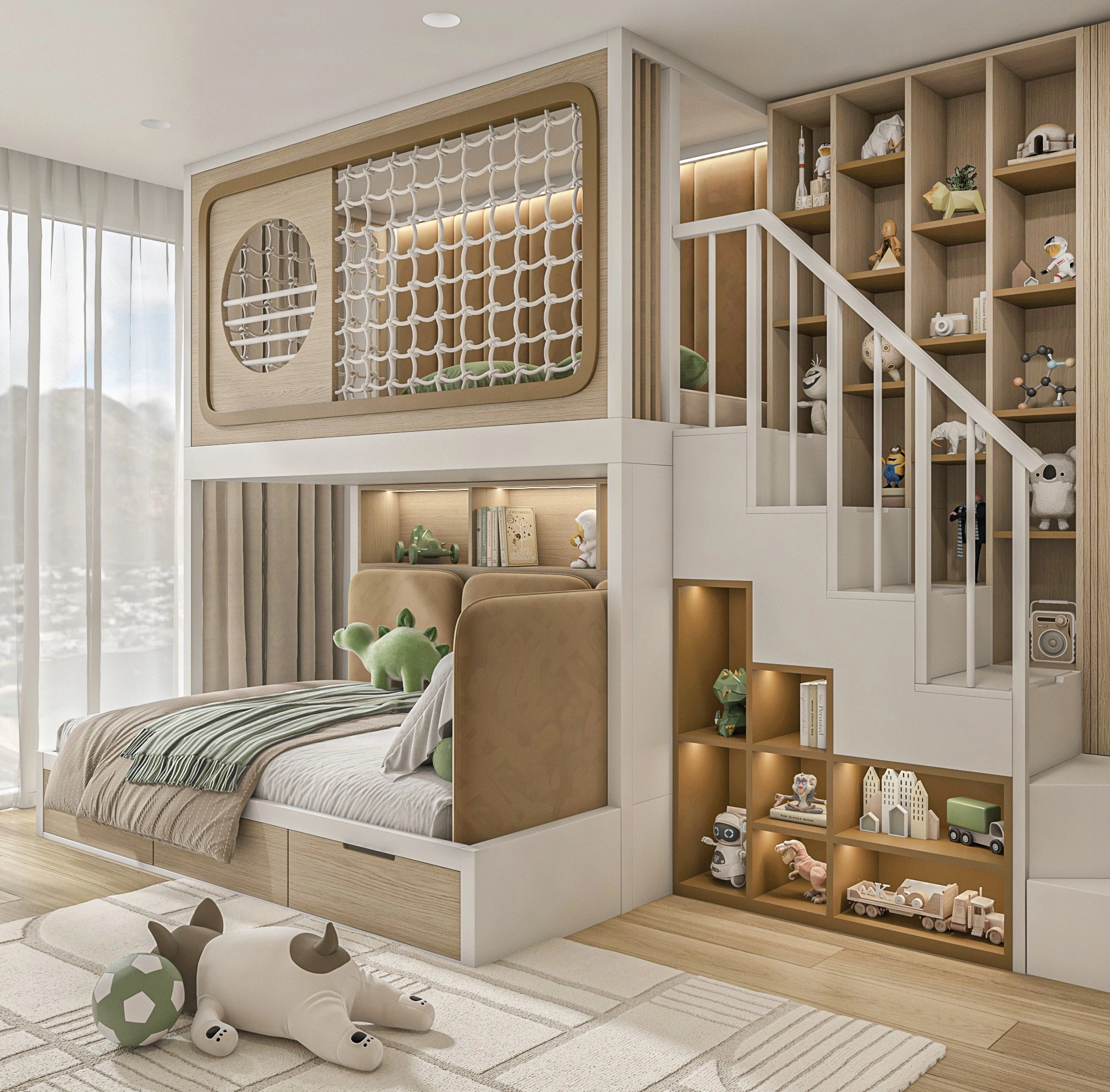
Psychology of Space and Development
The space in which a child lives shapes their perception of the world, emotional stability, and self-regulation. Through color, lighting, scale, tactile materials, and zoning logic, the environment influences concentration, rest quality, and cognitive and social development.
Color impact on emotional state
Soft tones help create calmness and comfort, while brighter accents add energy and activity. Balance is essential so the space does not feel overwhelming but remains engaging.
Stimulating creativity and imagination
A well-designed kid interior can inspire play, imagination, and creativity. Thematic elements and decor details encourage storytelling and creative thinking.
A sense of “personal world”
A personal space helps children feel autonomy and safety. The room becomes their own territory where they can express themselves and form their own comfort zone.
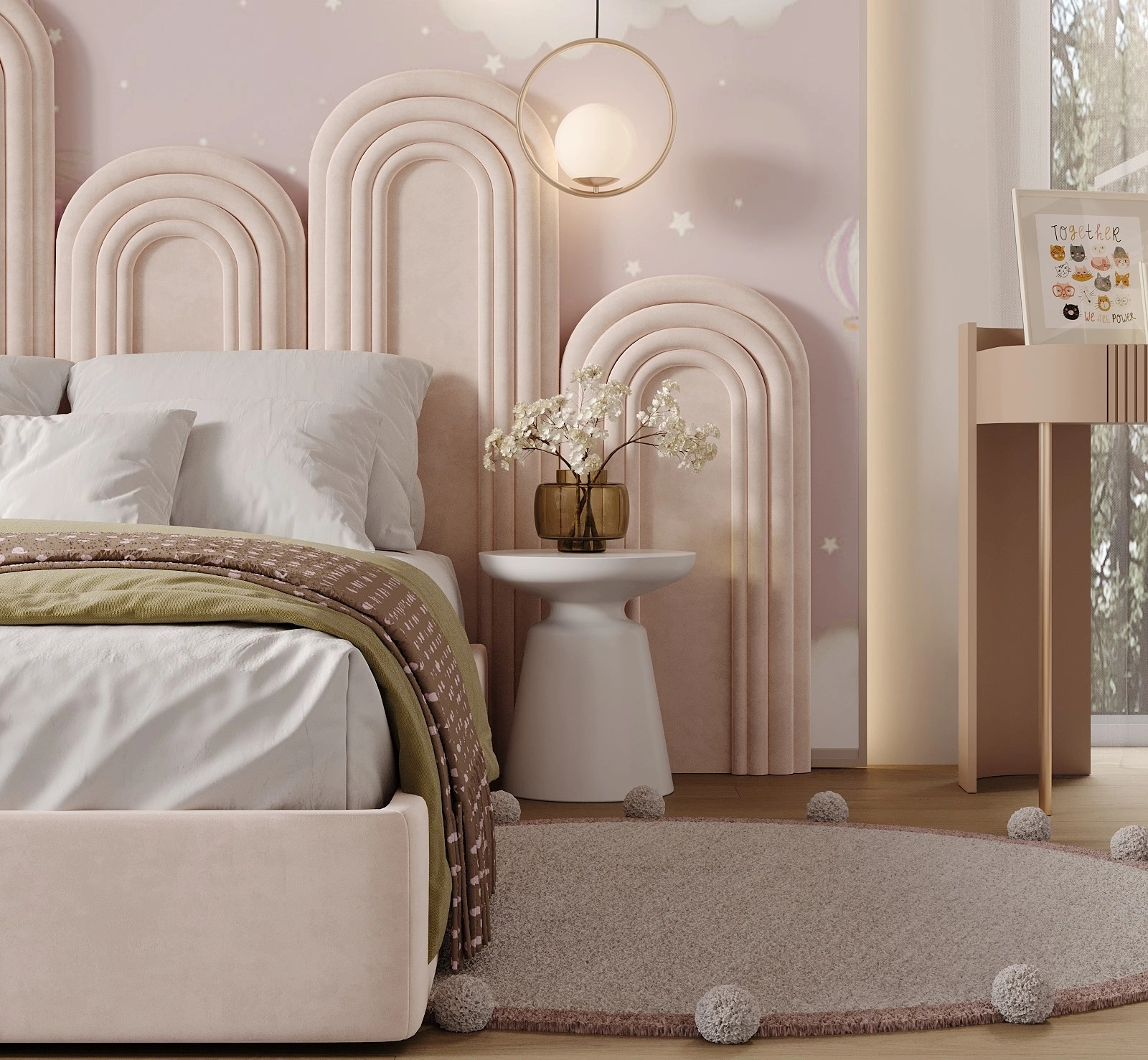
Individuality
Individuality in a kids’ room is essential because it allows the creation of a space that reflects the child’s character, interests, and needs. This approach helps build comfort, safety, and a sense of personal territory where the child can develop freely and express themselves.
Personal interests
Hobbies and interests form the foundation for decor, zoning, and accent choices in kid interior design.
Personalization
To create a unique character in the room, personalized decor elements can be used, such as neon name signs or decorative wall lettering.
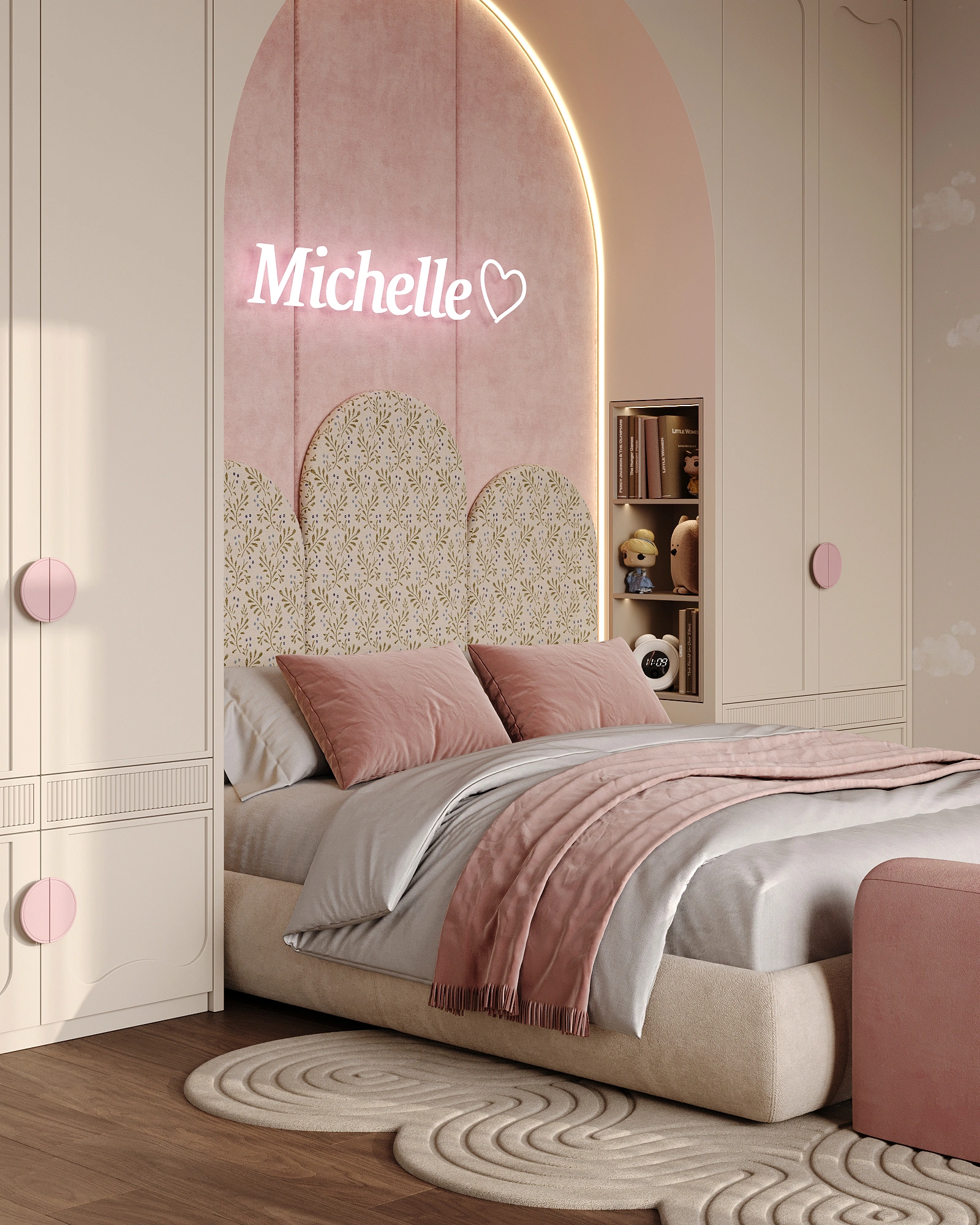
The Role of the Designer in Creating a Children’s Space
A designer specializing in children’s spaces understands their specific requirements for planning, safety, and functionality. Such a specialist considers not only aesthetics but also age-related needs, child development, and the potential for future transformation of the interior.
It is also important to balance the child’s wishes with the parents’ vision so that the room remains comfortable, safe, and well-structured in the long term. A full-cycle approach allows the project to be realized from concept to completion without losing quality or spatial logic.
Copying adult solutions into a kids’ room does not consider the needs of development, activity, and imagination. That is why children’s interior design requires a separate professional approach, where every decision is based on the child’s age and needs.
Our approach at FeliFam is based on deep specialization in children’s interiors. We create spaces that combine safety, functionality, aesthetics, and the ability to “grow” with the child. In every project, we consider the individual needs of each family so that a kids’ room is not only beautiful, but also truly comfortable, well-thought-out, and long-lasting.