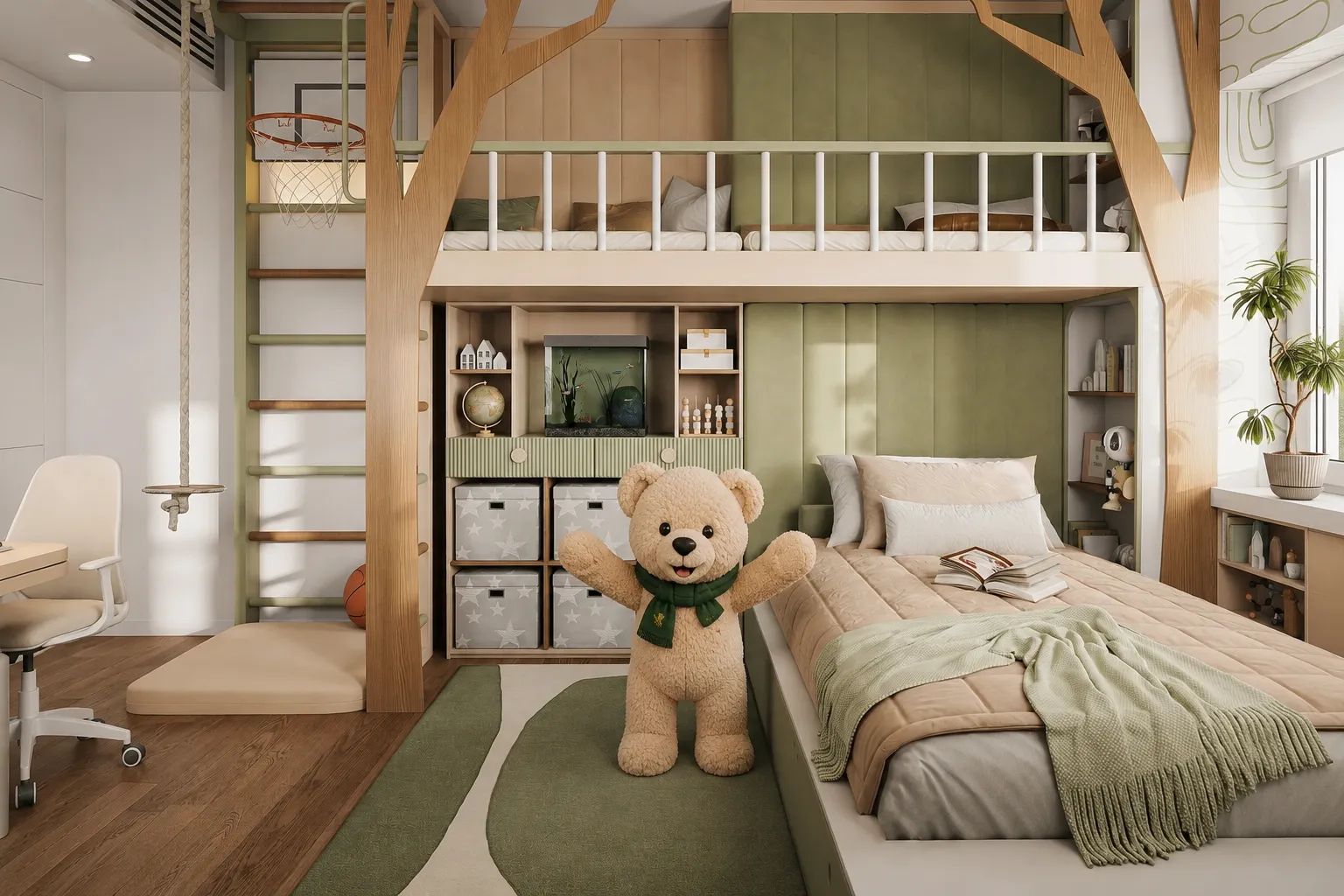


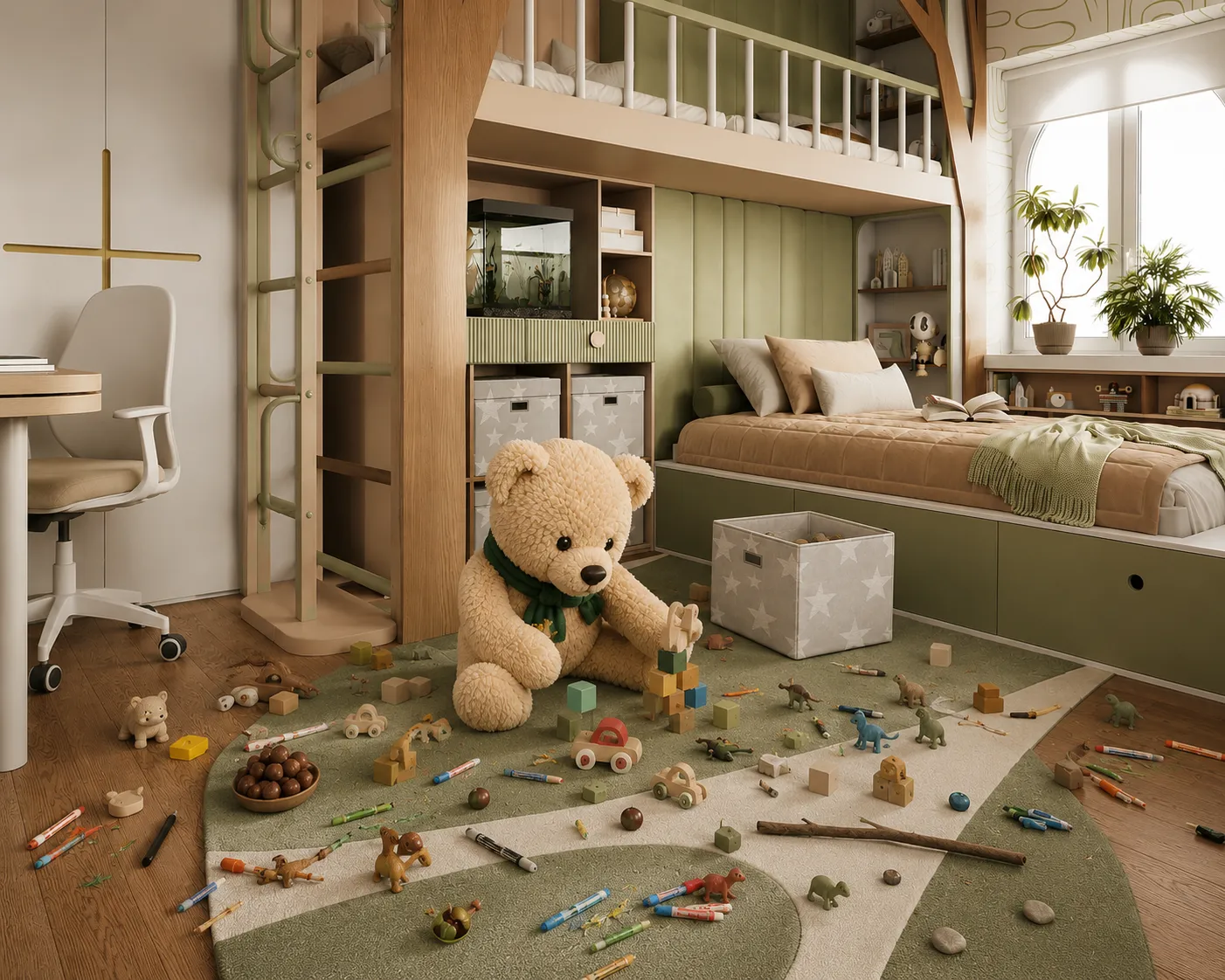
Every children’s room has its own unique atmosphere. It is probably the only space where beloved toys peacefully coexist with marker pens without caps, a collection of autumn chestnuts, pebbles brought from last year’s seaside holiday, and a stick that simply couldn’t be left behind in the park.
The real challenge for parents is finding a place for all these treasures while maintaining both the functionality and the aesthetics of the children’s room.
Storing toys is truly a task with an asterisk. For us, children’s room design always starts with thoughtful planning, where every storage system is considered already at the design stage. That is why in this article we’ve gathered the TOP 5 best toy storage solutions for 2026 that will help you organize the space properly.
Why proper toy storage is important
Well-planned toy storage solutions help not only maintain order in a children’s room but also make the space more functional, cozy, and comfortable for everyday life. When every toy has its designated place, maintaining tidiness becomes much easier, and the room itself feels more harmonious and welcoming.
Easier to keep the room clean
When every item has its place, cleaning is no longer an exhausting process. It only takes a few minutes to return toys to shelves, baskets, or containers without wasting time searching for a free spot.
Children learn independence faster
Accessible shelves, open units, and convenient boxes allow children to take their favorite toys on their own and put them away after play. This helps build useful habits without constant reminders from parents.
Toys stay in good condition longer
Properly organized storage helps prevent damage, loss of small parts, and general clutter. This is especially important for construction sets, creative kits, and board games.
The room looks more spacious and cozy
A well-thought-out kids room organization helps reduce visual clutter. Even a small children’s room feels more spacious when open surfaces are not overloaded with toys and every item has its place.
However, even the best storage system won’t work effectively if it is inconvenient or uninteresting for the child to use. That is why it is important not only to organize the space properly but also to make the cleaning process simple and intuitive.
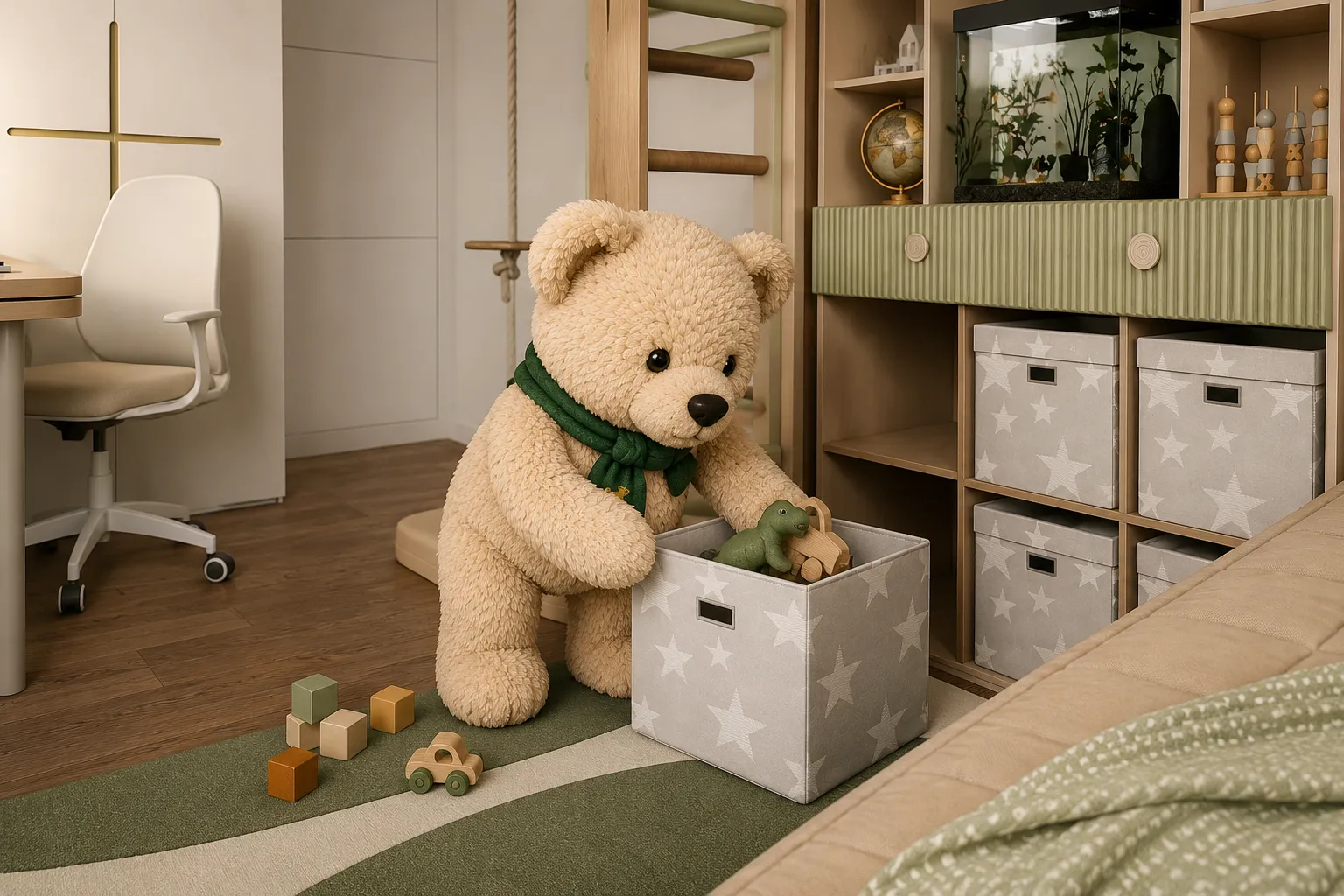
How to motivate a child to tidy up toys
Playing is always fun and engaging, while tidying up toys often means stepping away from an exciting activity. Children are frequently so immersed in play that they continue even during cleanup.
There are several simple approaches that help build toy organization systems habits without pressure or unnecessary conflicts.
Turn cleaning into a game
Children engage more easily when the process feels like a game. This can be a “speed challenge,” sorting toys by color or shape, or even an imaginary mission where every toy “returns home.”
Make storage accessible
If a child cannot independently reach or put away a toy, motivation quickly disappears. Low shelves, open units, and lightweight containers allow them to act independently and develop autonomy.
Clearly separate toy zones
When the space is logically organized, it is easier for a child to navigate. Construction sets in one place, books in another, soft toys separately. This structure reduces chaos and simplifies cleaning.
Build habits through example
Children imitate adult behavior. If order is maintained in the room and cleaning happens calmly and consistently, the child perceives it as a normal routine rather than a demand.
TOP-5 best toy storage solutions for children’s rooms in 2026
Below we have gathered the TOP 5 toy storage ideas that help maintain order and make efficient use of space in a children’s room. Each solution has its advantages, and the best results usually come from combining them.
Combined open and closed shelving units
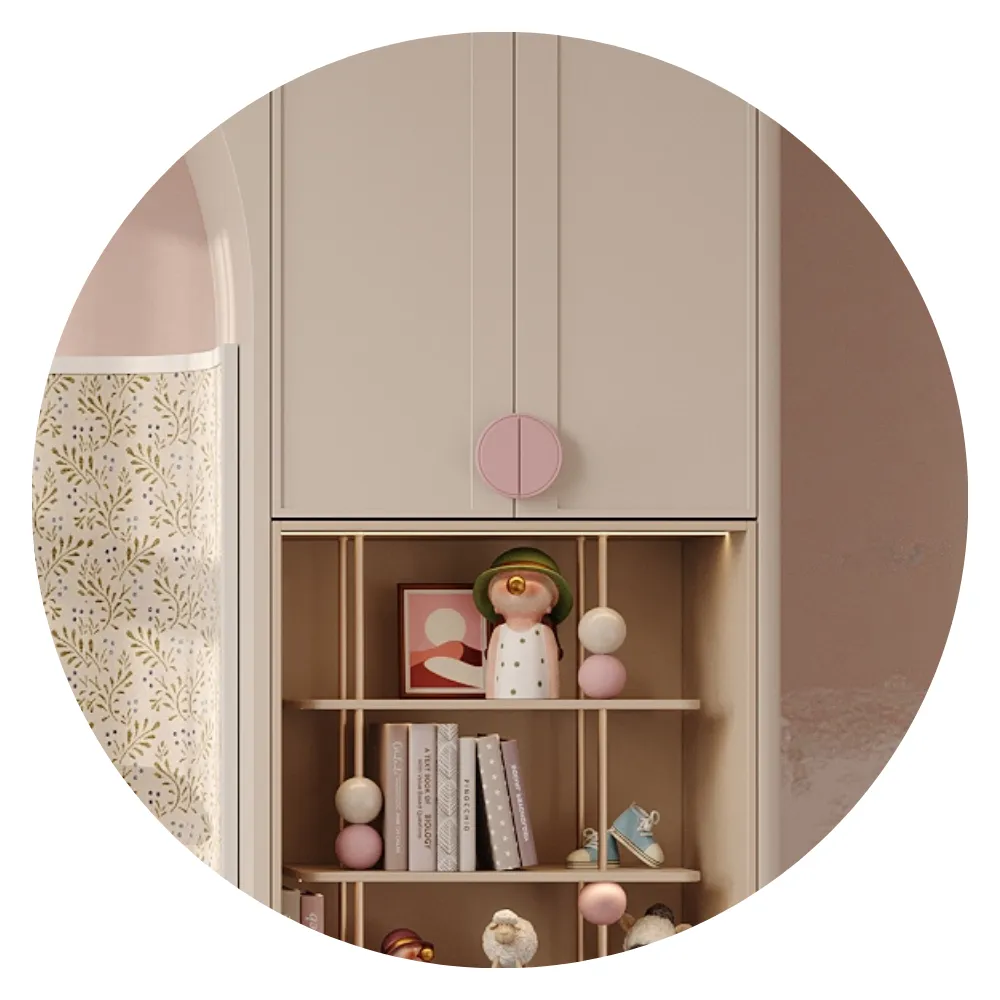
| Parameter | Description |
|---|---|
| Concept | Combination of open shelves for quick access and closed compartments |
| Advantages | Convenience, balance between functionality and aesthetics |
| Disadvantages | Requires thoughtful organization of contents |
| Suitable for | School-age children |
| Where to use | Play area, study area |
Baskets, boxes and containers
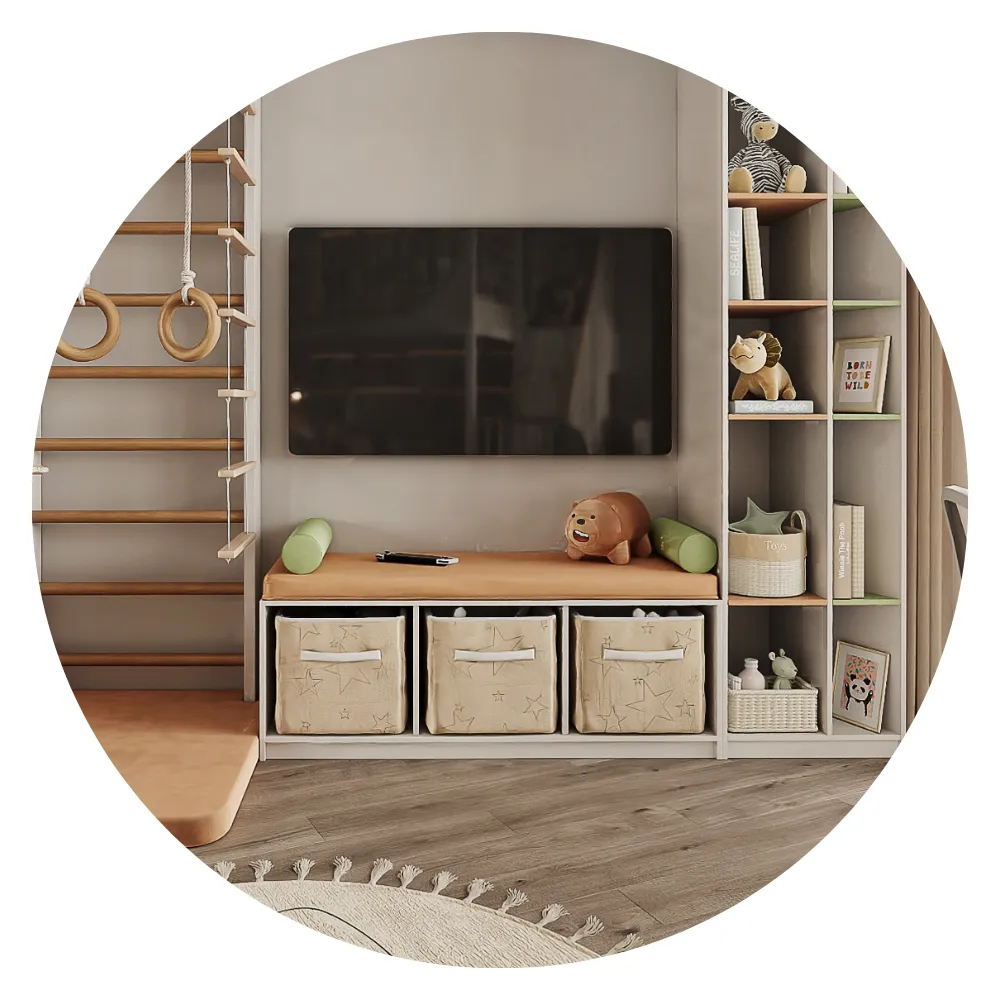
| Parameter | Description |
|---|---|
| Concept | Mobile containers for quick toy cleanup |
| Advantages | Simplicity, mobility, fast tidying |
| Disadvantages | Without internal sorting, clutter can quickly appear |
| Suitable for | Toddlers |
| Where to use | Play area, under the bed |
Built-in storage systems
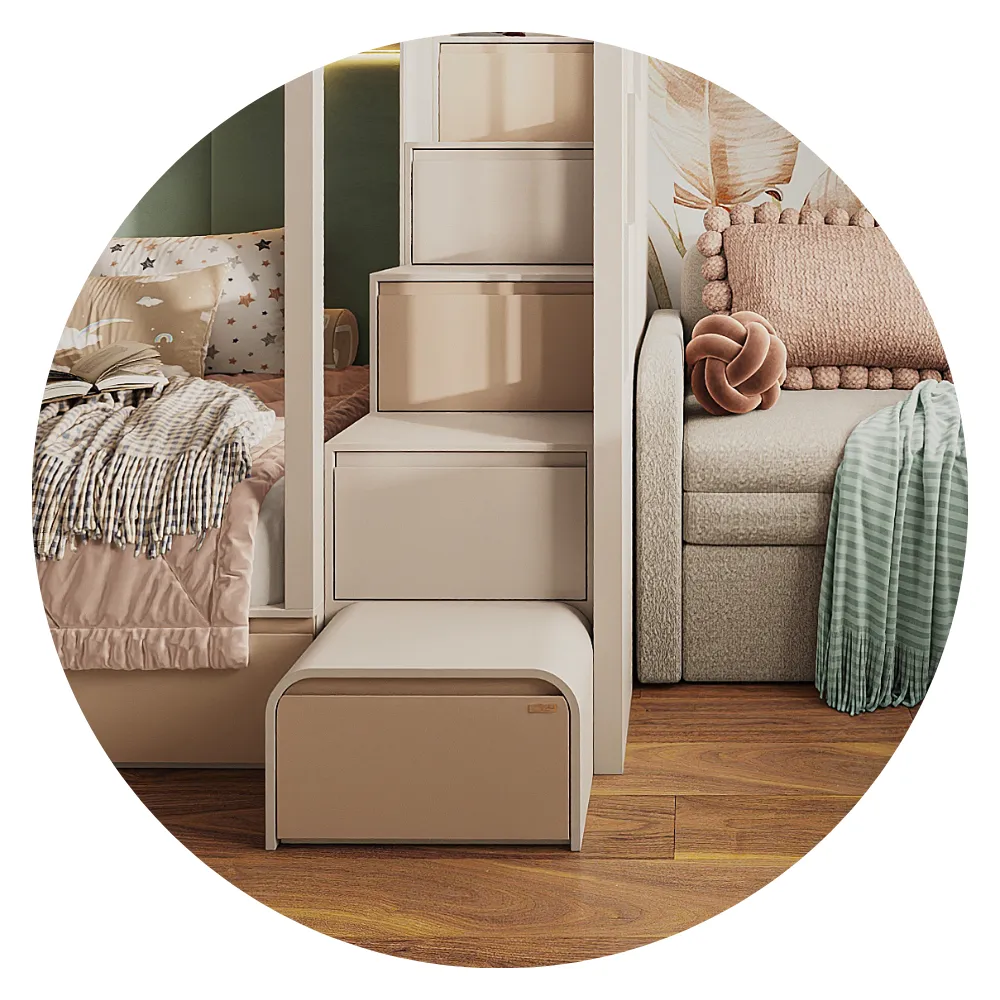
| Parameter | Description |
|---|---|
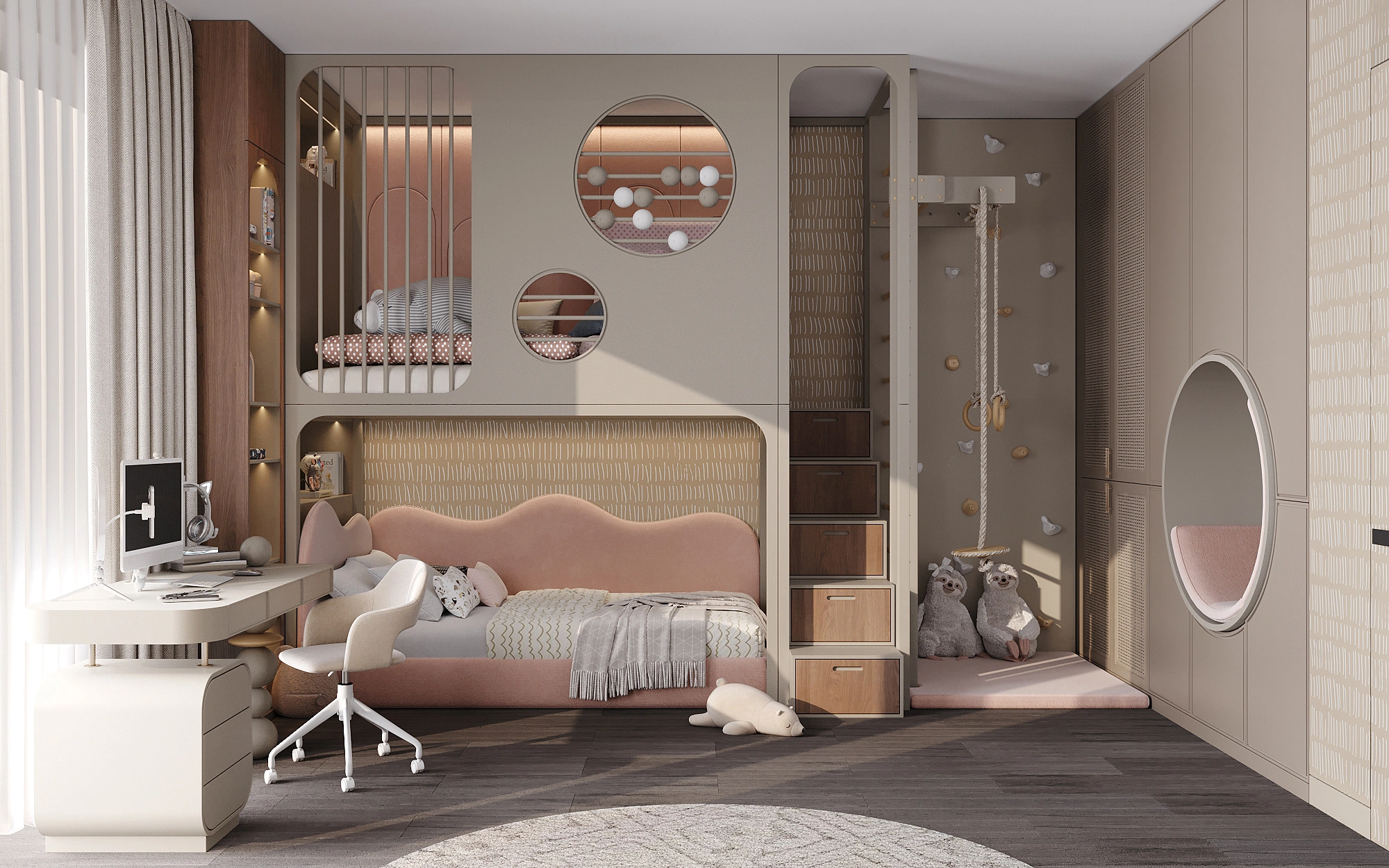
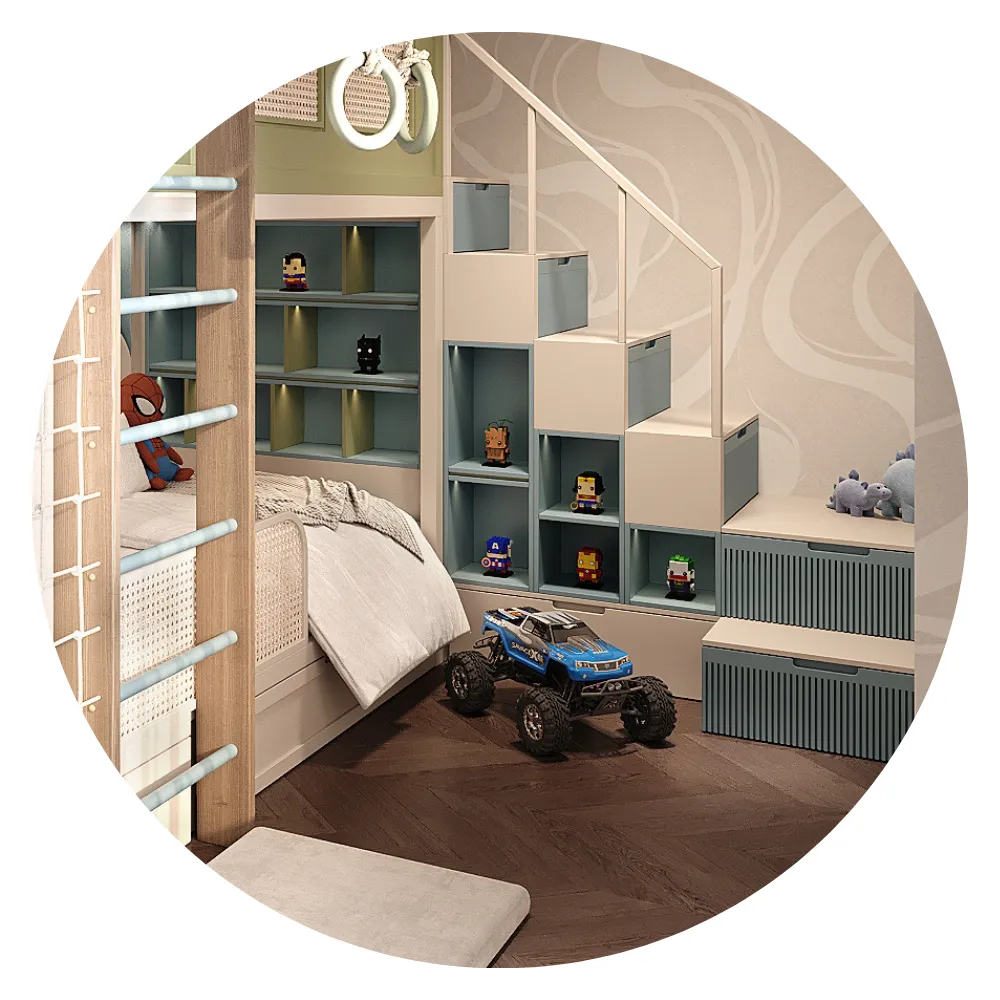
| Concept | Storage integrated into furniture: under beds, stairs, podiums |
| Advantages | Maximum space utilization, hidden storage systems |
| Disadvantages | Requires design planning |
| Suitable for | Small rooms or custom-designed interiors |
| Where to use | Under the bed, stairs |
Modular furniture systems
| Parameter | Description |
|---|---|
| Concept | Flexible furniture that adapts as the child grows |
| Advantages | Adaptability, long-term usability |
| Disadvantages | Higher cost |
| Suitable for | Growing children |
| Where to use | Main storage system |
Wall-mounted storage systems
| Parameter | Description |
|---|---|
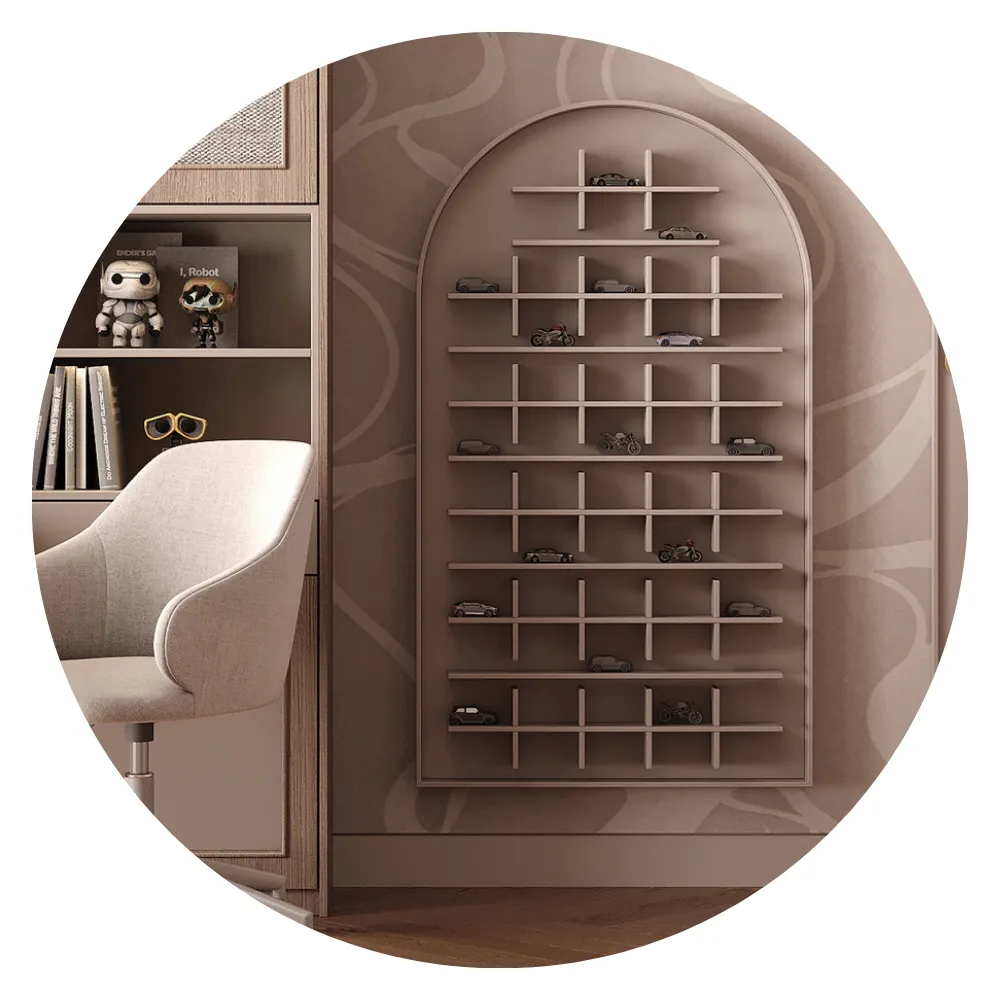
| Concept | Vertical shelves and wall panels |
| Advantages | Space saving, lightweight design |
| Disadvantages | Load limitations |
| Suitable for | Small rooms |
| Where to use | Play area, study area |
Most common mistakes in organizing toy storage
Even top-tier storage systems do not always work as expected. The issue is often not the choice of solutions, but how the space itself is organized. Below are the most common mistakes to avoid when designing a children’s room.
All toys stored in one large container
At first glance, this seems like the simplest solution. However, a single large box quickly becomes chaotic. It is difficult for a child to find a specific toy, and even harder to put it back. It is much more practical to separate toys into categories and use multiple baskets or containers.
Storage system does not match the child’s age
If shelves are too high or drawers are difficult to open, the child will simply stop using them. Toy storage solutions should be as accessible as possible so that children can independently take and put away their belongings.
No space left for new toys
A toy collection almost always grows. If all shelves are already full, order quickly turns into chaos. When planning storage systems, it is important to leave some extra space from the beginning.
Storage planned after renovation is completed
This is one of the most common mistakes. Once furniture is installed, finding space for all items becomes much more difficult. That is why professional children’s room design includes storage planning already at the concept stage.
Toy storage is just as important as designing sleeping, study, or play areas in a children’s room. Well-thought-out storage systems help maintain order, use space efficiently, and create a comfortable environment for the child.
If you are planning to design or renovate a children’s room, the FeliFam team will help you create an interior where every item has its place and the space feels comfortable for both children and the whole family.