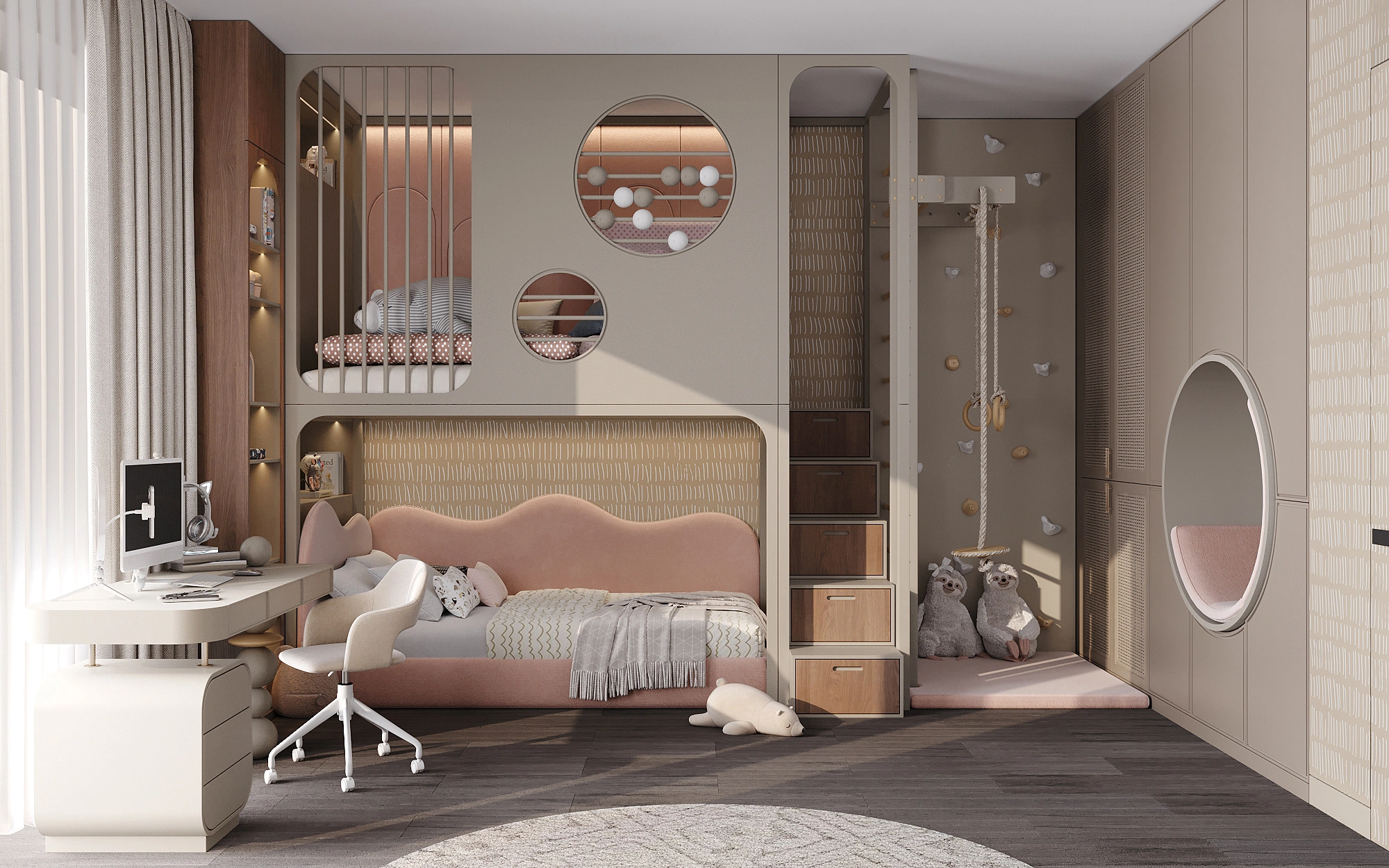



The Swedish wall has long become a familiar element in children’s rooms, but there are still many questions surrounding it. Does it really originate from Sweden? Why did this type of structure become so widespread? And most importantly, is it justified to install this system in a modern children’s room interior?
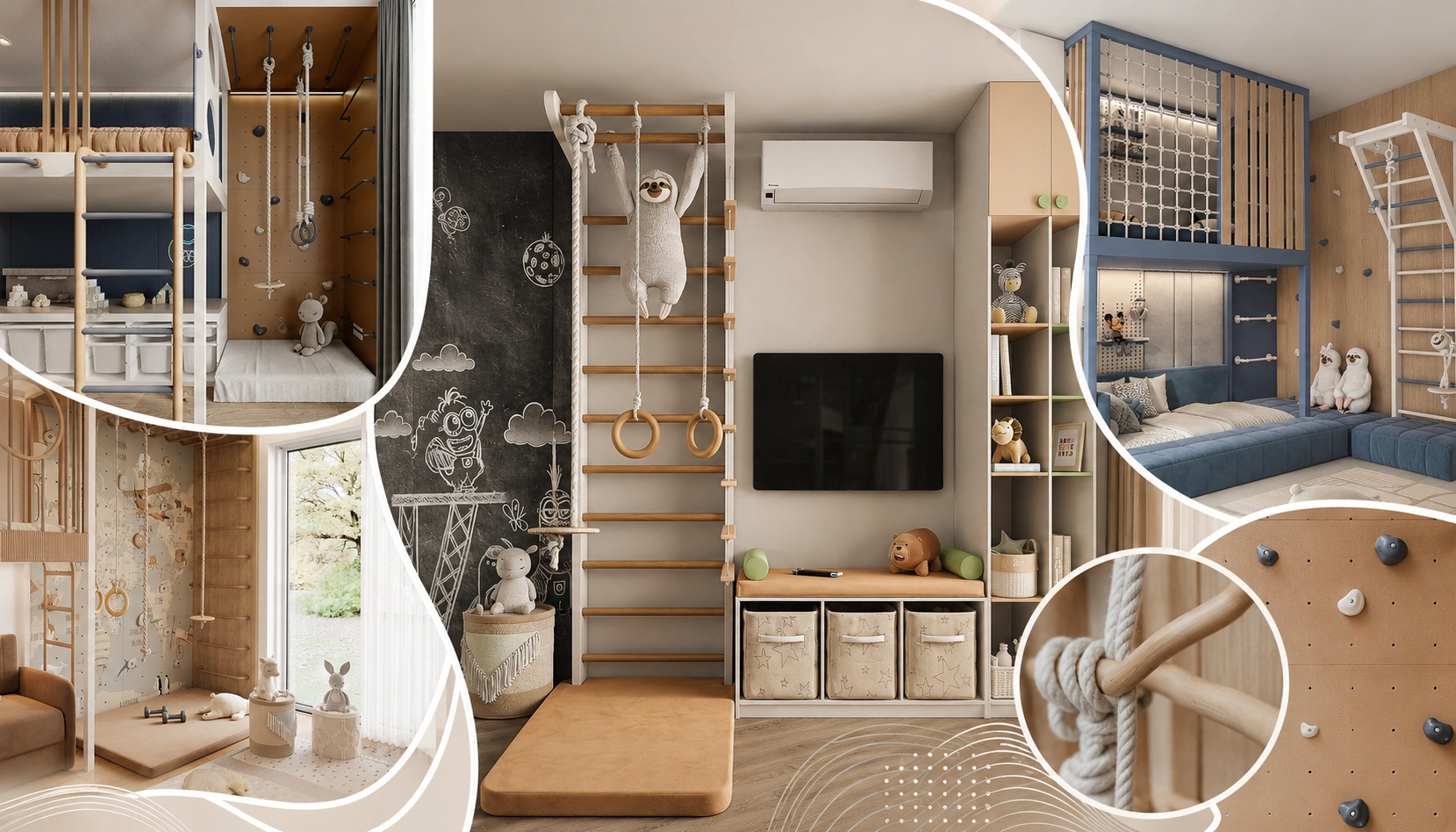
Swedish wall: a history that did not start entirely in Sweden
The foundations of physical education systems in Europe began forming at the end of the 18th century. At that time, German educator Johann Christoph Friedrich GutsMuths was one of the first to systematically describe the importance of gymnastics for harmonious physical development. His ideas became the basis for the development of school physical education across Europe.
In the 19th century, these approaches were further developed and systematized in Sweden by Pehr Henrik Ling, who created a holistic gymnastics system focused on natural movement, posture, and physical development.
It was within this Swedish school that simple wooden structures in the form of gymnastic ladders began to be actively used. Over time, they were adapted in different European countries and integrated into educational and sports systems. This is how the tool known today as the Swedish wall was formed.
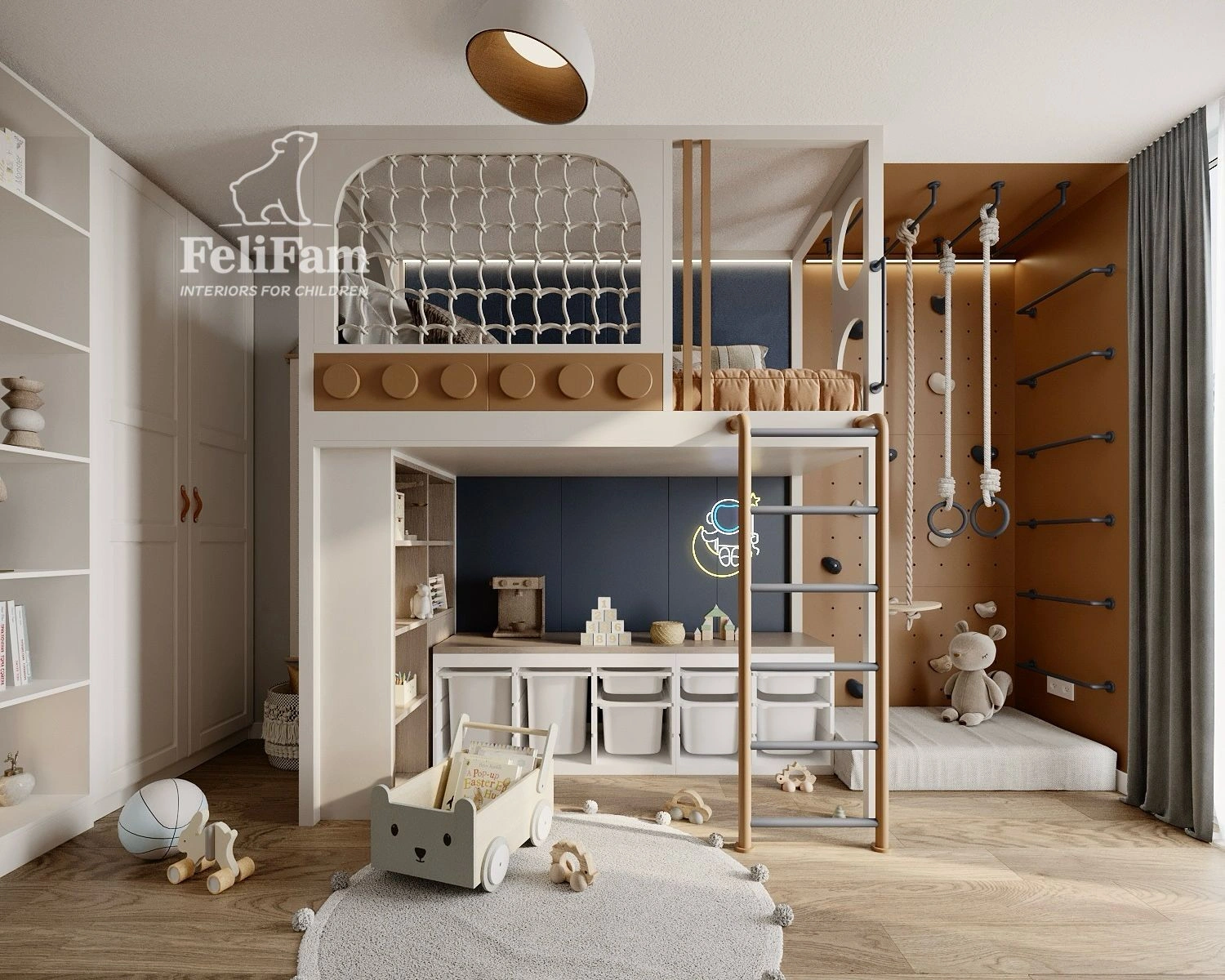
Why the Swedish wall is still relevant in a children’s room
Despite the emergence of many modern play and sports solutions, the Swedish wall remains one of the most versatile elements in a children’s room. Its relevance is explained by a combination of simplicity, functionality, and flexible adaptation to a child’s age.
During periods when children spend a lot of time in a sitting position, the Swedish wall naturally encourages movement in their daily environment without requiring large space or additional equipment.
An important role is played by the versatility of the structure. Modern models are often supplemented with rings, ropes, or pull-up bars, turning it into a multifunctional sports and play complex.
This combination of physical development, compactness, and flexibility makes the Swedish wall relevant even today as an element that grows with the child and adapts to their changing needs.
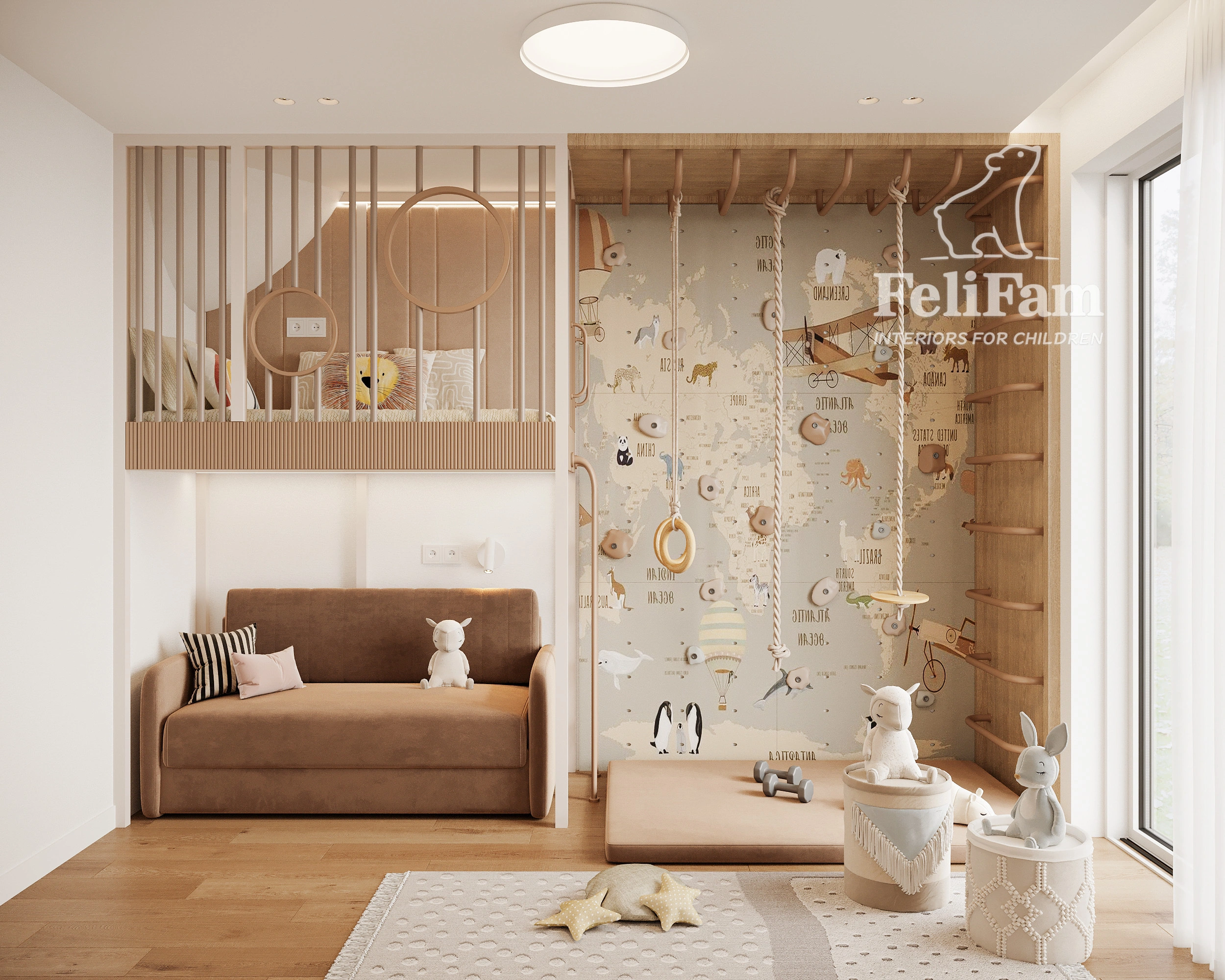
Should you install a Swedish wall in a children’s room
The decision to install a Swedish wall depends on the child’s age, the size of the space, and the parents’ expectations regarding the functionality of the interior. It is a versatile element that can both support a child’s active development and require careful spatial planning.
Advantages of installing a Swedish wall
- encourages daily physical activity
- develops strength, coordination, and flexibility
- suitable for different ages and can grow with the child
- takes up minimal space compared to other sports zones
- can be combined with additional elements such as rings or a rope
- encourages active time spent
Possible challenges of installation
- need for secure installation depending on wall type and load
- requirement for sufficient free space for safe use
- importance of constant safety supervision, especially for younger children
- importance of visual integration into the interior
A Swedish wall can be a good solution for a children’s room if all key factors are properly considered at the interior planning stage. Most potential difficulties are not related to the structure itself but to its selection, placement, and visual integration into the space.
With a well-thought-out design and high-quality implementation, these issues can be addressed in advance.
FeliFam creates children’s rooms and custom interiors where every detail is thoughtfully designed, combining functionality, safety, and aesthetics to support a child’s development and comfort.