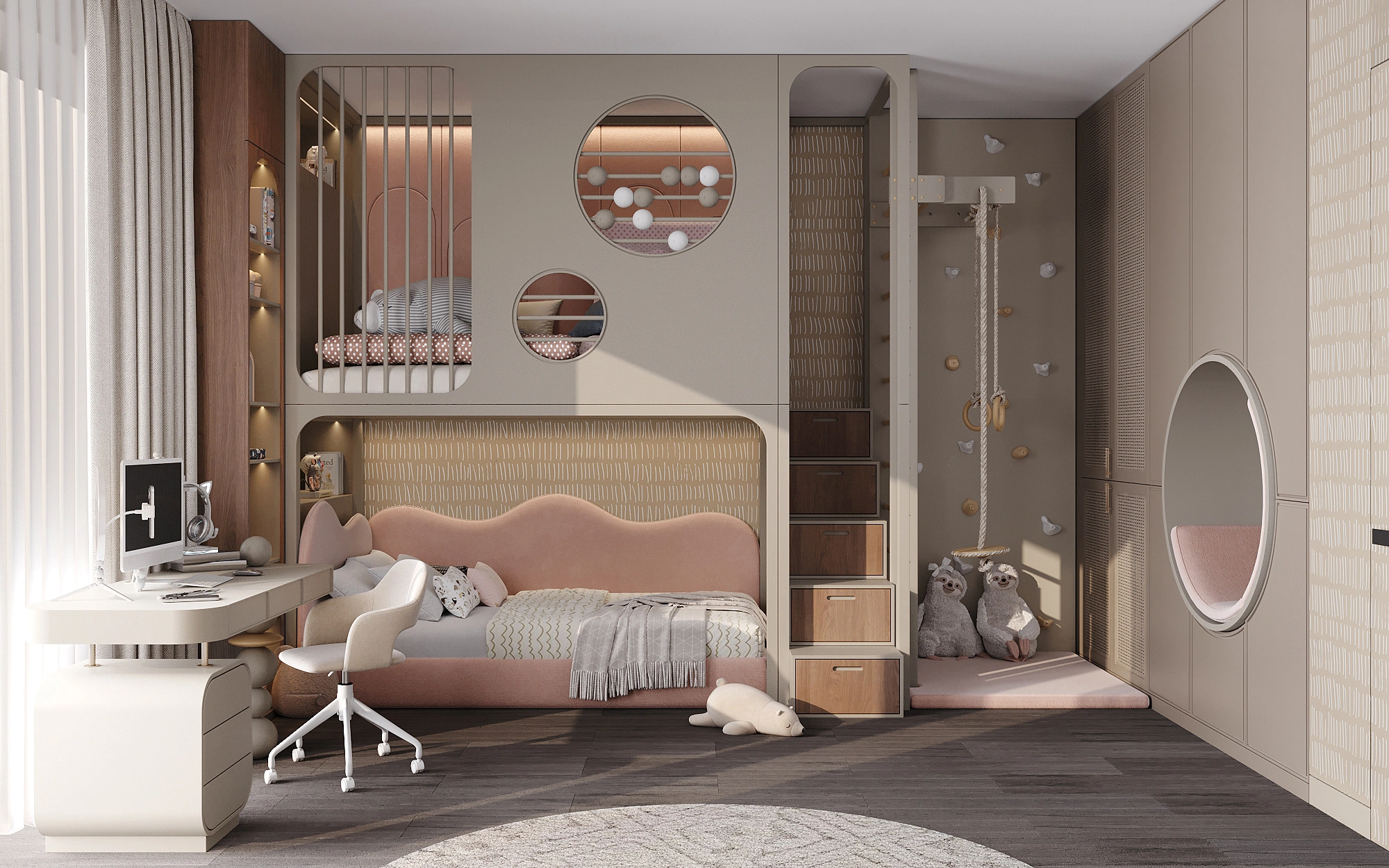



Having two children in one room is a common situation, especially in homes with limited space. At the same time, such a solution requires a thoughtful approach. It is important to consider the needs of each child, organize separate zones, ensure enough space, and plan the lighting properly. Proper zoning of a children’s room makes the space comfortable and functional.
In this article, based on a FeliFam design project, we show how to divide a room for two children so that each child feels comfortable.
Project details
| Location | Prague, Czech Republic |
|---|---|
| Space type | Children’s bedroom |
| Number of children | Two boys |
| Area | 17 m² |
| Project date | June 2025 |
Main challenges and solutions
In this project, we worked with a 17 m² room for two boys. The key task was to create a comfortable space for each child without overloading the interior and while maintaining a sense of lightness.
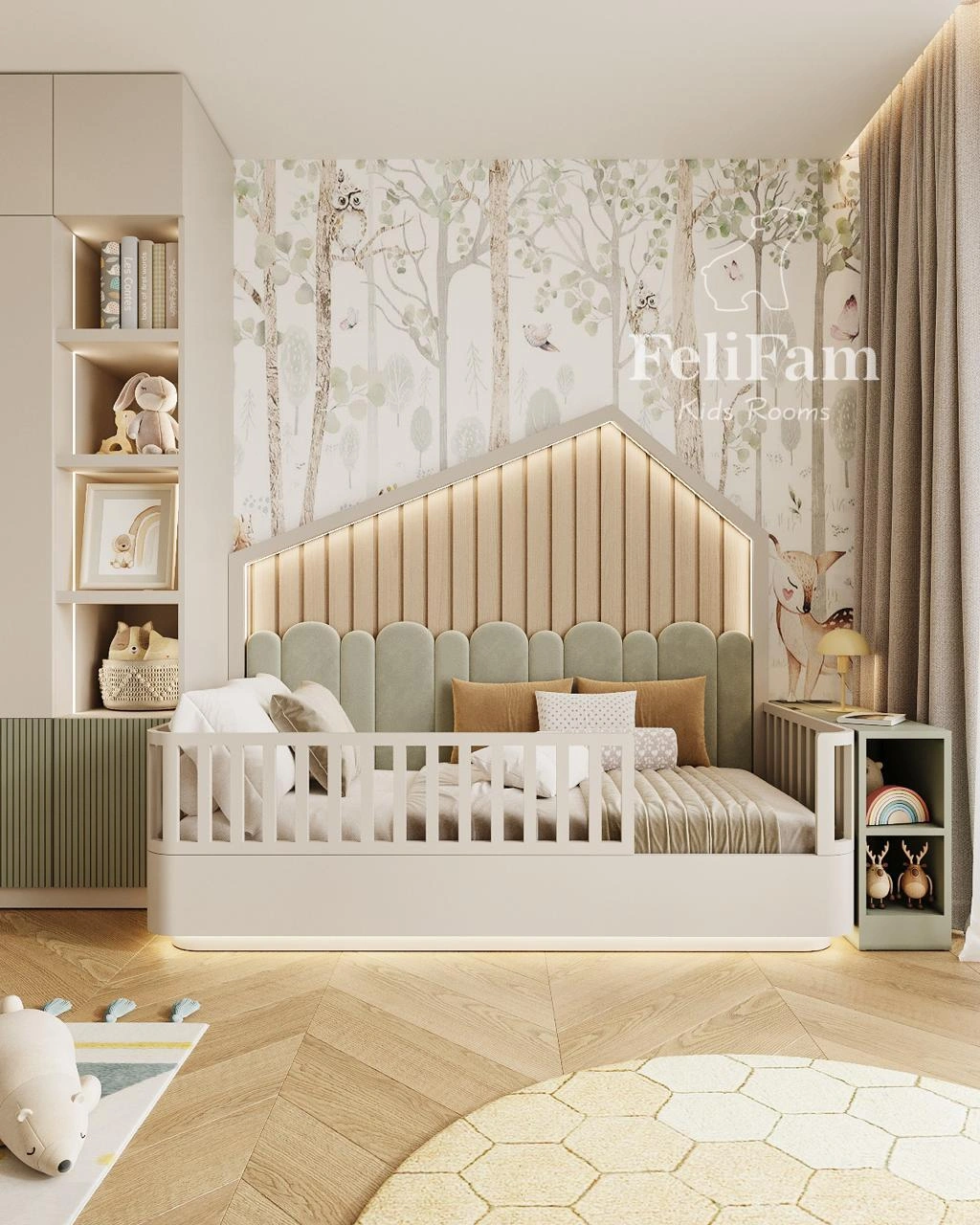
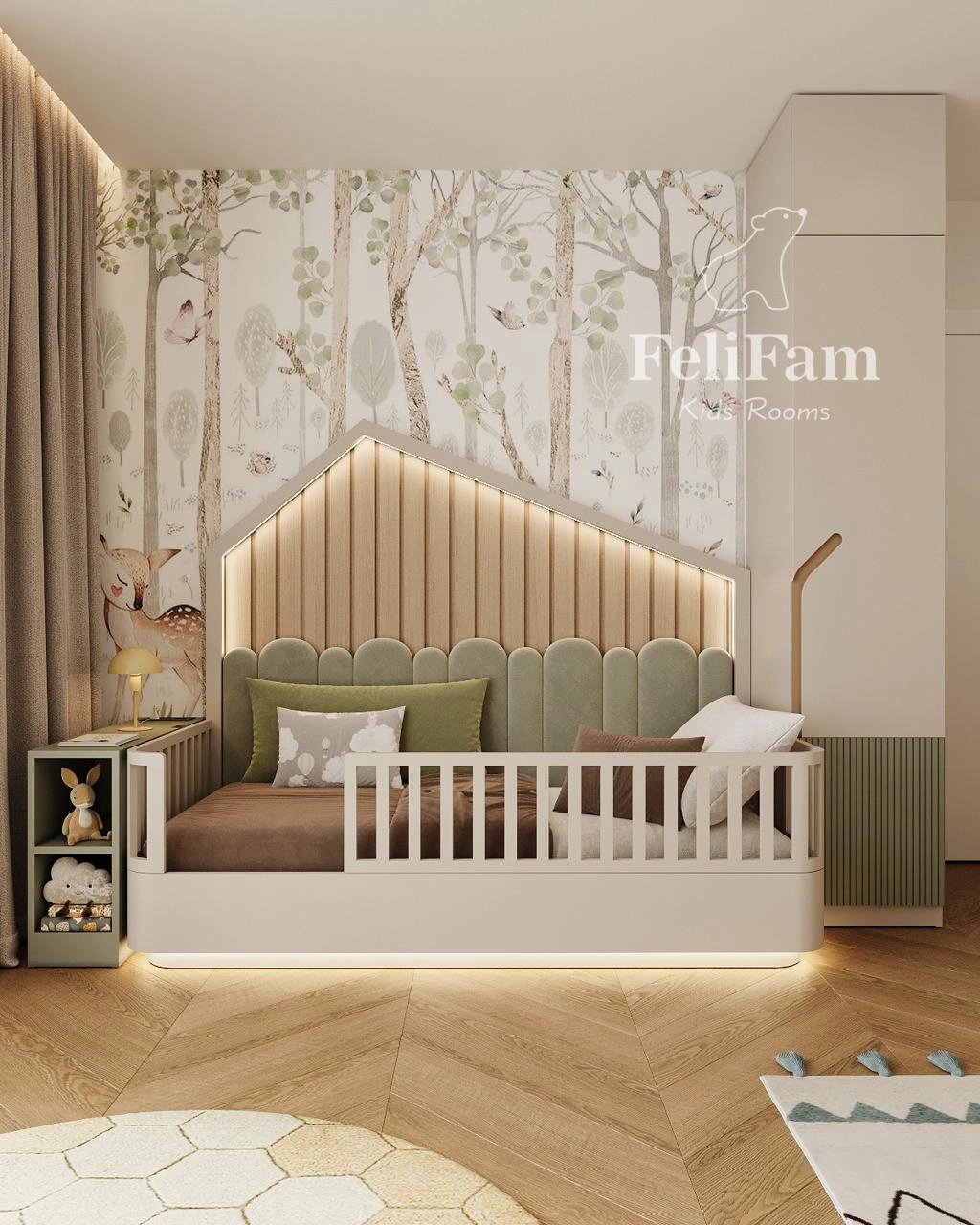
The main idea was a symmetrical division of space without partitions: the beds are placed on opposite sides of the room, forming two individual zones, while the center remains shared. The interior is designed in a warm neutral palette with soft green accents and minimalistic decor, creating a calm and harmonious atmosphere.
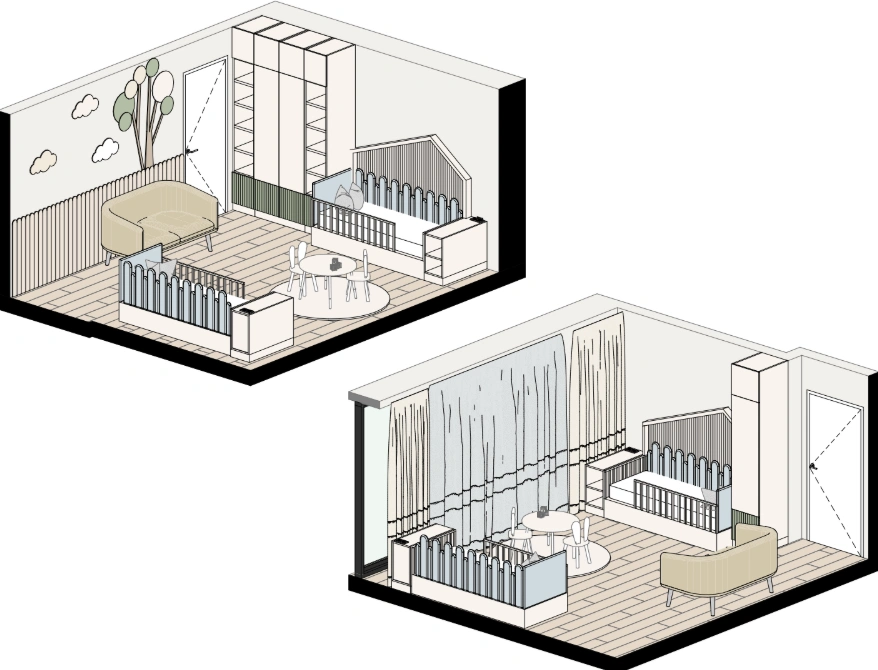
Smart zoning without physical partitions
Instead of traditional walls or partitions, a more functional approach was used: zoning through furniture and spatial composition.
The children’s room for two boys is logically divided into three main zones:
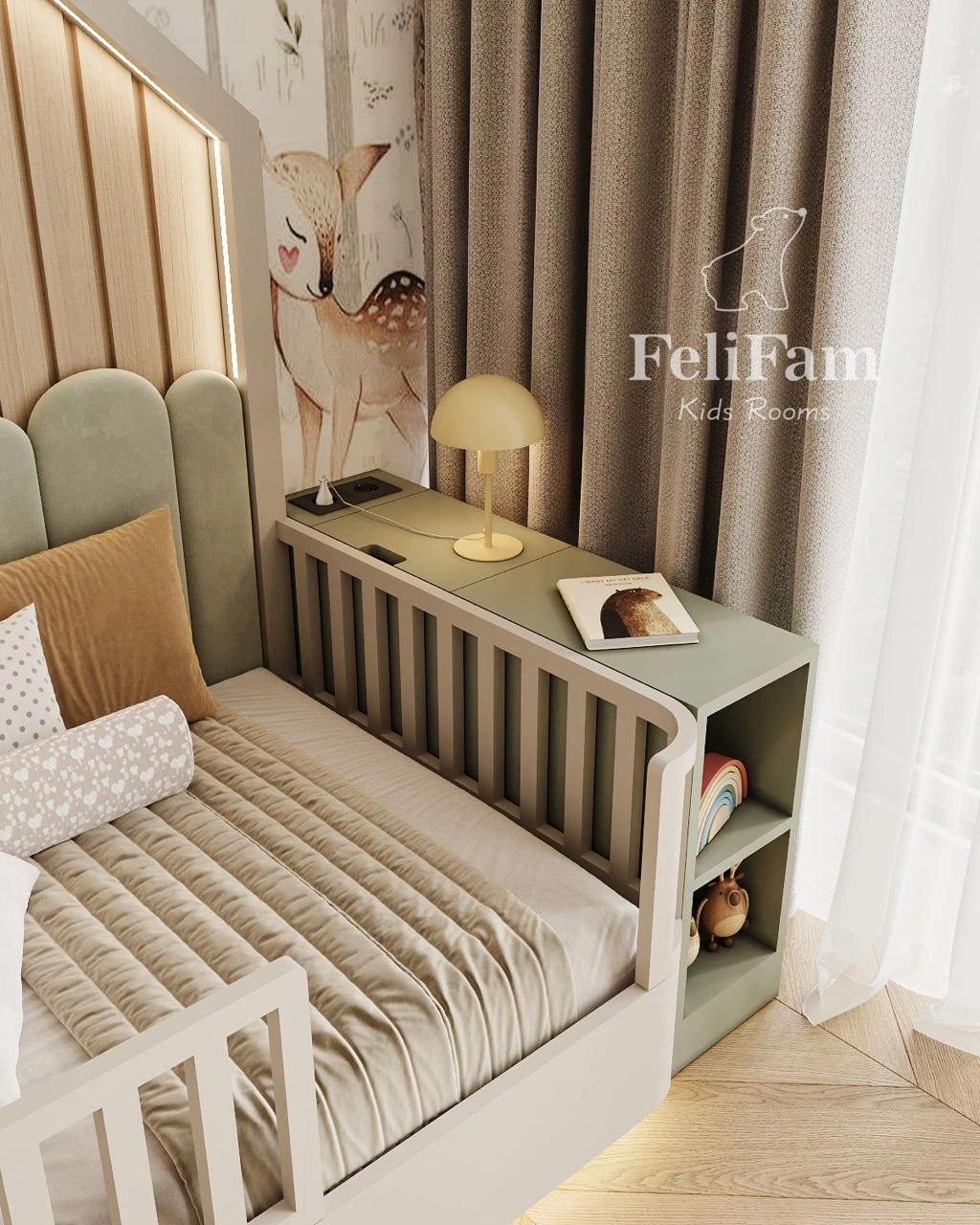
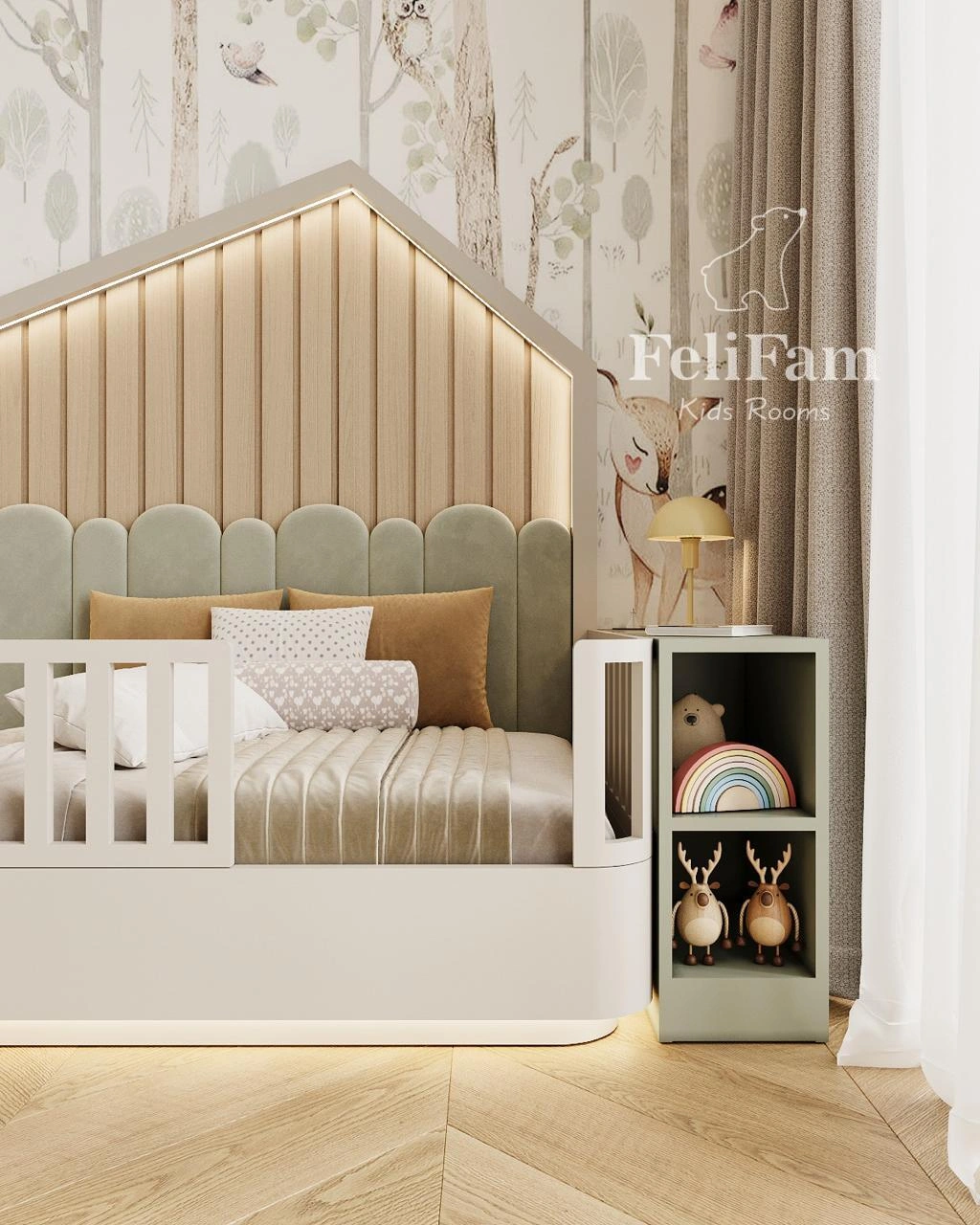
- Two individual sleeping zones located symmetrically on opposite sides of the room. Each sleeping area has its own niche with a bed, soft headboard, and local lighting.
- A central shared zone between the beds with a play table and a rug. This area is used for games, creativity, and interaction.
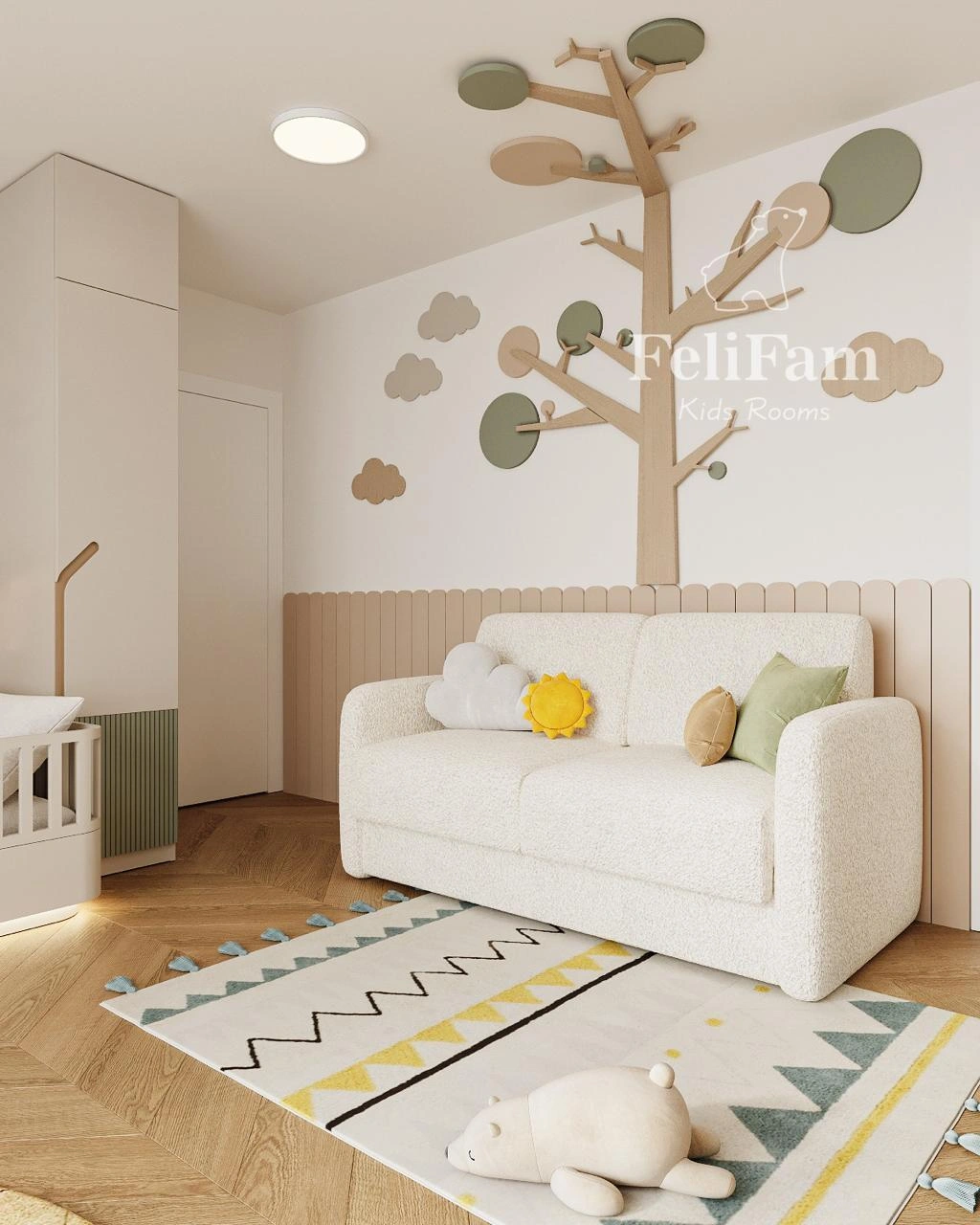
- A relaxation zone with a sofa placed along the wall and a decorative tree composition. This is a space for rest, reading, or spending time with parents.
Custom furniture as a zoning tool
One of the key approaches in this project is the use of furniture as a natural space divider. It is precisely custom children’s furniture that makes it possible to implement such solutions precisely according to room dimensions and children’s needs.
- Low bedside units gently separate sleeping areas.
- Symmetrical placement creates balance and a sense of order.
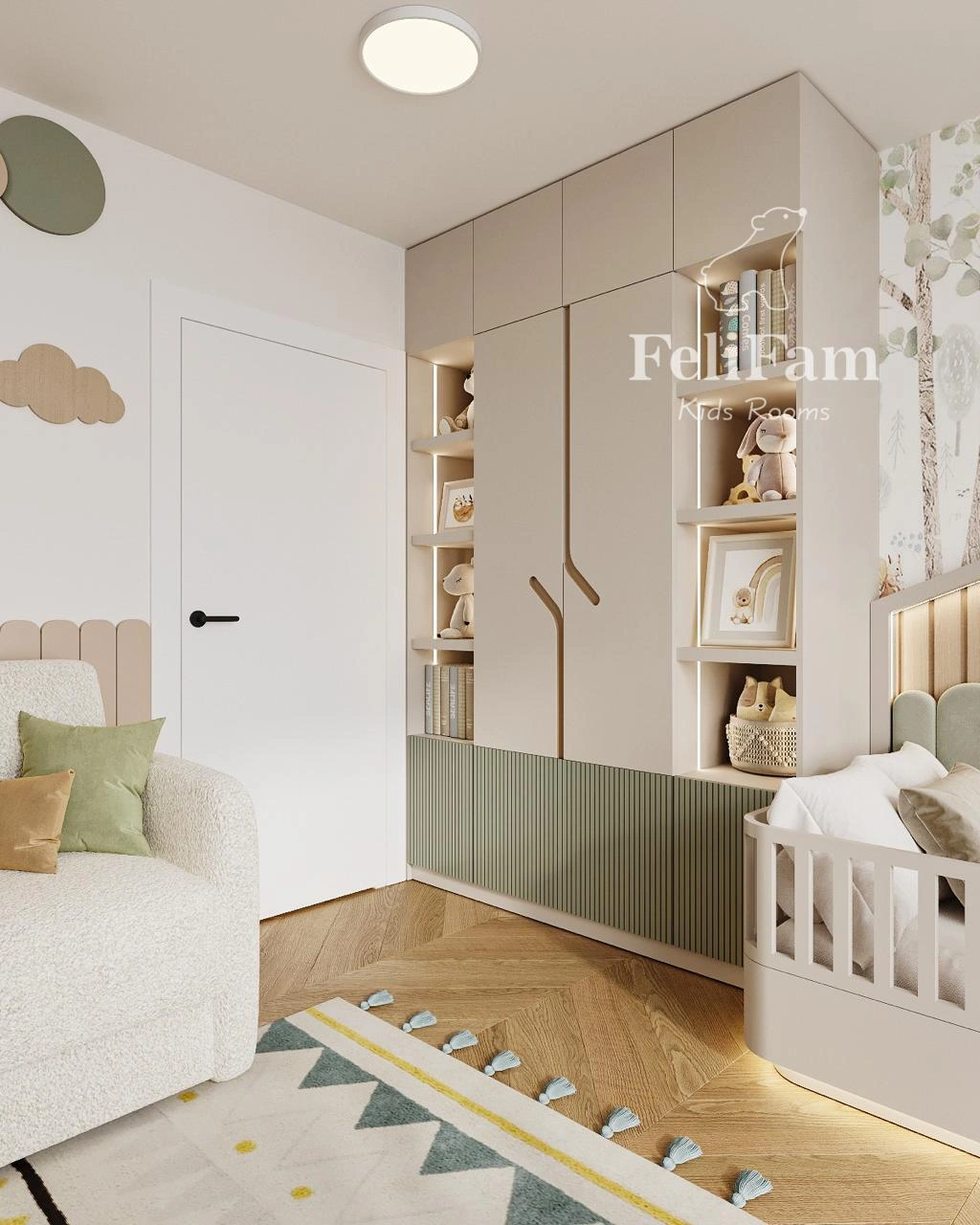
- Built-in storage systems along the perimeter help avoid visual clutter.
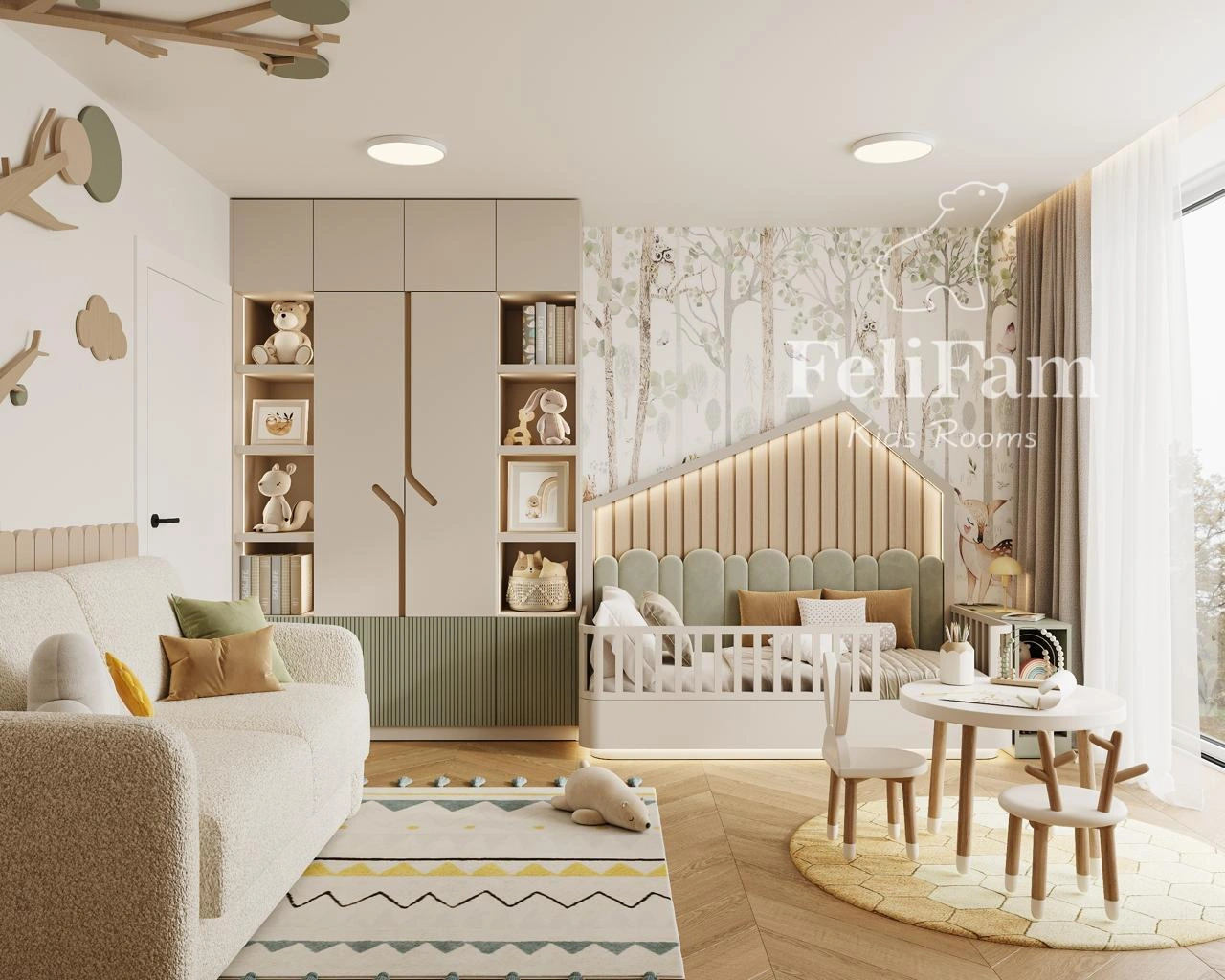
Unified interior style
Despite functional separation, the children’s room remains a cohesive space:
- warm neutral base (beige, milky, wood tones);
- muted green accents;
- soft textures and lighting that add coziness.
This approach is important: children have their own space, but the room still looks like a unified harmonious composition without visual conflict.
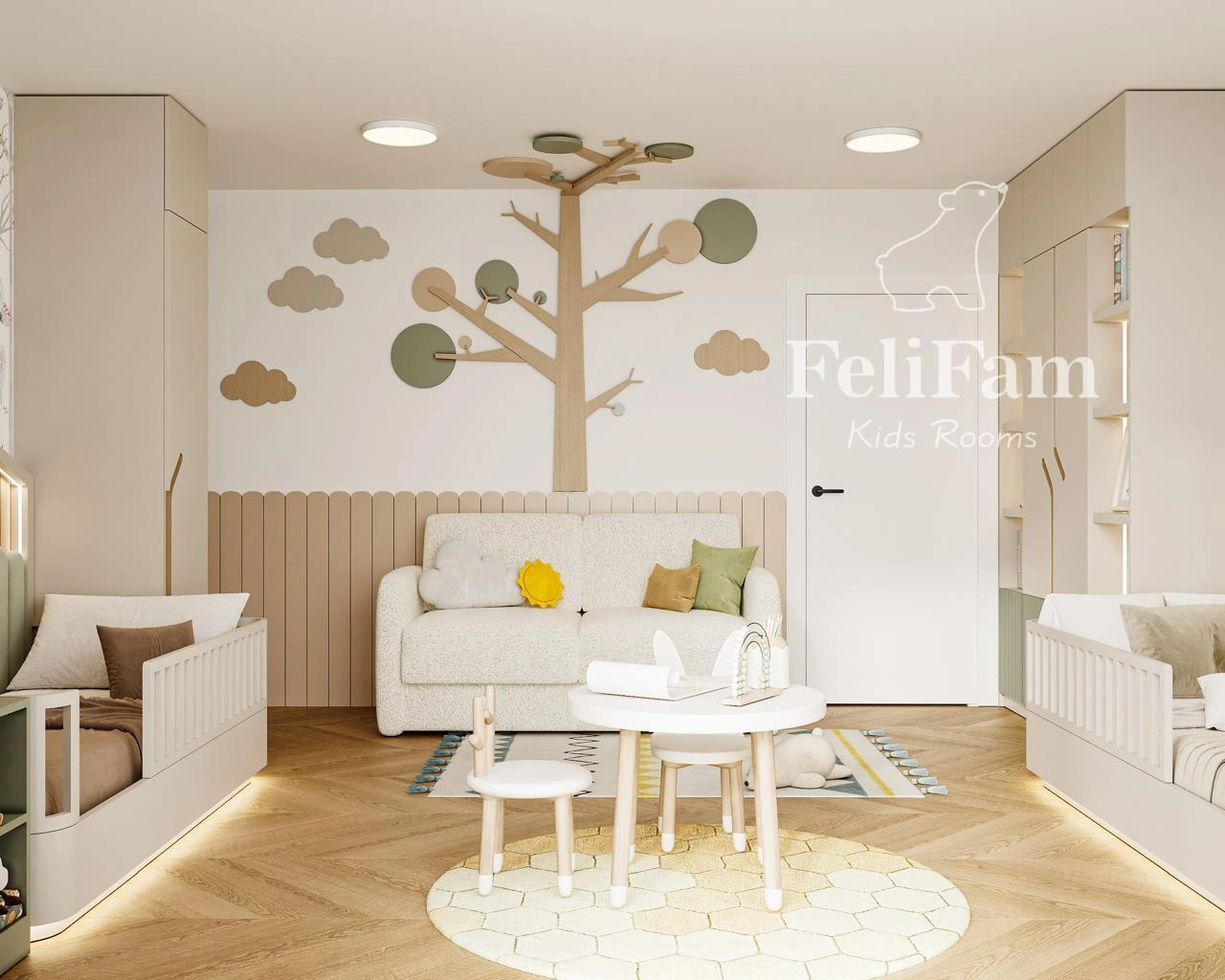
Lighting and details
Lighting plays a key role:
- built-in ceiling lights provide even general lighting;
- headboard lighting adds depth and works as night light;
- individual bedside lamps are used for personal comfort.
Decor elements (tree wall art, nature-inspired wallpaper) enhance the feeling of calm and a “child-friendly world” without overwhelming the space.
Interior that grows with the children
In this room for two children, future adaptation was planned from the start. The space can easily evolve as the children grow. The basic layout and symmetry remain relevant, while the function of zones changes.
The central play area can be transformed into a study area with desks by the window. Beds can be upgraded, safety rails removed, and later replaced with larger models.
Storage systems are already designed for larger volumes and future needs. Thanks to the neutral color base, the interior can easily be refreshed with textiles and decor without major changes.
Conclusion: dividing a room for two children is easier than it seems
This project shows that even on 17 m² it is possible to comfortably accommodate two children with the right approach. It is recommended to use furniture as a zoning tool and maintain a balance between shared and private space.
The result is not just a room, but a space where each child has their own personal zone.
At FeliFam we create individual solutions for each family, taking into account lifestyle, children’s age, and spatial features.