





Fear of the dark is one of the most common childhood concerns and often appears at an early age. This is a natural stage of development when a child begins to understand what feels safe and what seems threatening. However, for many children, darkness is associated with something scary and unknown. Usually this fear fades over time, but it is important to support the child and create a comfortable sleeping environment.
One of the most effective ways to address this issue is through thoughtful lighting. The right lighting helps the child feel safe and fall asleep comfortably without worrying about the darkness. At FeliFam Kids Room, we always pay special attention to lighting design, as it plays a key role in creating a sense of calm and emotional comfort. In this article, we will explore how light can help ease nighttime anxieties and provide a peaceful sleep environment for your child.
Understanding the fear of darkness: the key to better sleepThe fear of darkness is a natural developmental phase and has psychological as well as physiological roots. During early childhood (typically between the ages of 2 and 6), children experience rapid emotional and cognitive growth. At this stage, they begin to distinguish between the familiar and the unknown and are still learning what feels safe. Darkness — a symbol of the unfamiliar — may therefore trigger anxiety.
From a psychological perspective, this fear is part of normal emotional development. It shows that the child is developing abstract thinking and beginning to form ideas about the world beyond what they can see. Darkness is also associated with a reduced sense of control, which increases anxiety — especially at night, when the surroundings feel less predictable and comforting.
Parents can help a child cope with this fear through simple, supportive routines: physical activity during the day reduces stress levels, while calm evening rituals, such as reading a bedtime story, help the child wind down peacefully. Emotional support is equally important — allowing the child to express their worries openly helps reduce inner tension.
As experienced designers of children’s interiors, we are happy to share lighting solutions that help create a safe and emotionally supportive nighttime environment.
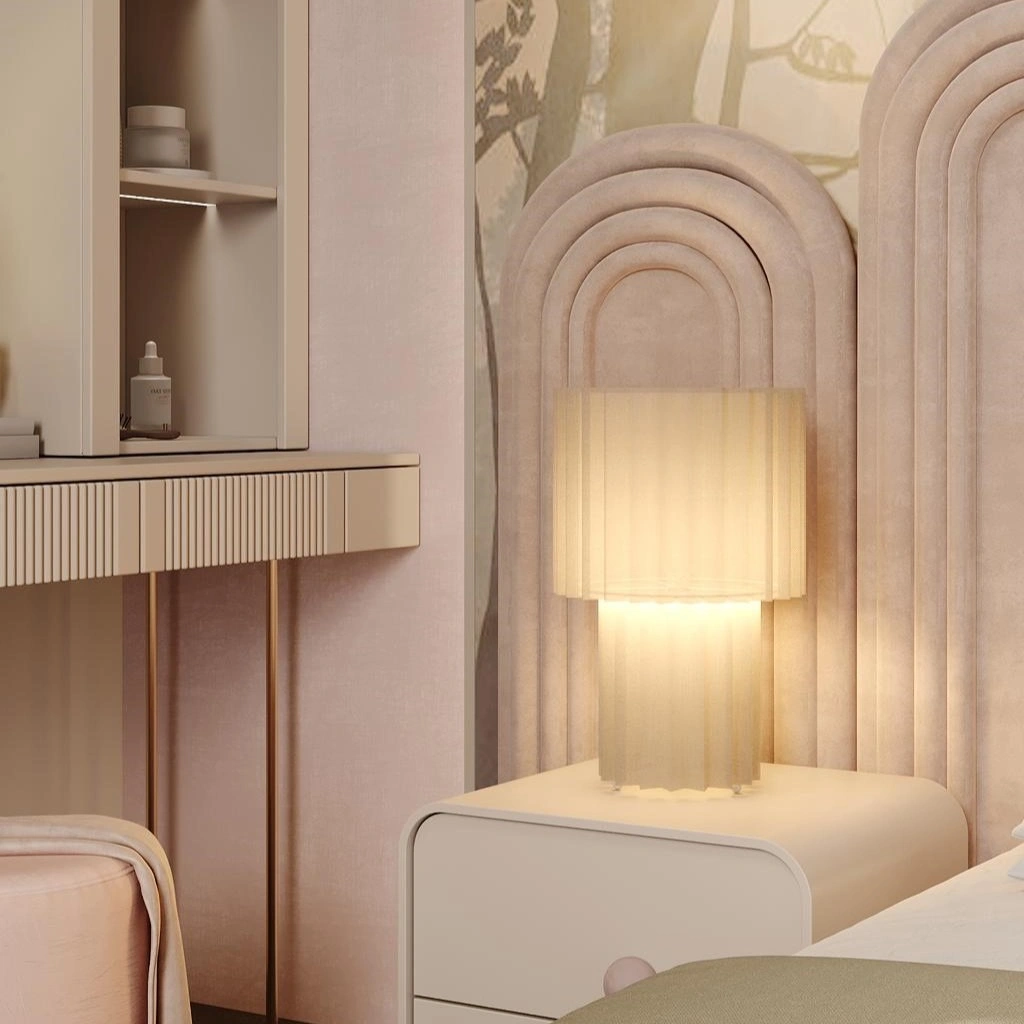 The most common and effective solution is a night light. It creates a soft glow that does not brighten the entire room but provides enough light for the child to feel safe. Night lights in the shape of cute animals or characters can be both functional and visually comforting, making the bedtime routine more pleasant.
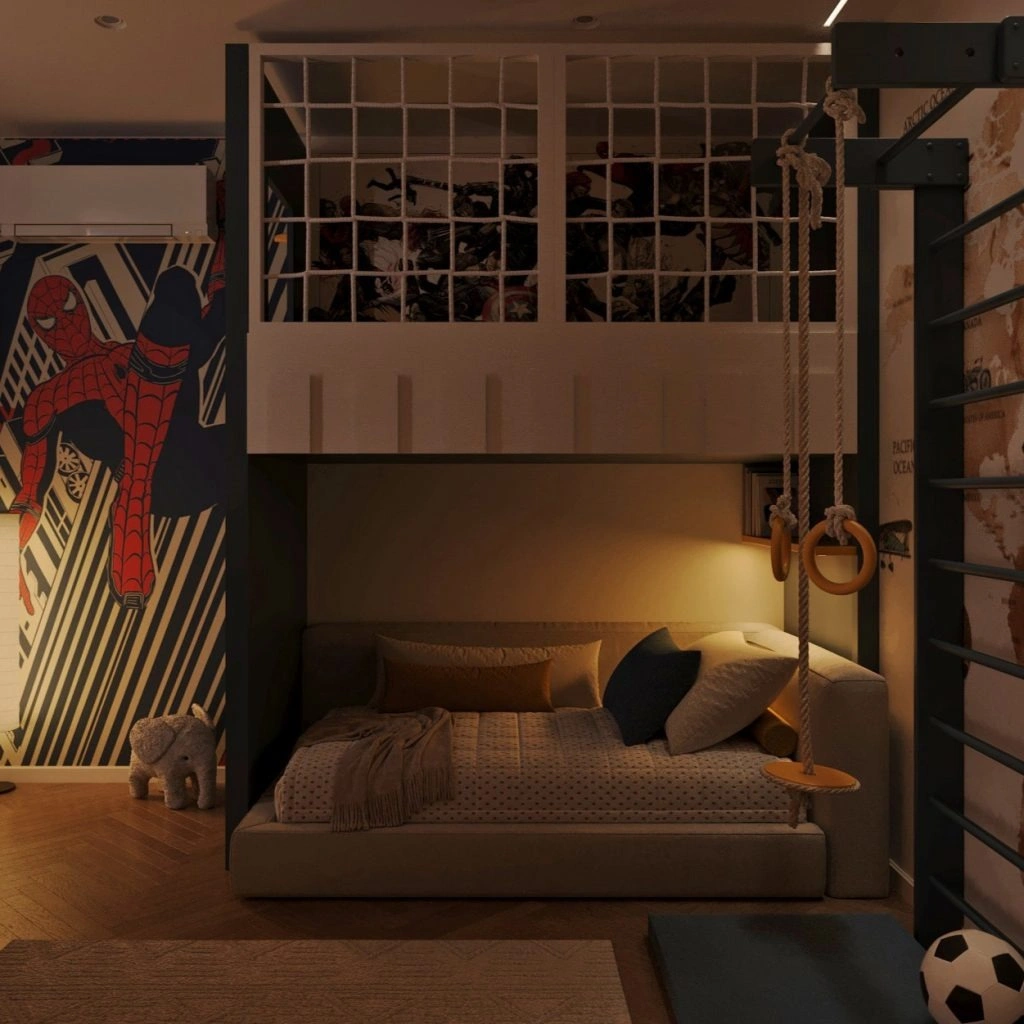 Another great option is soft ambient lighting around the bed or sleeping zone. It can be installed on the wall, under the bed frame, or behind the headboard, creating a gentle and even illumination. This helps eliminate harsh contrasts and prevents the room from feeling completely dark. It also serves as a visual guide if the child wakes up during the night, allowing them to fall asleep again without overstimulation.
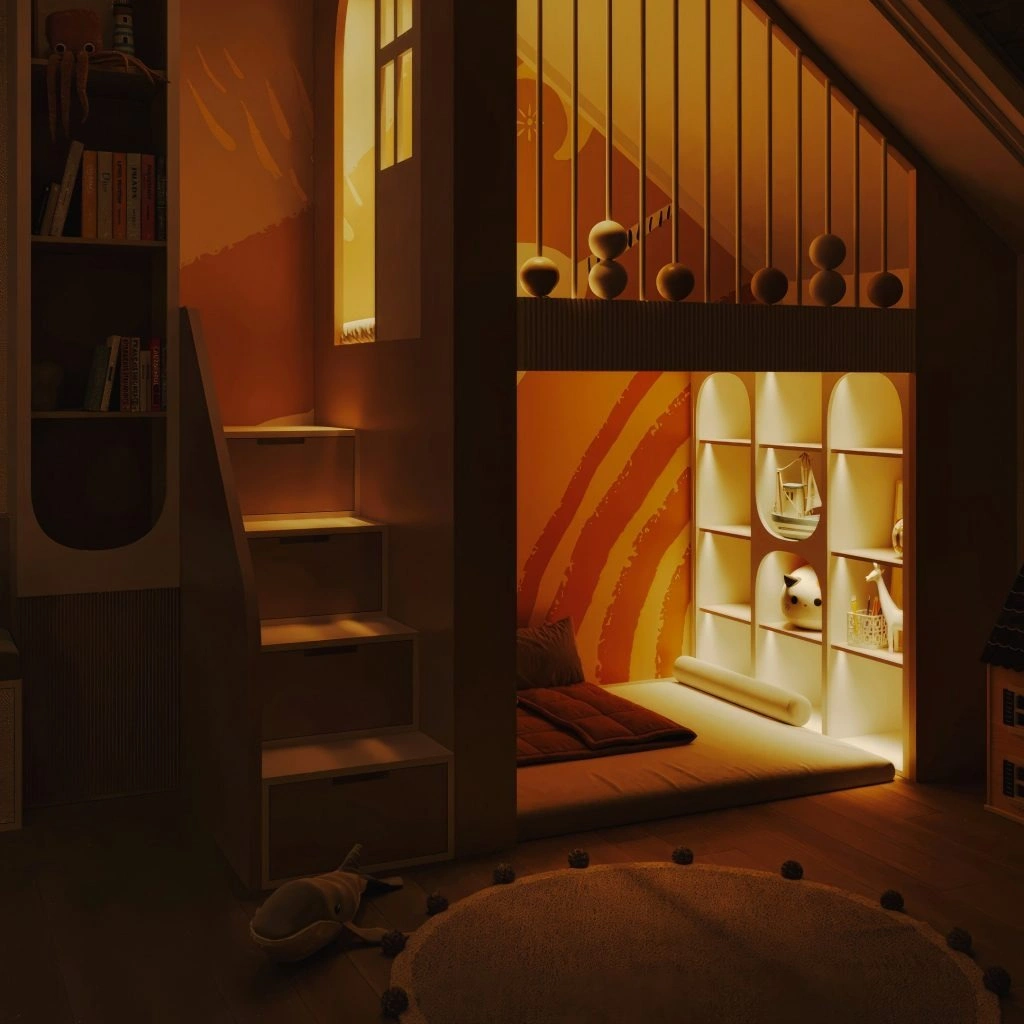 You can also help your child feel more comfortable with darkness through play. Adding soft lighting to the play zone allows the child to gradually become familiar with darker environments in a safe and enjoyable context. This approach builds positive associations and gently reduces anxiety.
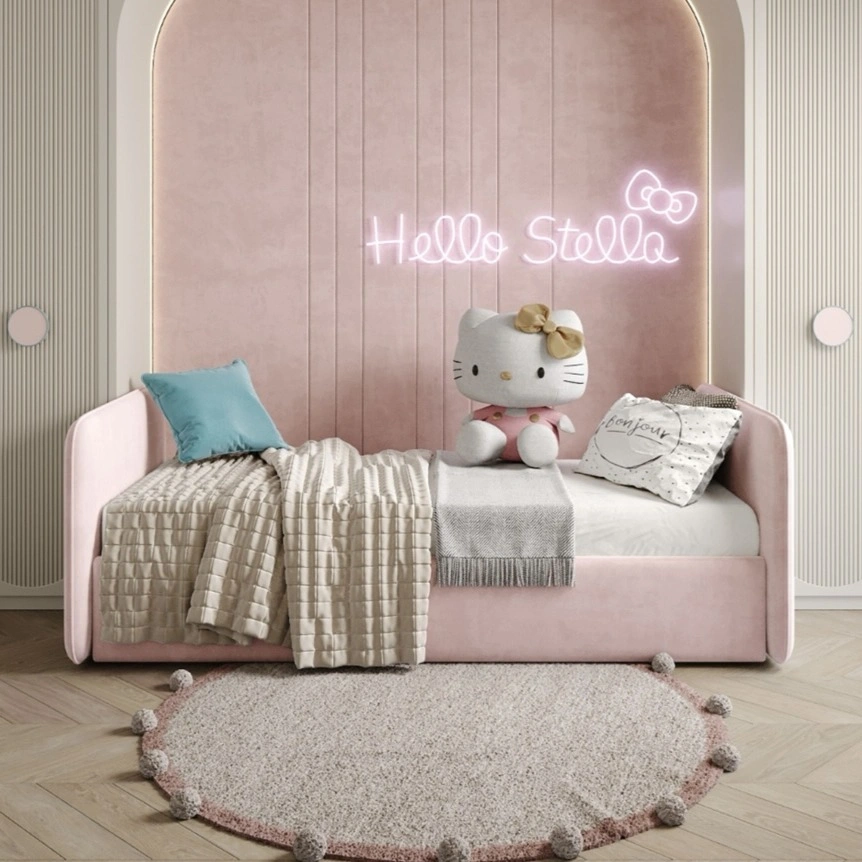 Neon-style wall lights are another creative idea. They are stylish, soft in brightness, and add a sense of coziness and security. Shapes can vary — stars, clouds, animals, or even favourite characters. Neon lighting can also be personalised with the child’s name or a cute symbol, making the room feel even more special and emotionally comforting.
Fear of the dark is temporary and can be gently overcome with attention and creativity. Instead of avoiding darkness altogether, it’s better to introduce it gradually through positive experiences: evening “flashlight expeditions,” glow-in-the-dark drawings, or reading bedtime stories where the dark is shown as magical rather than frightening. Thoughtful lighting helps make the transition from day to night smooth, safe, and emotionally reassuring.

