





Mirrors are an essential element in interior design, serving both aesthetic and practical purposes. They are commonly used in bedrooms and dressing rooms, adding light, space, and functionality. But should mirrors be included in children’s rooms? What are the advantages and disadvantages of this choice? And how can mirrors be integrated into a child’s space to ensure they are not only an attractive feature but also a safe one?
In this article, we will explore all aspects of using mirrors in children’s rooms and share practical tips on how to incorporate them effectively and securely.
Advantages of Using Mirrors in Children’s Rooms
Mirrors in a child’s room can serve not only as a stylish decorative element but also offer several practical benefits. They can make the space feel brighter and more spacious, while also contributing to a child’s development.
- Functionality. The most obvious advantage of mirrors is their practicality. A mirror helps children observe themselves, fostering essential self-care skills. For older kids, mirrors can be especially useful during activities like dancing, gymnastics, or theatrical performances.
- Visual Space Expansion. Mirrors can visually enlarge a room, which is particularly beneficial for smaller spaces. This creates a sense of openness and lightness—crucial for a child’s room, where every square meter matters.
- Improved Lighting. When placed opposite a window or light source, a mirror helps distribute both natural and artificial light more effectively. This makes the room brighter and cozier without the need for extra lighting fixtures.
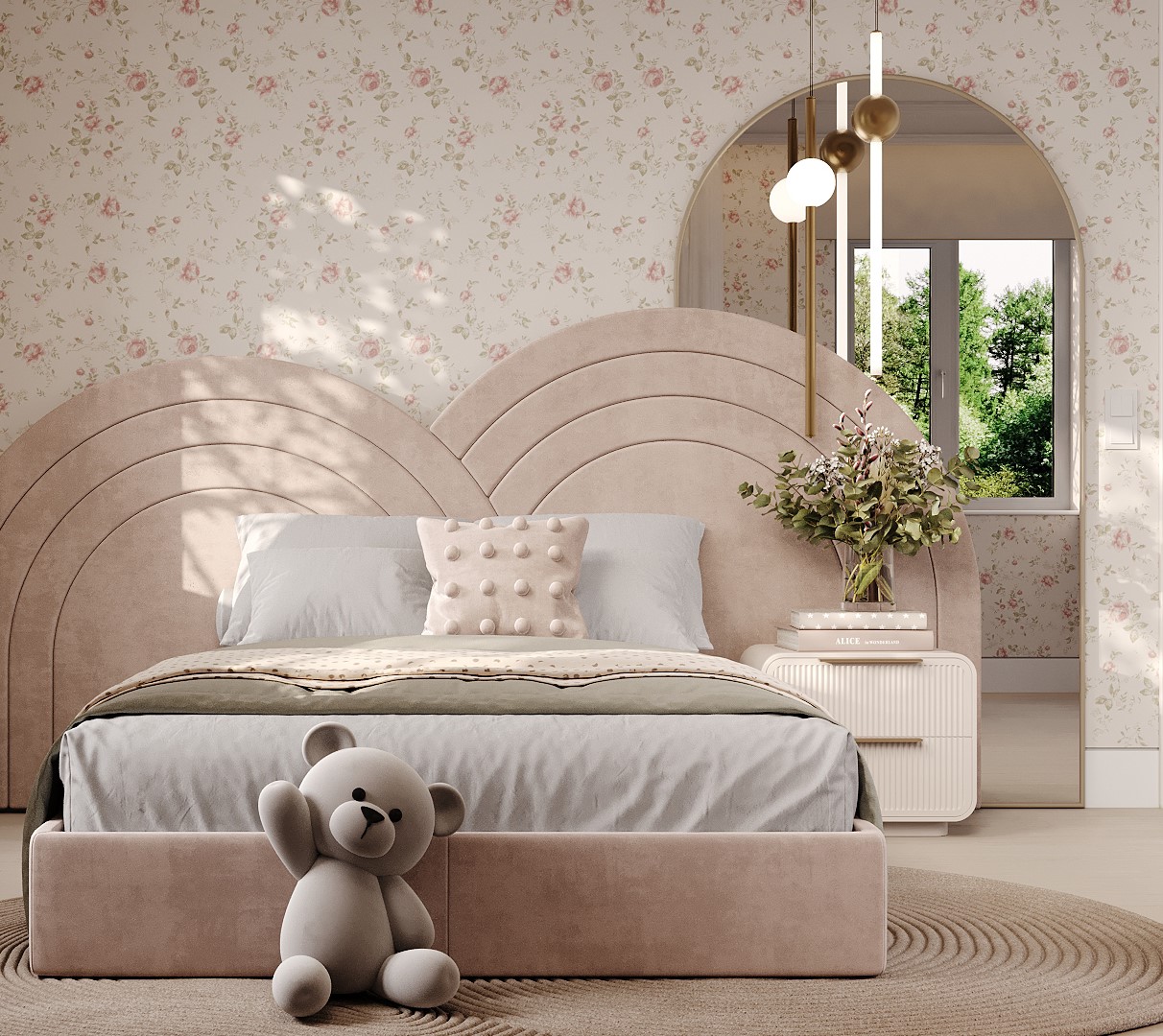
- Stylish Design Element. A mirror can become a striking accent in a child’s room design. It can add a modern touch or seamlessly complement any style—from minimalism to classic interiors. Decorative frames, unique shapes, or arrangements of multiple mirrors can become true highlights of the space.
Mirrors in a Child’s Room: Exploring Potential Drawbacks
In reality, there aren’t many disadvantages to using mirrors in children’s rooms. The primary concern for parents is safety. Mirrors are fragile objects, and in a space where active play and movement are the norm, it’s essential to address all potential risks.
It’s crucial to choose mirrors made from shatterproof materials, such as acrylic or polycarbonate. These options look like glass but are significantly lighter and more resistant to damage, making them a safer choice for children’s spaces. Opting for models with anti-shock coatings is also recommended. This special film holds the fragments together in case of breakage, preventing injuries.
Mirrors should be firmly mounted on the wall, with no possibility of shifting or falling. Freestanding mirrors without proper fixation are not recommended due to the increased risk of accidents.
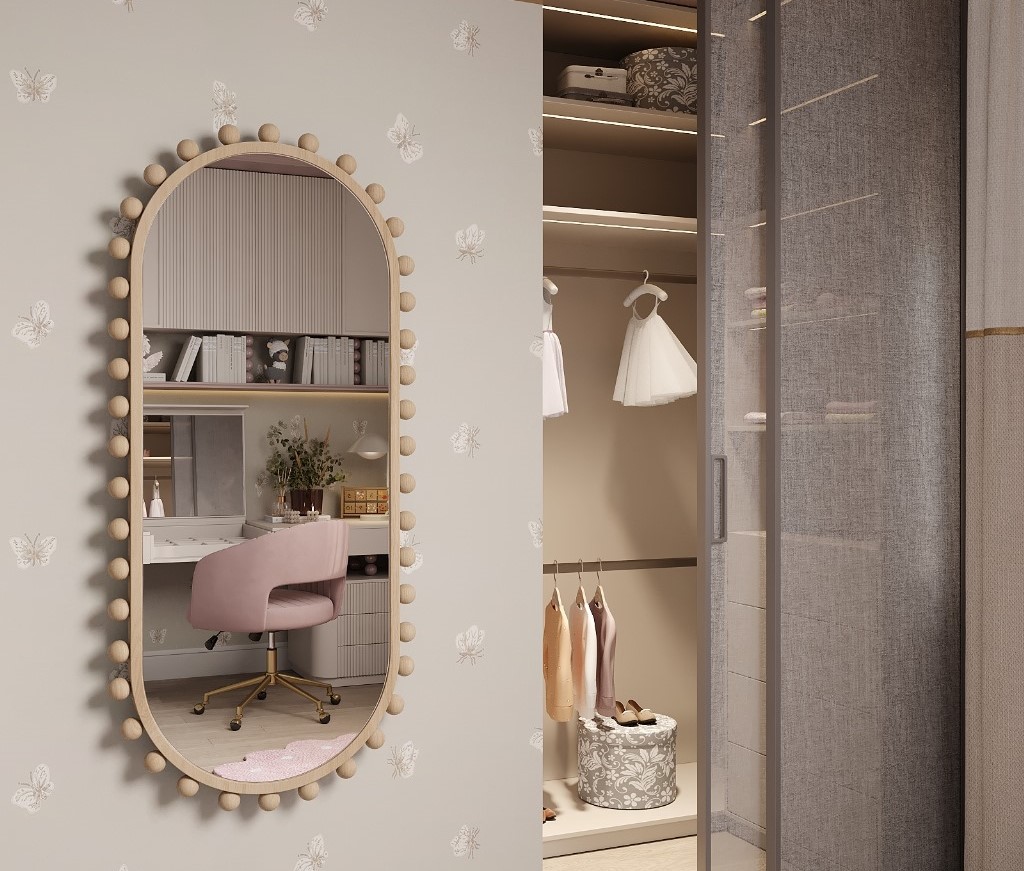
For added safety, select mirrors with rounded edges and sturdy frames without sharp corners. This not only reduces the risk of injuries but also gives the interior a polished and cohesive look.
Place the mirror outside the active play area—for example, near the wardrobe or study desk. This minimizes the risk of accidental damage while ensuring the mirror remains practical and easy to use.
Practical Tips for Integrating Mirrors into a Child’s Space
Designers often incorporate mirrors into children’s rooms because they not only serve a reflective function but can also become an important element that adds style and functionality to the space. Mirrors can transform the look of a room by visually expanding the space, reflecting light, and creating the illusion of more natural lighting. Additionally, mirrors can be part of design solutions, serving as decorative elements or even creating interesting lighting effects.
Here are a few more tips from designers on how to use mirrors in a child’s room:
- Vanity Tables with Built-in or Tabletop Mirrors: This option is perfect for girls, allowing them to develop self-care skills.
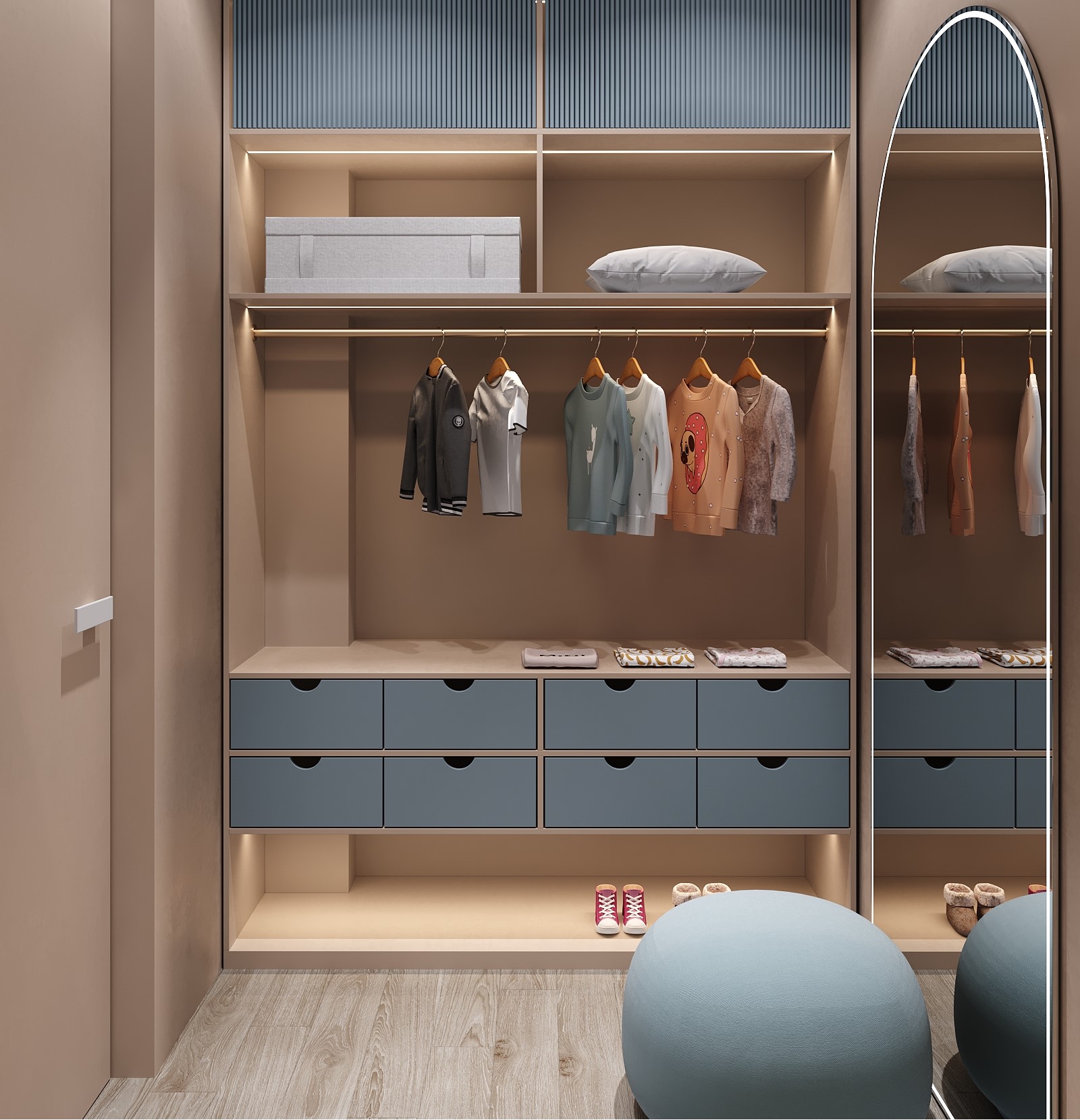
- Using Mirrors in the Dressing Area: A mirror in the wardrobe area allows a child to assess their clothing choices and experiment with different styles, helping to foster independence.
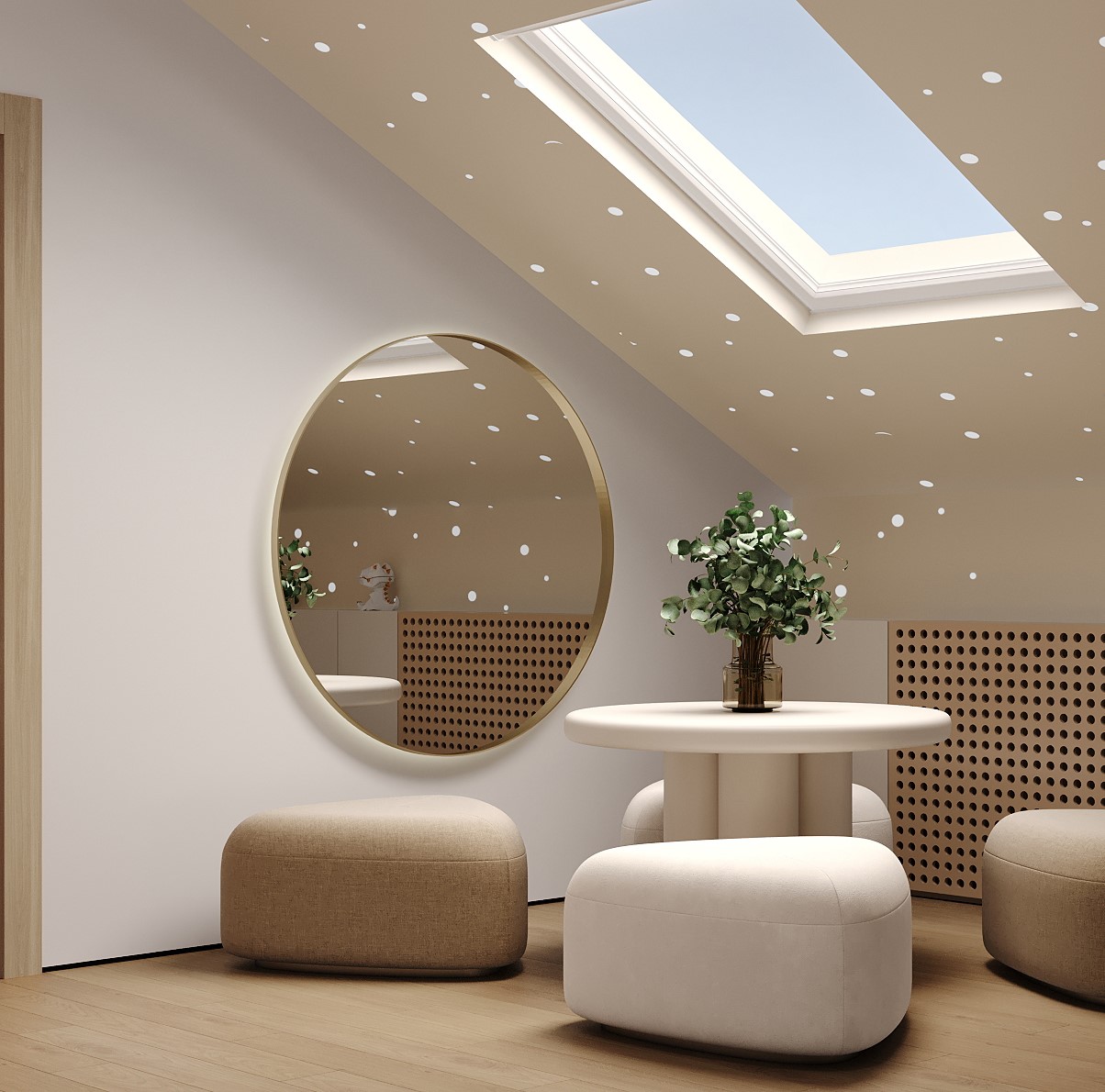
- Mirrors can be a great element of wall decor, adding style and dynamism to the interior. They can be arranged as a composition or as a single large mirror.
- Shaped Mirrors: These mirrors can create interesting visual effects, such as “bunnies” — light reflections that change depending on the angle of light.
- Placing a mirror on the wall opposite a window or in a corner of the room helps visually expand the space and make the room feel more spacious.
- Mirrors reflect natural or artificial light, making the room brighter and lighter. They can be used on walls that face windows to bring more light into the room.
Mirrors in a child’s room are not only a practical element for self-care and choosing clothes but also a stylish decor piece that can visually expand the space and create an atmosphere of coziness and light. It’s important to choose the right mirror, ensuring safety and functionality. With a creative approach and attention to detail, mirrors can become a striking accent in the design of a child’s room, making it more comfortable and stylish.
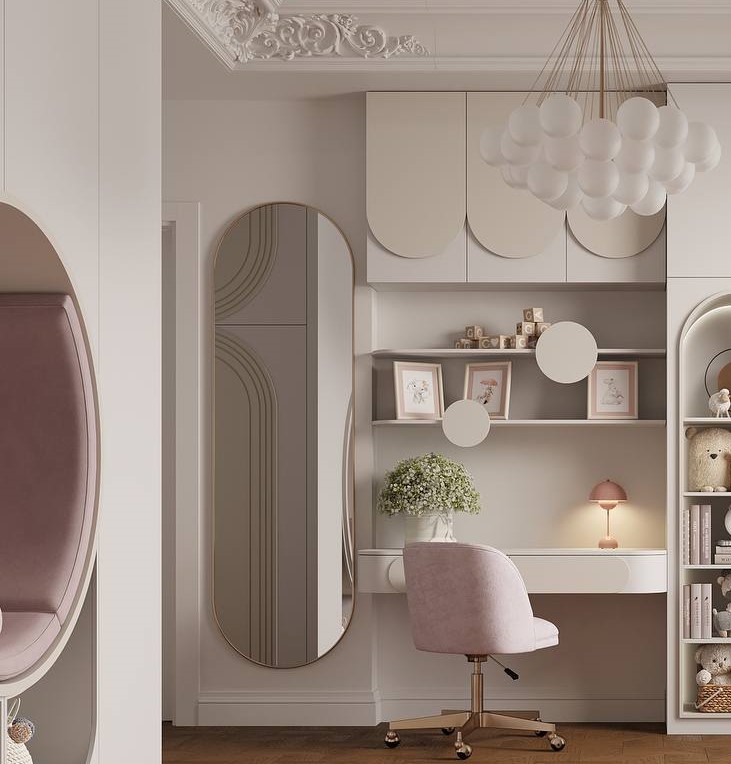
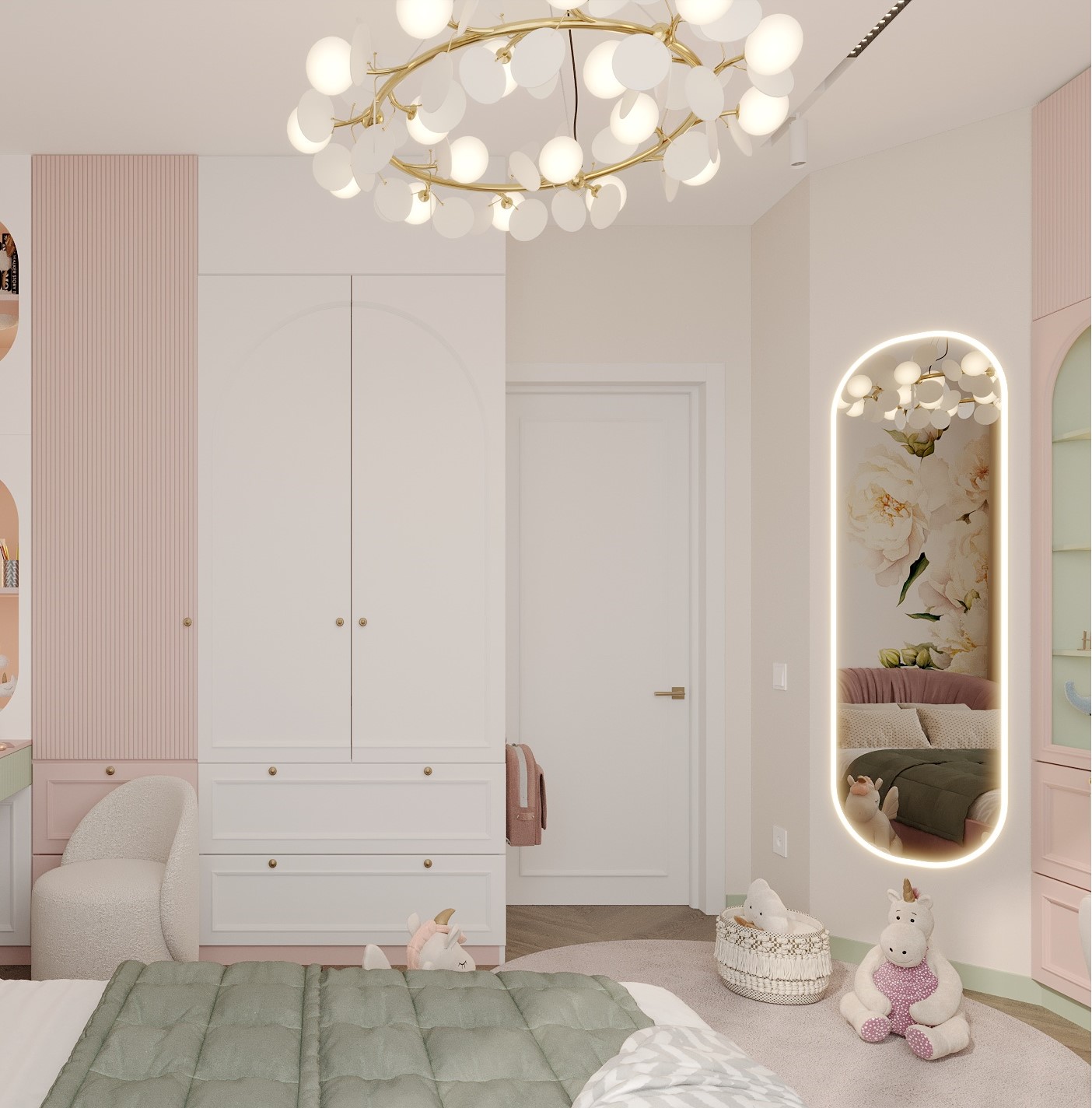
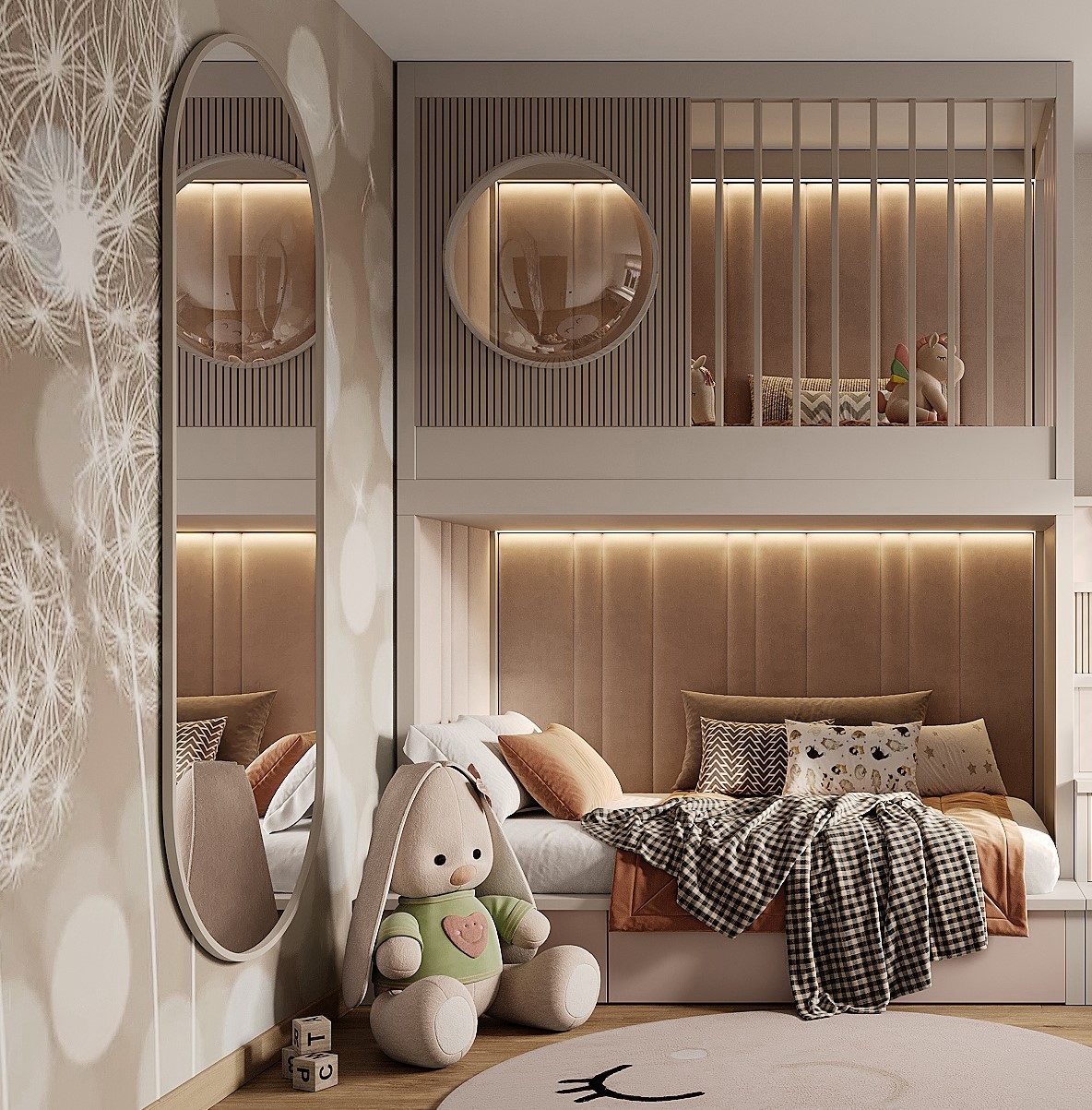
Integrating Mirrors into Children’s Rooms Through Our Projects

