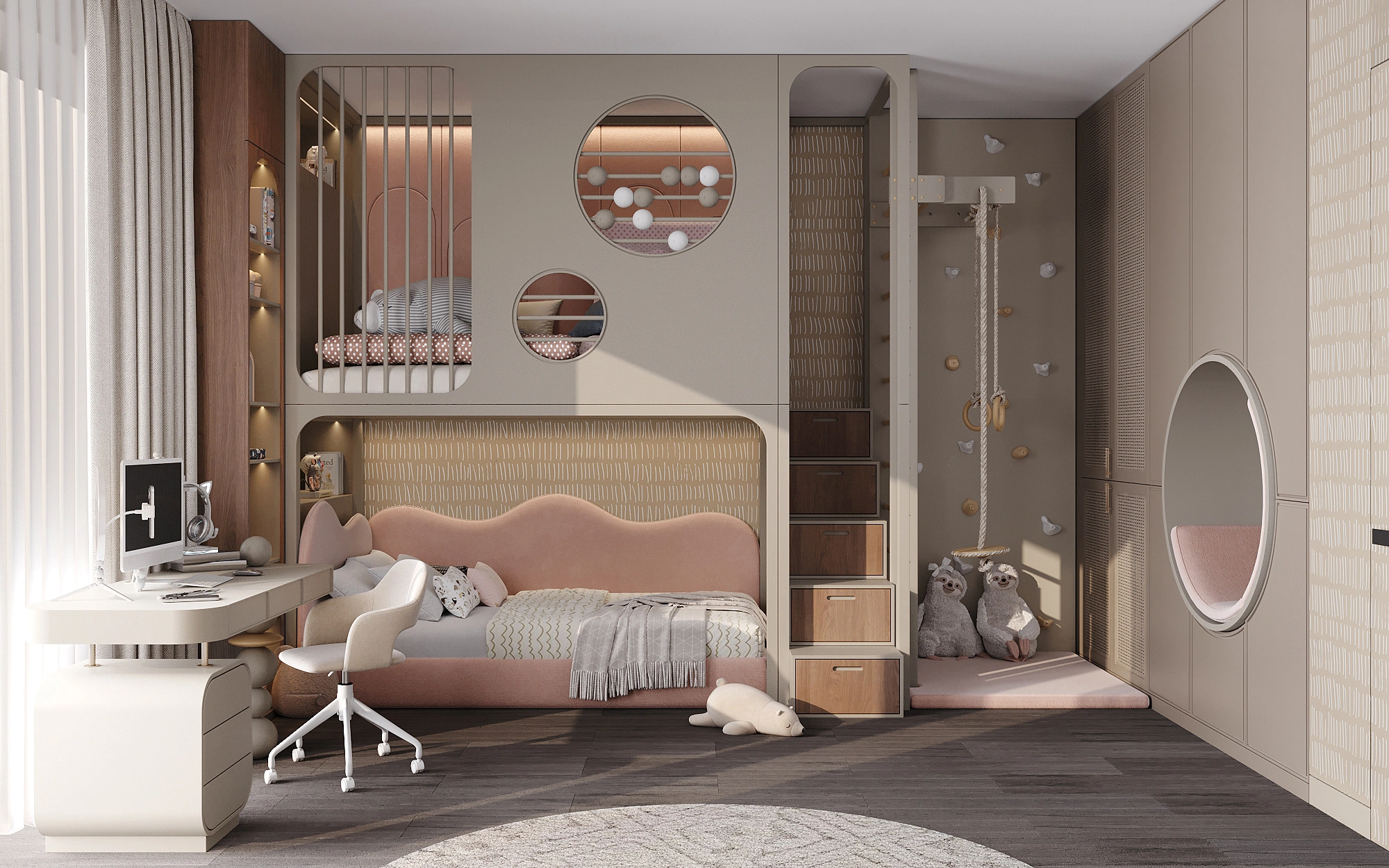



Many parents hesitate whether it is worth designing a children’s room in a minimalist style, as there is a stereotype that a child’s space must be extremely colorful and filled with numerous details and toys. However, modern design proves that minimalism can become not only a stylish but also a functional solution for a children’s room.
In this article, we will explore five of the most common myths about minimalism in children’s room design and show why simplicity and clarity can create a comfortable and cozy space that supports the harmonious development of your child.
Myth 1: Without bright colors, a children’s room looks boring
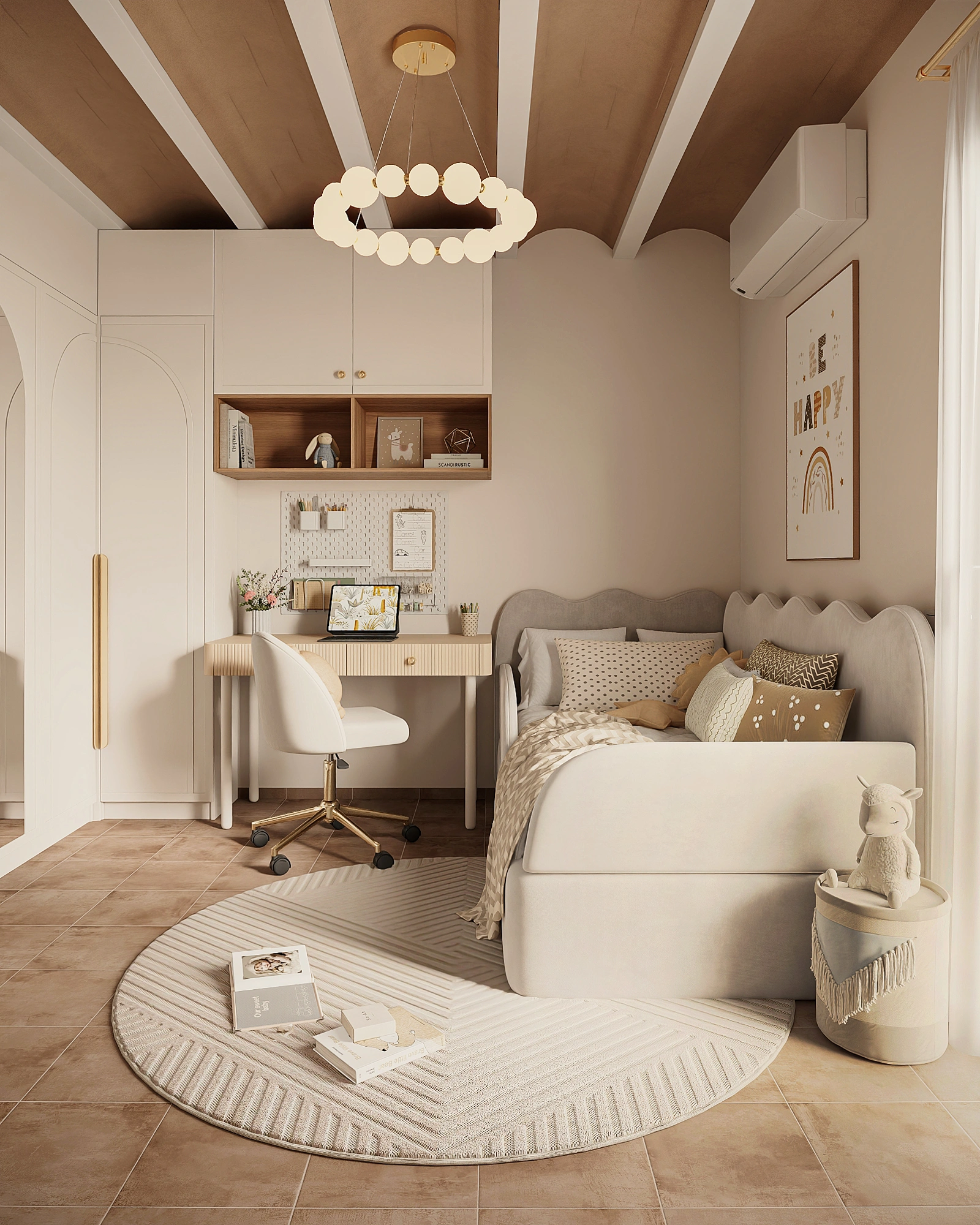
In reality, a restrained color palette does not take away emotions from a children’s room. On the contrary, it helps create a space where a child can breathe freely, play, and relax. Light natural tones work as a calm foundation that fills the room with light and visually makes it more spacious.
Such an environment does not overload the child’s attention, helps improve concentration, and supports faster relaxation after active play. This is especially important in a space that combines rest, learning, and creativity.
The character and mood of the interior are not created by saturated walls but by thoughtful details. Textiles, favorite toys, posters, or small decorative elements add color in a soft and balanced way. This approach makes it easy to adapt the room’s atmosphere as the child grows, without overloading the space.
Myth 2: Minimalism does not suit a child’s interests
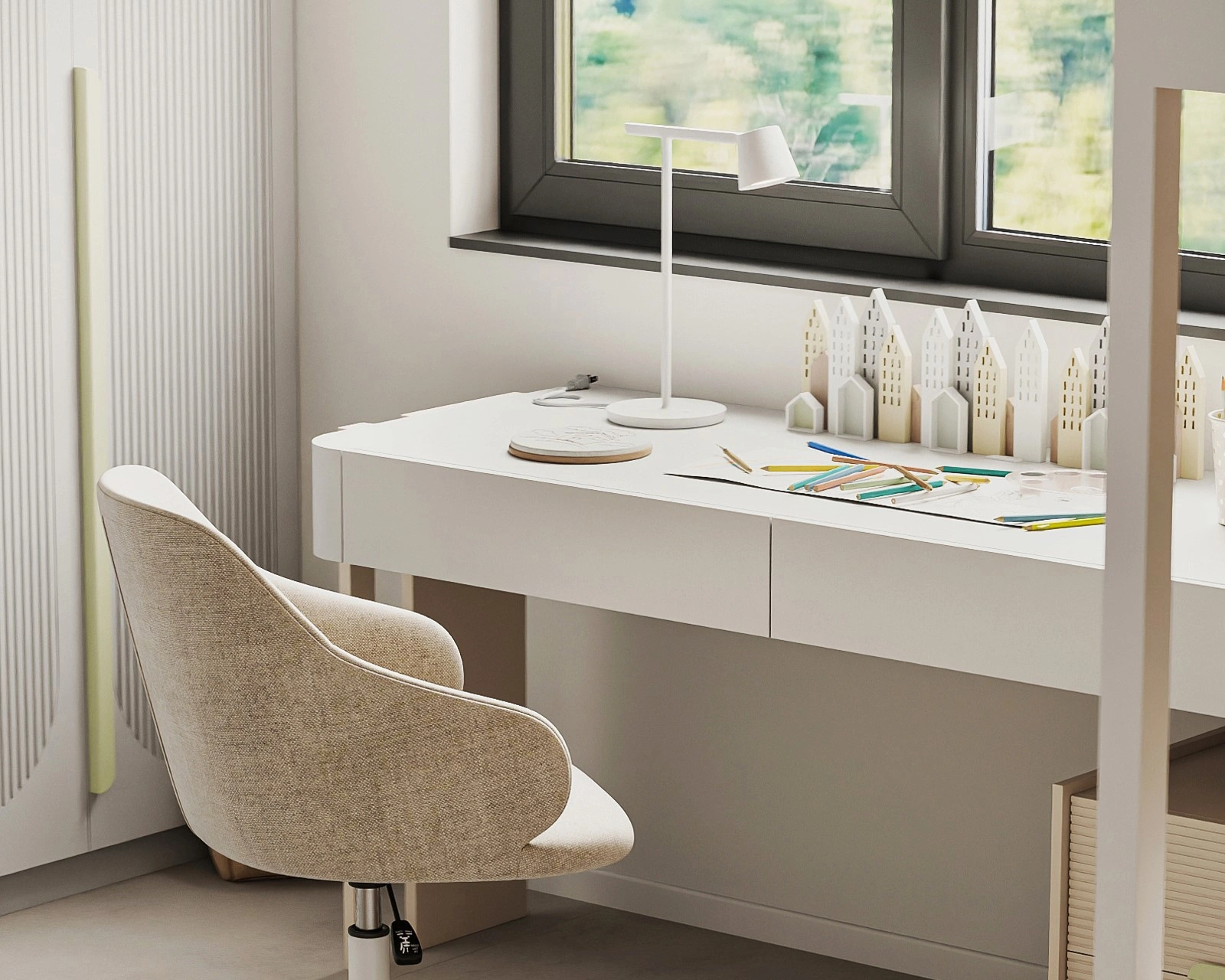
Minimalism does not limit a child; it opens more opportunities for self-expression. When a space is not overloaded with details, attention naturally shifts to play, creativity, and imagination. In such an environment, a child actively fills the space with meaning.
Another important advantage is flexibility. A minimalist room easily adapts as the child grows. Today it is a play space, tomorrow a study or hobby area. By changing a few decorative elements or functional zones, the interior remains relevant without a full redesign.
Myth 3: There is no place for toys in a minimalist room
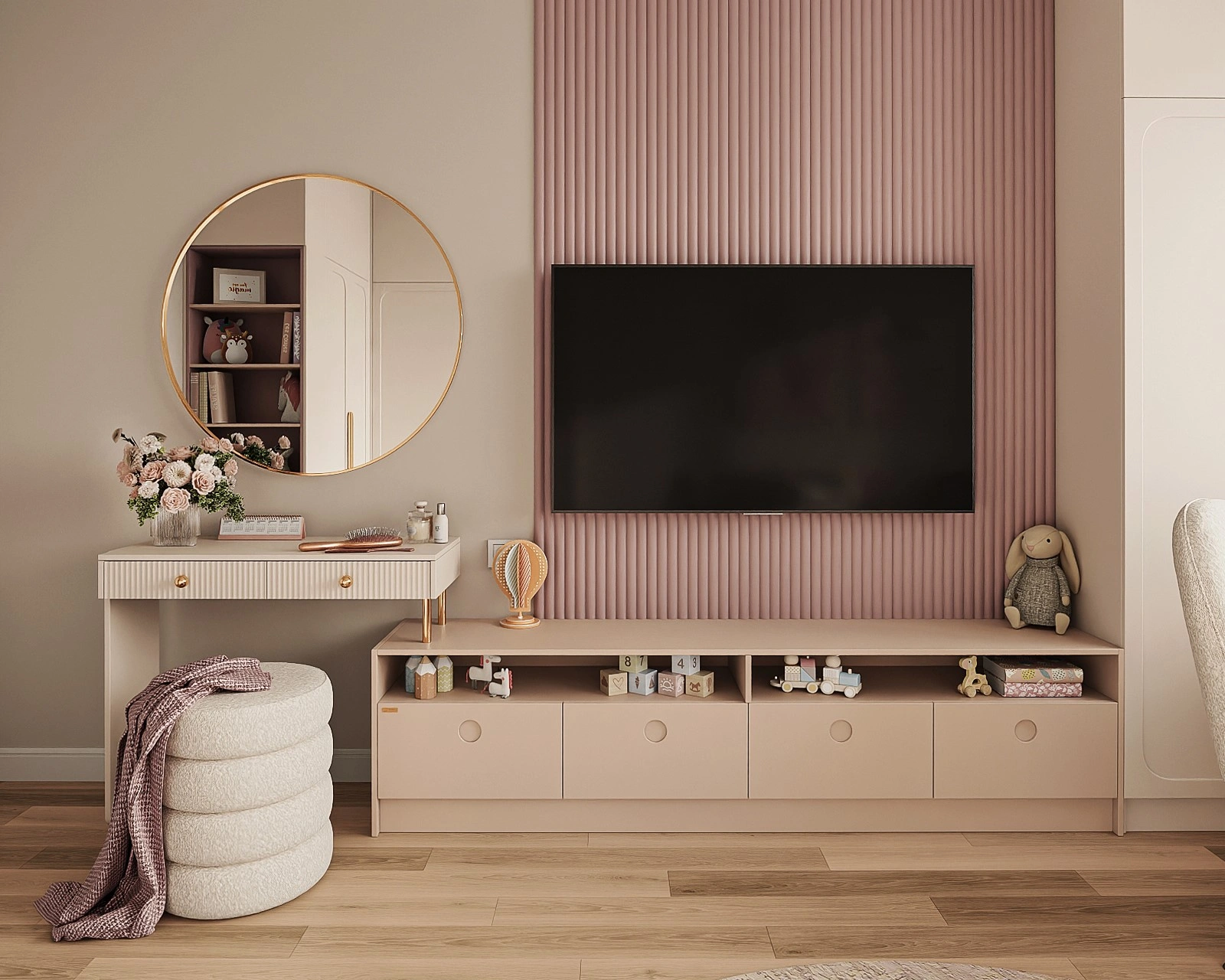
Minimalism does not mean giving up toys. It is about thoughtful organization, where every item has its place. This keeps the room tidy and helps children navigate their belongings and maintain order independently.
Clean storage systems, open shelves for favorite toys, hidden drawers, and multifunctional furniture allow everything to be organized without cluttering the space. This creates a sense of lightness while preserving functionality.
As a result, the children’s room remains both beautiful and practical, with space for both play and order.
Myth 4: Minimalism makes a children’s room cold and uncomfortable
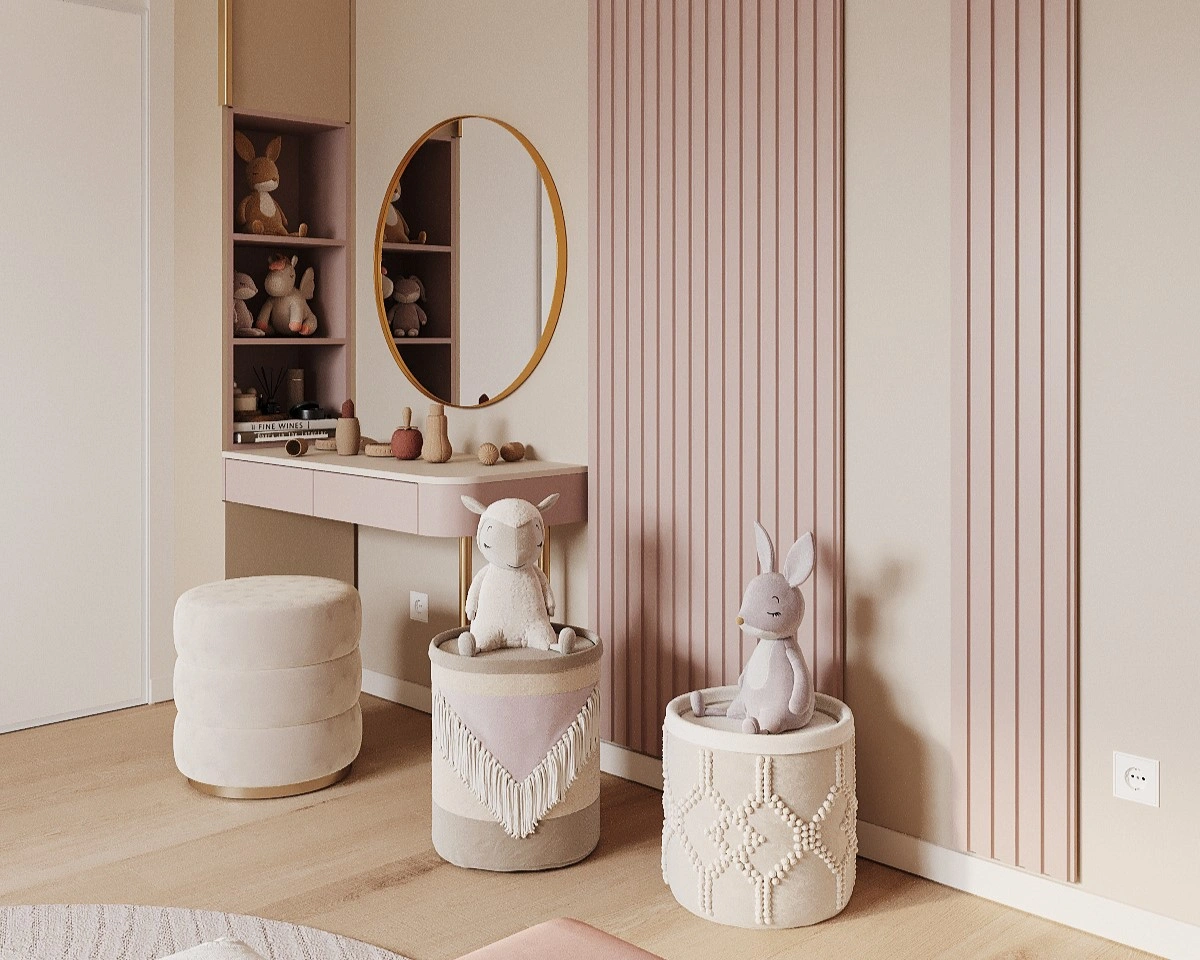
Minimalism is not about coldness but about balance and calmness. Comfort in such interiors is created through materials, textures, and lighting. These elements bring warmth and make the space truly comfortable for a child.
Soft textiles add a sense of comfort and protection. Blankets, cushions, rugs, and curtains soften the space and make it more welcoming. Warm lighting enhances this effect, creating a calm atmosphere that supports rest and sleep.
As a result, the children’s room remains light and aesthetic while being warm, soft, and pleasant for everyday life.
Myth 5: A child will not appreciate such design
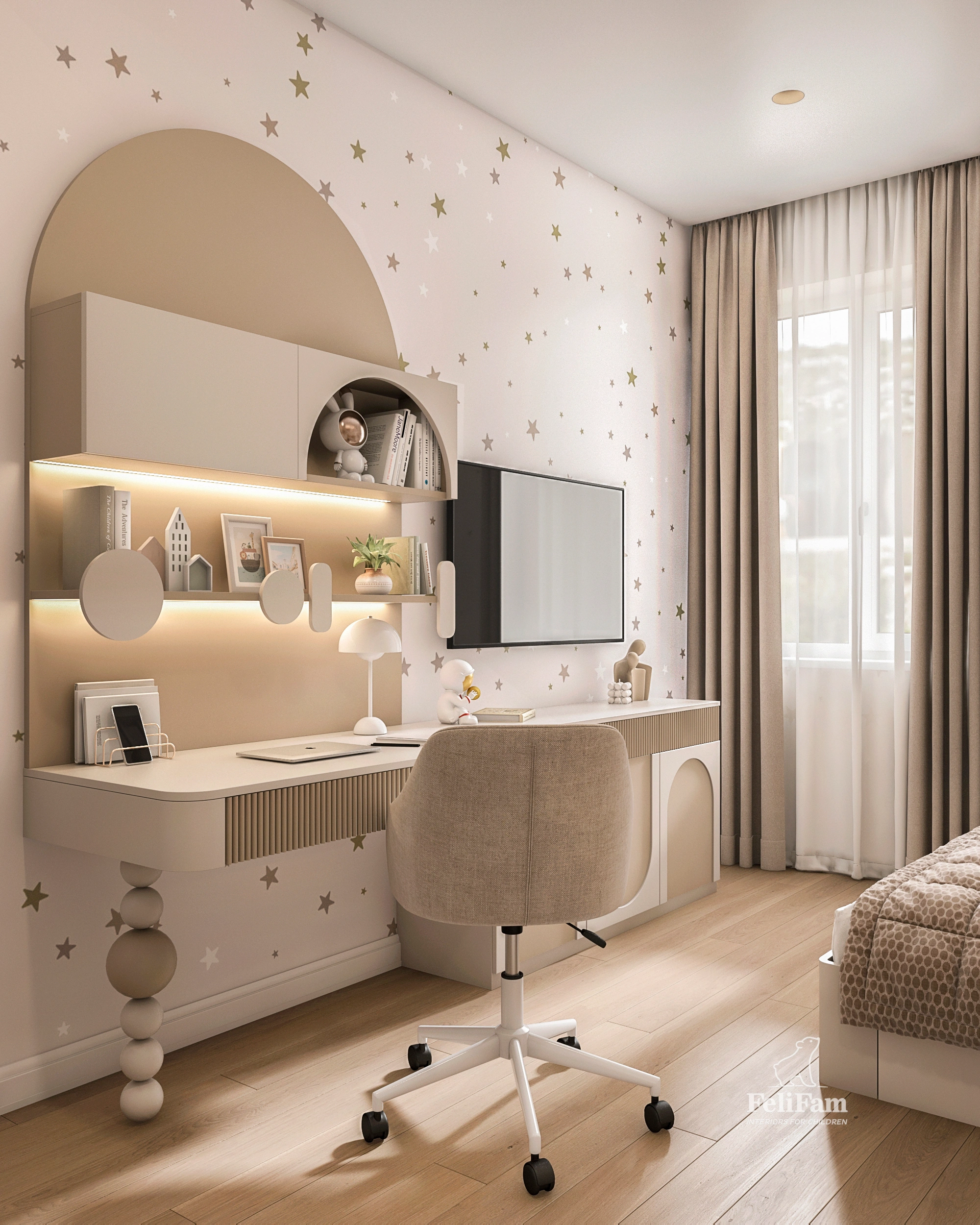
Children naturally respond well to spaces that are easy to navigate and not visually overwhelming. Minimalism creates exactly such an environment, where order, calmness, and clarity are present. In such a space, children can focus more easily on play, learning, and creativity.
A minimalist interior also helps develop good habits. When every item has its place, children learn to maintain order independently. This is not only about aesthetics but also about comfort and organization in daily life.
As a result, the minimalist space becomes clear, calm, and truly comfortable for the child.
Conclusion
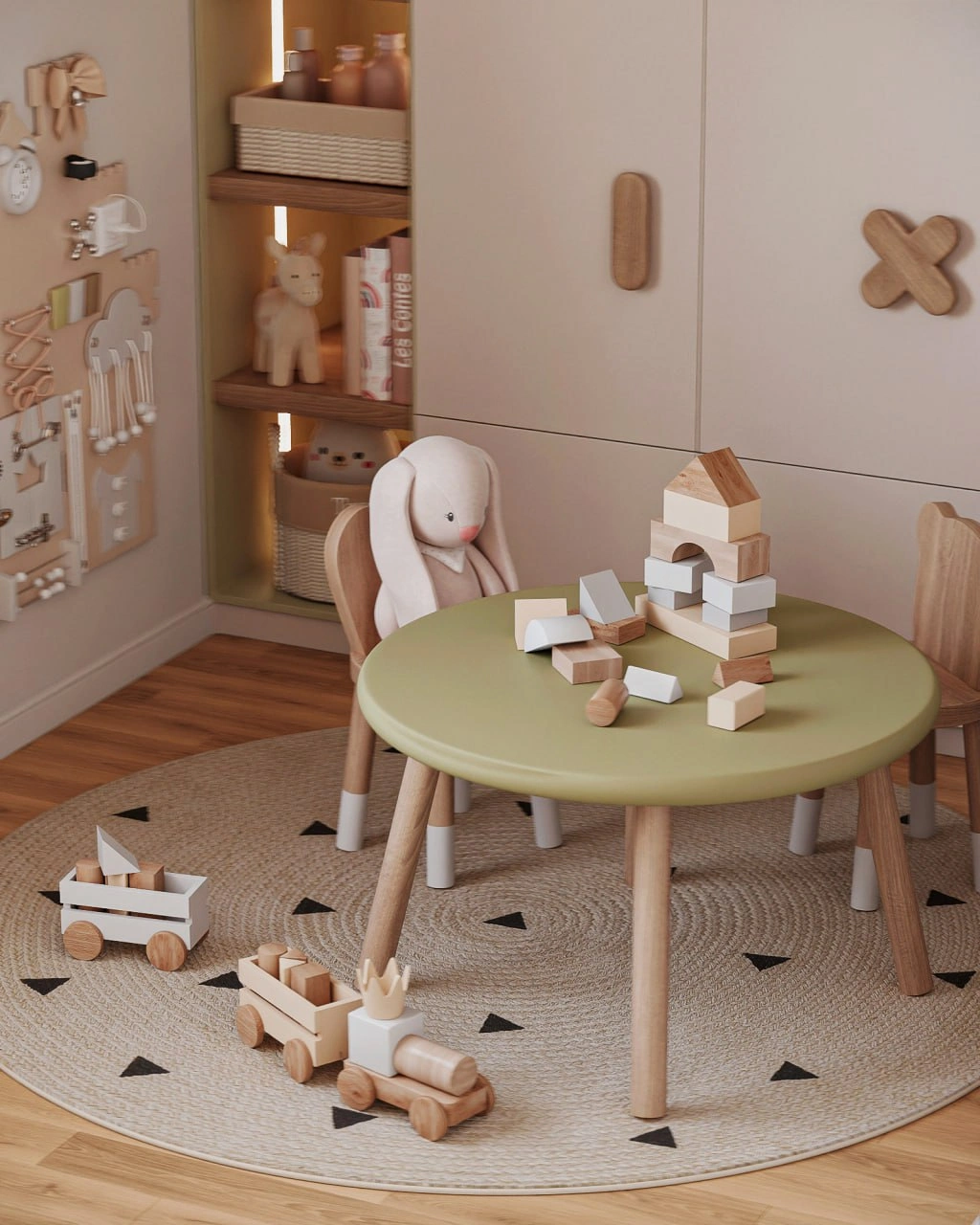
Minimalism in children’s room design is much more than a style. It is a thoughtful approach to creating a space where a child can live, grow, and explore the world. Every detail has meaning, and the atmosphere supports calmness and inner balance.
By removing unnecessary elements, you do not limit the child; instead, you create an environment with more space for imagination, play, and development. Such interiors do not overwhelm or tire, remain relevant for years, and easily adapt to changing needs and interests.
At FeliFam, we create children’s rooms as complete turnkey spaces, combining aesthetics, functionality, and a deep understanding of a child’s needs. Each project is developed individually, considering the family’s lifestyle and the child’s personality.
We work with both restrained minimalist solutions and more expressive concepts, maintaining balance and a sense of home. As a result, you receive a space that supports development, inspires, and remains relevant for years.