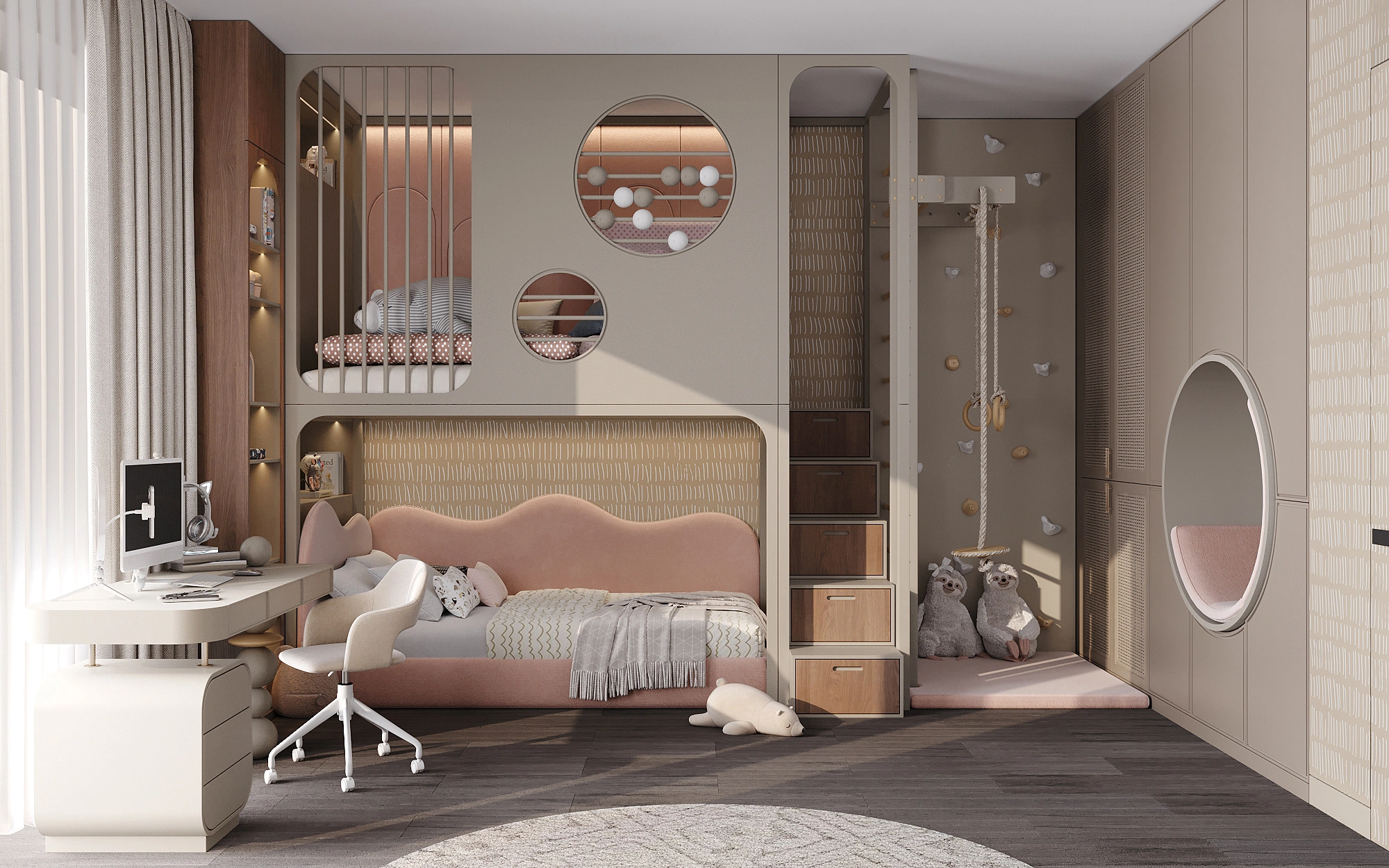



Kids room colors influence far more than the visual appearance of a space. They shape the atmosphere in which a child plays, rests, studies, and develops every day.
When planning a children’s room interior, it is important to consider not only current design trends but also the child’s age, personality, interests, and daily routine. A young child’s bedroom, a school-age child’s space, and a teenager’s room each require a different approach to color.
In professional children’s room design, color is one of the key tools used to create a balanced and comfortable environment. It can define functional zones, make the room feel more inviting, and reflect the personality of the child who lives there.
In FeliFam projects, we often combine a calm, versatile base with carefully considered color accents. This approach allows us to create interiors that remain relevant for years and can be easily adapted as the child’s needs, interests, and lifestyle change.
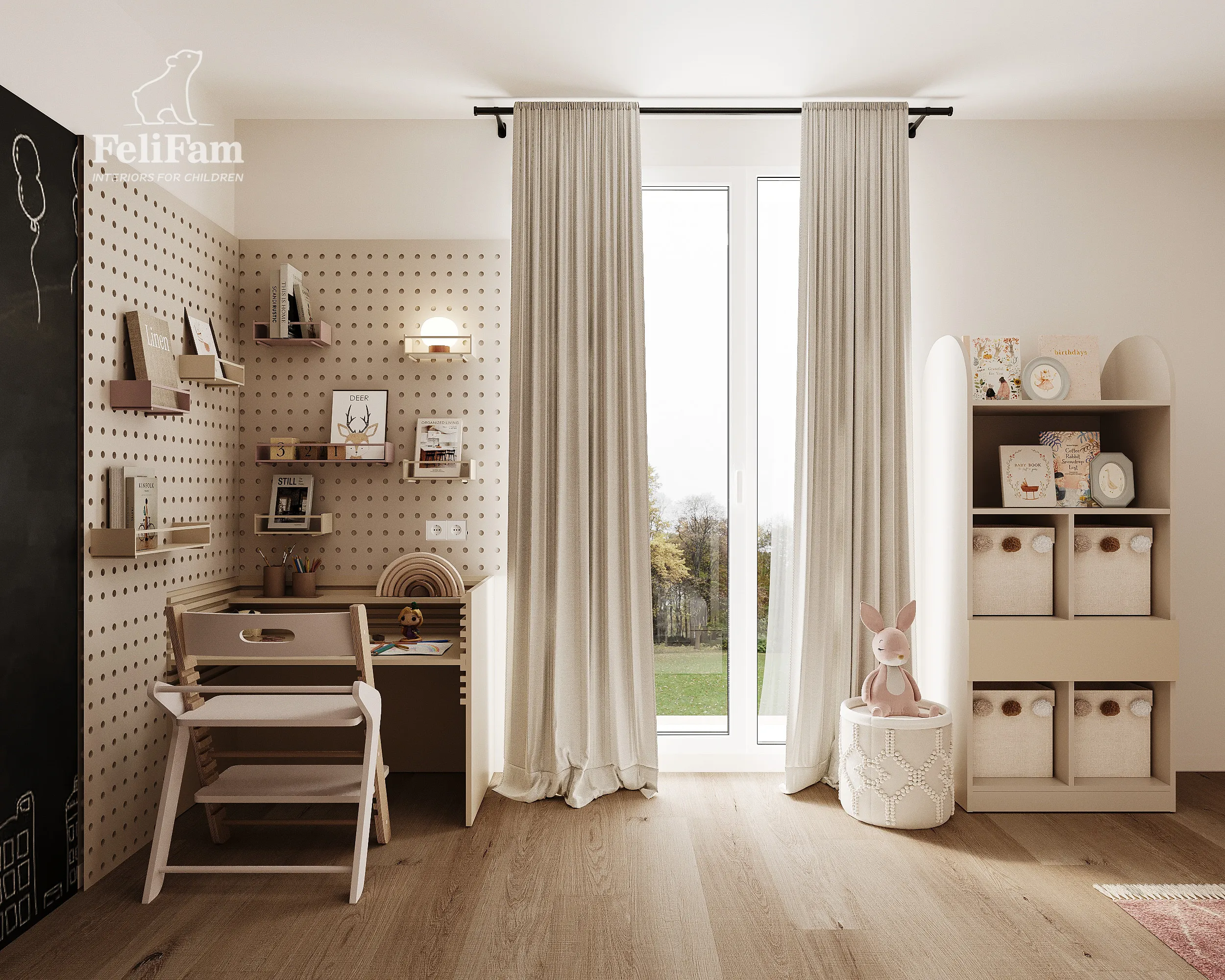
How Colors Shape the Atmosphere of a Children’s Room
Every shade affects how a room is perceived and changes the overall feeling of the interior. Warm colors can bring comfort and energy, while soft, nature-inspired shades help create a calm atmosphere for rest, learning, and creativity.
There is no single palette that will suit every child. The right choice depends on age, temperament, personal preferences, and how the room is used. This is why modern kids room interior design often starts with a neutral base, complemented by color accents introduced through textiles, décor, or custom furniture details.
The Psychology of Kids Room Colors
When selecting a kids room color palette, it is important to consider more than the color itself. Its intensity, undertone, and relationship with other shades and materials will all influence the final result.
Green Shades
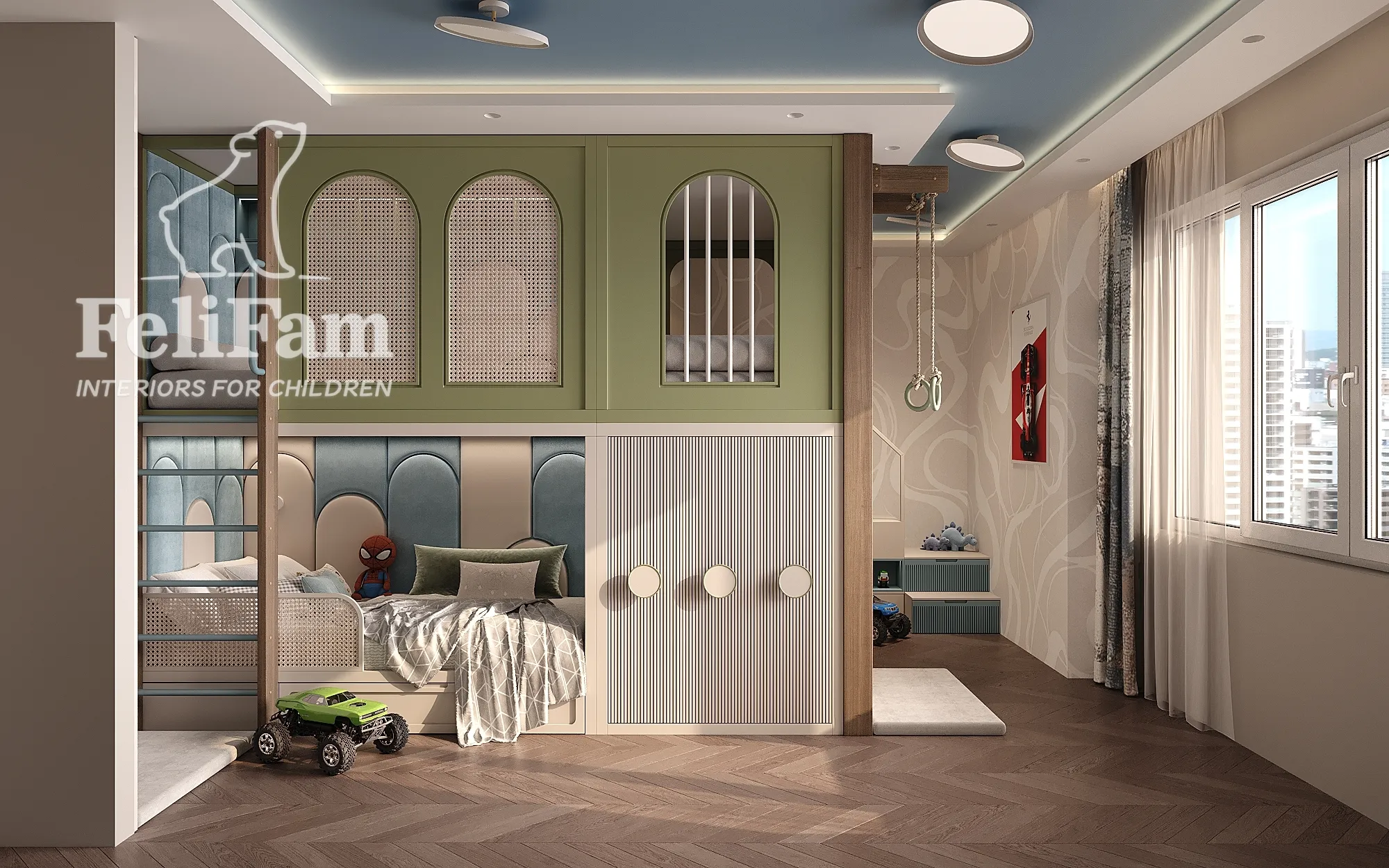
Olive, sage, and mint create a calm, nature-inspired backdrop. These shades work particularly well in rest and study areas, helping the room feel balanced and harmonious.
Light Blue and Deep Blue Shades
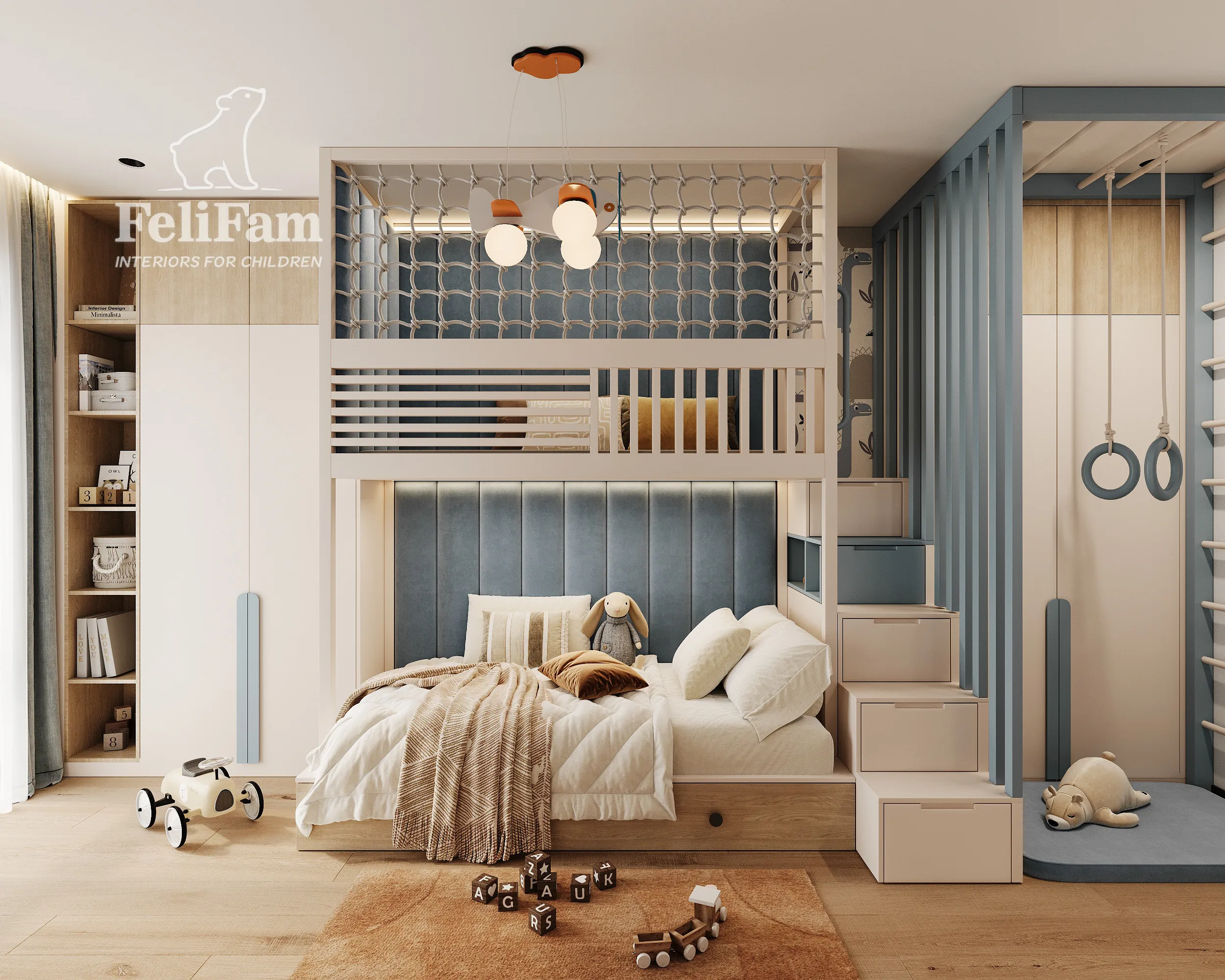
Light blue shades make a room feel airy and fresh. They pair beautifully with natural wood, white finishes, and warm accents, creating a balanced interior without making the space feel cold.
Warm Shades
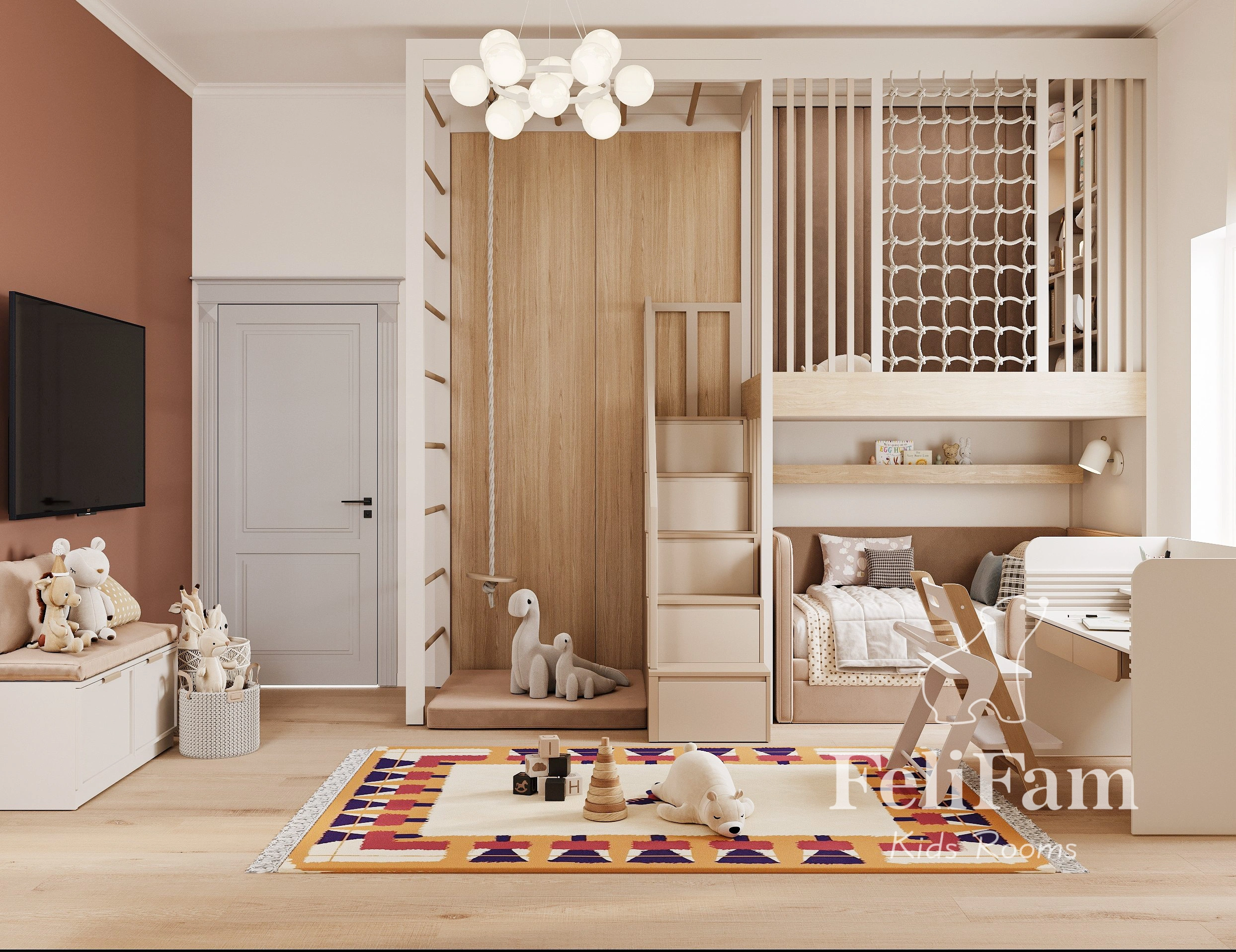
Yellow, terracotta, and peach tones bring warmth and energy into the room. They are often most effective when used selectively in textiles, décor, lighting, or smaller furniture elements.
Neutral Colors
Beige, cream, off-white, and light grey remain popular choices in modern children’s interiors. They provide a calm foundation that can be updated over time without redesigning the entire room.
How to Choose a Color Palette for Different Ages
Kids room colors should reflect the way a child’s needs change over time. A baby who is only beginning to explore the world benefits from a calm and reassuring environment, while older children often have clear interests, favorite colors, and a desire to take part in designing their own space.
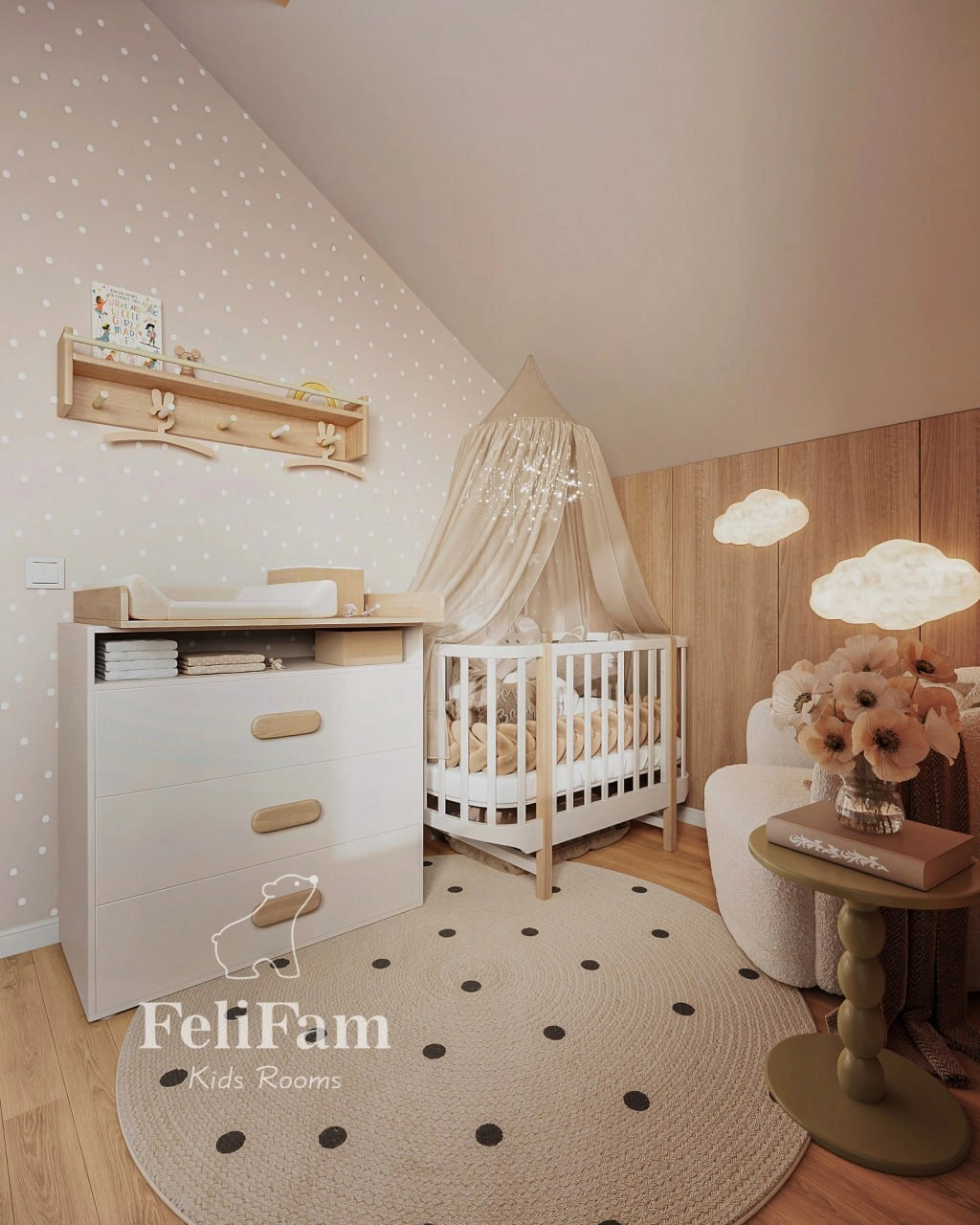
For babies and toddlers, designers often choose soft, nature-inspired shades such as warm white, beige, pale green, or pastel blue. This type of palette creates a peaceful atmosphere without visually overwhelming the room.
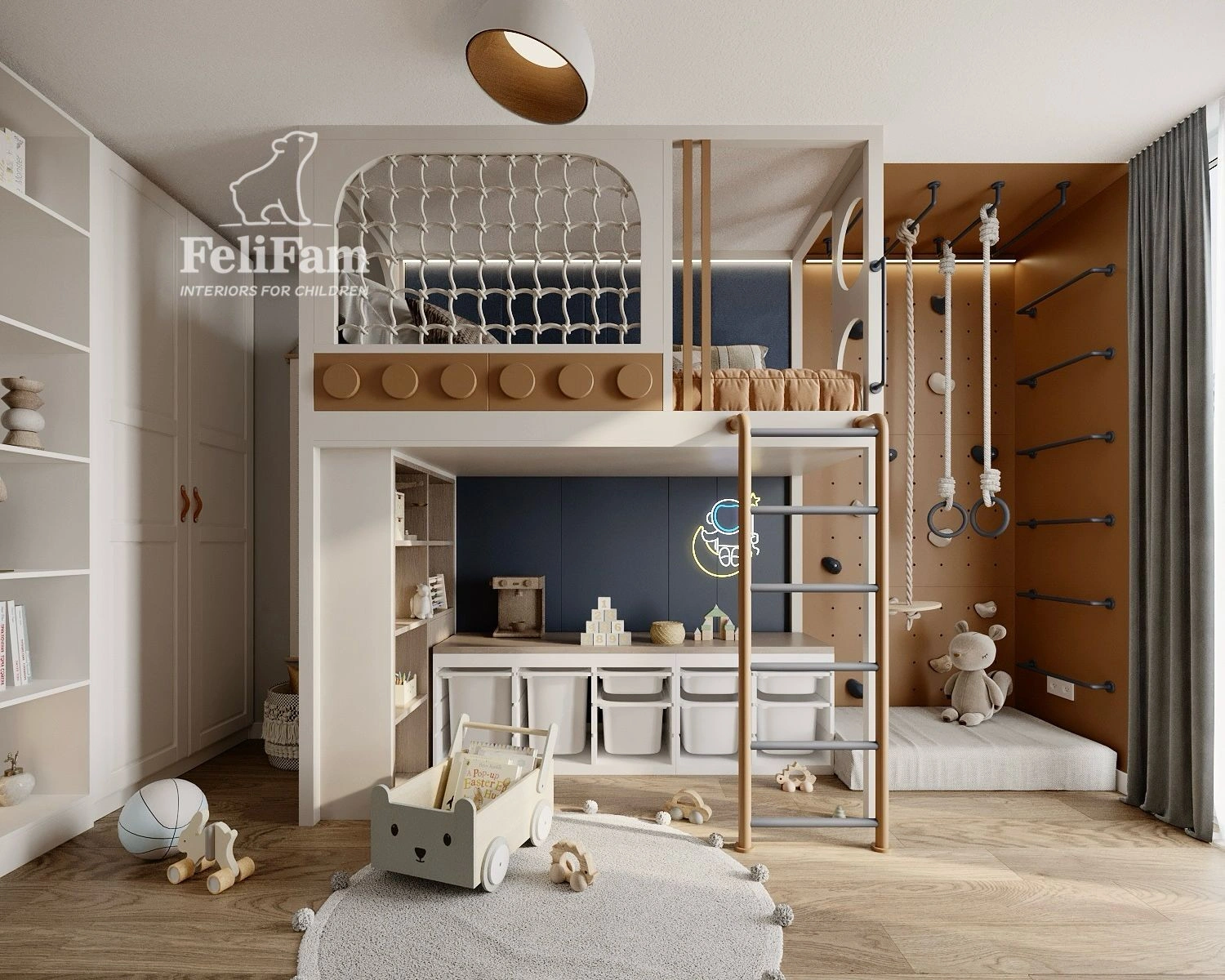
During the preschool years, the room becomes a setting for active play, imagination, and creativity. At this stage, brighter accents can be introduced, provided they are balanced by a calm base.
For school-age children, the design should support both concentration and relaxation. Subdued shades around the desk can create a comfortable study environment, while expressive color details give the room personality.
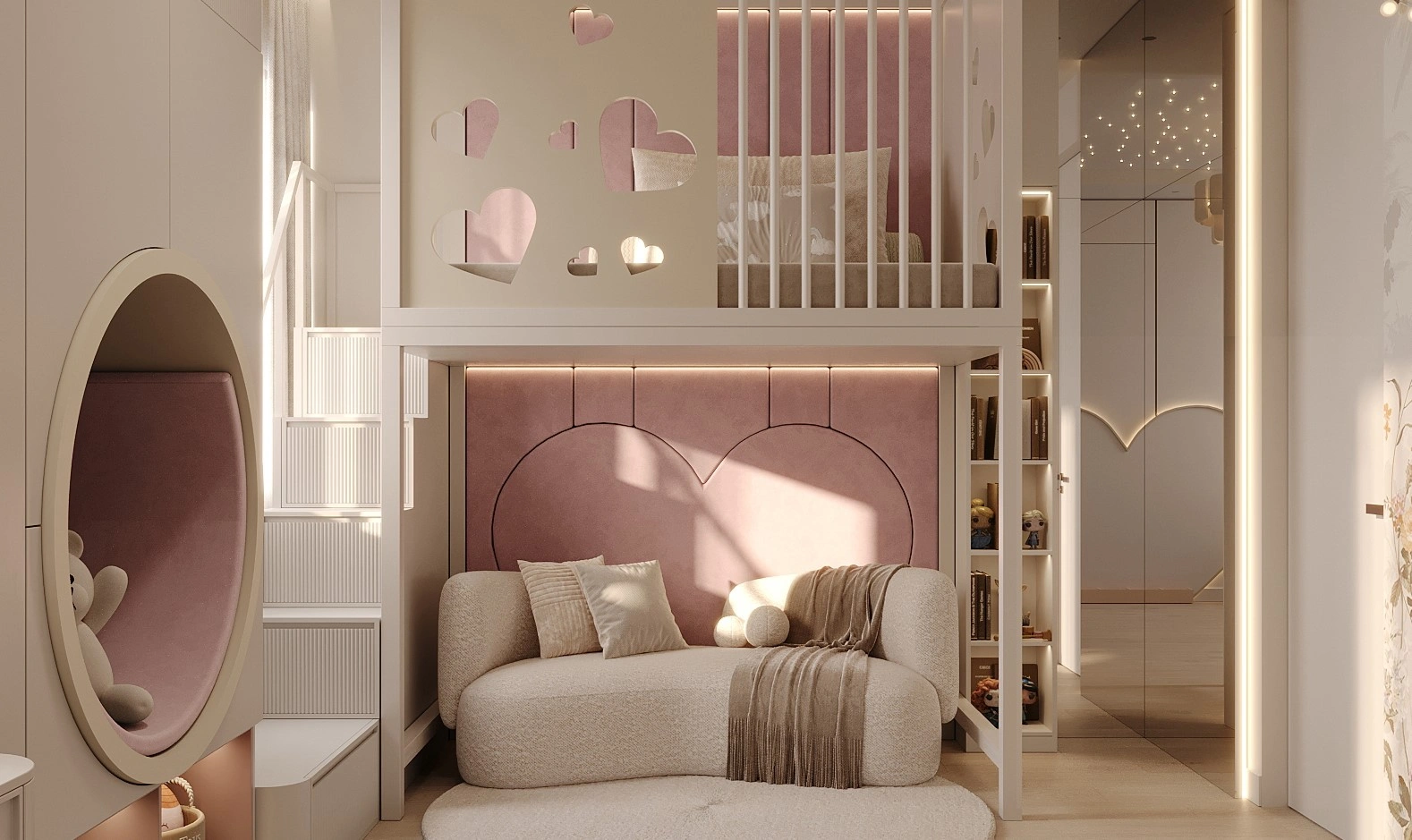
Teenagers are already developing their own sense of style, so their preferences should play an important role in the design process. A modern kids room for boys might combine neutral surfaces with deep blue, forest green, or graphite accents. A kids room for girls no longer needs to rely on a traditional pink palette; beige, olive, terracotta, lavender, and muted blue can create a more personal and sophisticated interior.
Combining Colors in Modern Kids Room Interior Design
A harmonious interior is rarely built around a single color. It depends on how different shades work together across walls, materials, textiles, and furniture. In modern kids room design, a neutral foundation is often paired with accents that can be replaced or updated as the child grows.
One practical guideline frequently used by interior designers is the 60-30-10 rule:
- 60% of the room is assigned to the main color, which establishes the overall atmosphere;
- 30% is given to a secondary shade that adds depth and character;
- 10% is reserved for accent details such as décor, textiles, artwork, or smaller furniture elements.
This approach helps prevent the palette from feeling random or visually overwhelming and gives the room a more cohesive, professionally designed appearance.
Popular Color Combinations for a Children’s Room
Contemporary children’s room design often draws inspiration from natural, calm palettes that can be adapted to different ages and interior styles.
Beige + natural wood + green
A warm, nature-inspired combination that creates a comfortable backdrop for both young children and school-age children.
Warm white + light blue + warm wood tones
A light and peaceful combination that maintains a sense of openness while adding gentle color to the interior.
Warm grey + terracotta + cream
A contemporary palette suited to older children and teenagers. It feels modern and refined while remaining warm and welcoming.
Olive + sand + white
A natural color scheme that works particularly well with wooden furniture and creates a calm interior without being tied to a specific age or theme.
Conclusion
Choosing kids room colors should begin with an understanding of the child rather than with temporary trends. A well-considered palette helps create a space where a child can rest comfortably, concentrate, play, and express creativity.
A successful children’s room design combines aesthetics, functionality, and the personality of its young resident. Color is not simply a decorative layer; it is an important part of the environment in which a child spends a significant part of everyday life.
At FeliFam, we create individually designed children’s spaces where every element has a purpose, from the choice of colors and materials to custom furniture, room zoning, and storage planning. The best interior is not simply a beautiful image, but a thoughtful, functional space that becomes part of a happy childhood.