





When designing children’s rooms, we always consider the study area as a strategically important part of the space. Regardless of the child’s age, this area should be well-planned and functional, including an ergonomic desk, quality lighting, practical storage solutions, and a properly selected kids’ desk chair.
Kids’ desk chairs form the foundation of daily productivity. They affect not only comfort but also concentration, endurance during lessons, and the development of healthy posture. An incorrectly chosen seat can lead to fatigue and loss of focus, while an ergonomic solution helps the child stay engaged in learning for longer periods.
Let’s look at the key criteria for choosing a kids’ desk chair that supports effective learning and adapts to the child’s growth.
Key Criteria for Choosing a Kids’ Desk Chair
- Proper posture. Feet should rest flat on the floor, knees at about 90°, and thighs parallel to the ground. If these conditions are not met, even the most expensive chair won’t provide proper comfort and support.
- Lumbar support. The backrest should support the lower spine, not just the mid-back. Ideally, it has adjustable lumbar support to match the child’s height, reducing strain during long study sessions.
- Adjustable features. The chair should allow adjustment of seat height, backrest angle, and, if possible, seat depth. This ensures proper ergonomics, adapts to the child’s growth, and allows the chair to be used comfortably for several years.
- Materials and durability. The frame should be made of reliable materials capable of withstanding daily use without deformation. Upholstery should be durable, breathable, and safe for children. Quality materials directly affect longevity, stability, and comfort during extended use.
- Interior harmony. The chair should fit naturally into the room’s overall design while being appealing to the child, turning the workspace into a personal and comfortable area rather than a chore.
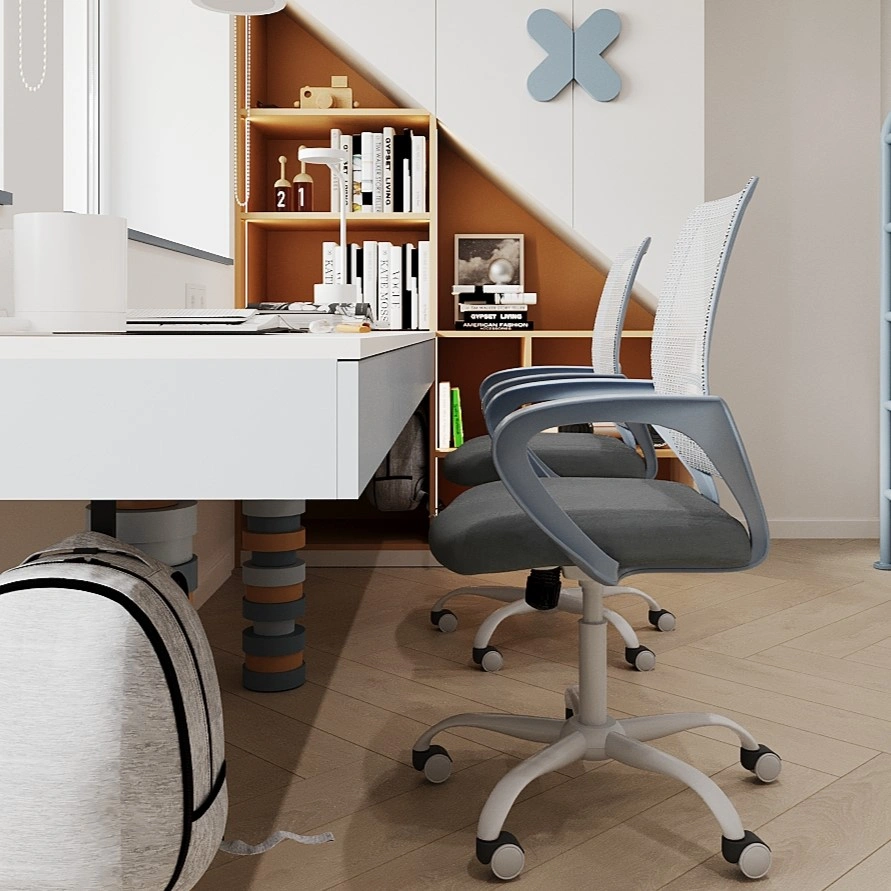
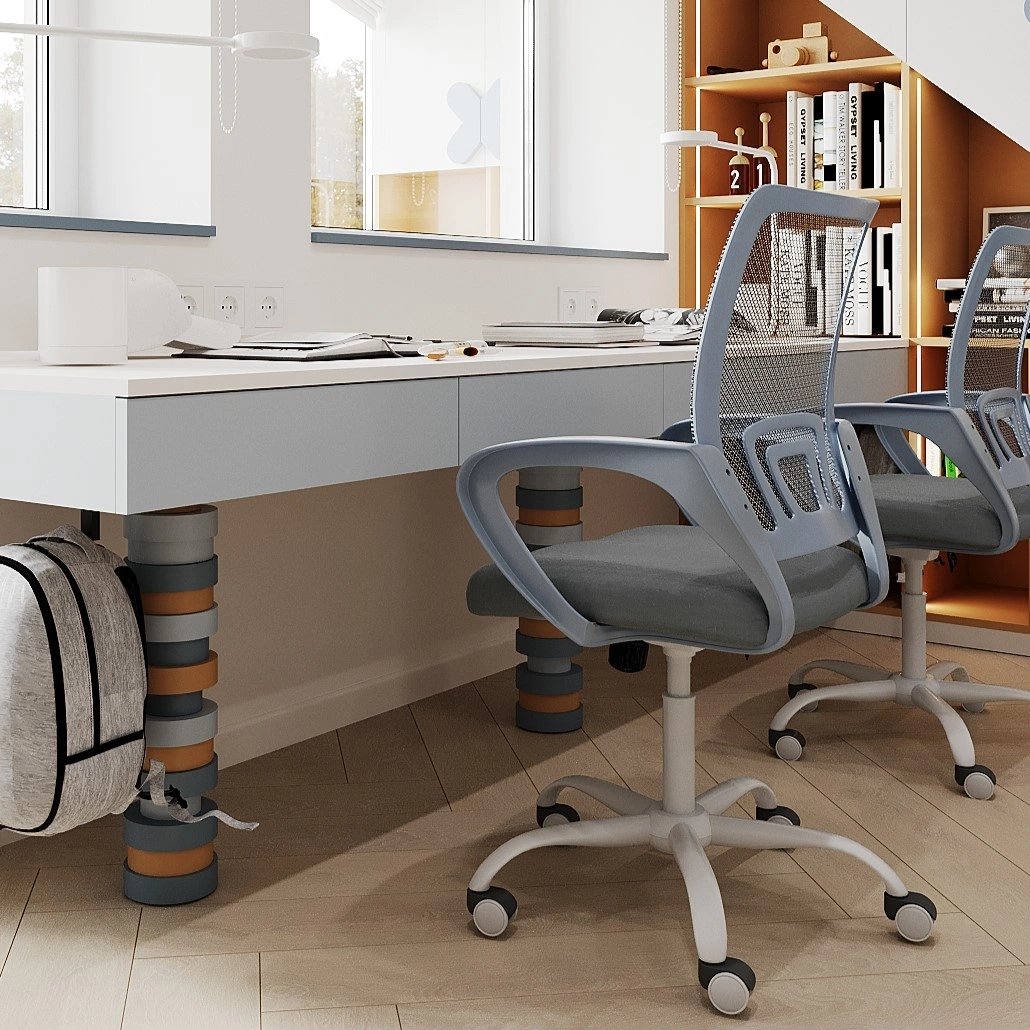
Kids’ Desk Chairs: Classic or Orthopedic
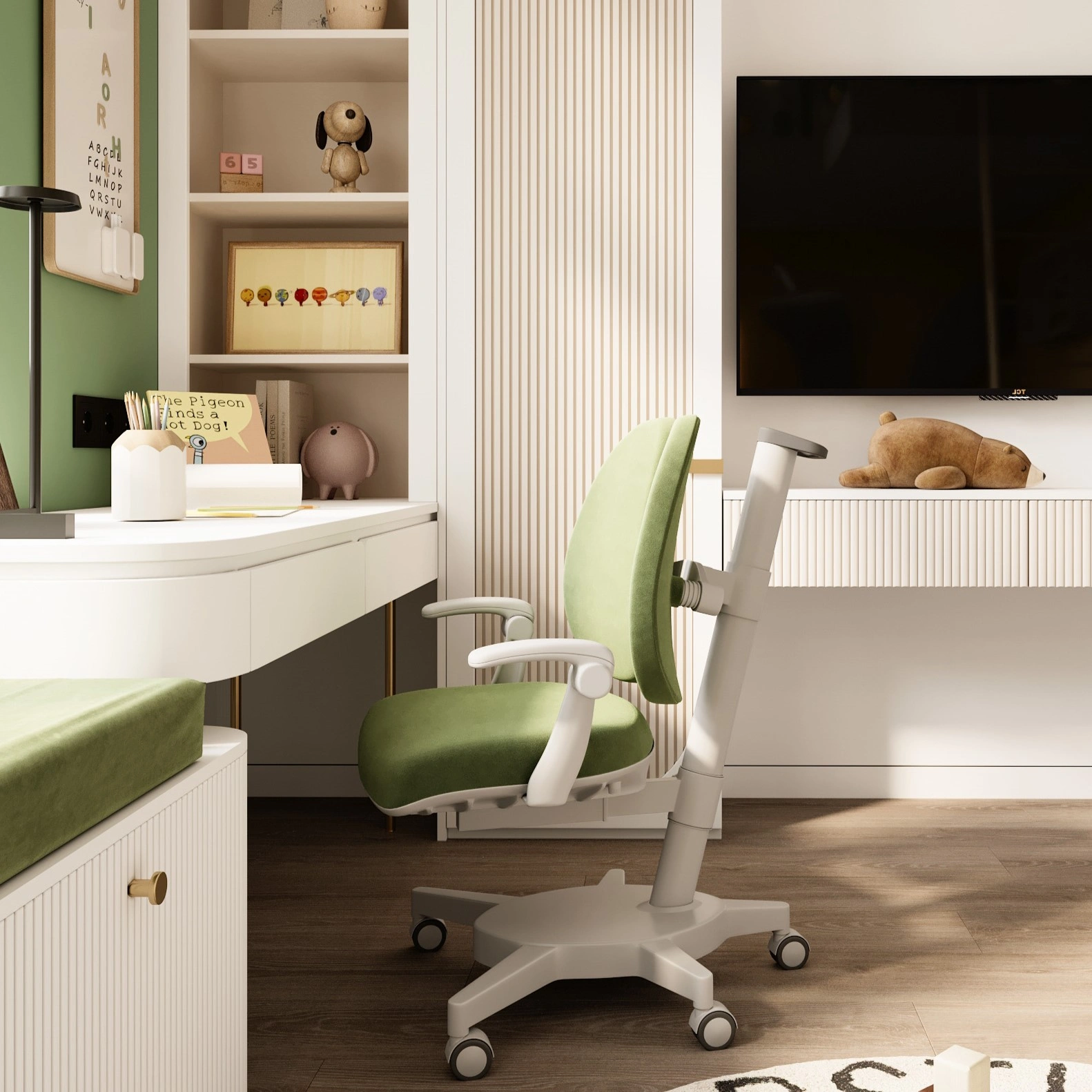
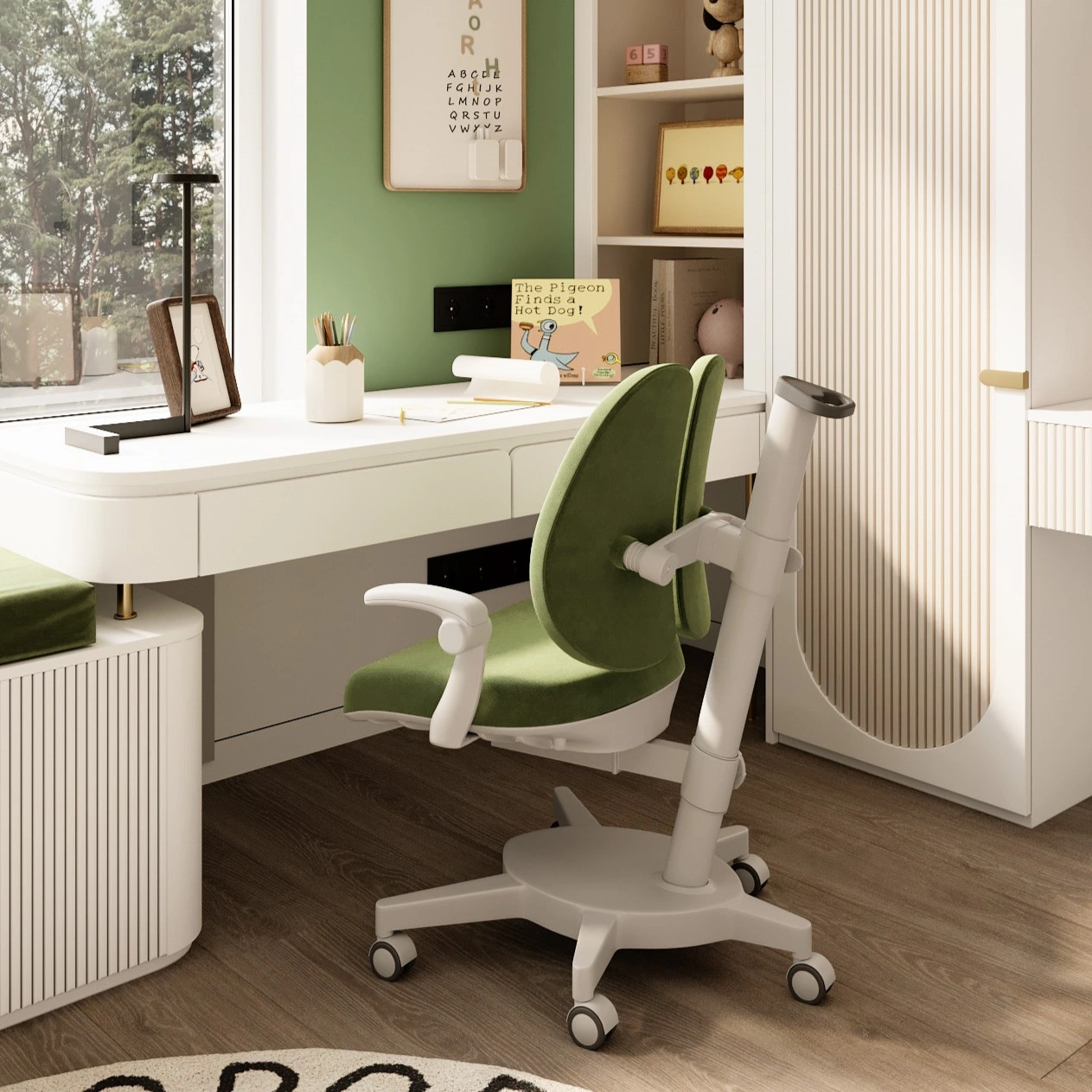
Orthopedic Models
Advantages:
- Anatomical support: Chairs are designed to follow the natural curves of the spine, especially the lumbar area, reducing strain and supporting healthy posture during long study sessions.
- Reduced fatigue: Proper back support and even weight distribution help the child stay focused for longer.
- Adjustable elements: Many orthopedic chairs offer extended adjustments — backrest height, tilt angle, lumbar support, etc.
Disadvantages:
- Higher cost due to complex design and special mechanisms.
- Some models may appear more technical and not always blend seamlessly with room design.
- Adaptation period: not all children immediately get used to firm support.
Classic Models
Advantages:
- Versatility: Suitable for shared spaces, comfortable for both children and adults.
- Aesthetics: Simple design that easily fits various interior styles.
- Simplicity and reliability: Fewer mechanisms increase durability and reduce risk of malfunctions.
- Minimal setup: Ready to use without complex adjustments.
Disadvantages:
- Limited ergonomic support for the spine and lumbar area.
- Less comfort for prolonged use.
- Limited long-term usability due to lack of adjustments.
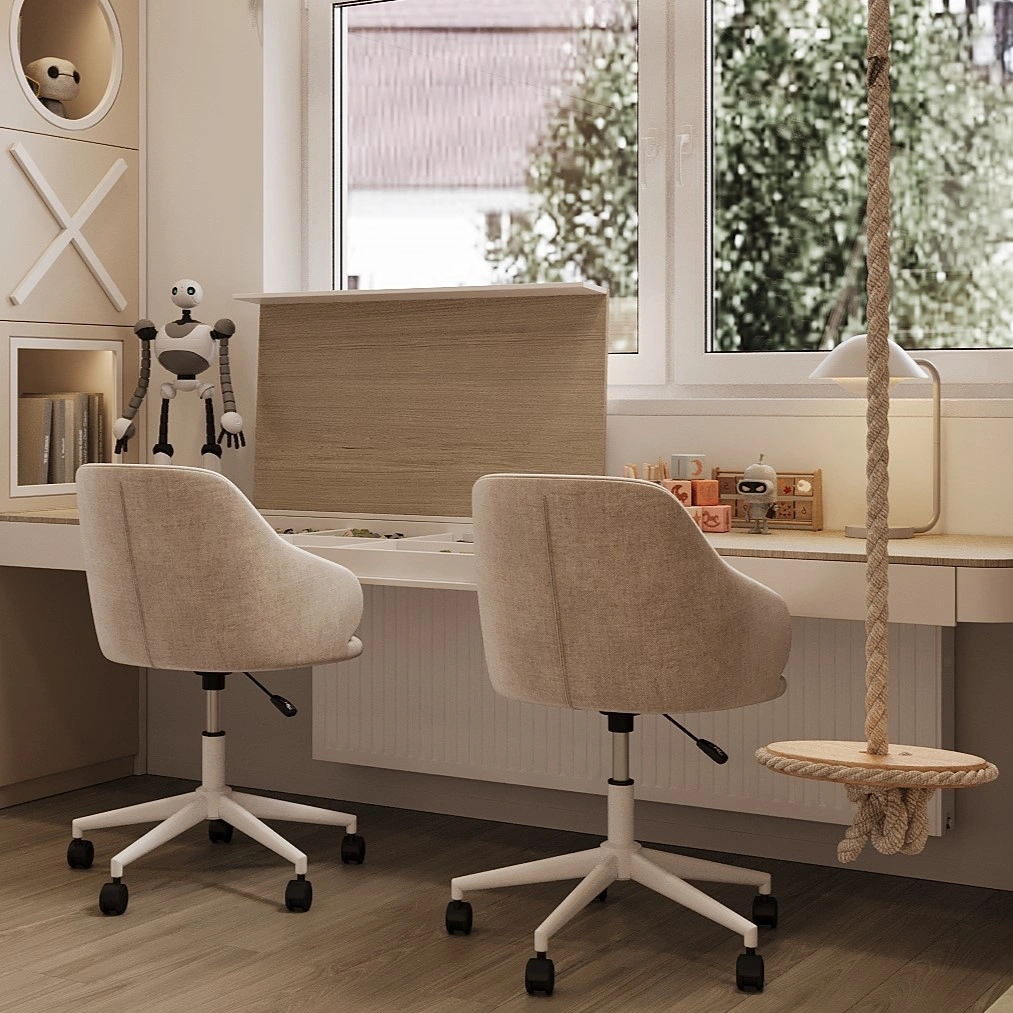
Which Kids’ Desk Chair Is Right for Your Child?
Choosing between orthopedic and classic models depends on how the study space is organized and the role the workspace plays in your child’s daily routine. Consider lesson duration, workload intensity, growth periods, and need for personalized adjustment.
When to Choose an Orthopedic Chair
- The child studies 2–3 hours or more daily;
- Active growth period;
- Doctor’s recommendations for posture support;
- Need for precise individual adjustment to the child’s measurements.
In these cases, ergonomic support is not just an advantage but a necessity.
When a Classic Chair Works Best
- The workspace is used occasionally or for short periods;
- Shared space usage;
- Importance of versatility and aesthetic integration;
- No need for complex adjustments.
Here, simplicity, stability, and harmony with the room design are key.
Our Approach
In our projects, we treat a kids’ desk chair as a long-term investment in the child’s health and comfort. Model selection is based on daily study duration, age, height, developmental needs, and overall space design.
Modern ergonomic chairs combine thoughtful design, extended functionality, and aesthetically balanced styles. Most models integrate seamlessly into the interior while supporting its look and feel.
We always choose solutions that align with the room design and how the space will be used. Balancing ergonomics, functionality, and aesthetics creates a study area where children feel comfortable, focused, and confident every day.

