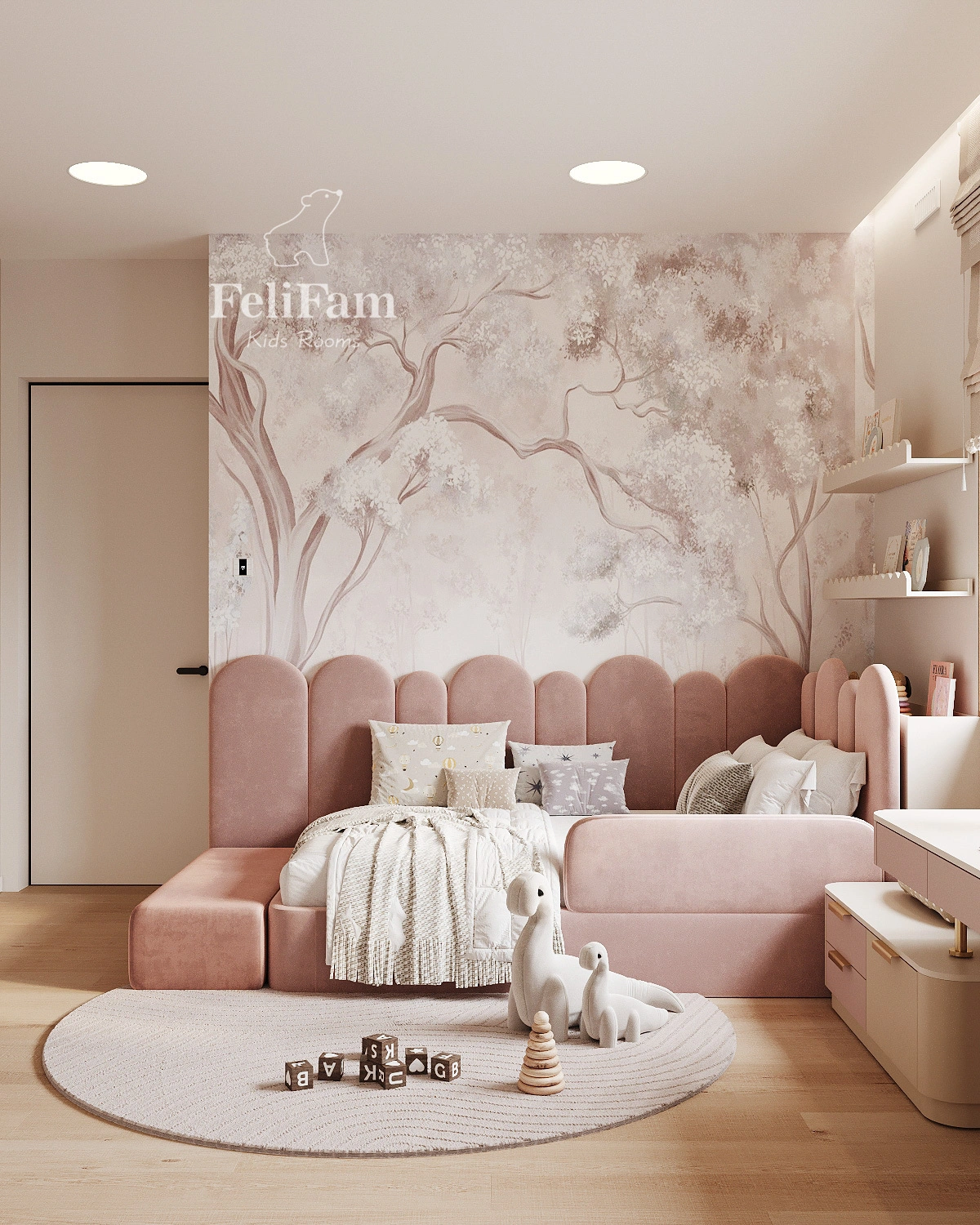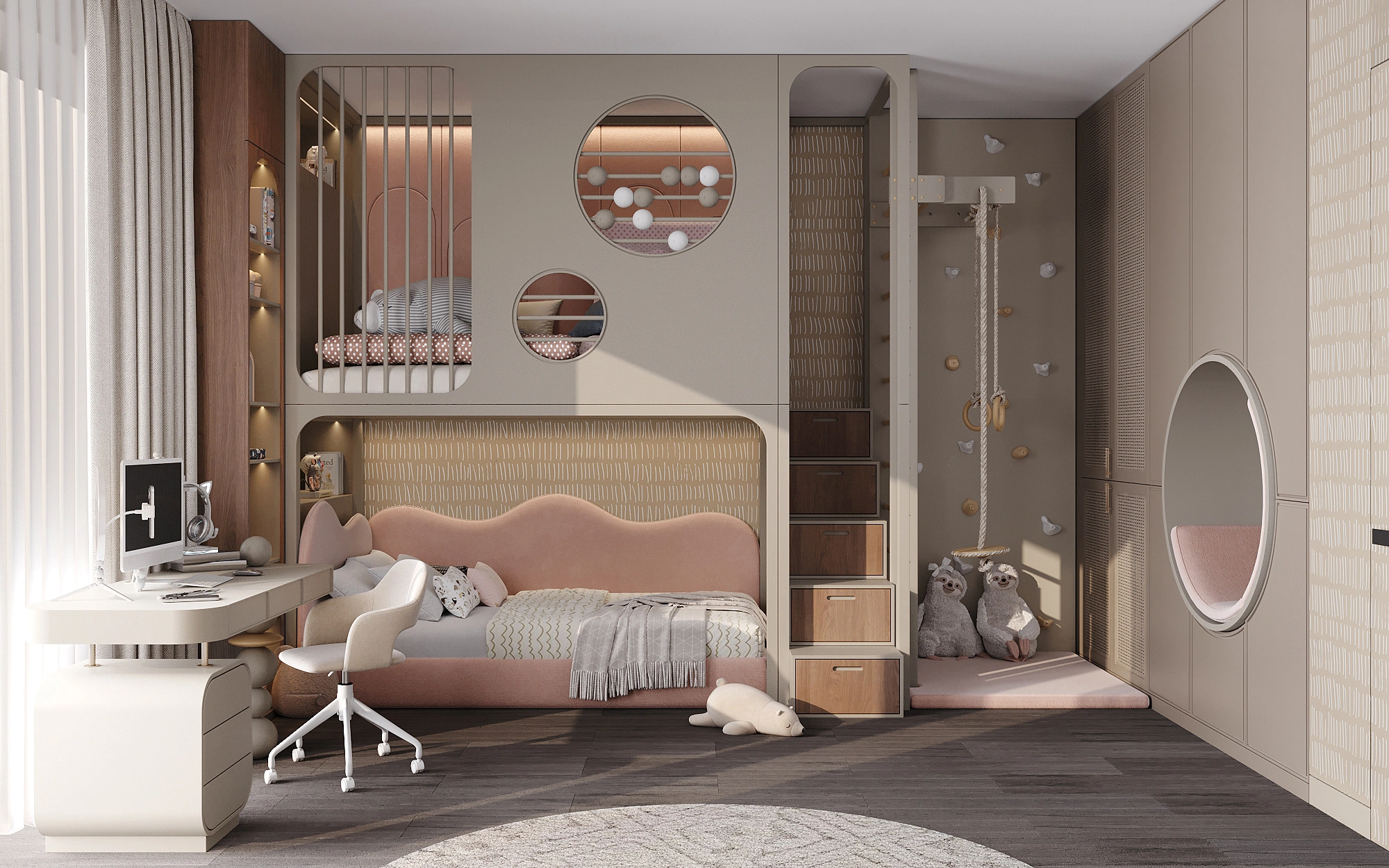



Designer kids' rooms are often associated with beautiful furniture, carefully selected colour palettes, and stylish interiors that make a lasting first impression. It is easy to think of them simply as visually appealing spaces created for children.
In reality, the true value of a designer children's bedroom goes far beyond appearance. A thoughtfully designed room is created to support a child's everyday life, providing comfort, safety, functionality, and room to grow.
In this article, we'll explore what designer kids' rooms really are, how they differ from standard interiors, and why investing in a professionally designed space benefits both children and their parents.
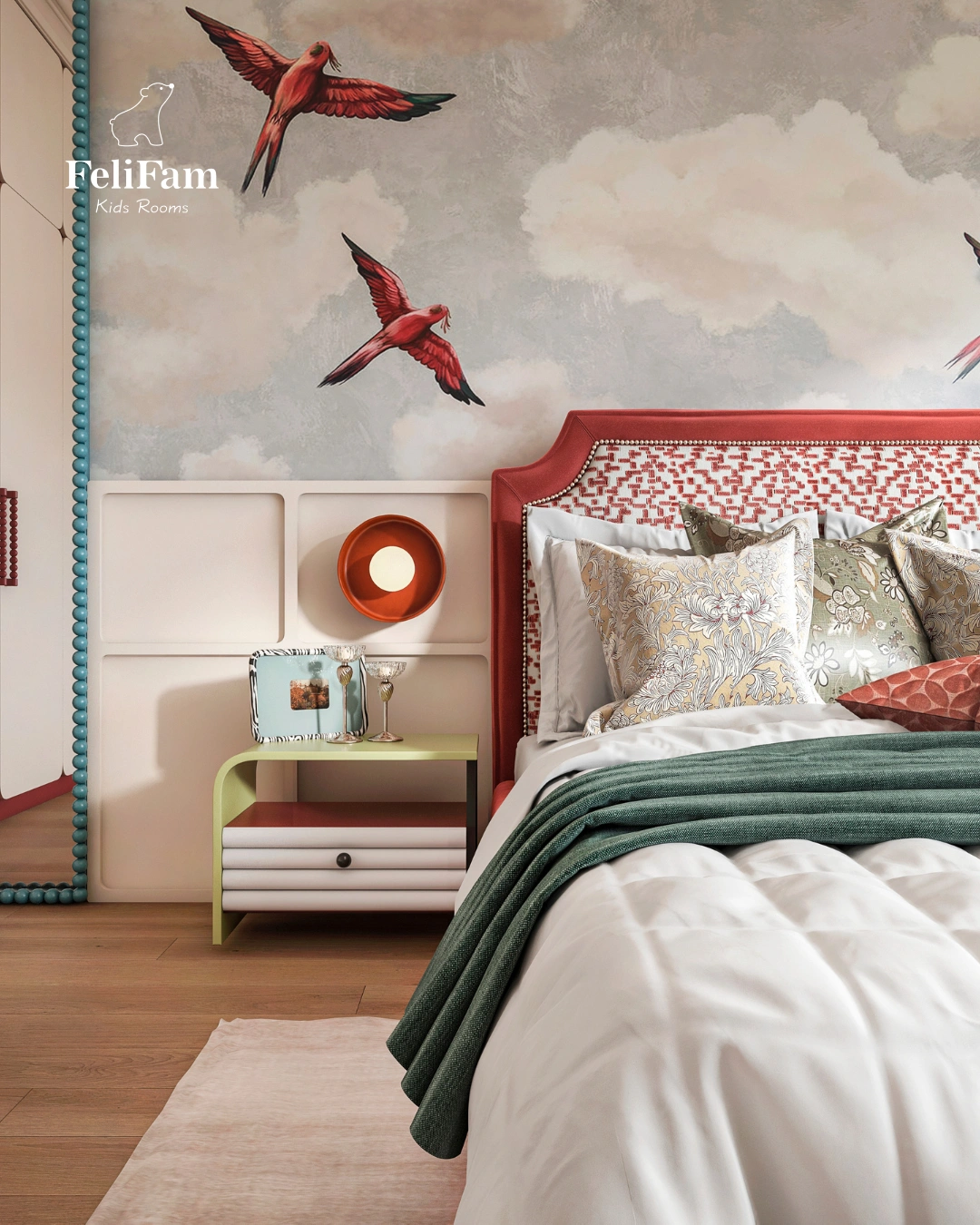
What Are Designer Kids' Rooms?
As we've already established, designer kids' rooms are much more than a collection of premium furniture. They are personalised spaces created around a specific child, their family's lifestyle, and the way they live every day. Every design decision serves a practical purpose and contributes to a more comfortable daily routine.
That is why every project begins long before colours, finishes, or furniture are selected. The first step is understanding the people who will use the room. A designer looks at the child's age, interests, daily habits, routines, and changing needs, while also considering how the entire family interacts with the space.
For some families, a children's bedroom is primarily a place to sleep and study. For others, it also becomes a creative studio, a play area, a reading corner, or a place to spend time with friends and family. These everyday activities shape the layout far more than any particular interior style.
Professional design always starts with the right questions. Where will the child study? Is there a need for a dedicated creative area? How much storage is required for toys, books, or sports equipment? How will these needs change over the coming years? The answers become the foundation of the project. This is exactly what defines professional kids room interior design, where every decision is made for both visual harmony and everyday functionality.
Planning is equally important. Even a spacious room can feel inconvenient if its functions are poorly organised. On the other hand, a smaller space can feel remarkably comfortable when every square metre is thoughtfully designed.
Ergonomics and safety also play a crucial role. Furniture dimensions, shelf placement, circulation, lighting, materials, and hardware all influence how naturally and safely a child uses the room every day. These details are often invisible in visualisations, yet they make the greatest difference once the room becomes part of everyday life.
A well-designed room also anticipates the future. Children grow quickly, and their interests, routines, and priorities evolve with them. A carefully planned space can adapt over time without requiring a complete renovation or replacing all of the furniture.
That is what truly defines modern designer kids' rooms.
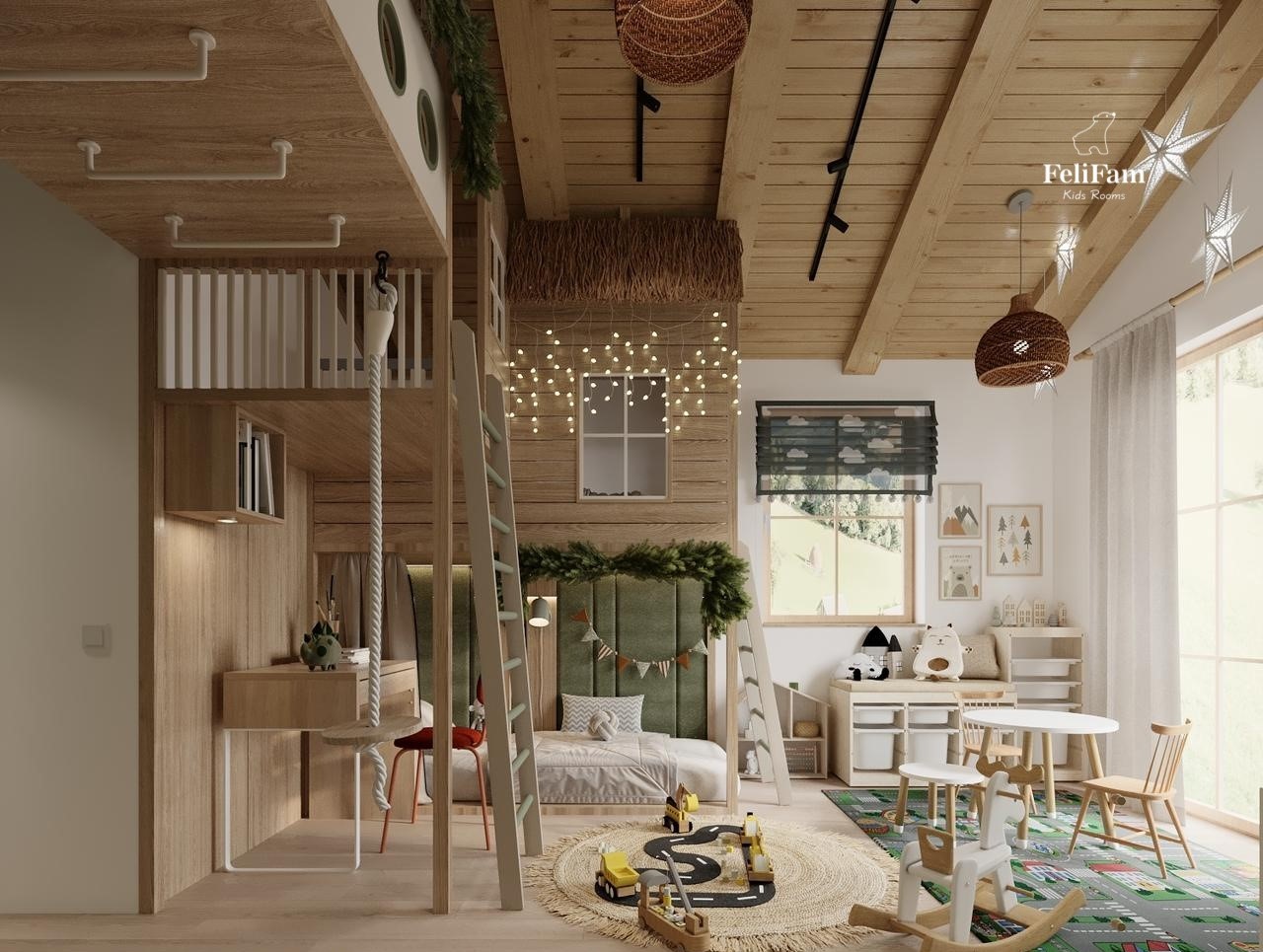
How Designer Kids' Rooms Differ from Standard Interiors
Standard furniture collections make it easy to furnish a room quickly. However, they rarely take into account the unique dimensions of the space, the family's lifestyle, or the individual needs of the child. As a result, valuable space is often underused, while some furniture becomes unsuitable much sooner than expected.
A custom kids room design starts with understanding the space and the family, not with choosing furniture. If you're planning to create a personalised children's bedroom, it helps to understand what working with a kids room designer looks like before the project begins.
An experienced designer plans not only for how the child will use the room today, but also for how the space will support their changing needs in the years ahead.
A professional children's bedroom design makes it possible to:
- make the most of every square metre;
- create practical and organised storage solutions;
- adapt the room to the child's age and lifestyle;
- choose safe, durable materials built for everyday use;
- bring furniture, lighting, and décor together into one cohesive interior.
Another important difference is the personal approach. A designer considers the child's personality, interests, and everyday habits, creating a room that feels genuinely comfortable rather than simply attractive.
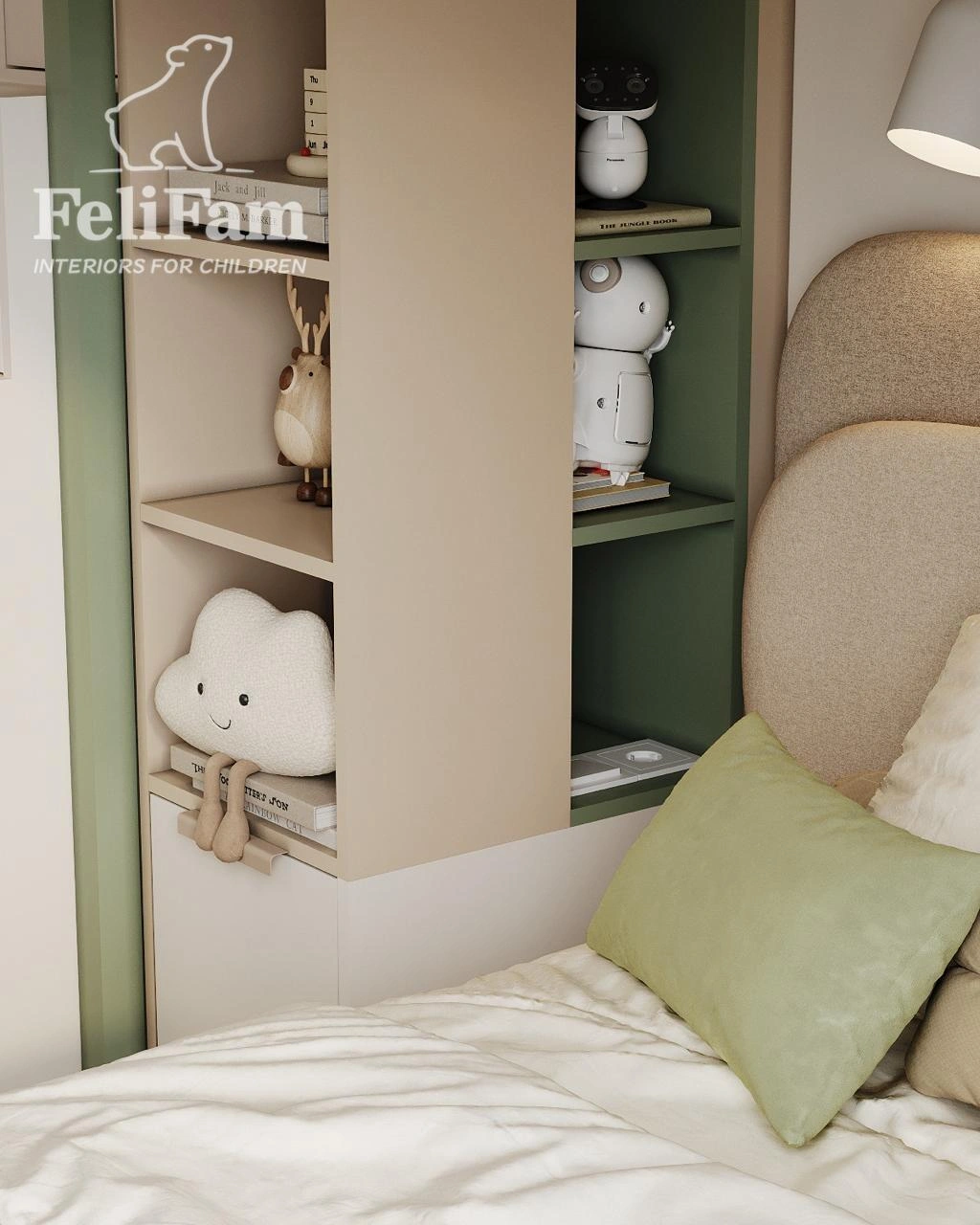
Why Designer Kids' Rooms Matter for Children and Parents
The greatest value of designer kids' rooms is not found in luxury finishes or bespoke furniture. It lies in giving a child a true sense of belonging and a space they can genuinely call their own.
A personal room becomes a place to rest, learn, create, and grow. It is where children welcome friends, develop new interests, and build the memories that shape their childhood.
For parents, a personalised children's room offers equally meaningful benefits. A carefully planned layout makes better use of the available space, reduces unnecessary purchases, and creates an interior that continues to work as the child grows instead of requiring frequent redesigns.
That is why investing in designer kids' rooms is about much more than creating a beautiful interior. It is an investment in comfort, safety, everyday functionality, and a child's healthy development. When every detail has been thoughtfully considered, the space supports the entire family every single day.