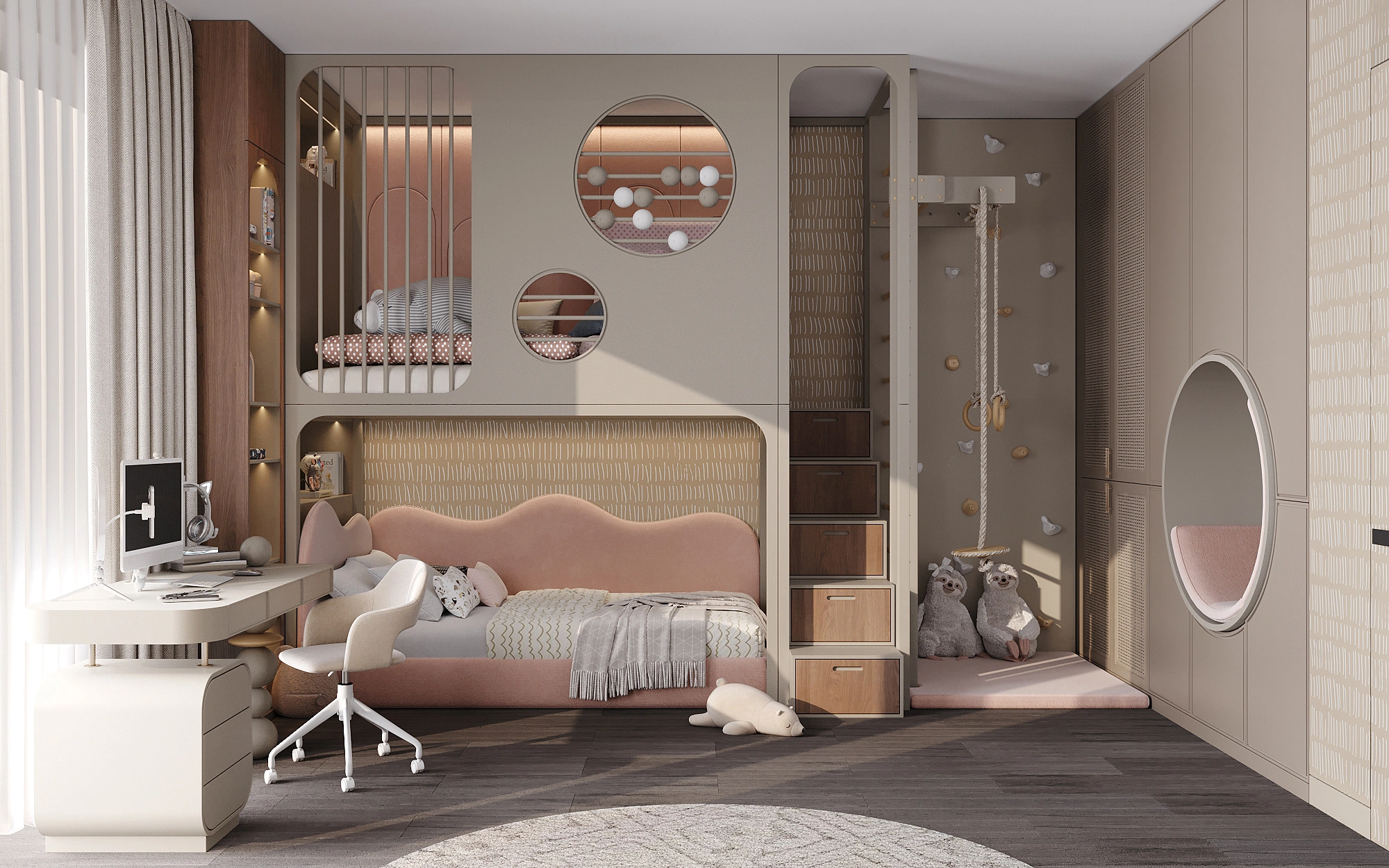



Blue has long been used in children’s interiors, but its possibilities go far beyond the traditional idea of a room for a boy. It can feel light and airy, understated, warm, or rich and expressive. That is why a blue kids’ room can look completely different from one project to another.
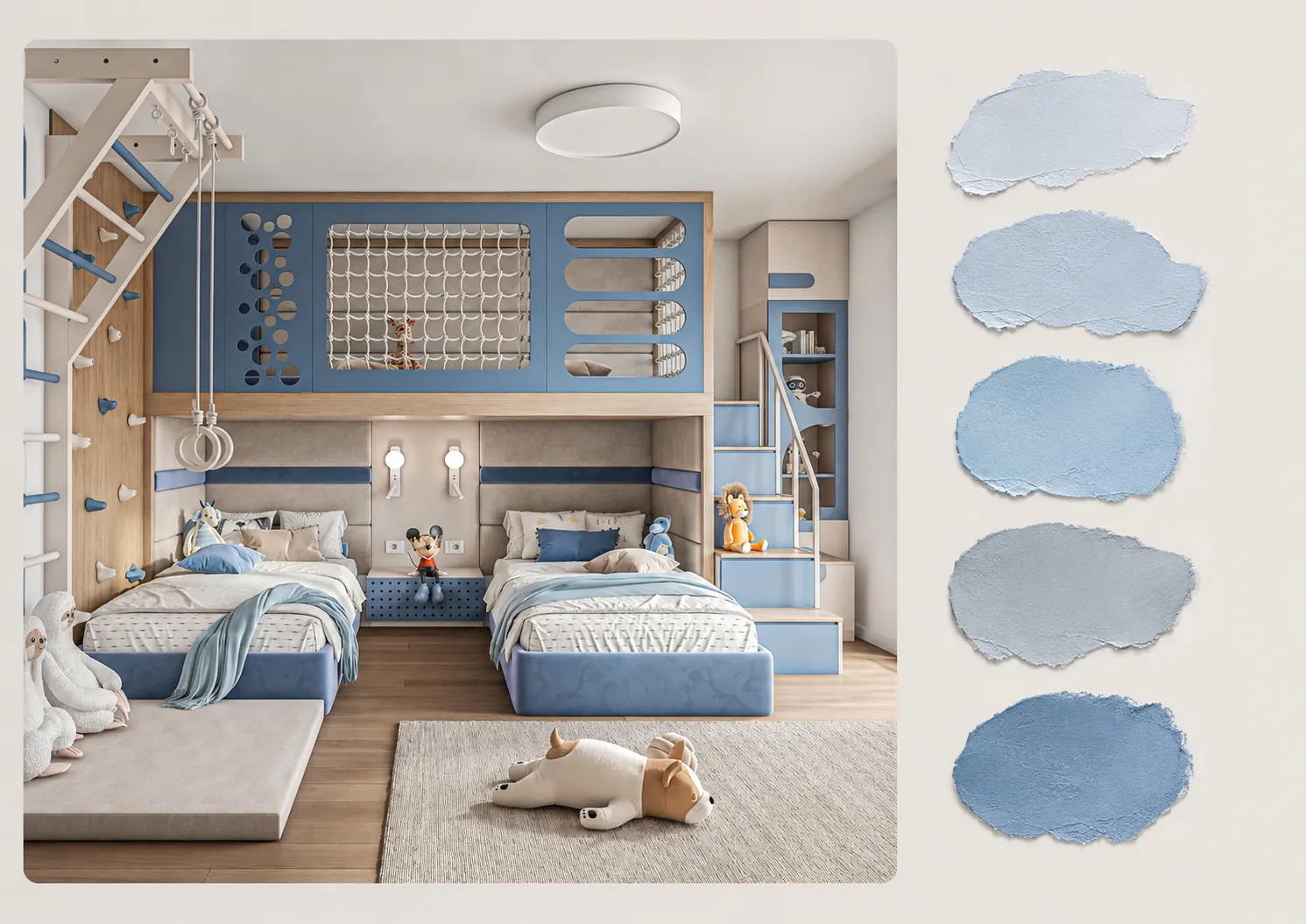
Blue in Children’s Room Design
Before choosing a particular shade, it is worth deciding what kind of mood you want to create in the space. Light and muted tones tend to feel more delicate, while deeper shades attract more attention and can become the main accent.
- Soft blue works well for light, calm compositions. It can be used across larger surfaces, such as walls, without making the colour feel too dominant. Combined with cream, white, or light wood, it creates a very soft palette.
- Sky blue has a more distinctive character. It evokes a sense of open space and works well when you want to bring a fresh feel to the interior. This shade can be used not only on walls, but also in textiles, decorative panels, or selected furniture fronts.
- Grey-blue is an interesting choice for a contemporary interior. It is less vivid, which makes it easy to combine with beige, grey, natural wood, and other neutral shades. At the same time, lighting should be taken into account, as cool colours can appear darker when there is not enough natural light.
- Pastel blue is often chosen when the goal is to create a light and understated base. It works well in smaller spaces and can be easily combined with other pastel colours.
- Deep blue creates a completely different effect. It can be used for an accent wall, furniture, or a specific area of the room. To keep the space from feeling overwhelming, it is best balanced with lighter surfaces and softer shades.
Blue shades with green or turquoise undertones form another distinct group. They bring more energy to the palette and can work particularly well in themed interiors, for example with marine, nature-inspired, or tropical motifs.
At the same time, blue does not have to be used on every wall. If you are looking for a more versatile solution, the main surfaces can remain neutral while blue is introduced through furniture, wallpaper, curtains, rugs, bedding, or decorative elements.
This approach is especially practical when the interior is intended to last for several years. Changing textiles or decor is much easier than completely redoing the walls. That is why a good blue kids’ room design does not necessarily have to revolve around a single colour. What matters more is defining its role within the overall composition.
The Psychology of Blue and Gender Stereotypes
For decades, blue has been associated with children’s rooms for boys. However, contemporary children’s room design is not limited by this distinction. The colour can be part of any child’s space, while its overall character is determined primarily by the shade, proportions, and combination with other elements.
Blue should also not be viewed as a colour that automatically creates a particular psychological effect. The impression of an interior is shaped by many factors. These include lighting, the amount of coloured surfaces, the intensity of the shade, textures, and the colours used alongside it.
For example, blue and white create a light, contrasting composition. Adding natural wood makes the interior feel warmer. Blue combined with beige looks softer, while pairing it with green can give the palette a more natural feel.
Less obvious combinations can also produce interesting results. Blue and pink can look delicate and contemporary when muted shades are used. Blue and yellow bring more energy and work well as bright accents. Terracotta, caramel, and other warm shades, meanwhile, create a striking contrast with a cool blue base.
The amount of colour also plays an important role. A blue wall and a few small blue details will create a completely different impression. When the colour is used across larger surfaces, it is worth balancing it with neutral elements. If blue appears only in the details, you can opt for a more saturated shade.
Blue therefore should not be treated as a ready-made stylistic solution. It is simply one of the tools that can help shape the character of a space. It can serve as the main colour, a background shade, or a small accent. This flexibility is exactly what makes it so interesting for contemporary children’s interiors.
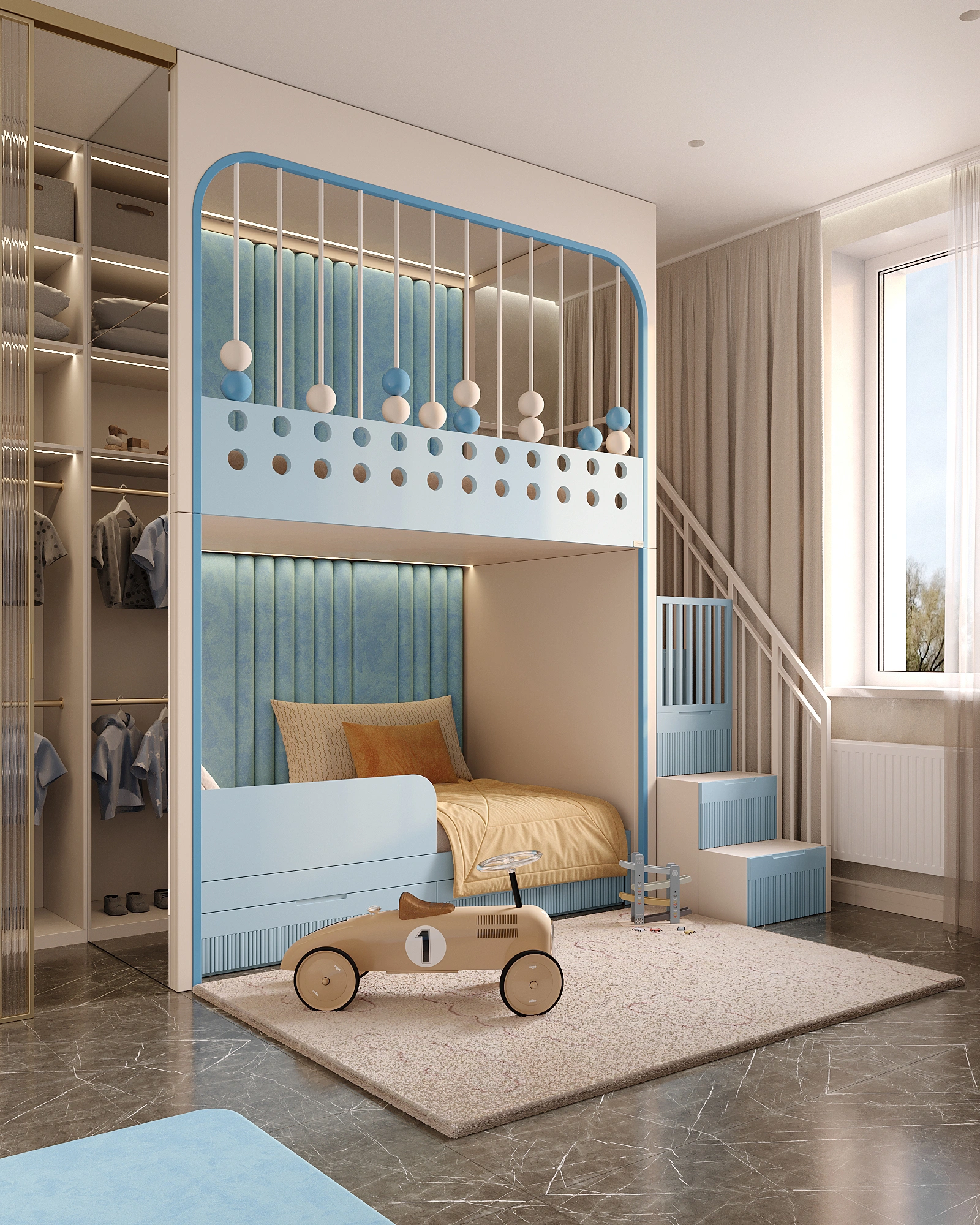
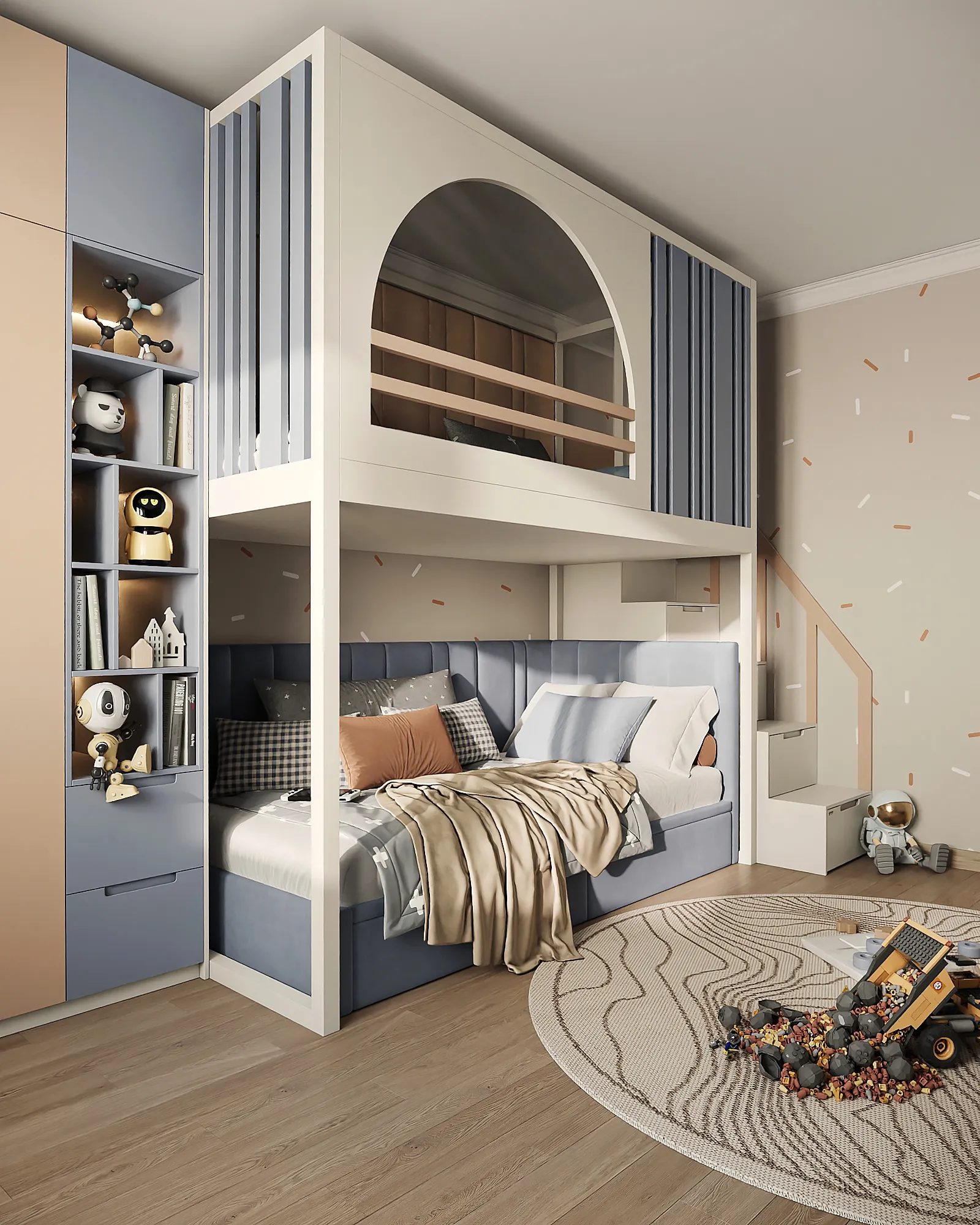
Examples of Blue Kids’ Room Designs by FeliFam
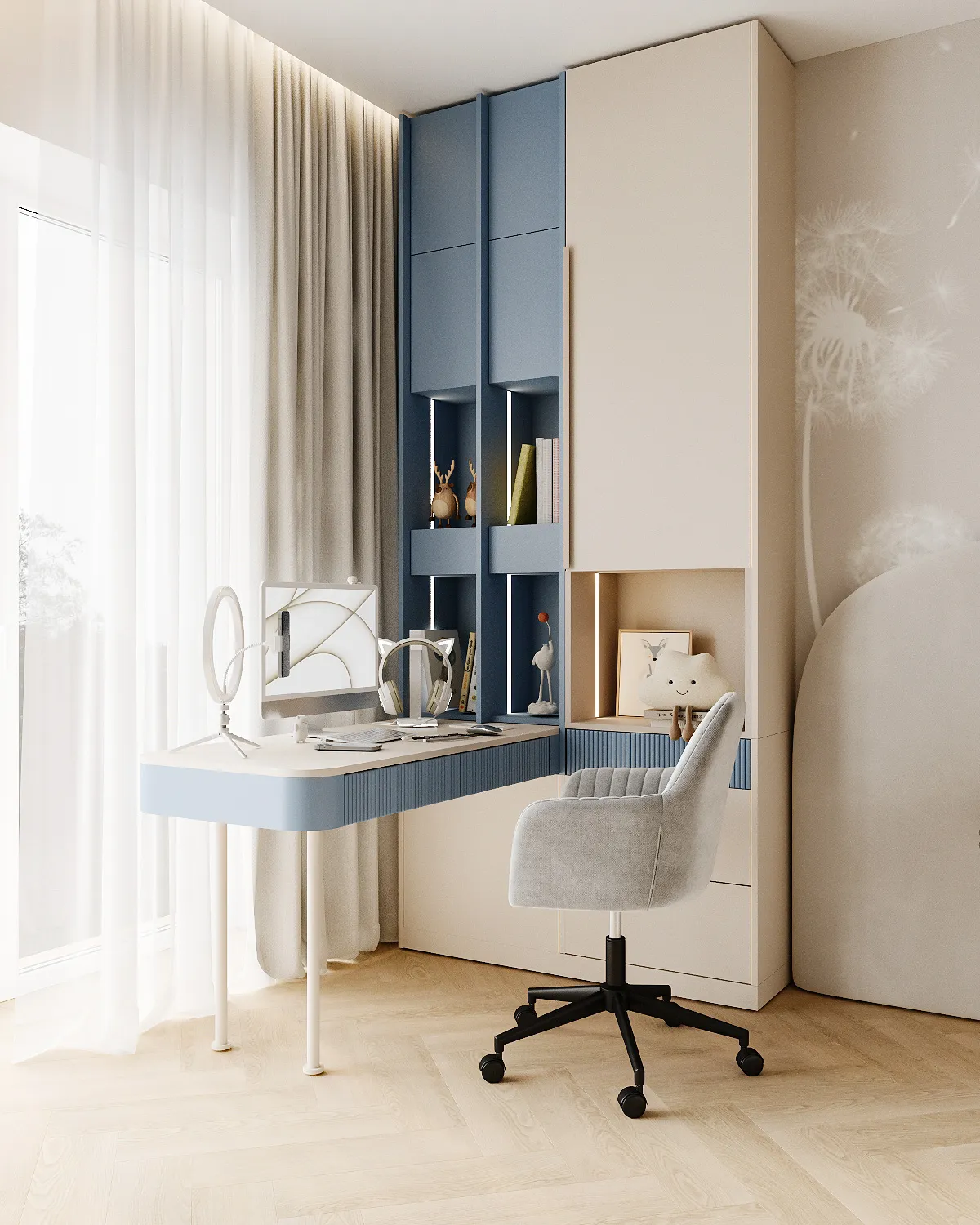
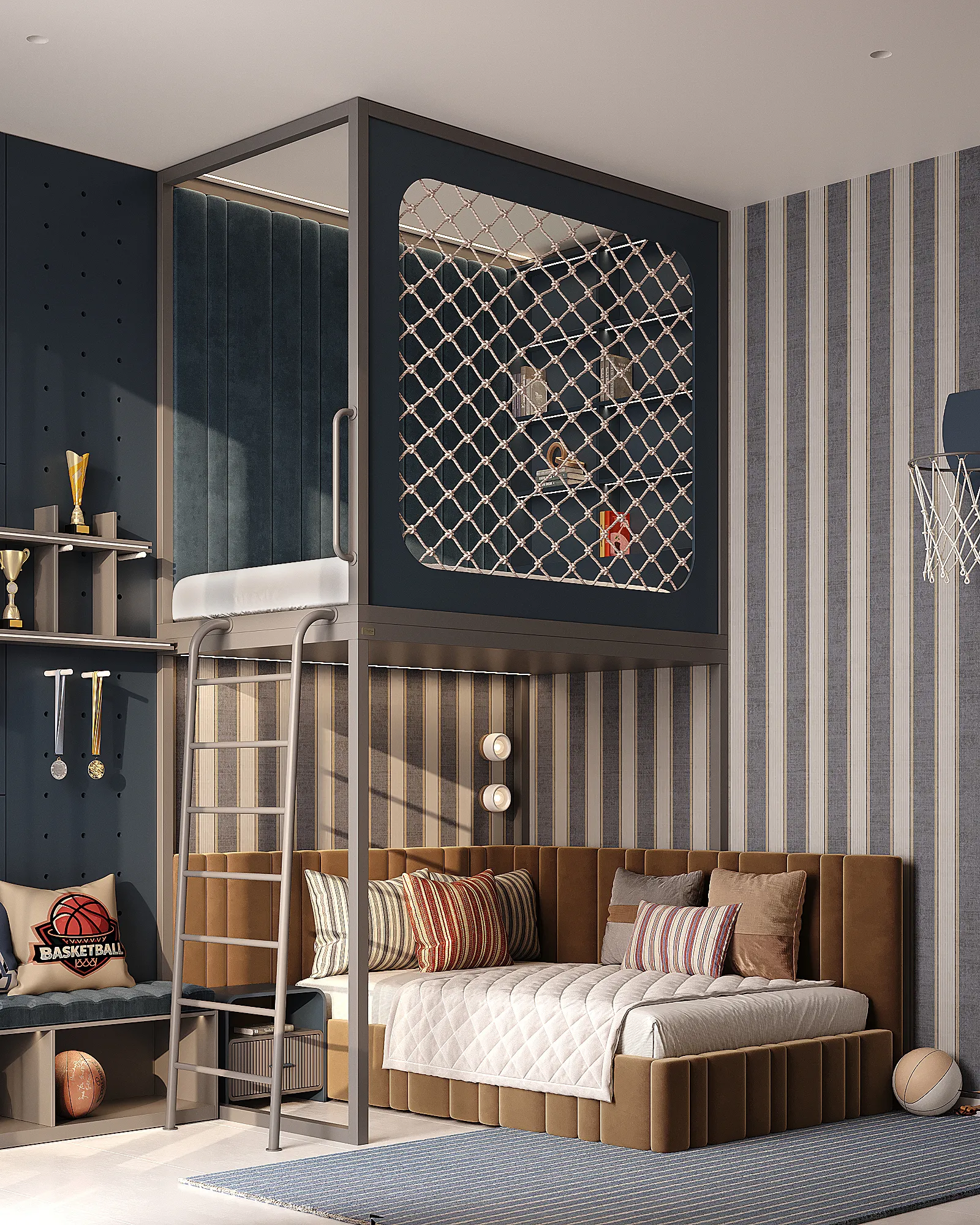
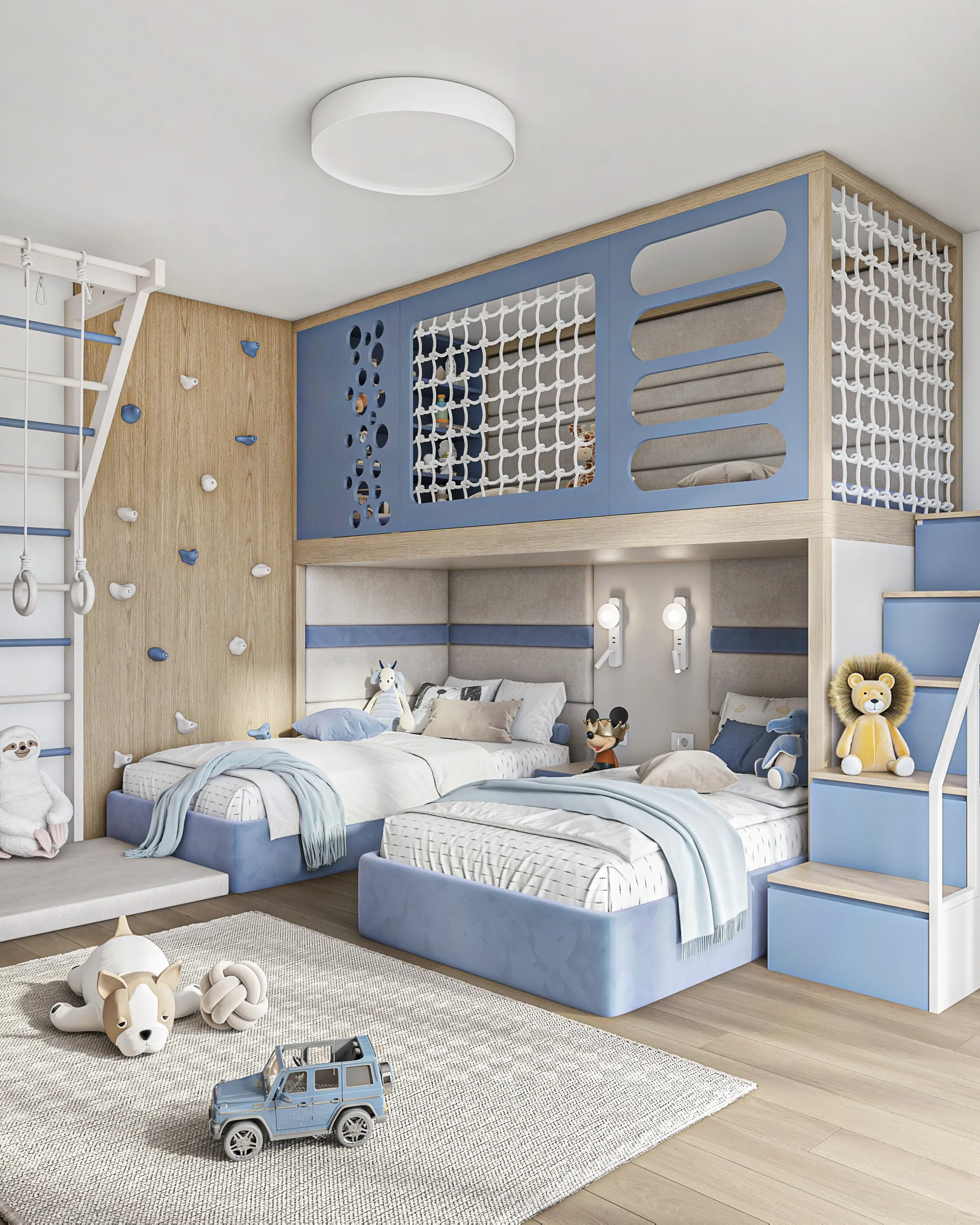
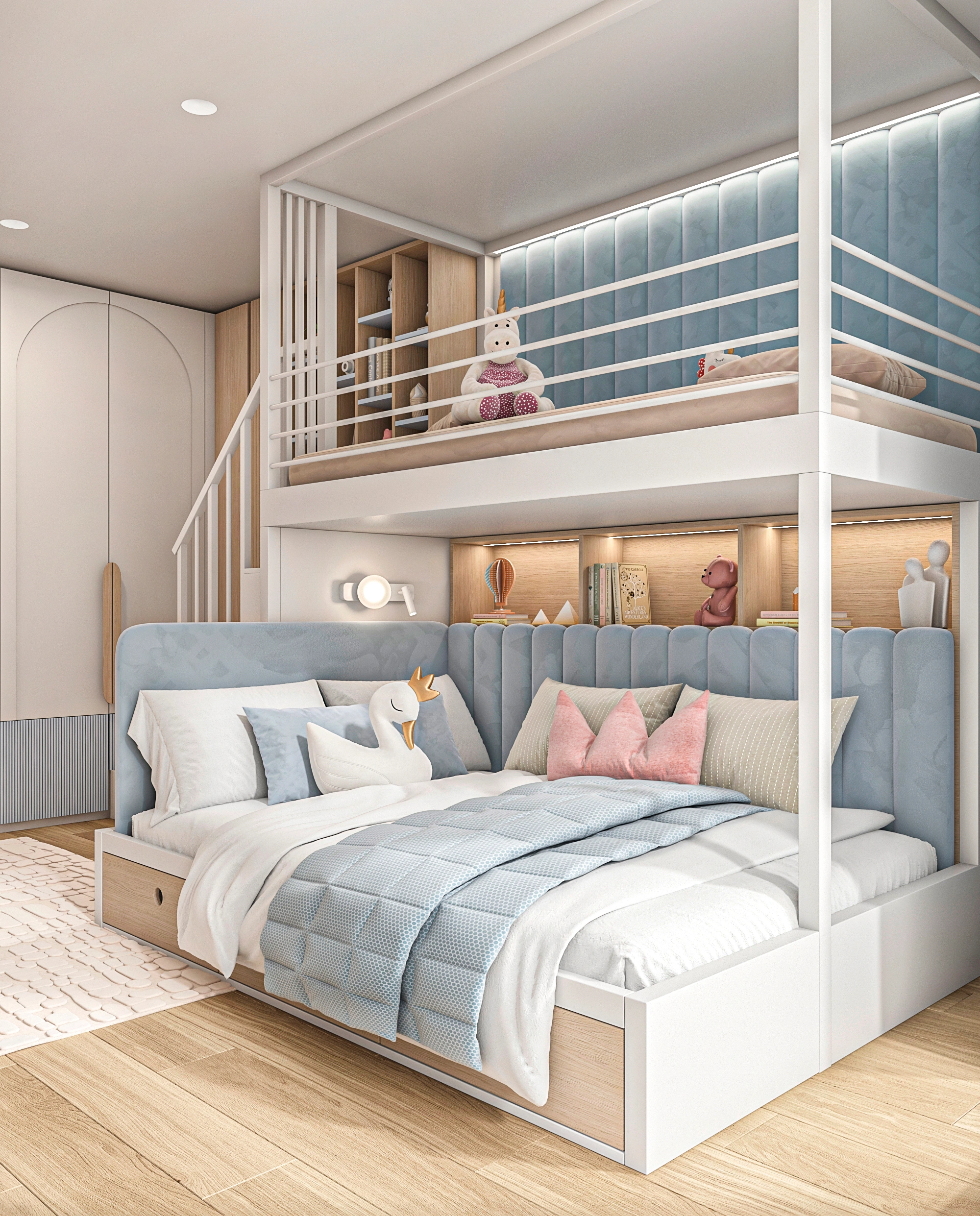
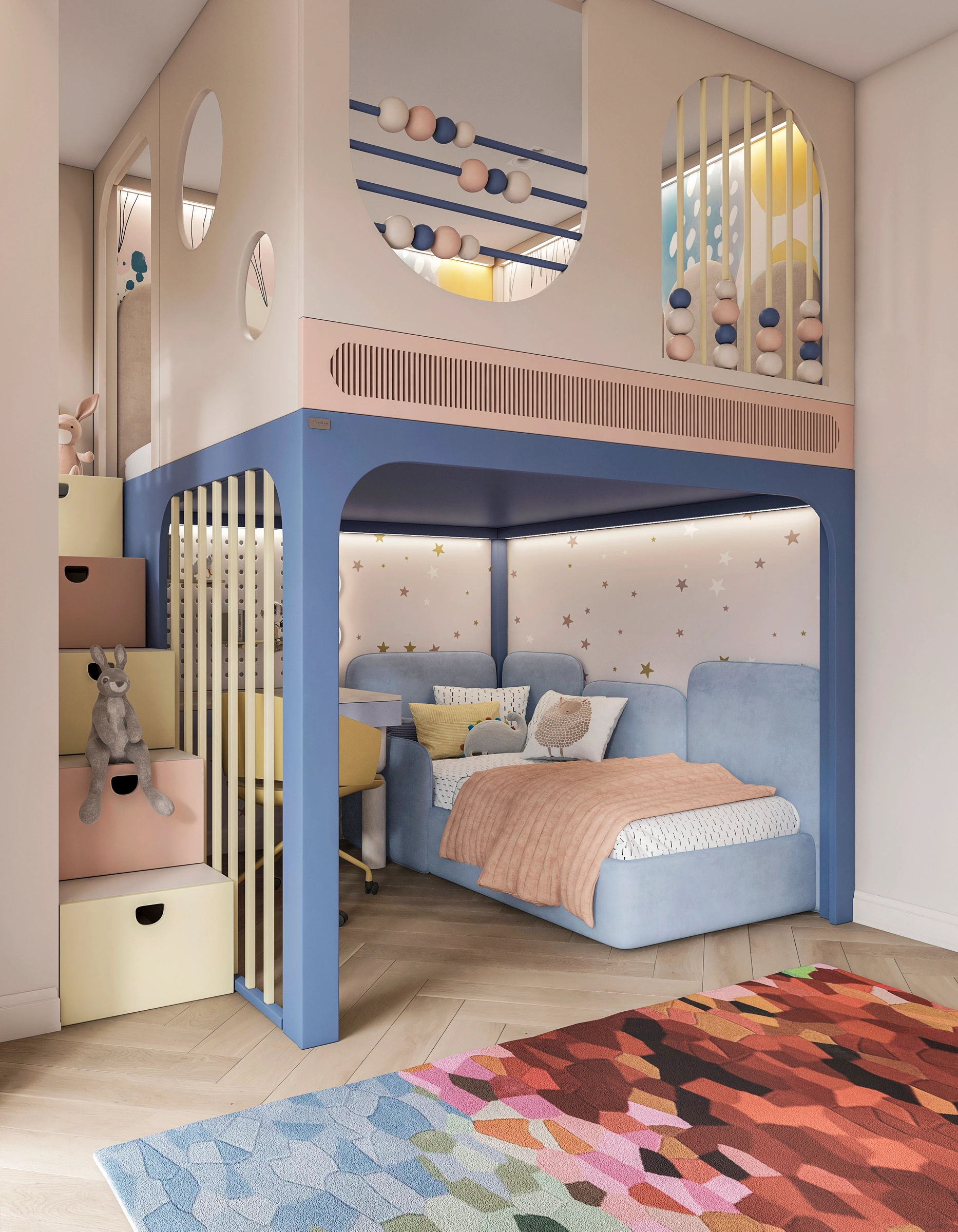
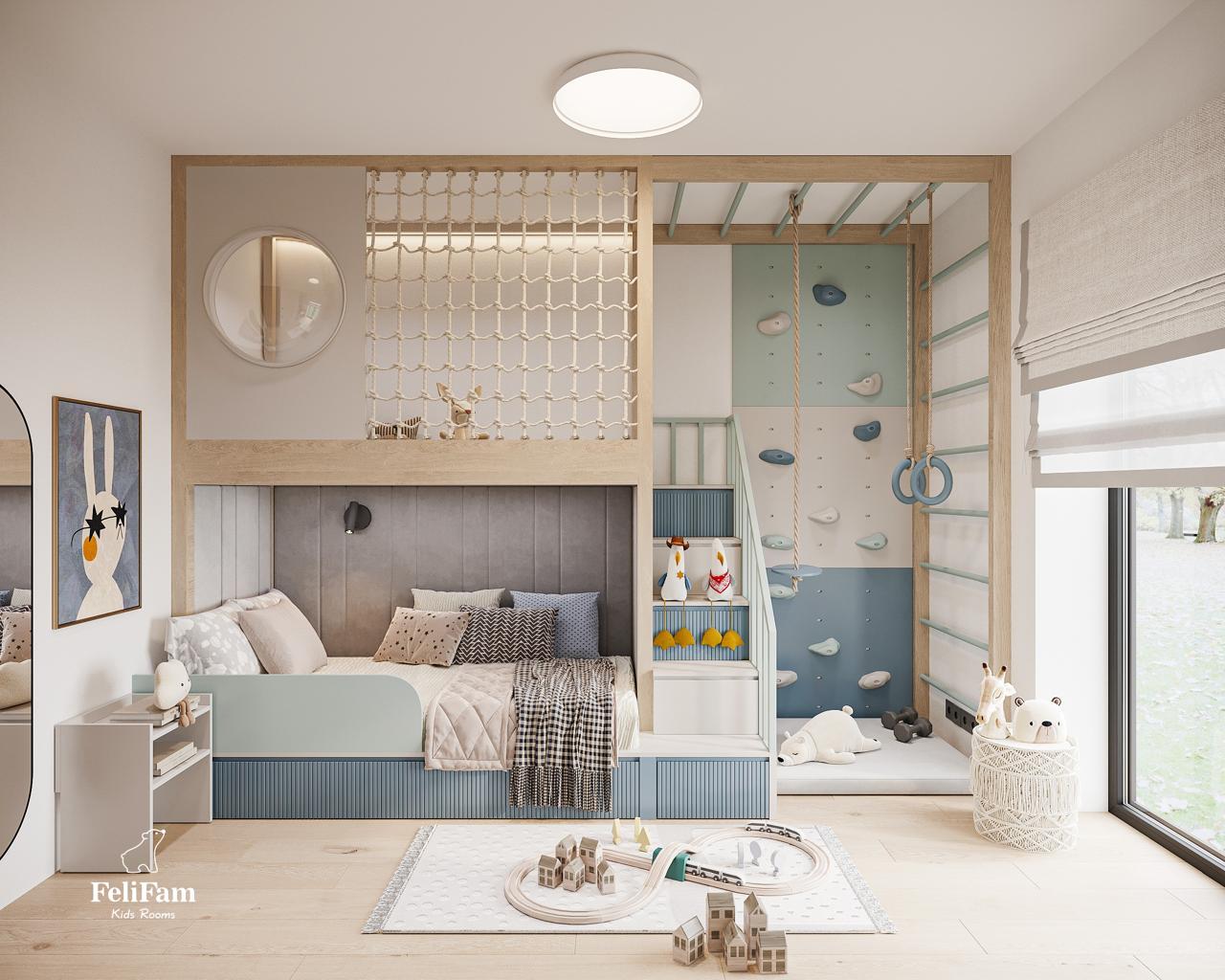
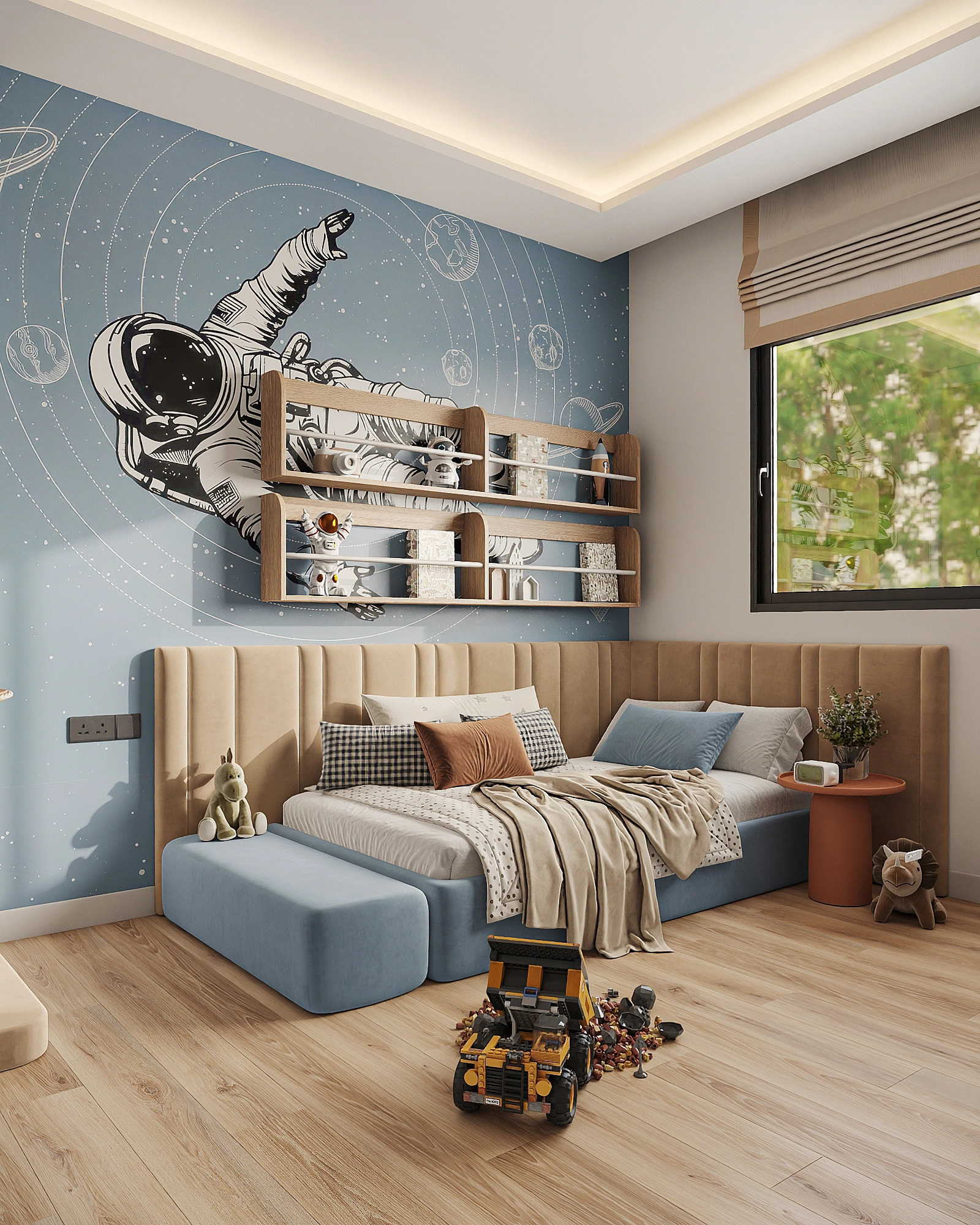
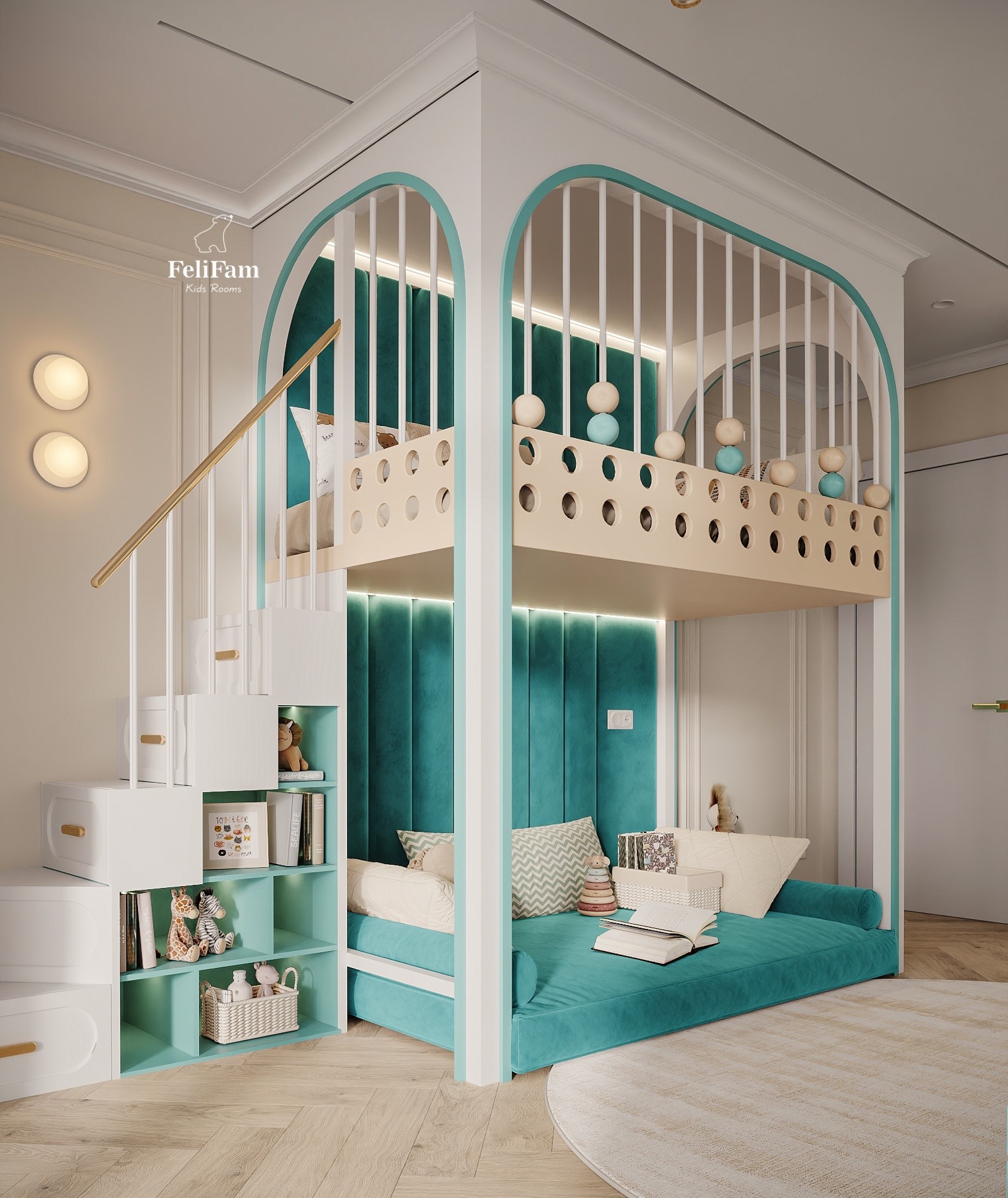
Below are real examples of blue kids’ rooms created by FeliFam. They show just how differently the same colour can be used in an interior.

Conclusion
Blue does not have a single way of being used in a children’s interior. It can be a light background, a striking accent, a furniture colour, or the foundation of the entire palette. By changing the shade, proportions, and colour combinations, you can create a space with a completely different character.
When planning the interior, it is therefore better to look beyond stereotypes and consider the specific room, its lighting, the child’s age, and the desired atmosphere. Blue can simply be one of the tools that helps make the space feel personal and unique.