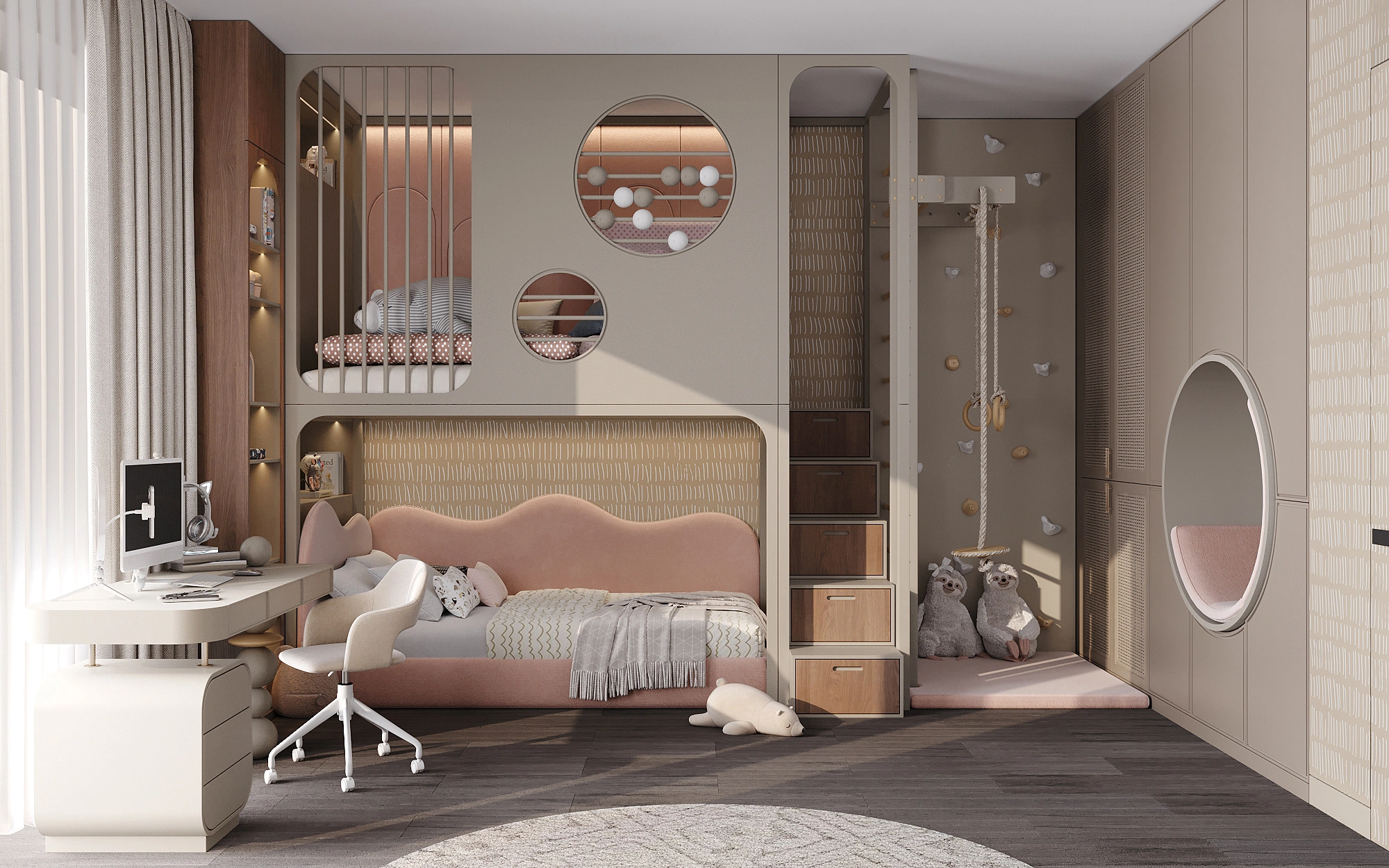



Not long ago, people imagined the future as flying cars and vacations on Mars. Today, the future looks different — artificial intelligence has quietly become part of everyday life, helping us solve tasks, generate ideas, and even design interiors.
Artificial intelligence is actively entering different areas of life, simplifying work in many professions and transforming the way we approach familiar processes.
It is interesting to see whether AI can handle the work of an interior designer just as effectively. In practice, we tested real requests from parents and compared AI-generated concepts with projects created by FeliFam designers. Today, many families turn to searches like “AI decorate my room” looking for quick inspiration — but can artificial intelligence truly create a thoughtful and functional space for a child? We decided to test it with real interior design scenarios.
Project №1. Kids’ room for an 8-year-old girl
Parents’ requirements:
- A bright premium interior in a modern classic style with soft decorative elements
- Main palette: milky tones. Avoid dark or overly saturated colors
- The atmosphere should be cozy, calm, and “grown-with-the-child”
- Include a study and reading area, a comfortable sleeping zone, and spacious storage with a wardrobe
- Balance between closed storage and open shelving
- The interior should look elegant, functional, and subtly reflect the child’s personality
Room size — 16 m²
Conclusions
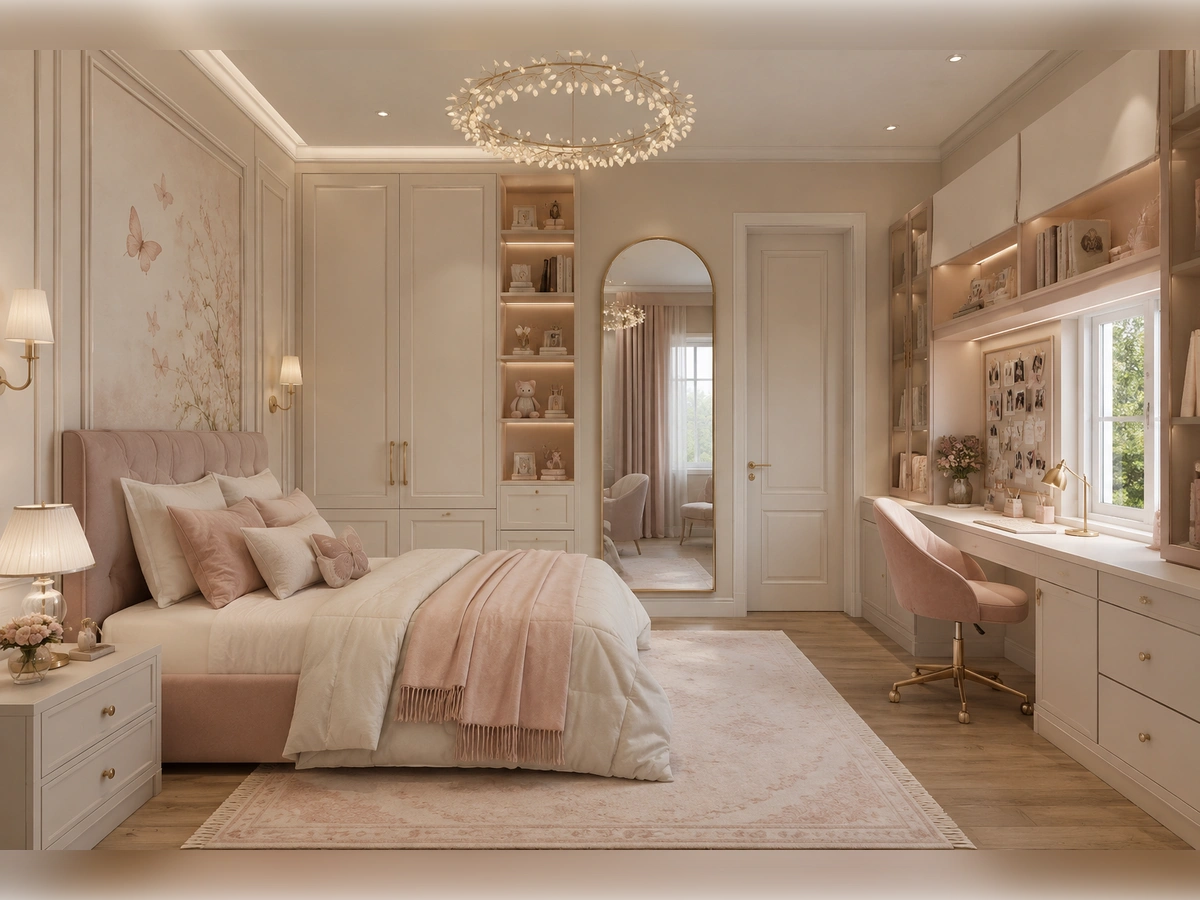
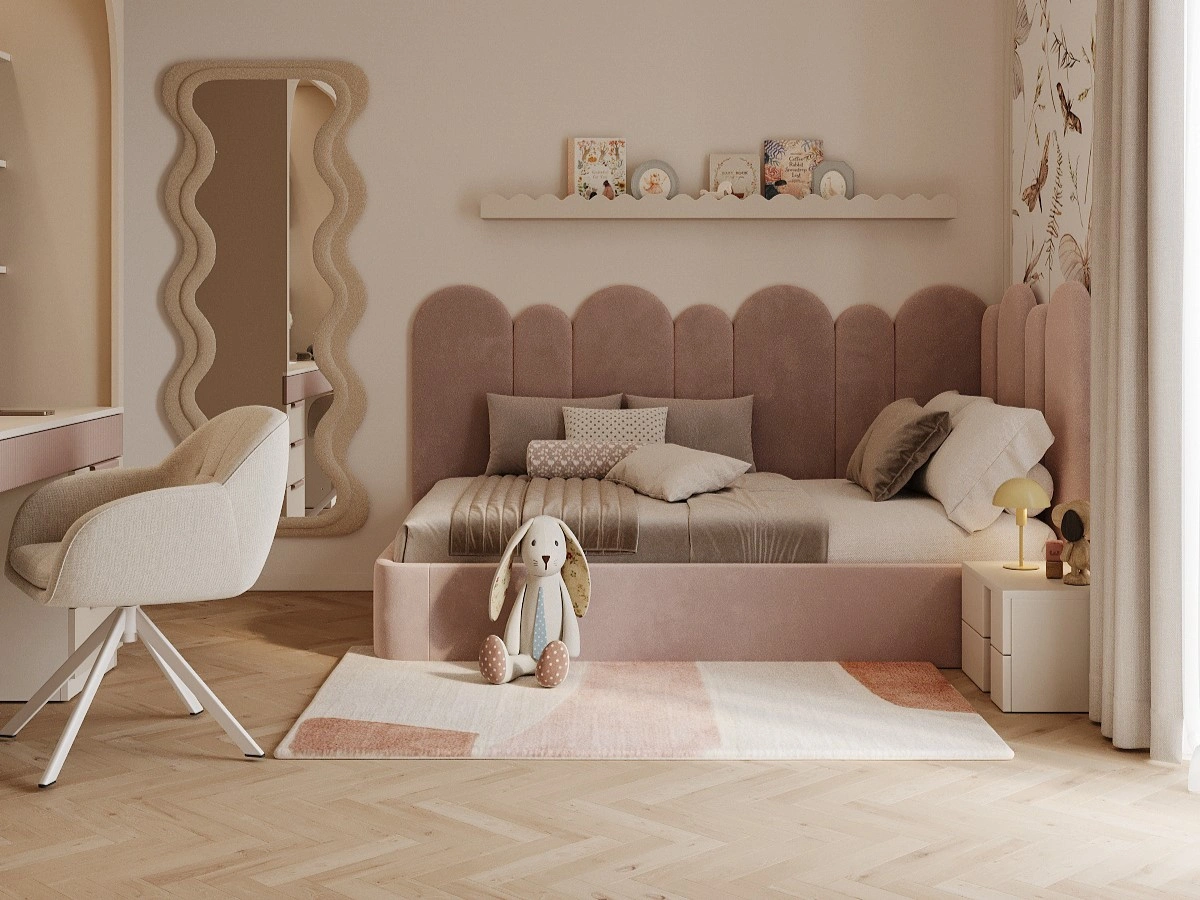
The first version looks visually appealing, but for a 16 m² space the composition is less adapted to real-life ergonomics.
The second version is designed from a professional interior perspective: the zoning feels more balanced, the space breathes better, and the overall layout supports everyday comfort more naturally. At the same time, the interior remains elegant, soft, and highly harmonious.
Project №2. Modern room for a teenage boy
Parents’ requirements:
- A modern, functional, and cozy interior for an active 13-year-old boy
- Main palette: warm beige and natural light tones with subtle accent colors
- Comfortable sleeping area and study zone
- Spacious storage for clothes, books, and accessories
- Include a TV zone and a PlayStation area
- Open shelves for decor, LEGO, books, and personal items
- The space should combine study, relaxation, and daily activity comfort
Room size — 11 m²
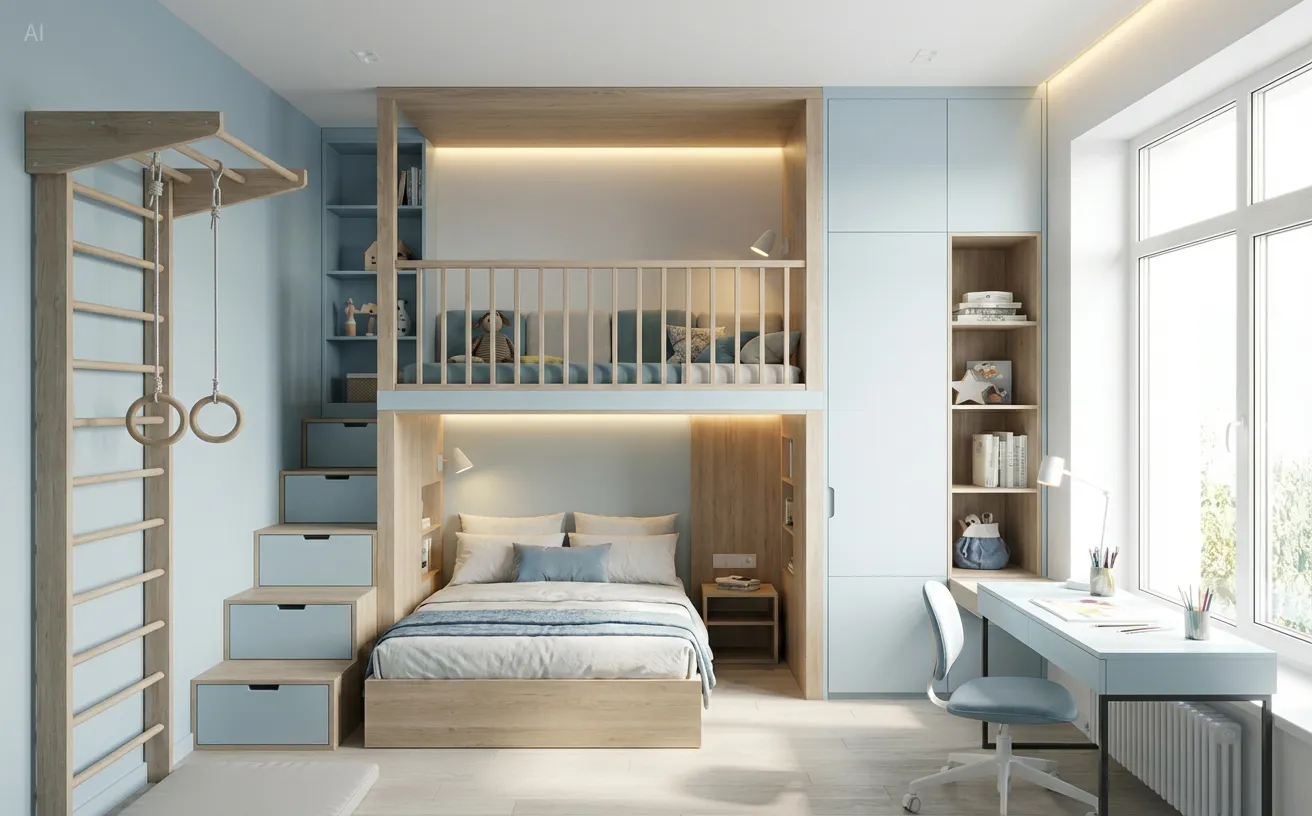
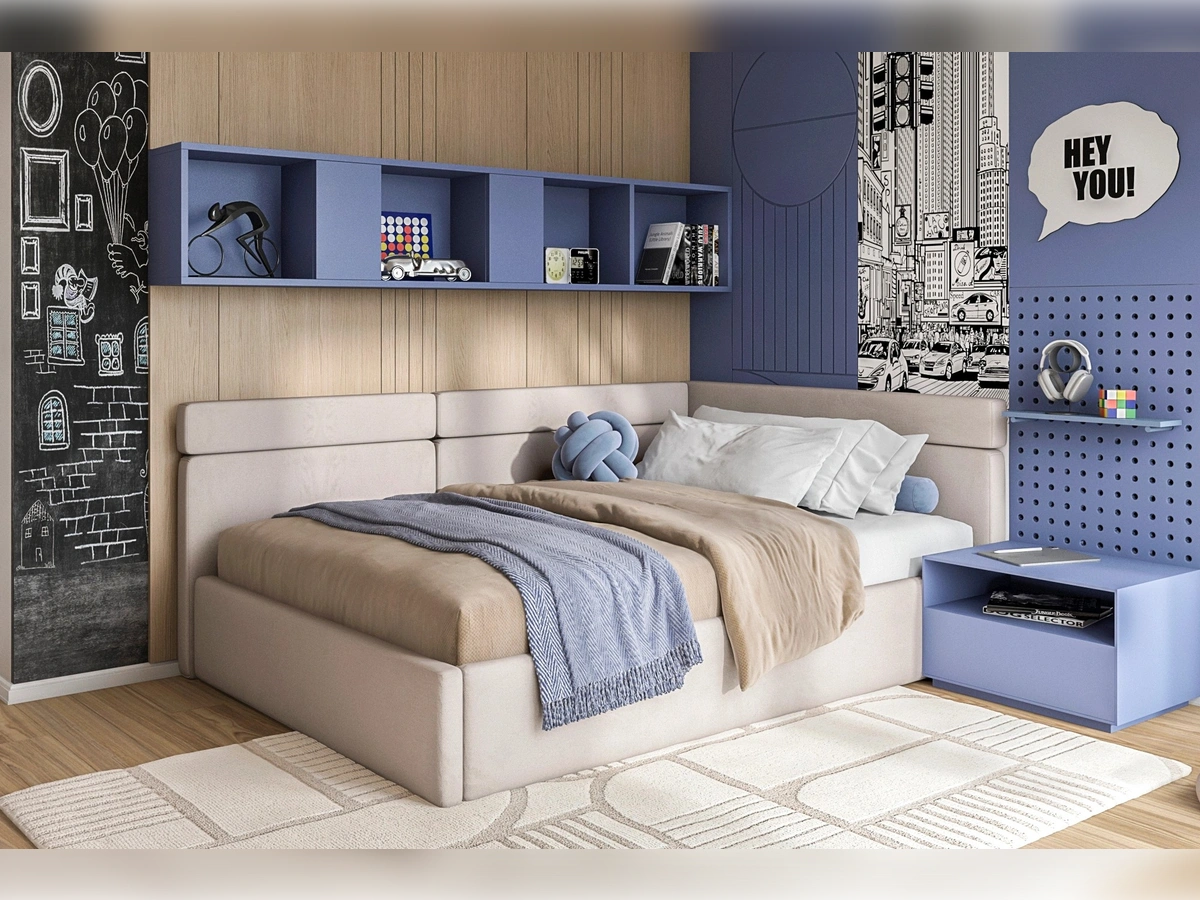
Conclusions
The AI-generated project is restrained, clean, and functional, with good ergonomics for an 11 m² space. It feels practical for everyday use but less expressive in atmosphere and personality.
The designer version creates a stronger emotional connection and reflects the teenager’s individuality more deeply. The space feels more layered, immersive, and architecturally resolved.
Project №3. Room for three girls
Parents’ requirements:
- Bright premium interior in modern classic style
- Main palette: warm milky tones with soft powder accents
- Comfortable sleeping area with decorative detailing
- Functional study and creative zone with integrated lighting
- Large storage systems for clothes, books, toys, and accessories
- The space should be elegant, cozy, and comfortable for three children
Room size — 19 m²
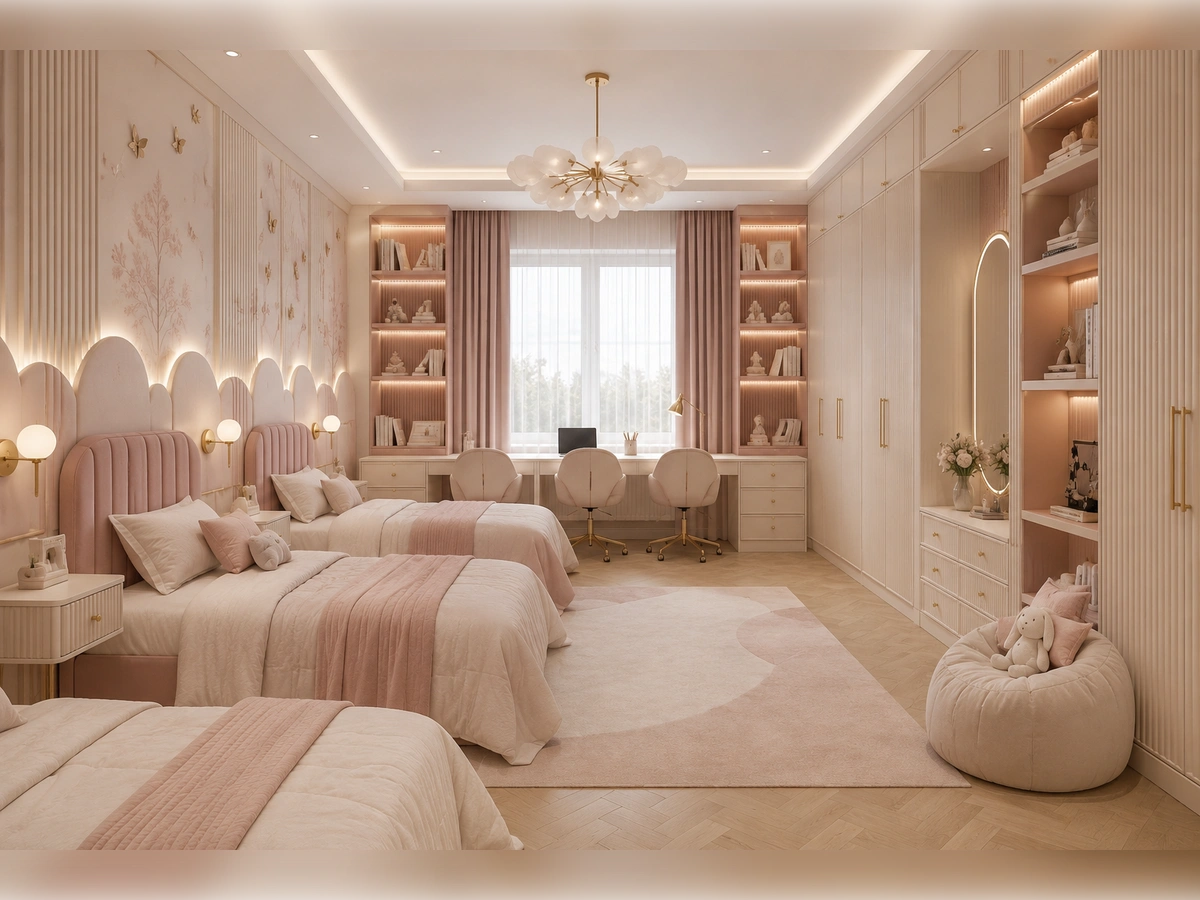
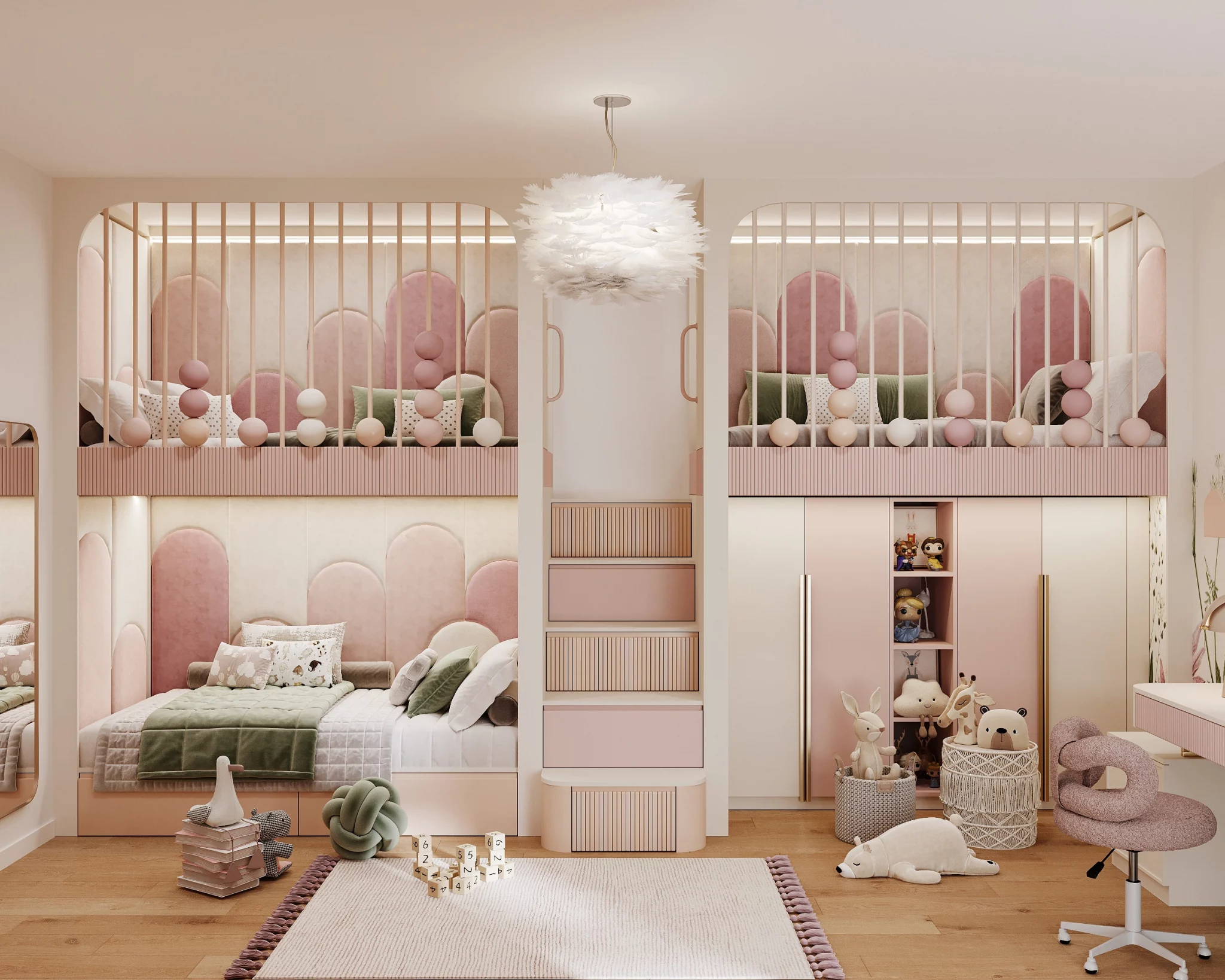
Conclusions
The AI version feels calmer and more classic, but less distinctive in composition and less expressive for a shared children’s room. Due to separate beds and heavier furniture volumes, the space also appears visually denser.
The designer version feels more architectural and intentional. The two-level structure creates a complete spatial concept rather than simply arranging furniture, while also optimizing comfort for three children.
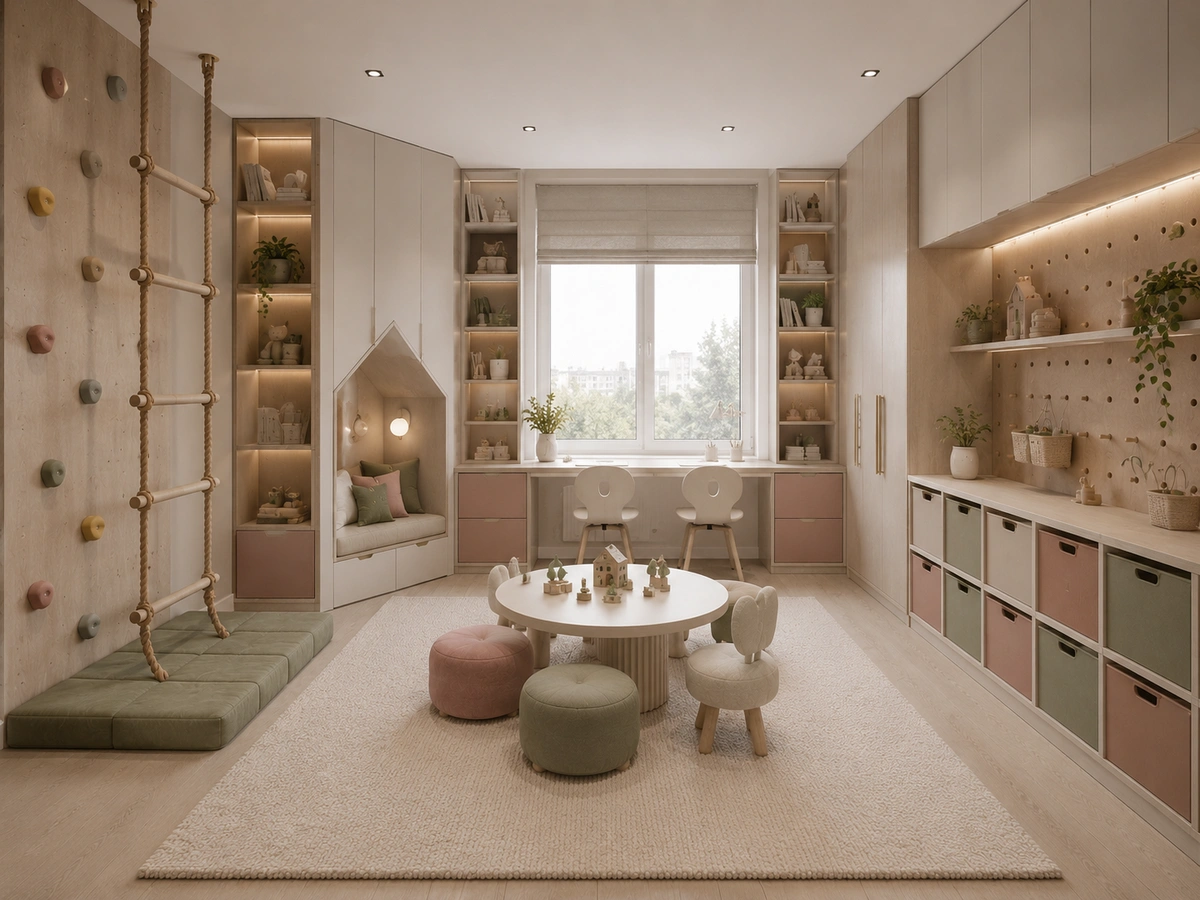
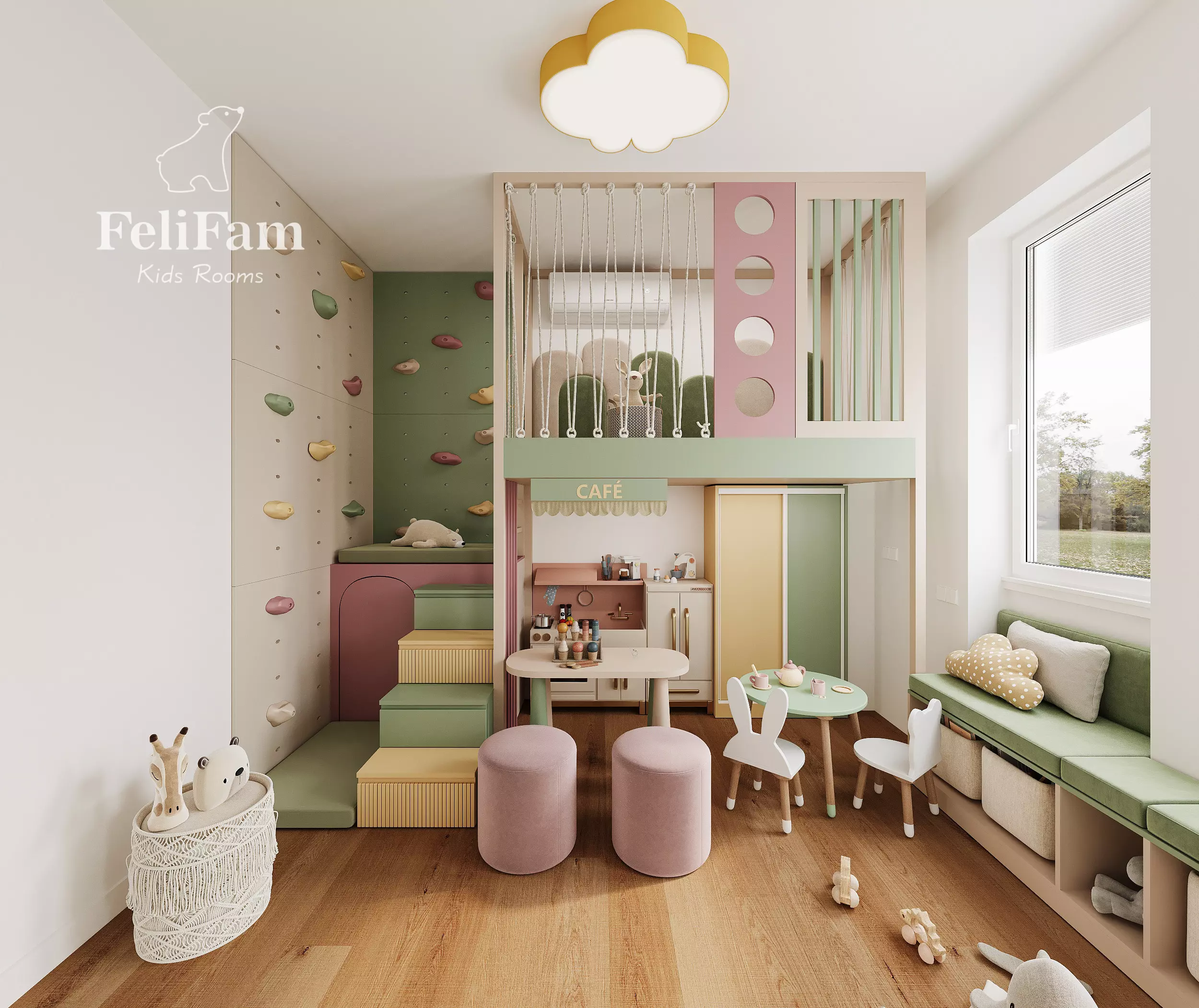
Project №4. Kids playroom
Client request:
- A modern, bright, and functional space for active play, creativity, and imagination development
- Main palette: warm natural tones combined with vibrant accents
- Include climbing walls, ropes, and safe physical activity elements
- Open shelving and storage systems
- The space should combine premium aesthetics with maximum functionality
Room size — 10 m²
Conclusions
The AI version feels visually softer and calmer but lacks the dynamic atmosphere requested by the client. It also does not fully define play scenarios or create enough engagement for active children.
The designer version delivers a much richer interactive experience. Multi-level structures, climbing elements, and thoughtfully designed activity zones create a more immersive and emotionally engaging environment.
AI interior design vs real designer FeliFam: checking who creates better kids’ rooms with real examples
Artificial intelligence already demonstrates strong capabilities in generating interior concepts and visual inspiration. It is becoming a valuable tool at the early stages of the creative process.
However, while AI can generate aesthetically pleasing images, it still does not fully understand real ergonomics, emotional comfort, children’s routines, or the subtle details that shape everyday living.
The future of interior design is not about replacing designers with technology, but about combining AI tools with professional expertise and human creativity.
At FeliFam, we believe technology should inspire creativity — not replace it. That is why we transform ideas, references, and even AI-generated inspiration into thoughtful, functional, and deeply personal children’s interiors designed for real life.