


Can a green children’s room look premium, modern, and anything but predictable? Absolutely, when shades, materials, and accents are carefully balanced.
Today, green goes far beyond the familiar mint walls or bright cabinet fronts. It can be deep and sophisticated, almost neutral, or, on the contrary, become the main accent of the interior. This versatility is exactly what makes a green palette so inspiring for children’s spaces.
In this article, we take a closer look at green in children’s interiors, exploring how different shades affect the feel of a space and which colours pair best with them. We’ll also look at inspiring examples of children’s rooms in green tones and show how this colour can work in different ways: as a calm base, a subtle accent, or a statement element that defines the character of the entire interior.
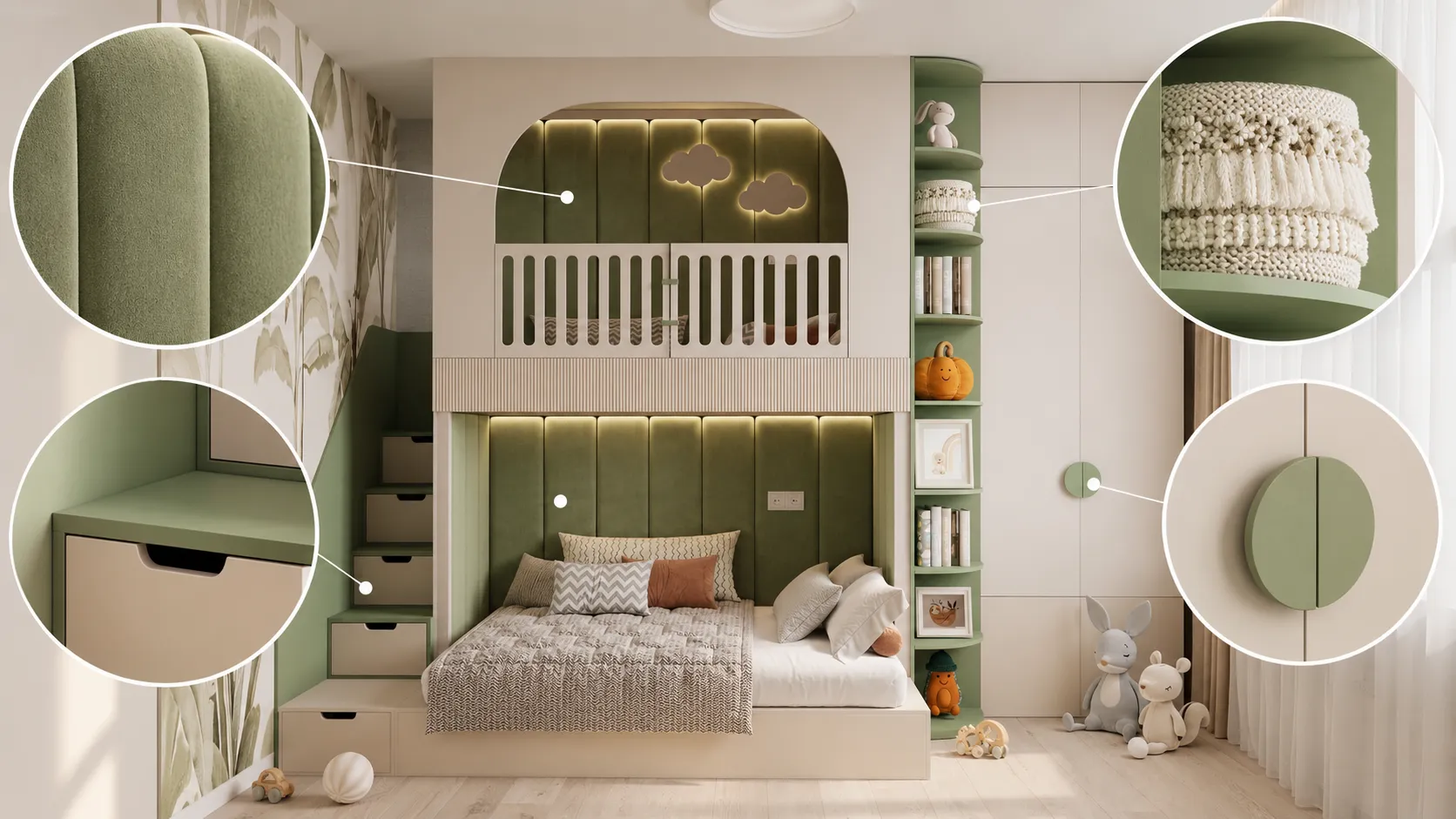
Green in a Children’s Room: How It Affects the Space and a Child’s Mood
A children’s room serves several purposes at once. It is where a child rests, plays, learns, reads, and spends a significant part of the day. That is why colour matters here not only from a design perspective. It shapes the overall feel of the room and can make it feel calmer, fresher, or, on the contrary, more energetic.
Green is particularly interesting for children’s interiors because of its connection to nature. It evokes plants, the outdoors, and open spaces, which is why muted green shades often feel soft and comfortable. Sage, olive, grey-green, and light natural greens work especially well in areas for rest, reading, and sleep, where it is important to avoid excessive visual stimulation.
Brighter shades of green can bring more energy to a room and make it more engaging for a child. But balance is key. Rich green is best used selectively: in upholstered panels, textiles, furniture fronts, a chair, a rug, or individual decorative details. This keeps the interior lively without making it feel overly stimulating.
Green works especially well in rooms where different zones need to have distinct moods. For example, a calmer shade can be used around the bed, while a more expressive green accent can define the play or creative area. This allows colour to visually separate different parts of the space without relying on complex structures or an abundance of décor.
Another advantage of a green palette in a children’s room is that it is not tied to a particular age. A soft green can look equally natural in a room for a preschooler, a school-age child, or a teenager. As the child grows, there is no need to completely redesign the interior. Often, simply changing the textiles, posters, lighting, and décor is enough to give the room a fresh new look while keeping the green foundation.
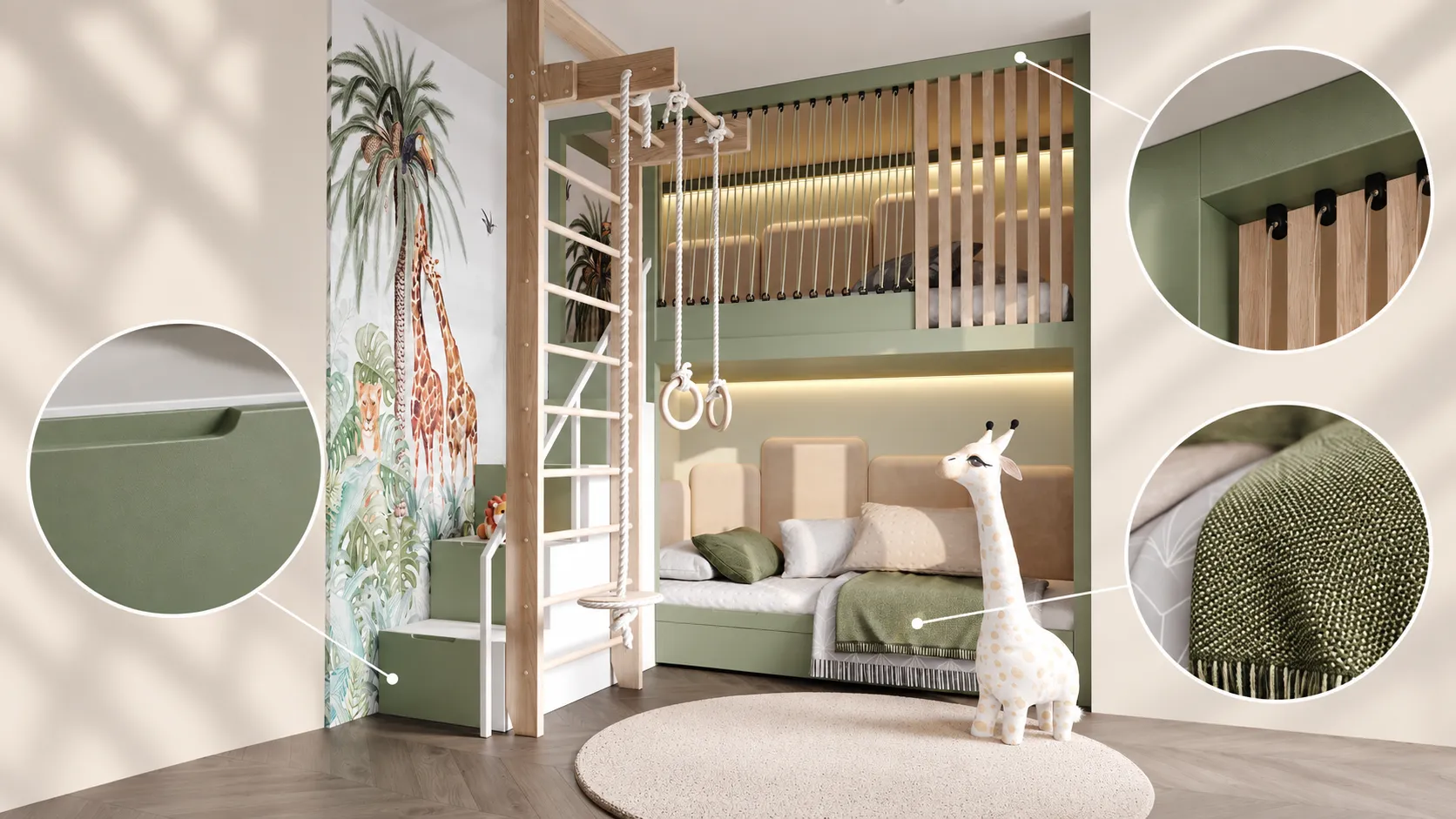
How to Use Green Harmoniously in a Children’s Room
For green to feel harmonious in a children’s room, it is important to define its role in the interior. Softer shades can serve as a base for walls or furniture, while richer tones are better reserved for accents such as textiles, upholstered panels, décor, or individual furniture fronts.
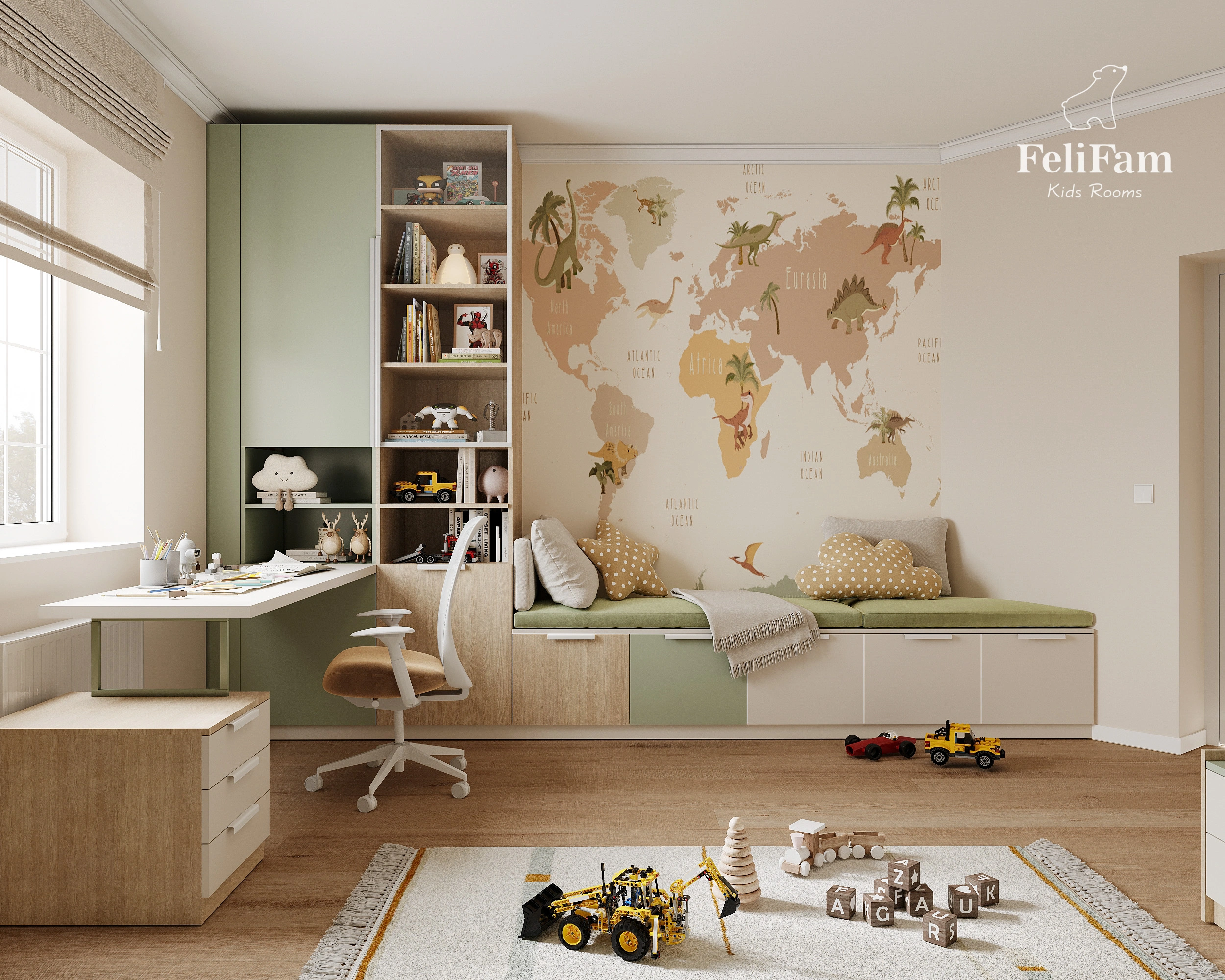
Green is easiest to combine with natural and neutral colours. For example, sage green works beautifully with cream, light wood, and beige textiles. Olive green can be complemented with warm grey, caramel, or terracotta accents. Emerald green looks striking against light walls, especially when paired with wood and a few golden or graphite details.
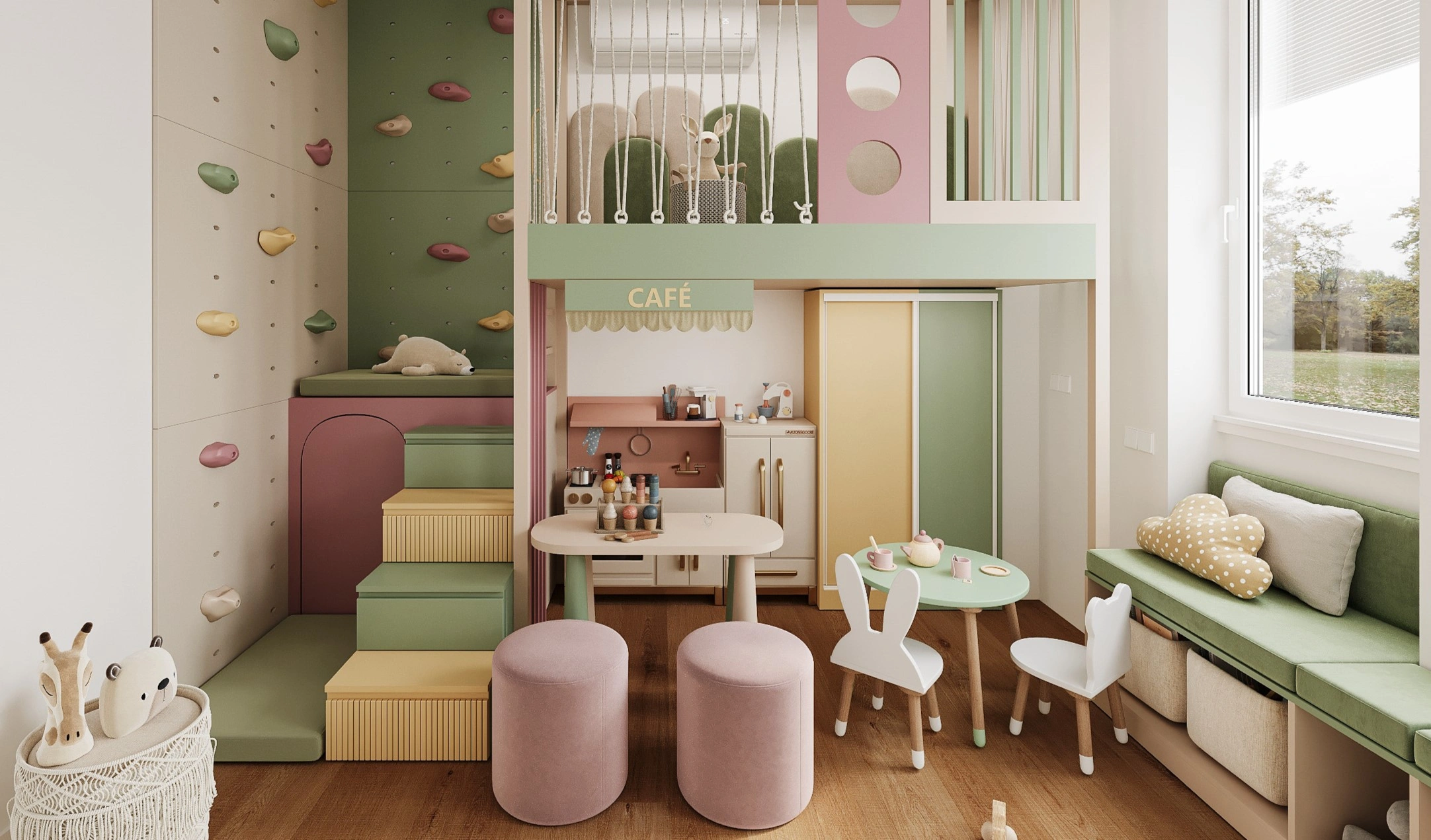
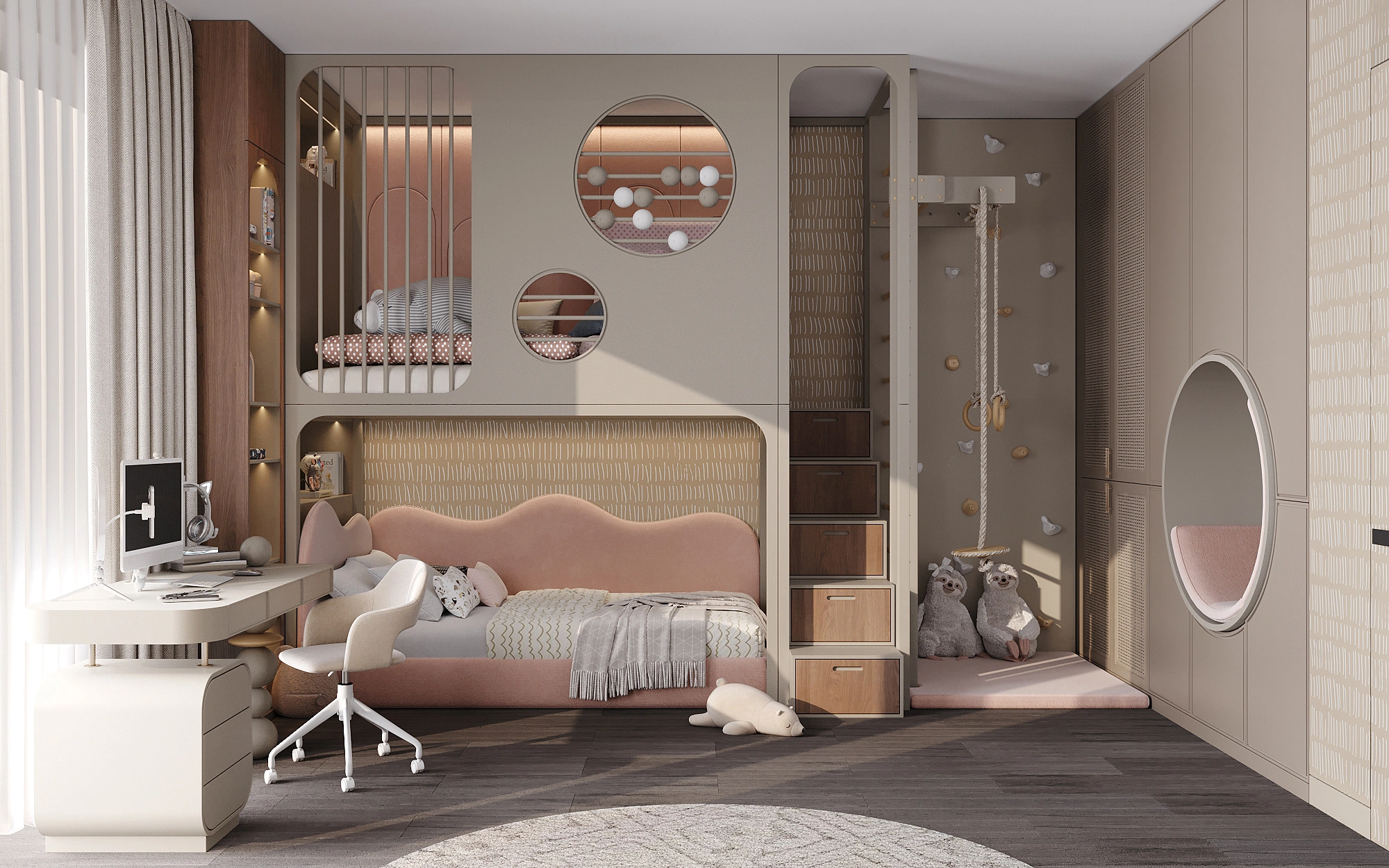
In a girl’s room, green can be softened with dusty pink or peach. For a fresher interior, try pairing green with blue. And if you want to bring more energy into the room, small yellow accents can be introduced through décor, textiles, or the play area.
The key is to keep accent colours to a minimum and repeat the chosen shades across several elements of the interior. This helps the space feel cohesive and thoughtfully designed.
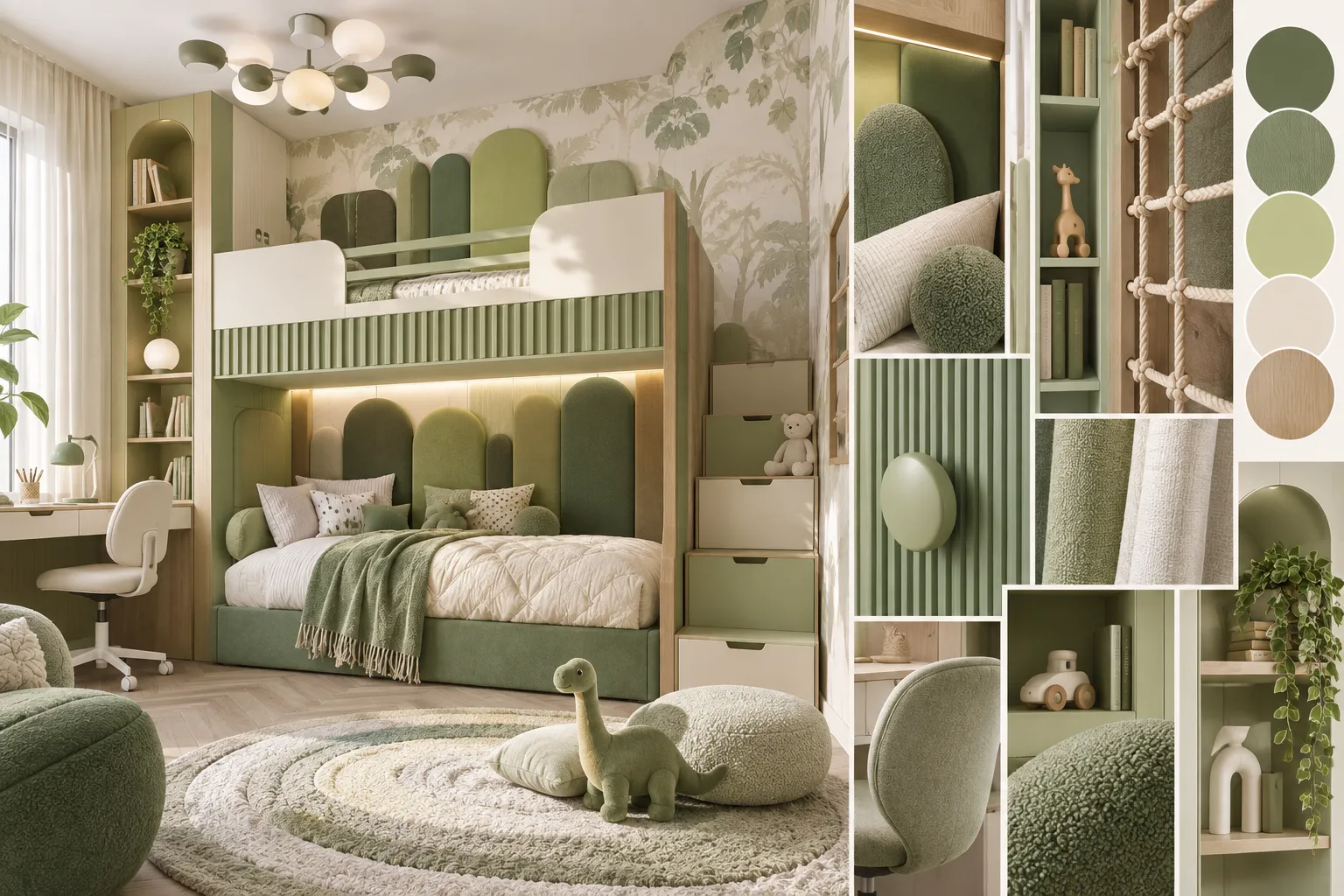
How Green Works in FeliFam Projects
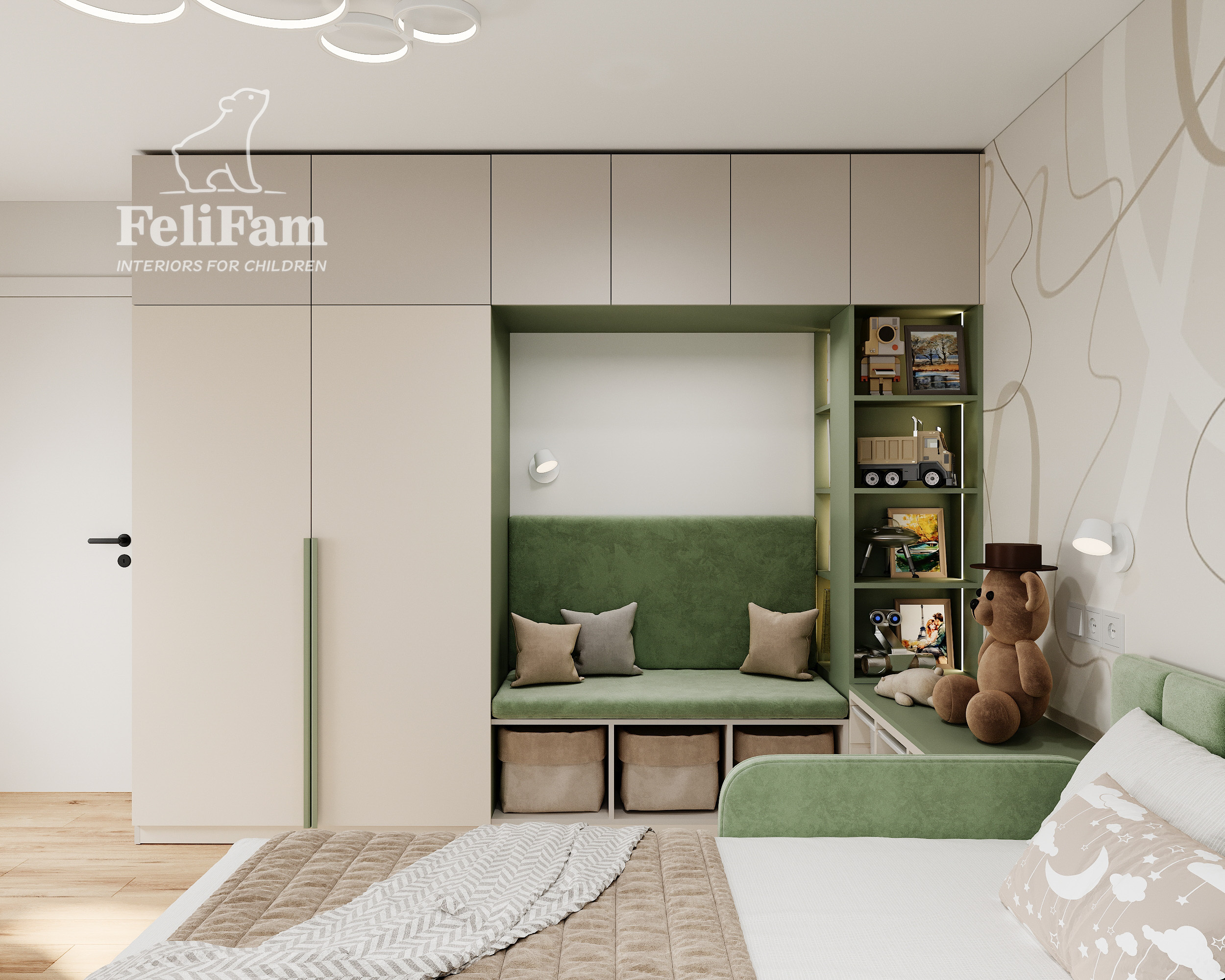
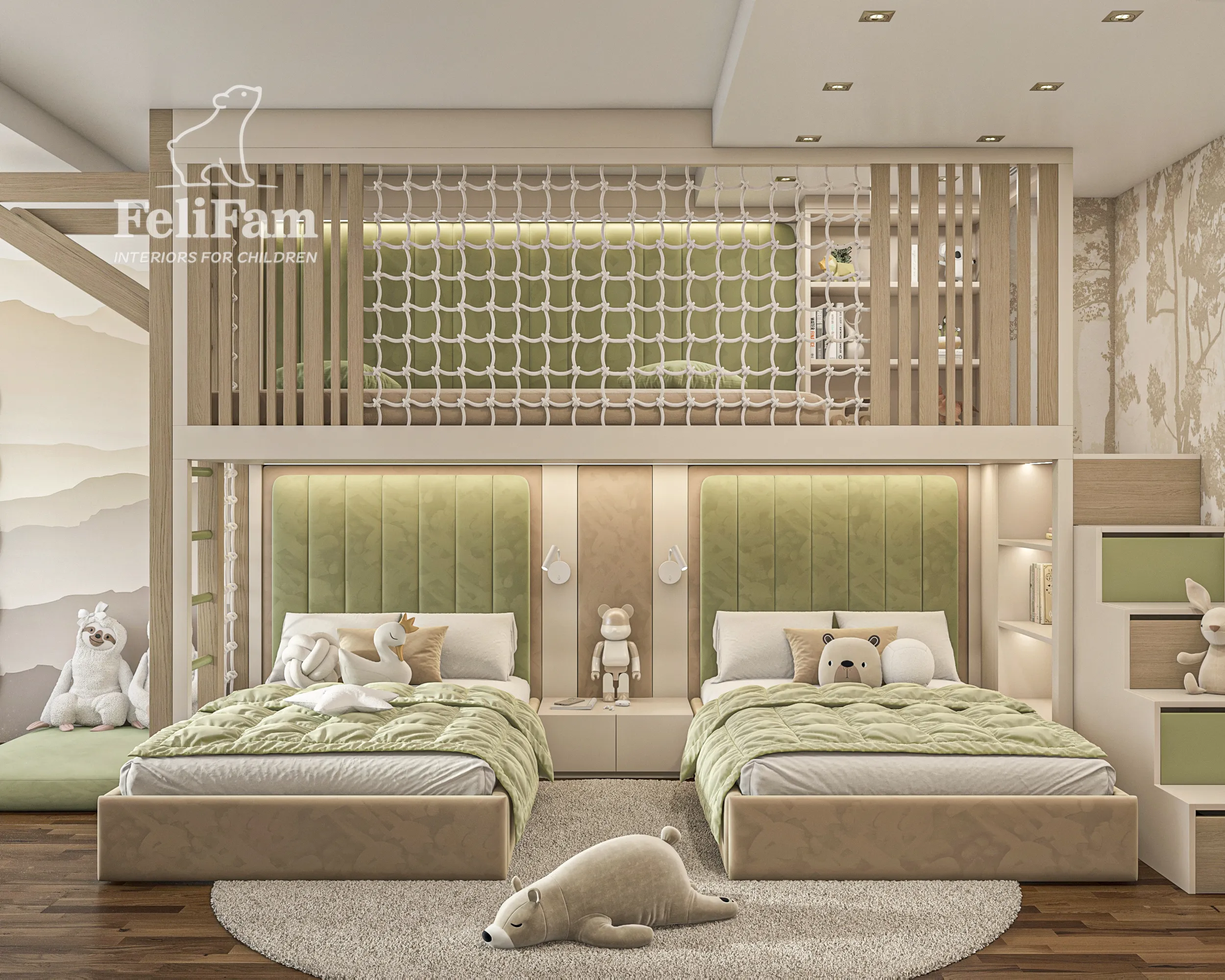
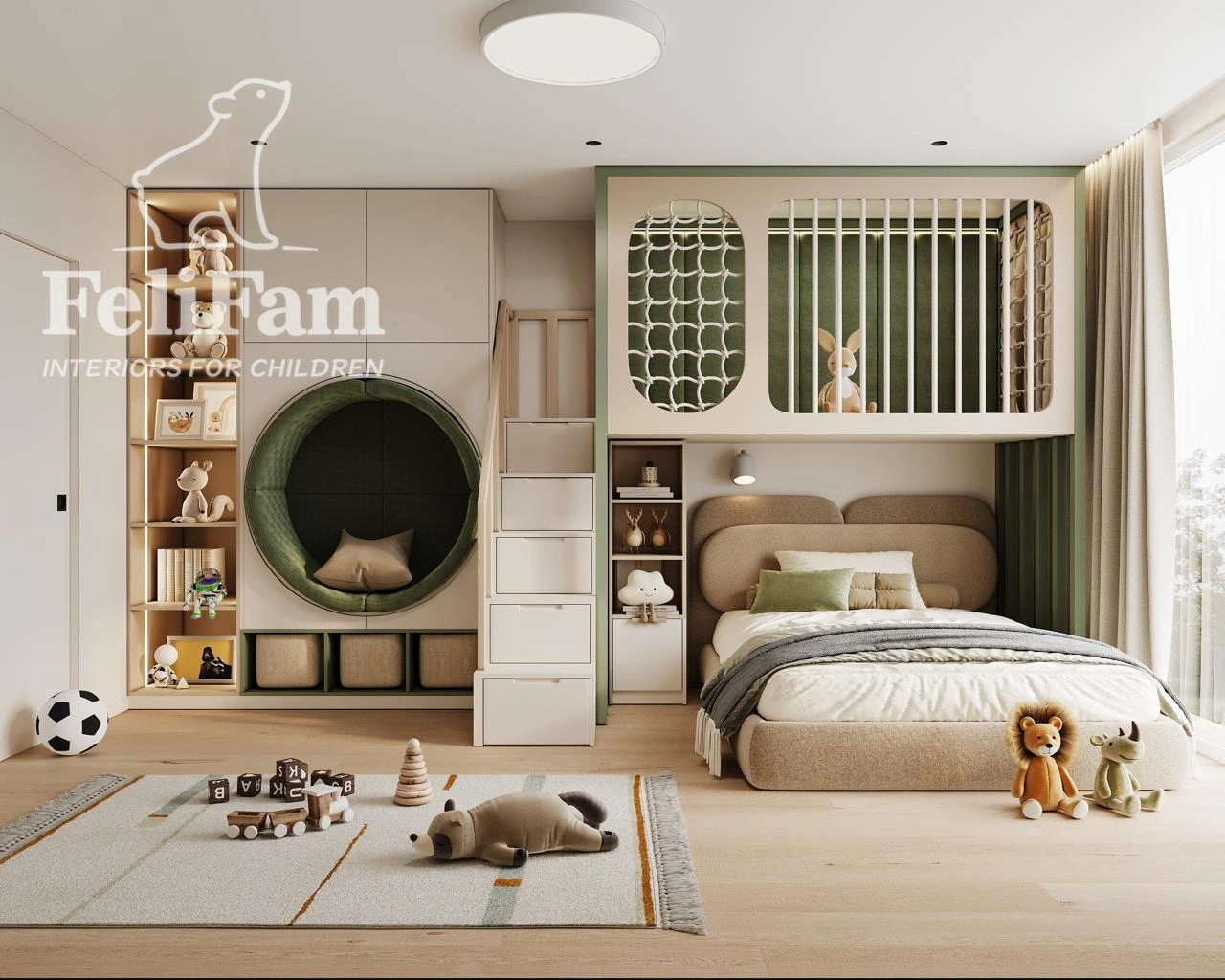
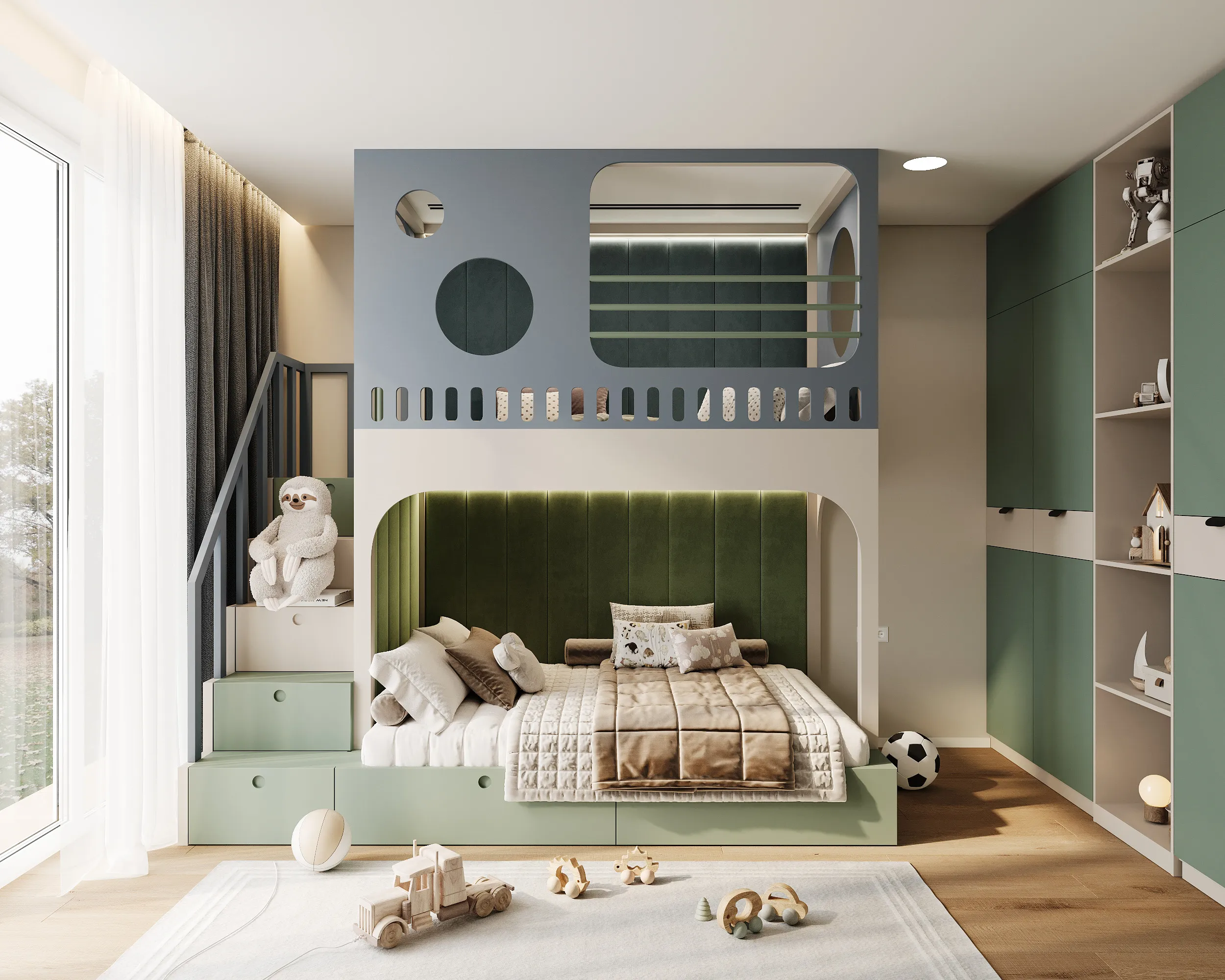
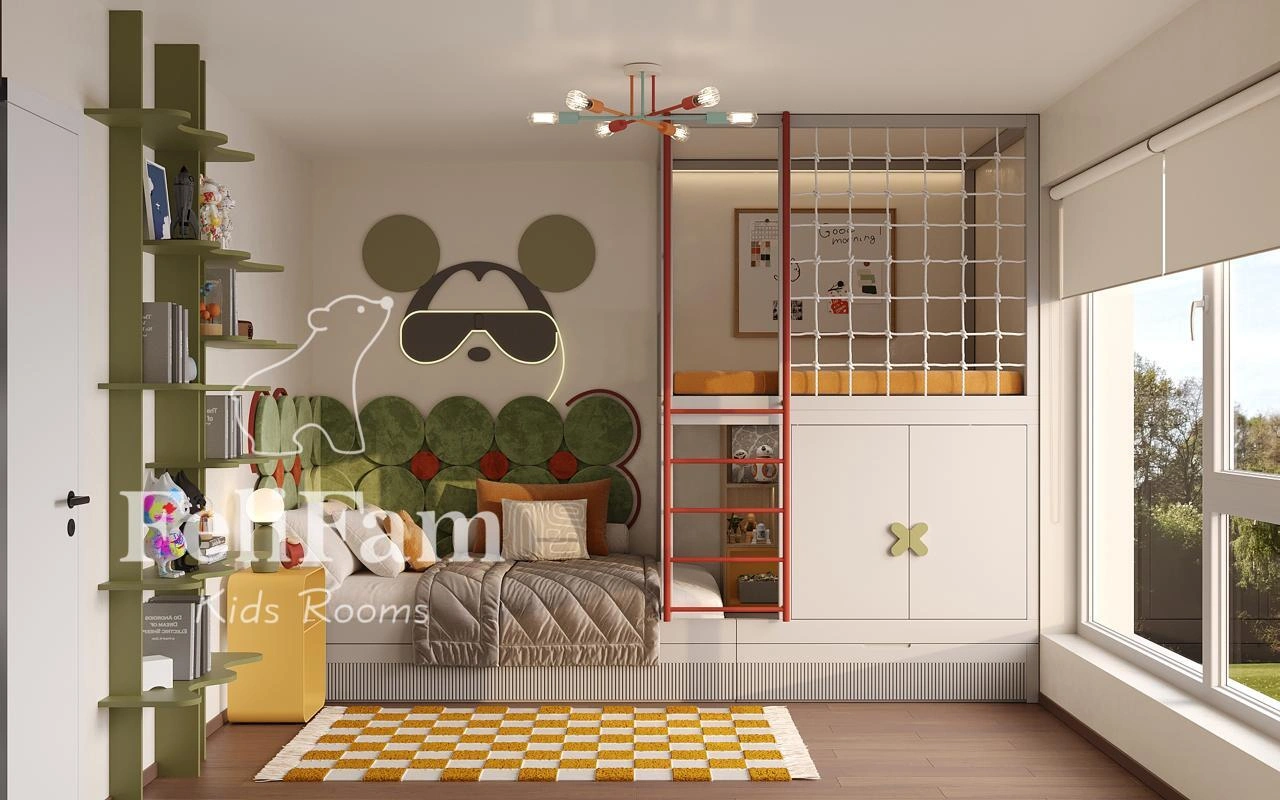
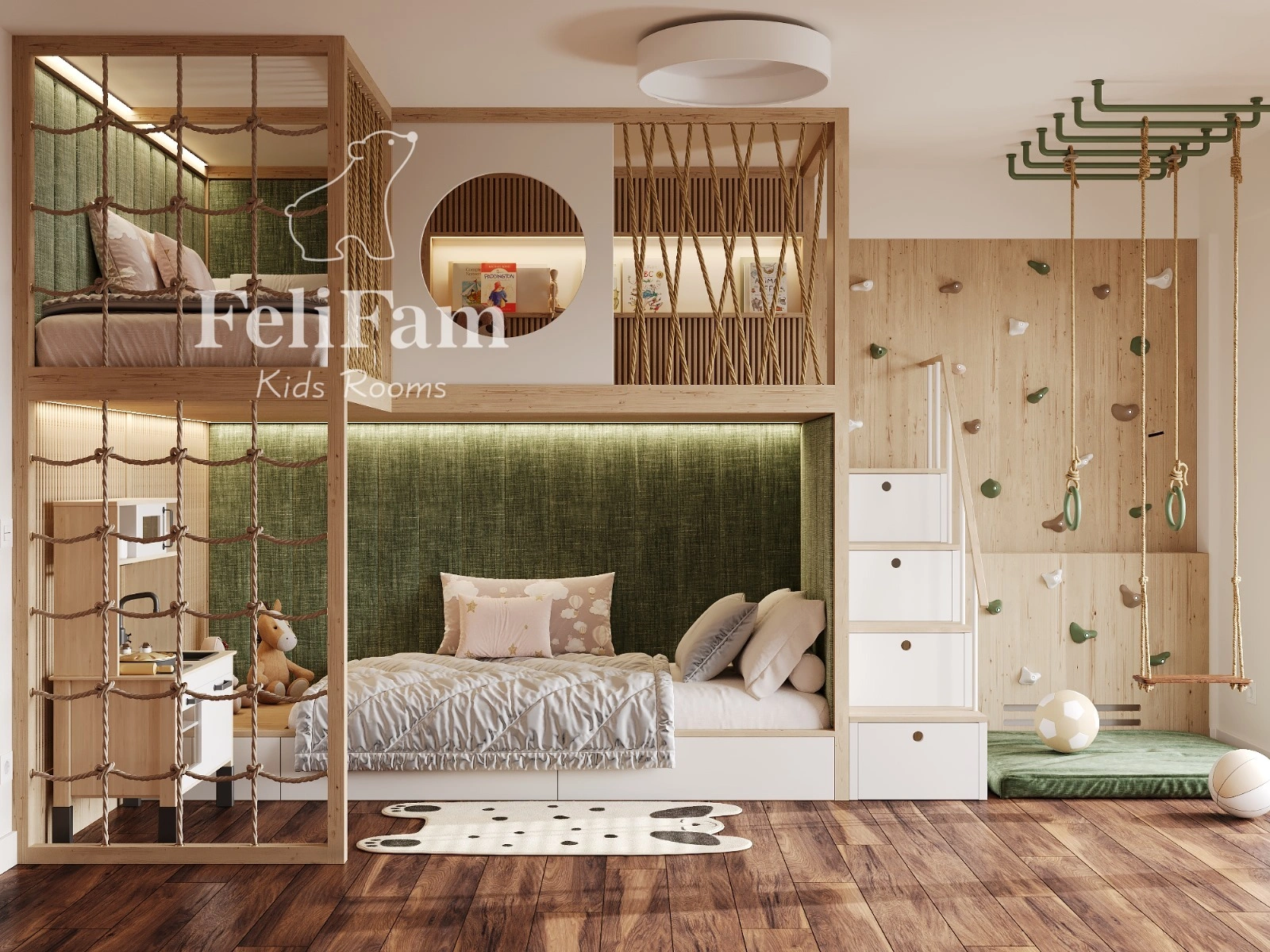
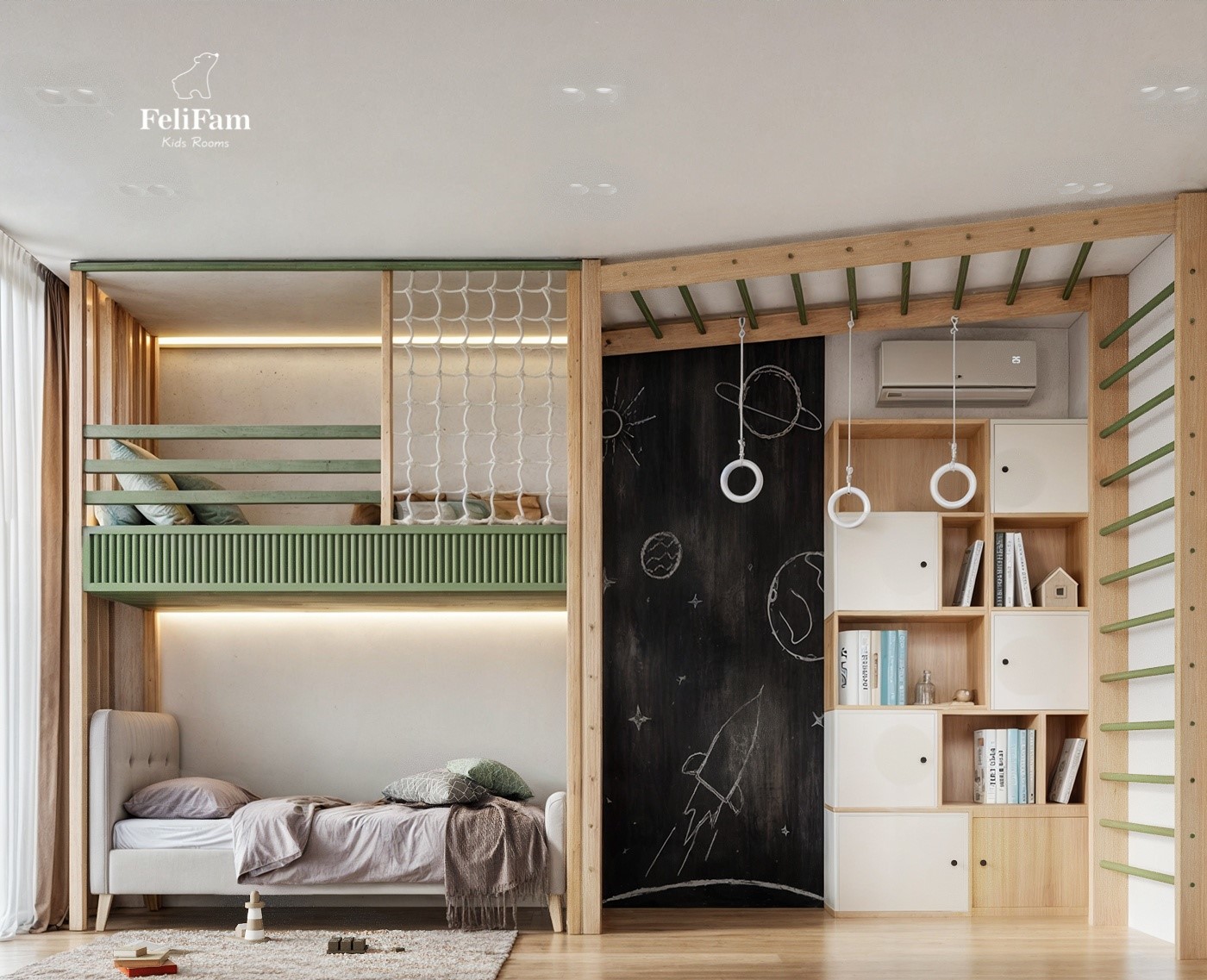
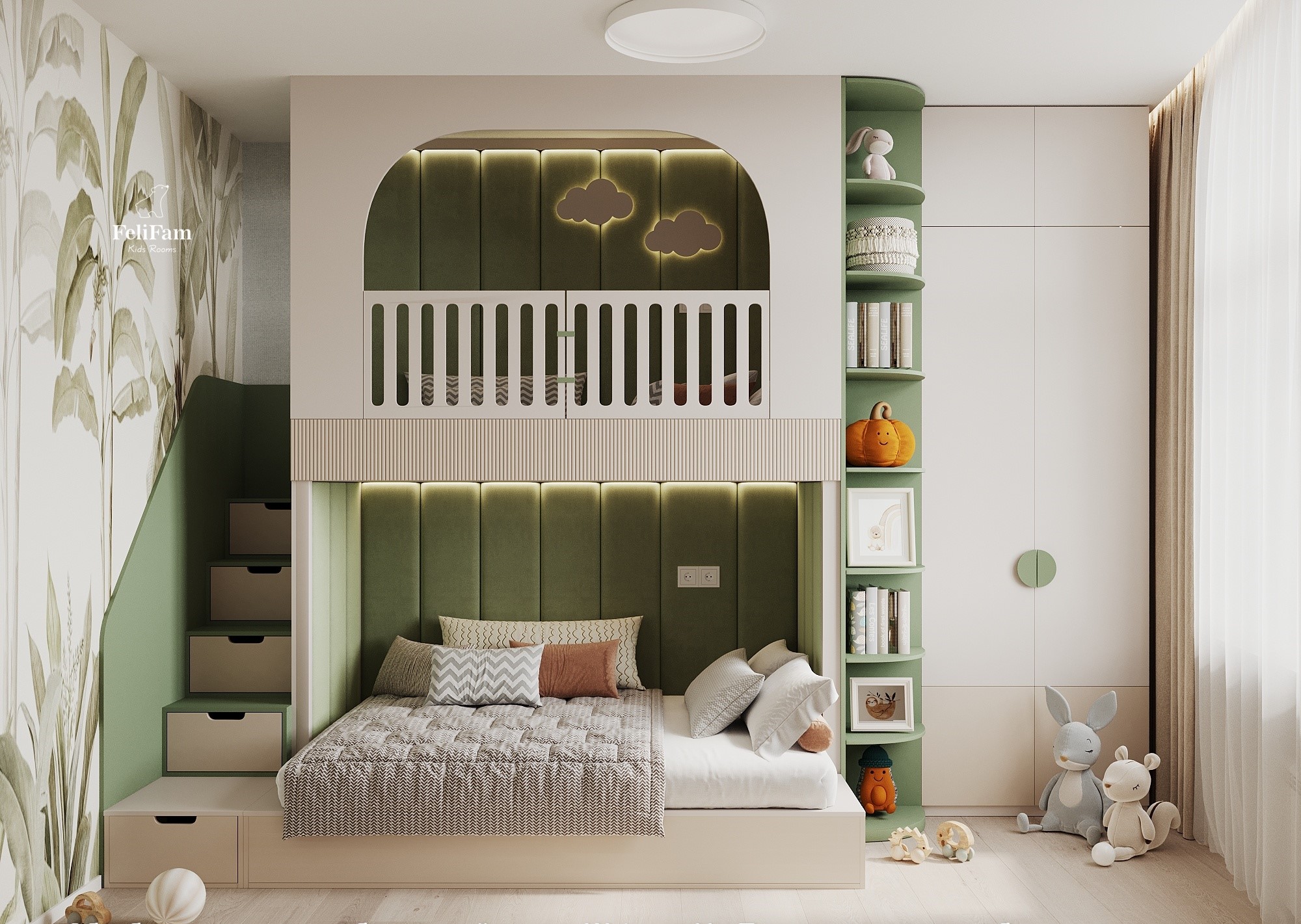
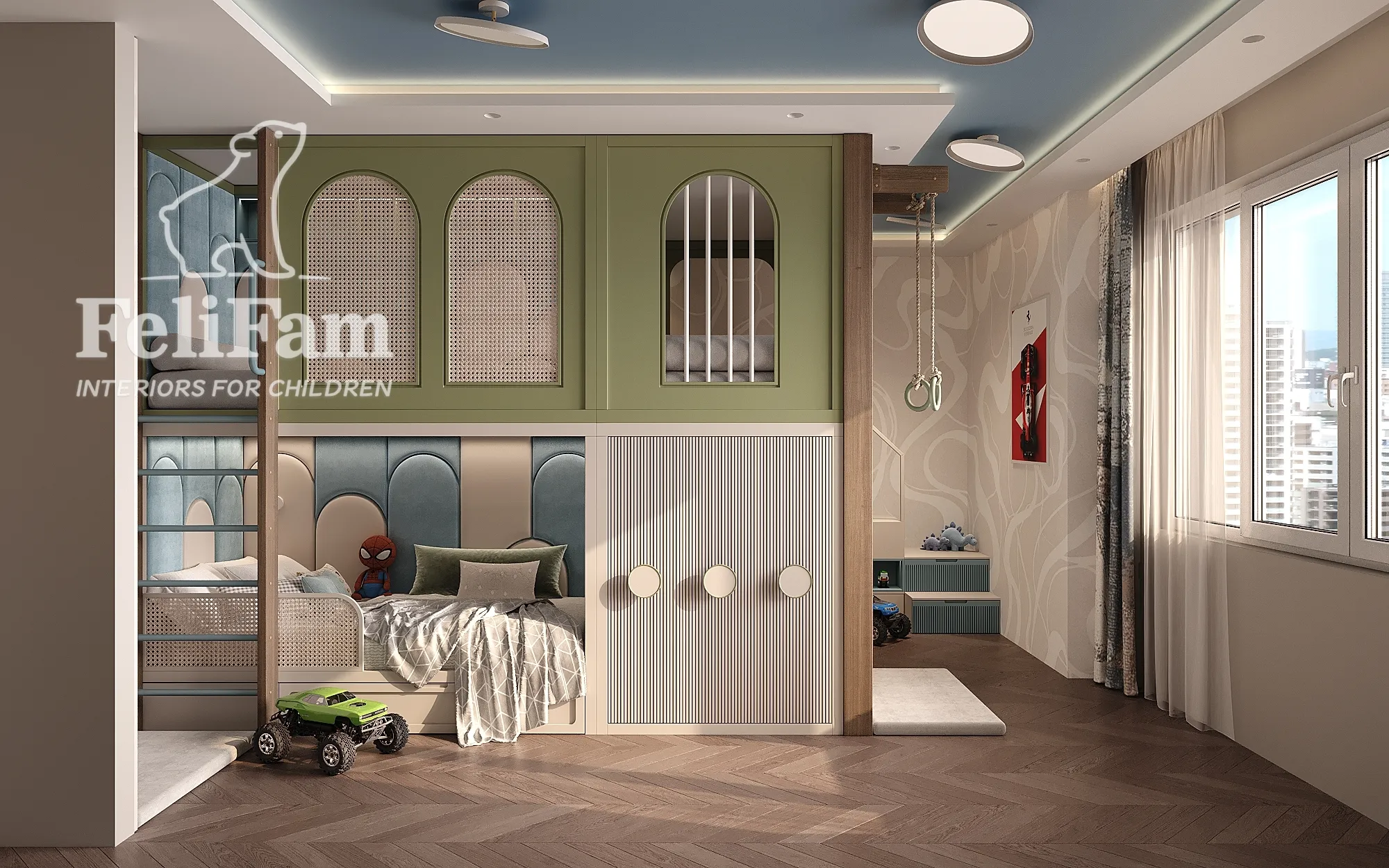
In FeliFam projects, green takes on a different character every time. In some rooms, it becomes a calm foundation; in others, it works as a bold accent, while sometimes it appears more subtly through textiles, furniture, or décor. Below, we’ve gathered examples of our children’s rooms to show just how versatile a green palette can be in a contemporary interior.