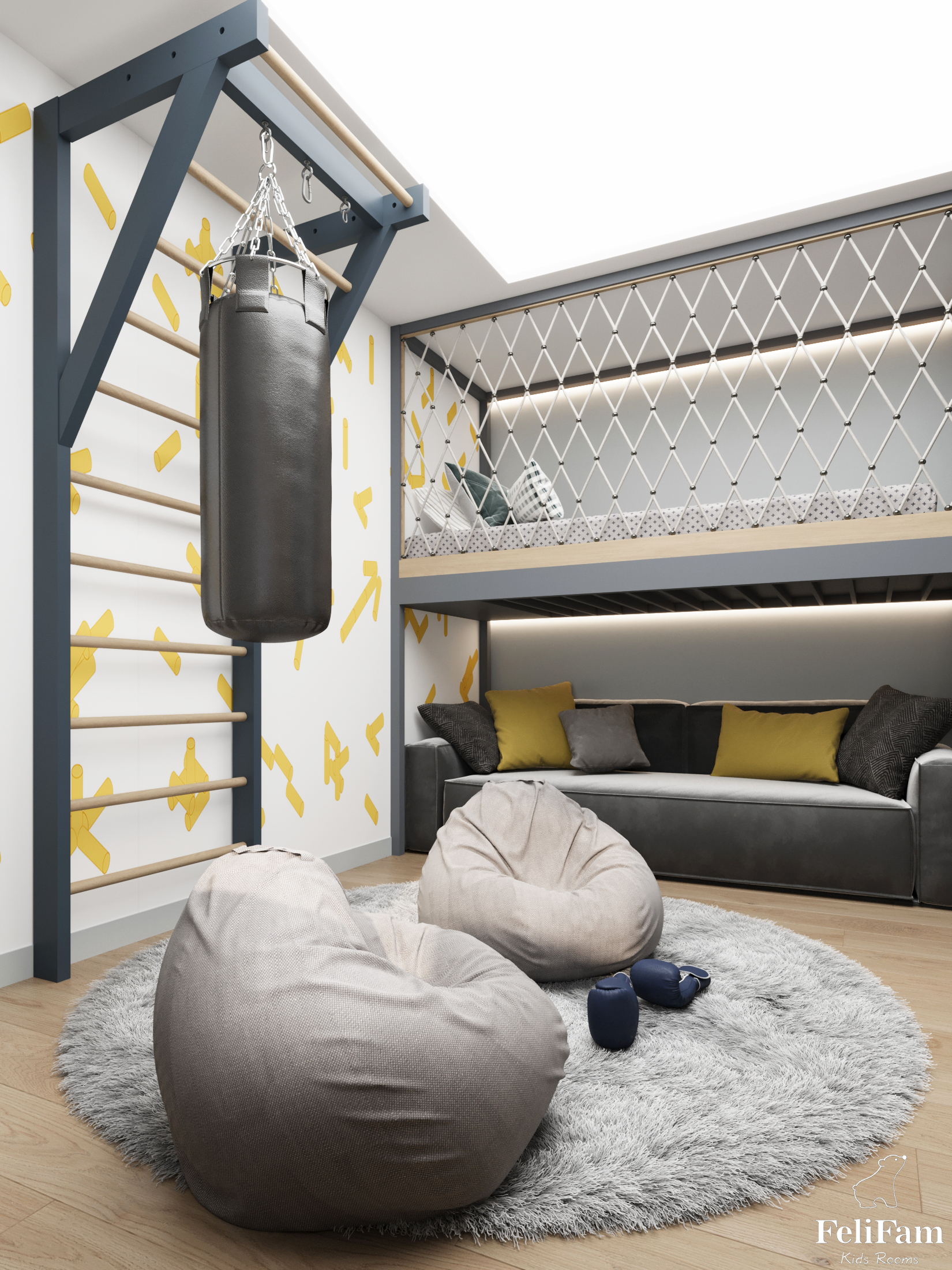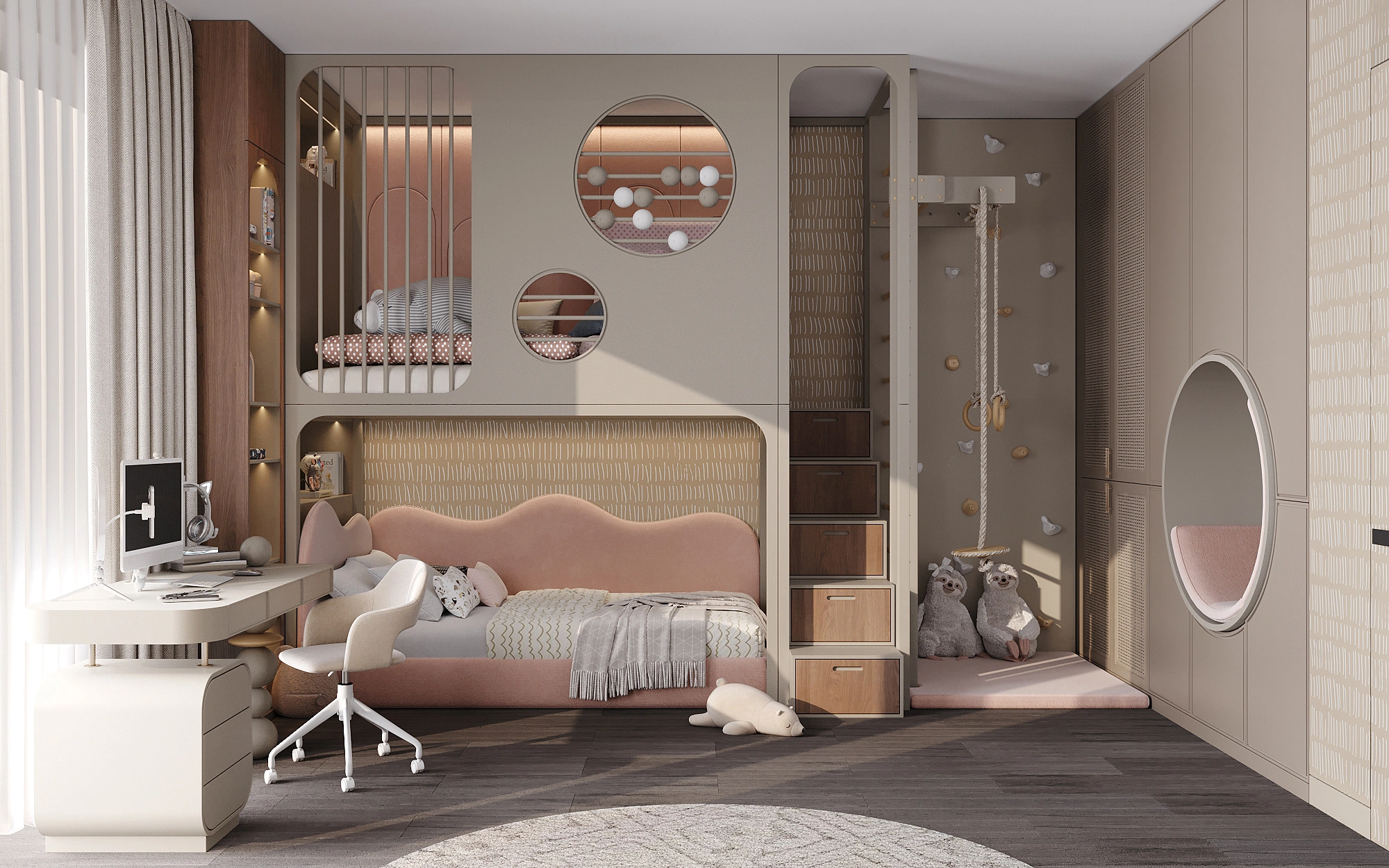



What a child is passionate about today can often become part of who they are tomorrow. Children’s interests do more than fill their free time. They help develop imagination, discover individual strengths and gain a better understanding of themselves.
It is important to provide a comfortable and safe place at home for the activities a child loves. Thoughtful children’s room design helps bring a child’s interests together with everyday needs without turning the interior into a themed setting. Let’s explore how to incorporate a child’s hobbies into the layout and details of their room.
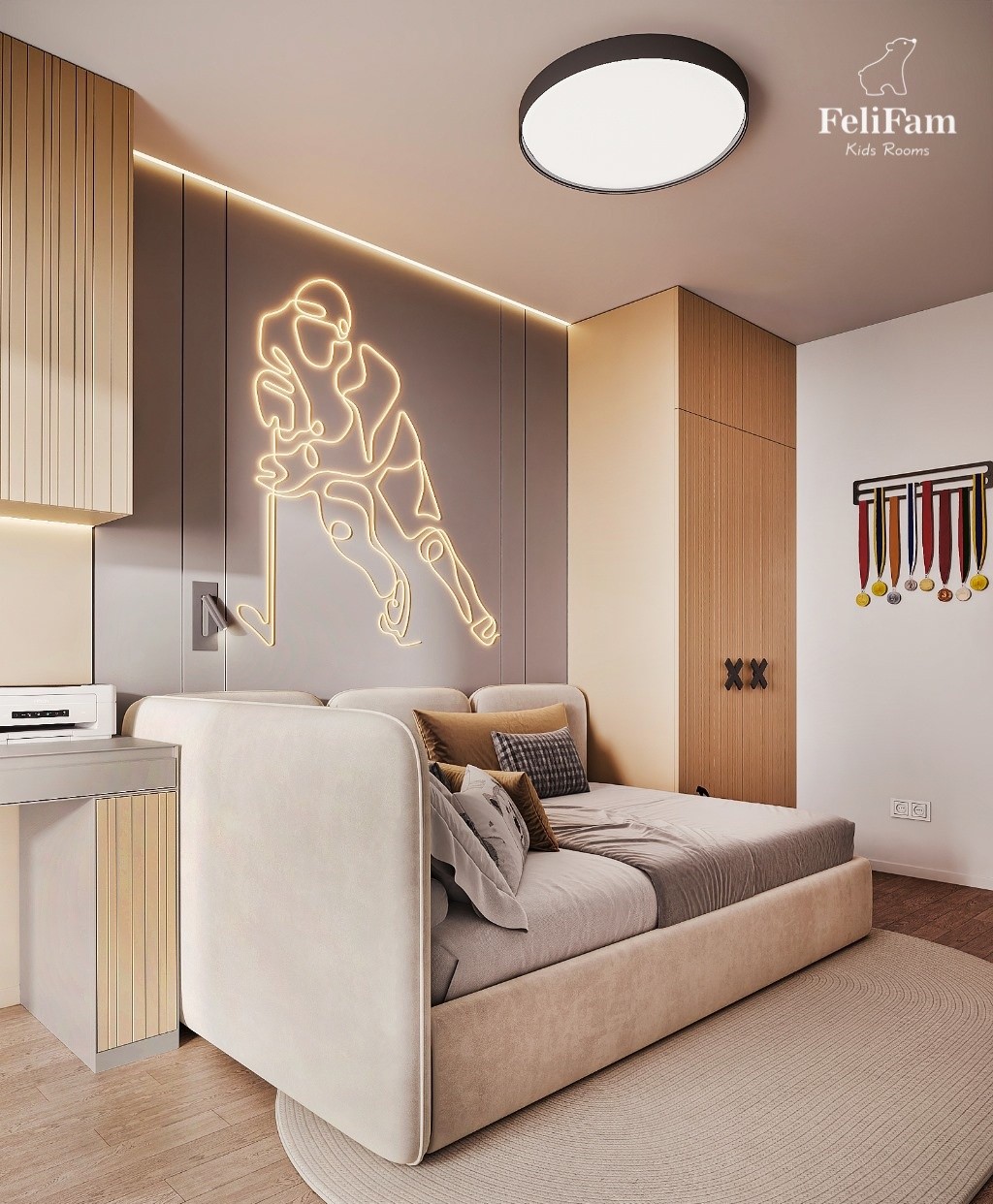
Why Hobbies Matter for Children
Drawing provides an outlet for creative experimentation, building things encourages problem-solving, and music helps children express their emotions. These activities give children the opportunity to try new things and gradually discover what interests them.
A report by the American Academy of Pediatrics on the role of play in children’s development highlights how play supports cognitive and social-emotional development, as well as the ability to concentrate and regulate behaviour.
You can encourage a child’s interests through simple everyday choices: setting aside a space for drawing, keeping construction toys within easy reach or placing favourite books at a height the child can comfortably access.
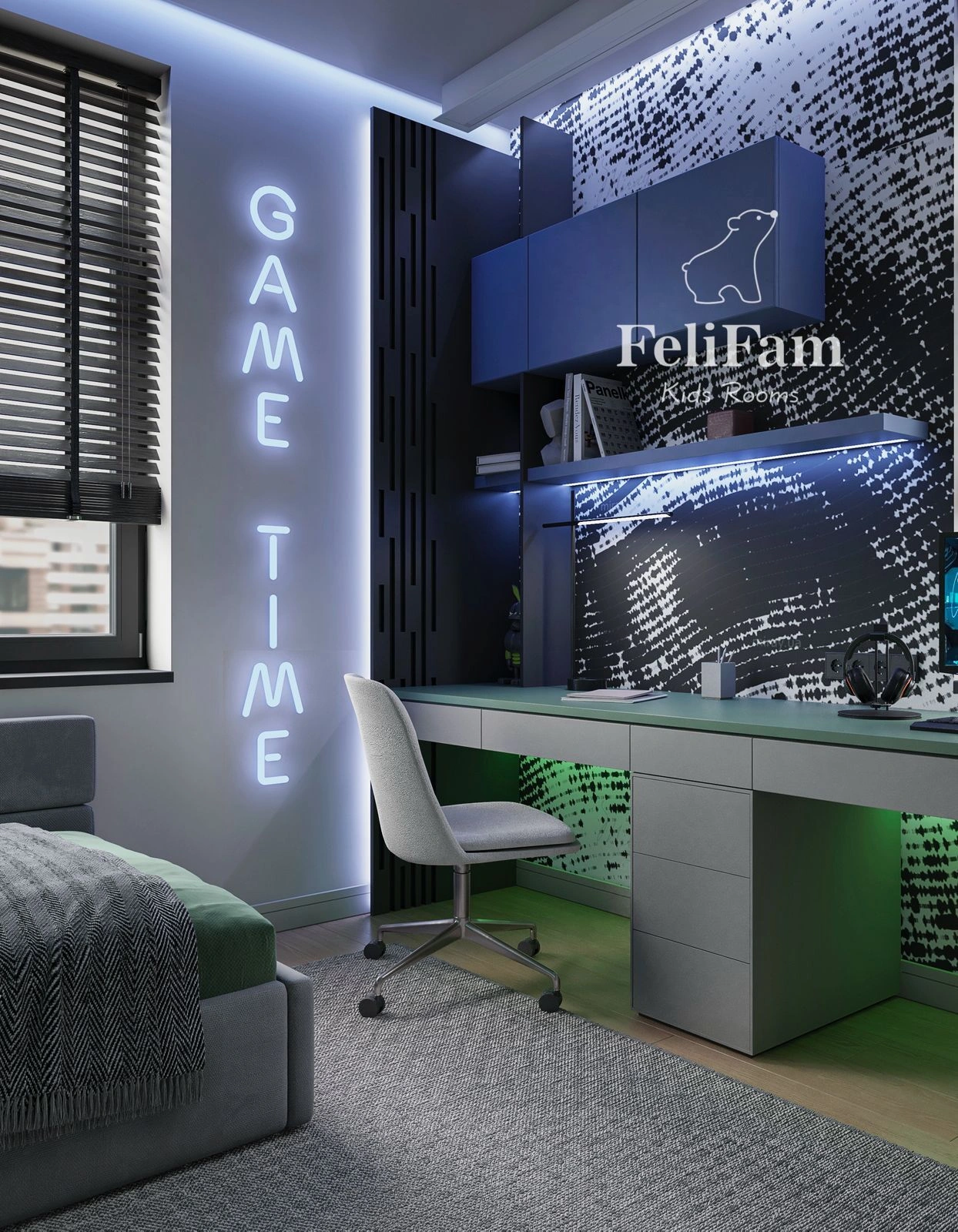
Why a Comfortable Environment for Hobbies Matters
Having everything within easy reach is important, but the overall environment matters too. Good lighting, a comfortable work surface and enough space to concentrate or move freely, depending on the activity, all contribute to a positive experience. A child’s room should remain a comfortable place not only for creativity but also for rest.
At FeliFam, we take a child’s interests and hobbies into account when creating children’s bedroom designs. This allows us to create interiors that provide room for self-expression while remaining functional as children grow.
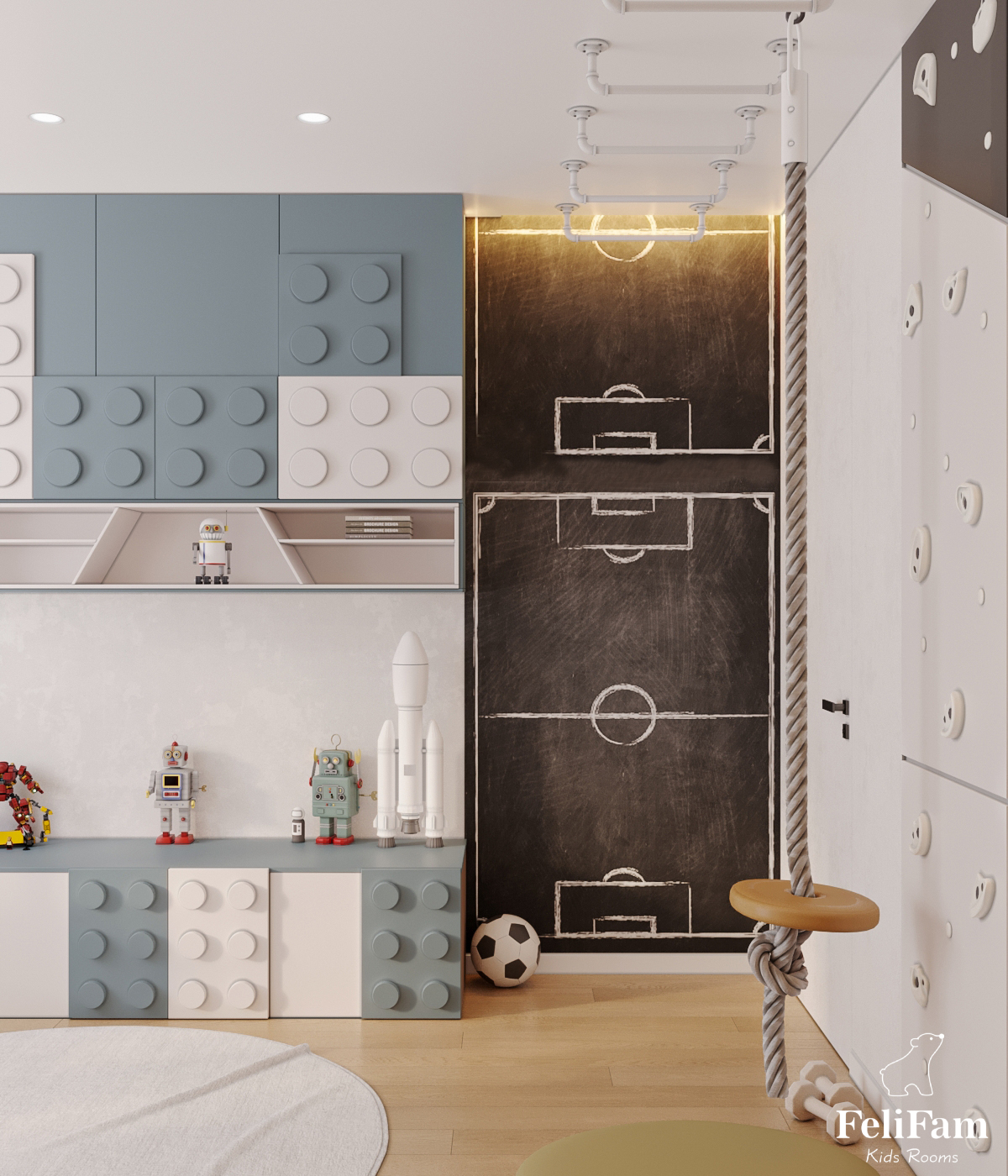
How to Adapt a Child’s Room to Their Hobbies
When a child’s hobby requires equipment, materials or additional floor space, it is worth considering these needs at the planning stage. This ensures that the room’s design responds not only to aesthetic preferences but also to the way the space is used every day.
- Consider the requirements of each activity. When planning a space for musical instruments, consider acoustics and access to power sockets. For dancing or gymnastics, allow enough clear floor space, choose non-slip flooring and maintain a safe distance from furniture.
- Plan storage carefully. Deep cupboards can accommodate larger sports equipment, drawers with dividers help organise small construction pieces, and glazed display cabinets provide a place for collections. If standard storage solutions do not accommodate the equipment, bespoke furniture may be a suitable option.
- Make use of vertical space. Wall-mounted equipment holders, rails and hooks help keep the floor clear and make better use of the available space in a smaller room.
- Allow for change. Adjustable shelving, mobile drawer units and modular furniture make it easier to reorganise the room as new interests emerge.
Not every activity needs its own dedicated zone. Sometimes, a few well-considered solutions are enough to keep a child’s room practical for everyday life. That is why children’s room design should take into account how the space is used now and how it can be adapted in the future.