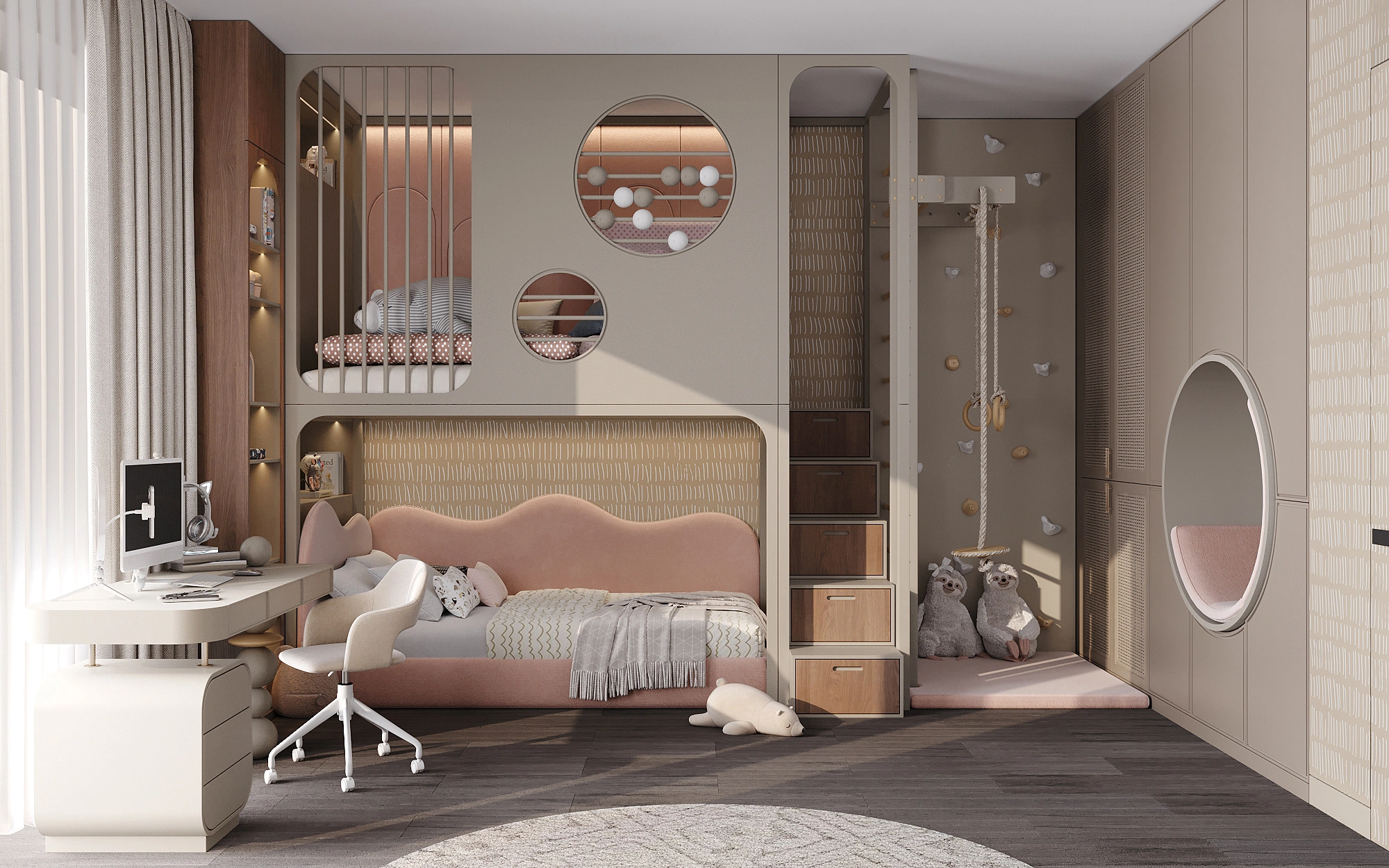



Designing a children’s room for two kids so that each child feels comfortable, cozy, and has enough personal space can be challenging. This is especially true when it comes to choosing sleeping arrangements. Is it better to choose a bunk bed to save space, or should you opt for two separate beds?
In this article, we’ll explore the advantages and disadvantages of both options and look at when each solution may be more suitable. We’ll also share practical tips to help you create a comfortable and functional room for two children while taking each child’s individual needs into account.
Bunk Beds: the Ideal Solution or a Challenging Design?
For many children, a bunk bed can feel like a little dream come true. Having their own “upper level” can easily turn into a cozy spot for playing, reading, and imaginative adventures. For parents, it can also be a practical solution, especially when space in the room is limited.
A bunk bed may seem like the obvious choice for a children’s room shared by two kids. It helps save floor space and leaves more room for play, study, and storage. But is this solution always equally comfortable for both children?
Advantages of Bunk Beds
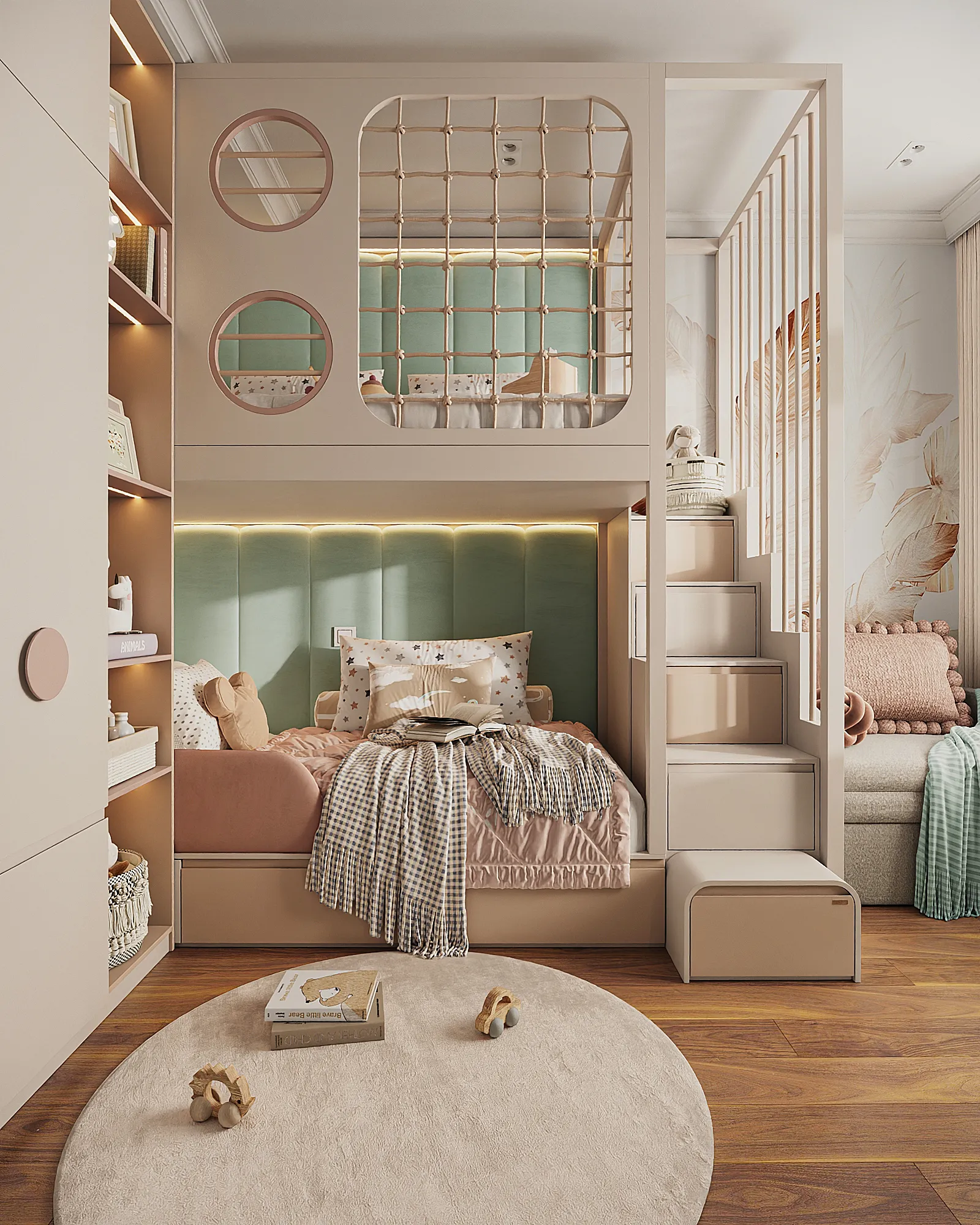
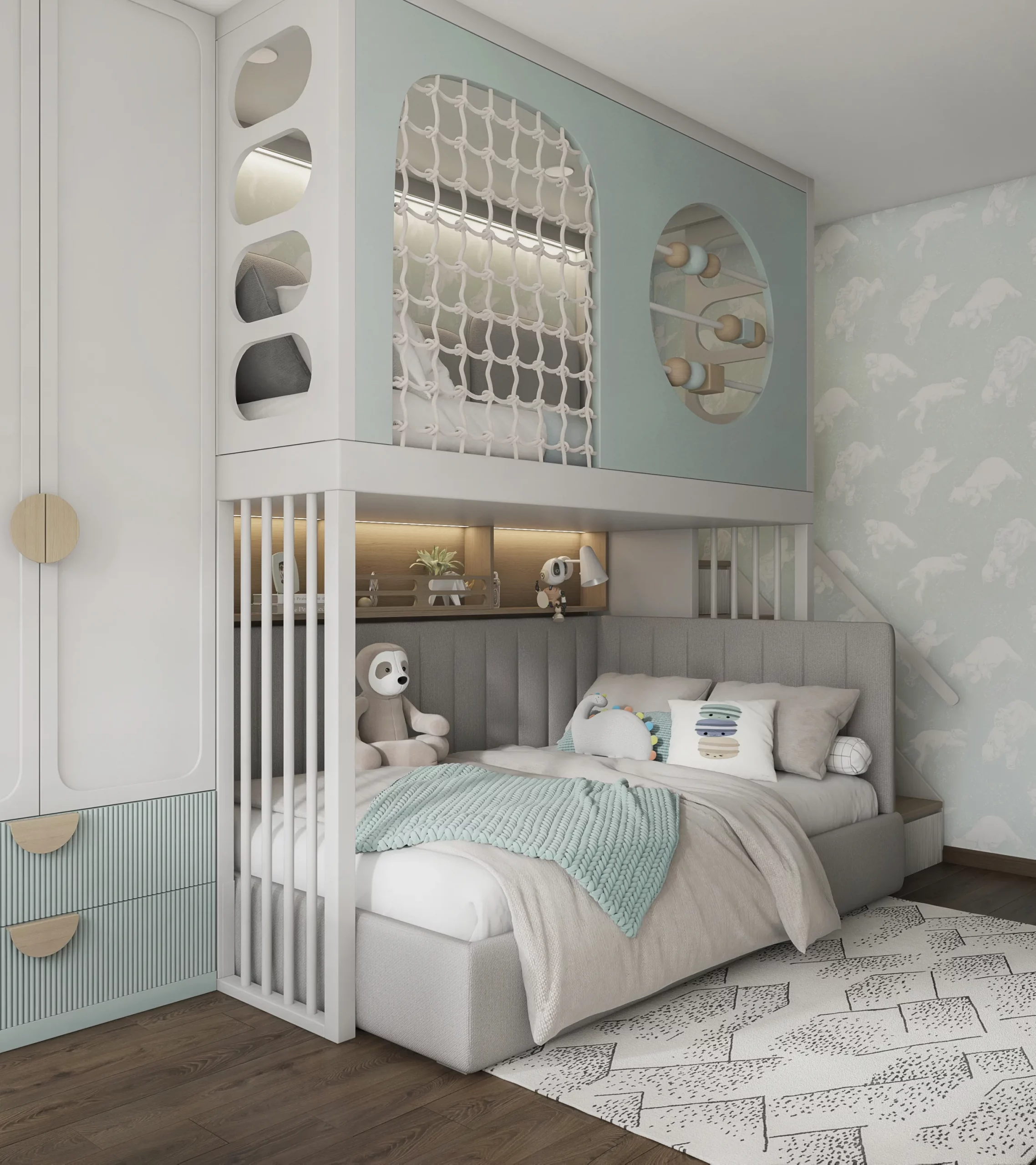
- Space saving. A bunk bed provides two full sleeping spaces while taking up approximately the floor area of a single bed. This leaves more room for play, study, and storage.
- Functionality. The structure can be designed to make the most of the available space. Built-in drawers, shelves, wardrobes, and other storage solutions help organize children’s belongings and keep the room tidy. These solutions are especially easy to adapt to a specific space when using custom children’s furniture.
- Space for children’s imagination. For children, a bunk bed can be much more than simply a place to sleep. The upper level can easily become a cozy personal retreat, while the structure itself can become part of the play area.
Disadvantages of Bunk Beds
- Safety considerations. The upper level requires particular attention to the design and the child’s age. Reliable safety rails and safe access to the sleeping area are essential. These details should be carefully considered during the design stage.
- Disagreements over the top bunk. If both children want to sleep on the upper level, it may lead to arguments. This can be addressed in advance, for example by agreeing to take turns or allowing the children to choose a comfortable arrangement together.
- Potential inconvenience. Making the bed, changing bed linen, and cleaning the upper bunk can be less convenient. However, carefully planning the height of the structure and access to the sleeping area can make everyday use much more comfortable.
- Financial aspect. A custom bunk bed with additional storage systems may cost more than a standard model. However, a well-designed structure makes efficient use of space and combines several functions within a single solution.
Separate Beds: a Comfortable Choice or a Challenge for a Small Room?
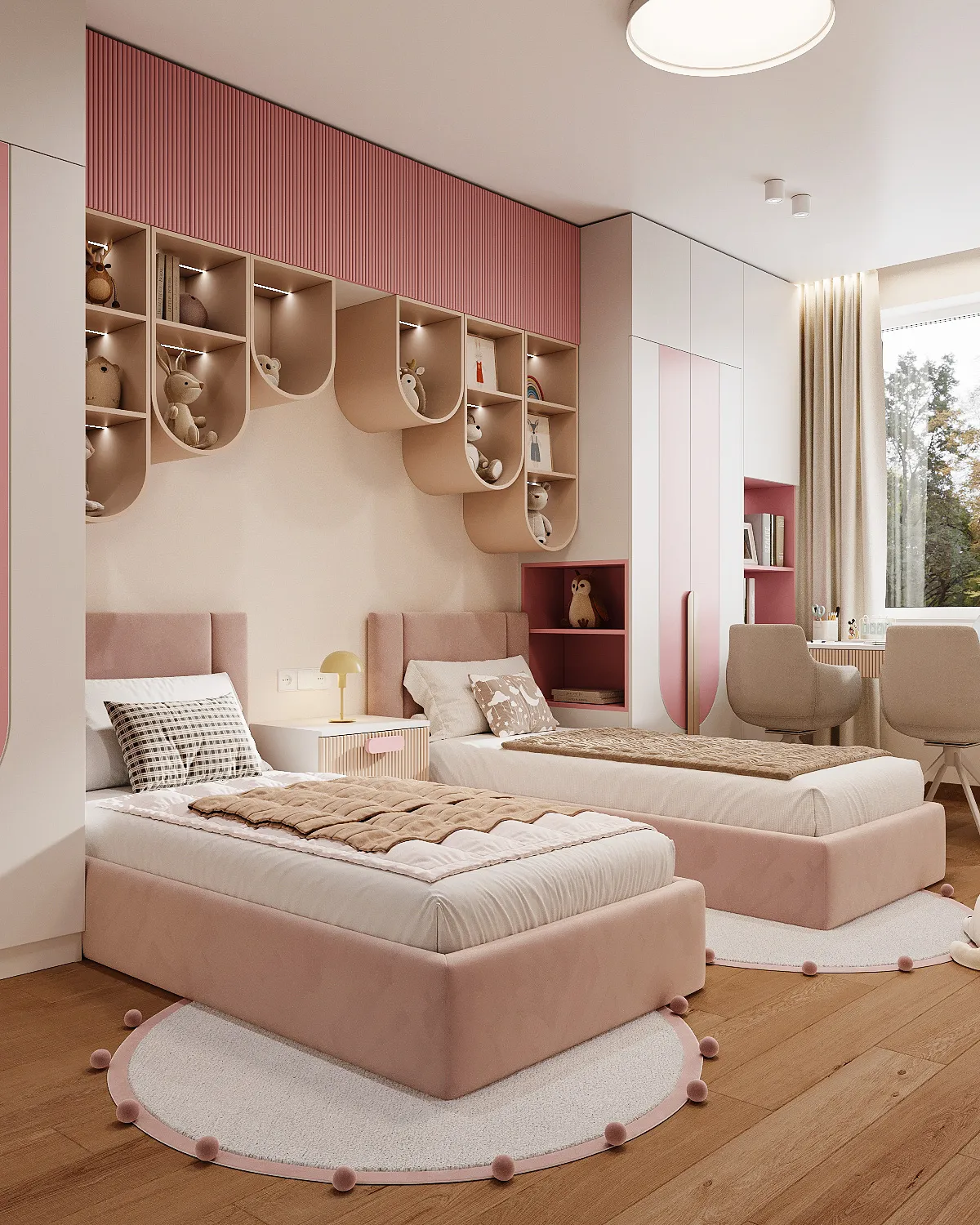
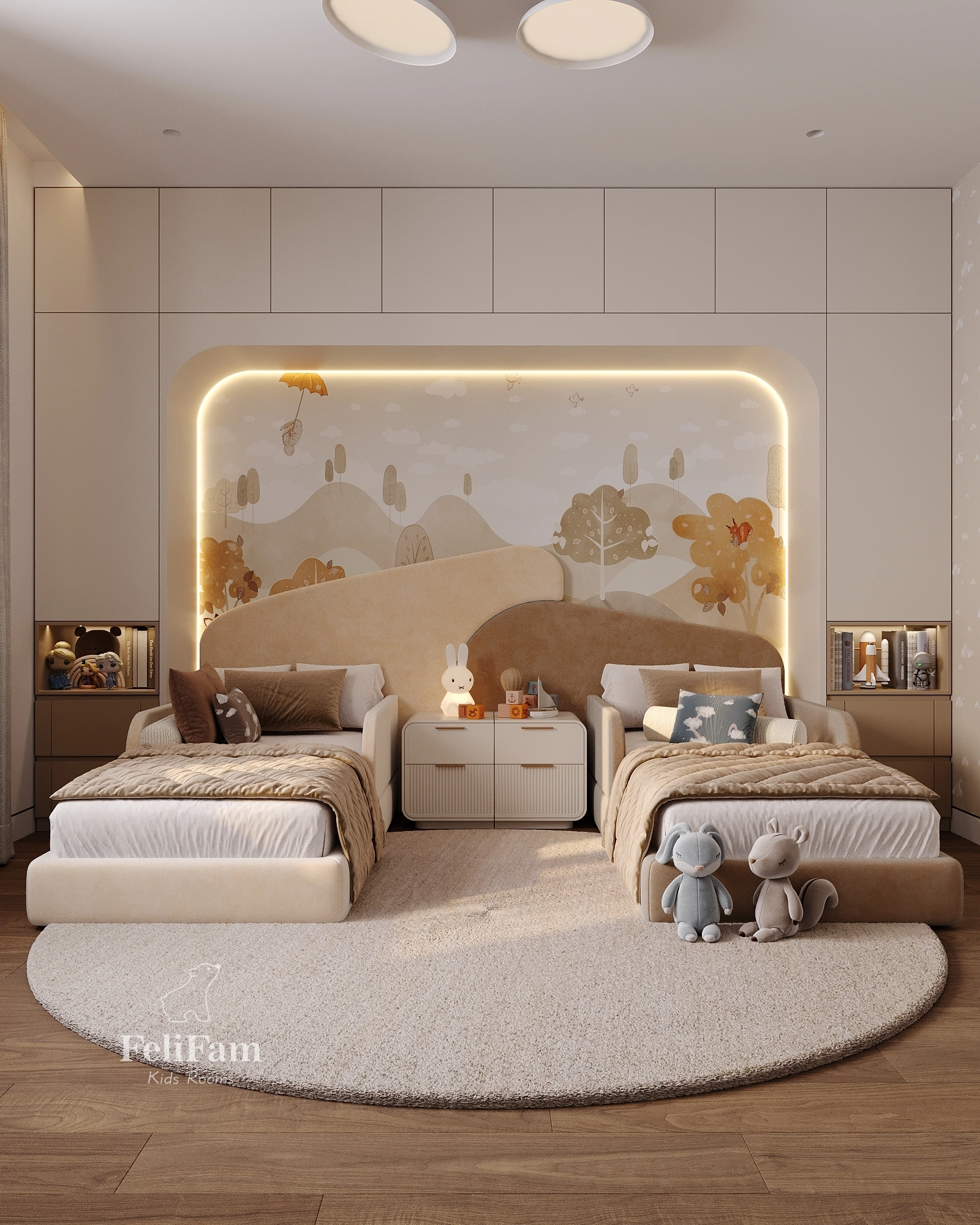
Separate beds give each child their own space for sleeping and relaxing. At the same time, they require more floor space, so it is important to carefully plan the room layout in advance. Let’s look at the main advantages and disadvantages of this solution.
Advantages of Separate Beds
- Personal space. Each child has their own sleeping area for rest and relaxation. It also makes it easier to take each child’s individual preferences into account when designing the room.
- Equal comfort for both children. Both children have equally comfortable sleeping spaces, which eliminates disagreements over who gets the top bunk.
- Flexible layout. Separate beds can be positioned on opposite sides of the room, placed next to each other, or rearranged over time. This provides greater flexibility when adapting the space to the children’s changing needs.
- A solution for different ages. Separate beds can easily be adapted as children grow. Their size, mattress, or design can be changed when necessary without altering the overall concept of the room.
Disadvantages of Separate Beds
- More floor space required. Two separate beds take up more space than a bunk bed. In a small room, this can make it more difficult to accommodate wardrobes, study areas, storage systems, and enough open space for play.
- Fewer opportunities for compact storage. Standard separate beds do not always make it possible to use the surrounding space as efficiently. However, this can be addressed with beds featuring built-in drawers or carefully designed furniture solutions.
- More challenging in a small room. If the room has an unusual shape or limited floor area, fitting two separate beds may require more careful planning to preserve enough free space for the children’s other needs.
Combined Solutions: Two Separate Beds with a Play Area Above
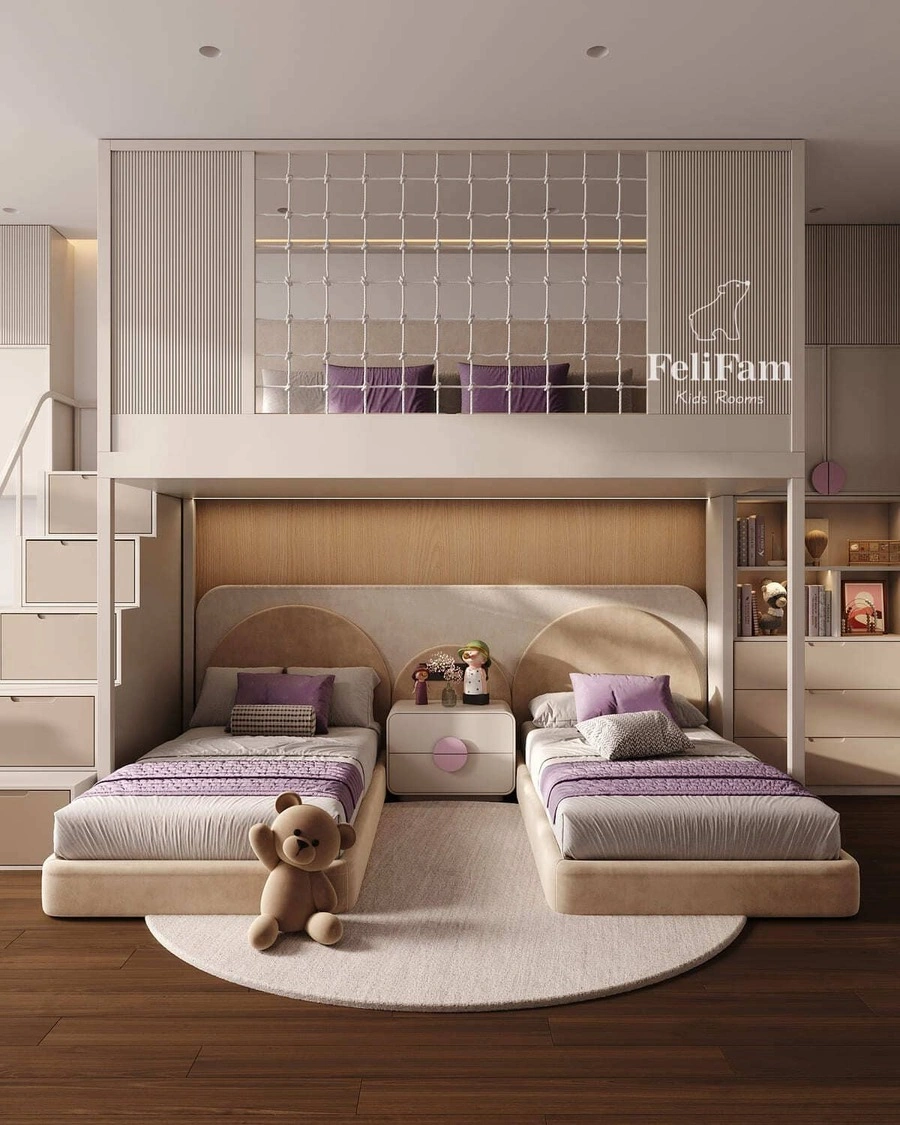
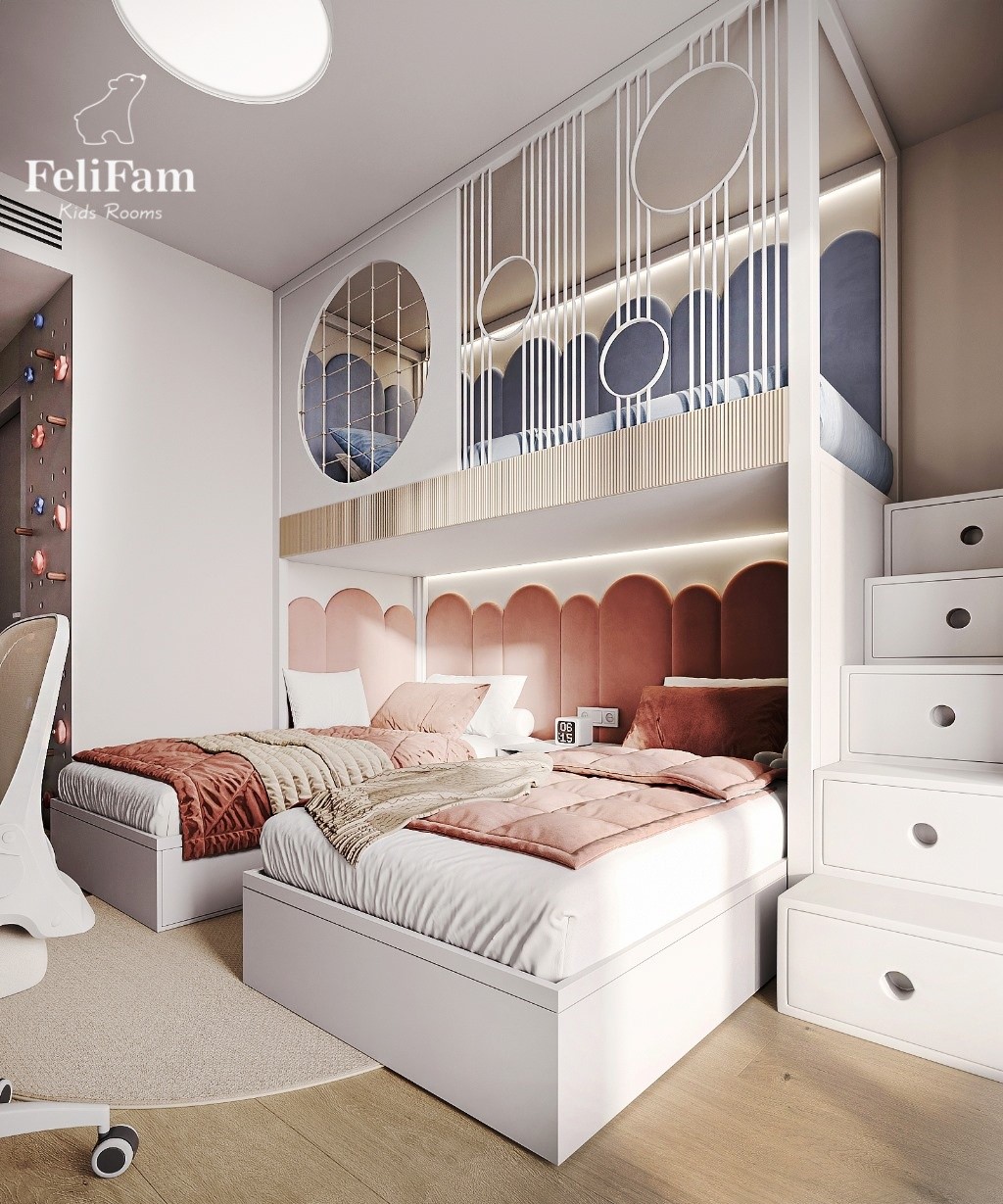
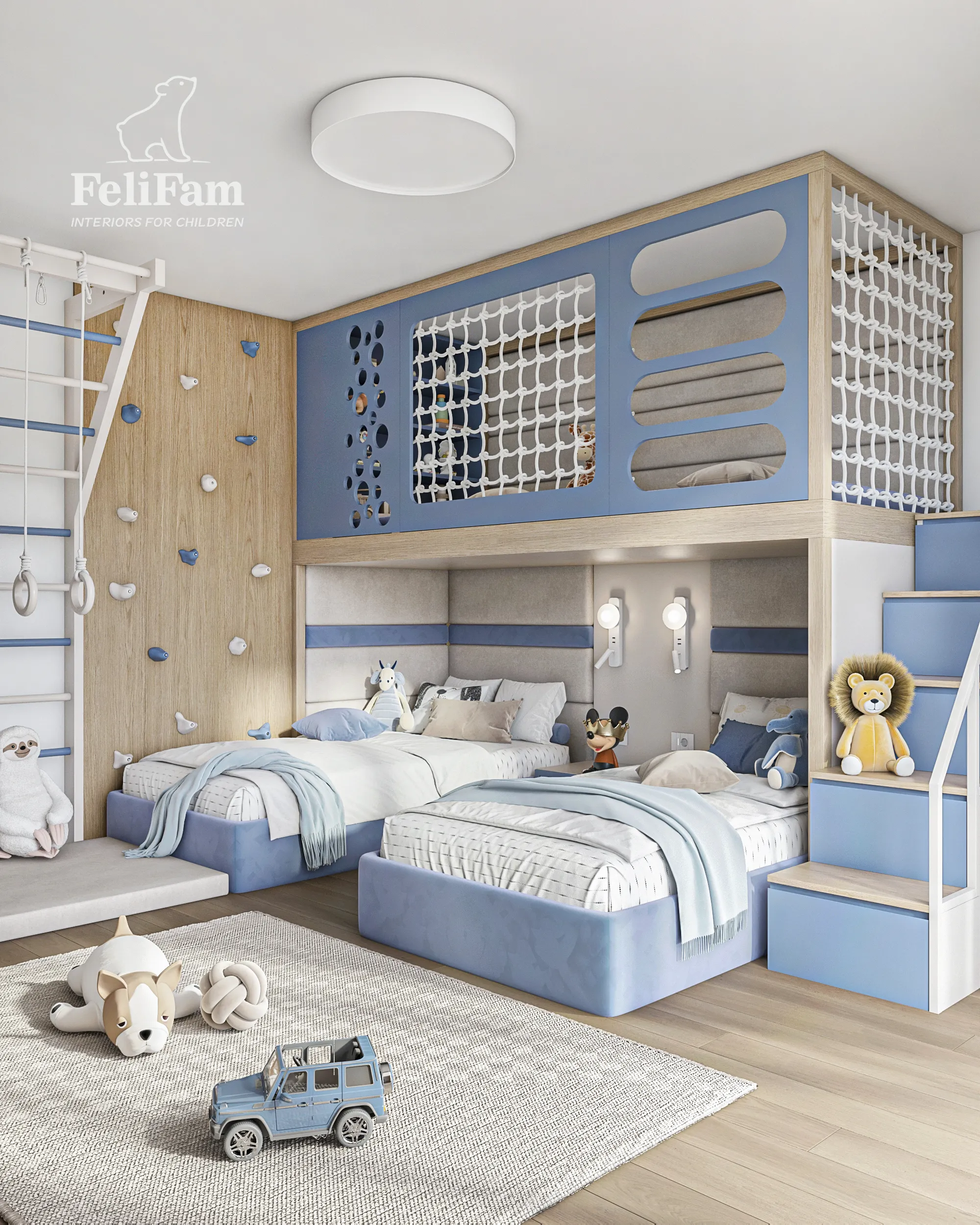
If you want to use the available space as efficiently as possible but a traditional bunk bed is not the right option, a combined solution can be a great alternative. Two full-size beds are positioned on the lower level, while the space above them is transformed into an additional area for play, reading, or relaxation.
This solution works particularly well in children’s rooms where it is important to preserve more open space for shared activities. The upper level can be designed as a cozy hideaway, a small playroom, or a private retreat. At the same time, both children have equally comfortable and accessible sleeping spaces.
A combined structure also makes it possible to adapt the room as the children grow. When the need for a play area changes, the upper level can be redesigned to serve a different purpose.
Which Bed Should You Choose for Two Children?
There is no universal answer to this question. A bunk bed can help save space and create more opportunities for storage and play. Separate beds give each child their own personal space and provide greater flexibility in the room layout. Combined solutions, meanwhile, make it possible to use vertical space to create an additional play or relaxation area.
The most important thing is to consider not only the size of the room but also the children’s ages, needs, habits, and how the space may need to change over time.
At FeliFam, we design children’s rooms individually, allowing us to adapt every solution to your specific space and your children’s needs. We carefully plan the layout, consider all structural details, and anticipate the potential limitations of each option from the very beginning. Whichever solution you choose, it can become a comfortable, functional, and beautiful part of your children’s room.