





Designing a shared room for two children is always a challenge, as it requires balancing functionality, comfort, and aesthetics. One of the key decisions parents face is choosing between a bunk bed or two separate sleeping areas. In this article, we’ll explore the pros and cons of both options and share tips on how to minimize the drawbacks of each solution.
Bunk Bed: The Perfect Solution or a Design Dilemma?
Bunk beds are every child’s dream. At some point, every kid has imagined turning the top bunk into their very own fortress. It seems like the perfect solution for a shared room, especially in smaller spaces. But is it truly the best option?
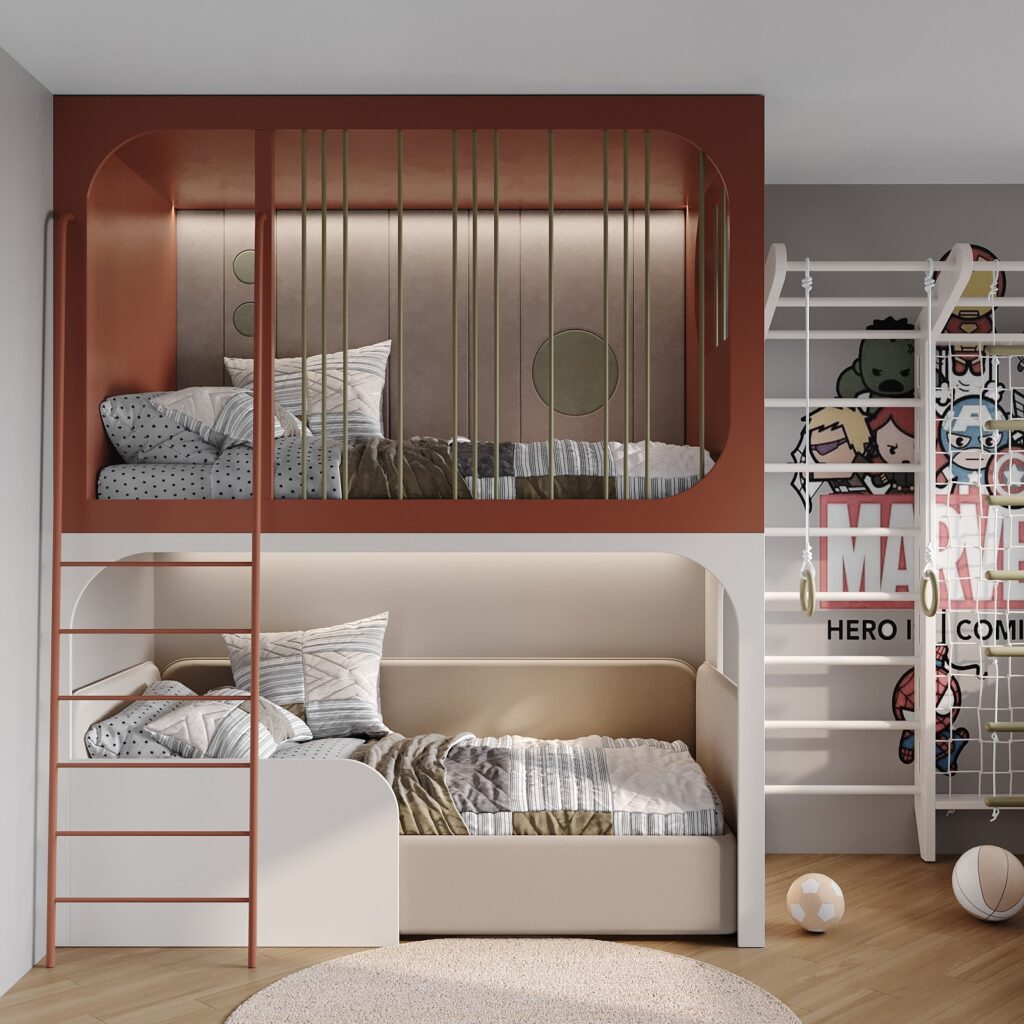
Advantages:
- Space-saving. Professionally designed bunk beds optimize space, allowing for additional areas for play and study.
- Functionality. Built-in drawers and shelves provide extra storage for toys, books, and other belongings.
- Happy kids. Bunk beds aren’t just for sleeping — they become a stage for exciting games and adventures.
Disadvantages:
- Safety concerns. Children might fall from the top bunk during sleep or play. To prevent this, choose beds with high guardrails or walls that can be creatively decorated.
- Disputes over the top bunk. Kids often argue over who gets the top spot. A simple solution is to set up a rotation schedule or use a fun game to decide fairly.
- Potential inconvenience. Changing bedding or cleaning the top bunk can sometimes be tricky. However, this can be addressed during the planning stage of the project.
- Cost factor. Designing a bunk bed can be more expensive, but it’s a smart investment that maximizes space and offers additional storage options.
Advantages and Disadvantages of Separate Beds in a Children’s Room
Some parents choose separate beds for the children’s room to provide each child with more personal space. But what are the advantages, and are there any drawbacks to this option?
Advantages:
- Personal space: Each child has their own dedicated space for sleeping and relaxing, without the need to switch places, allowing them to personalize their sleeping area.
- Fair conditions: Both children have equal sleeping arrangements, preventing any unfairness or conflicts in choosing their spots.
- Flexibility: Separate beds can be moved or rearranged according to changes in the room or the children’s needs.
- Age adaptability: Separate beds provide necessary comfort for children of any age and can even be used during teenage years when more space for sleeping is needed.
Disadvantages:
- Requires more space: Two separate beds need more space, which may be a challenge in smaller rooms. Additionally, two separate beds can take up space that could limit the arrangement of other necessary furniture like wardrobes or study zones.
- Lack of additional features: Unlike bunk beds, which often provide storage space under the lower bunk, separate beds do not offer this advantage.
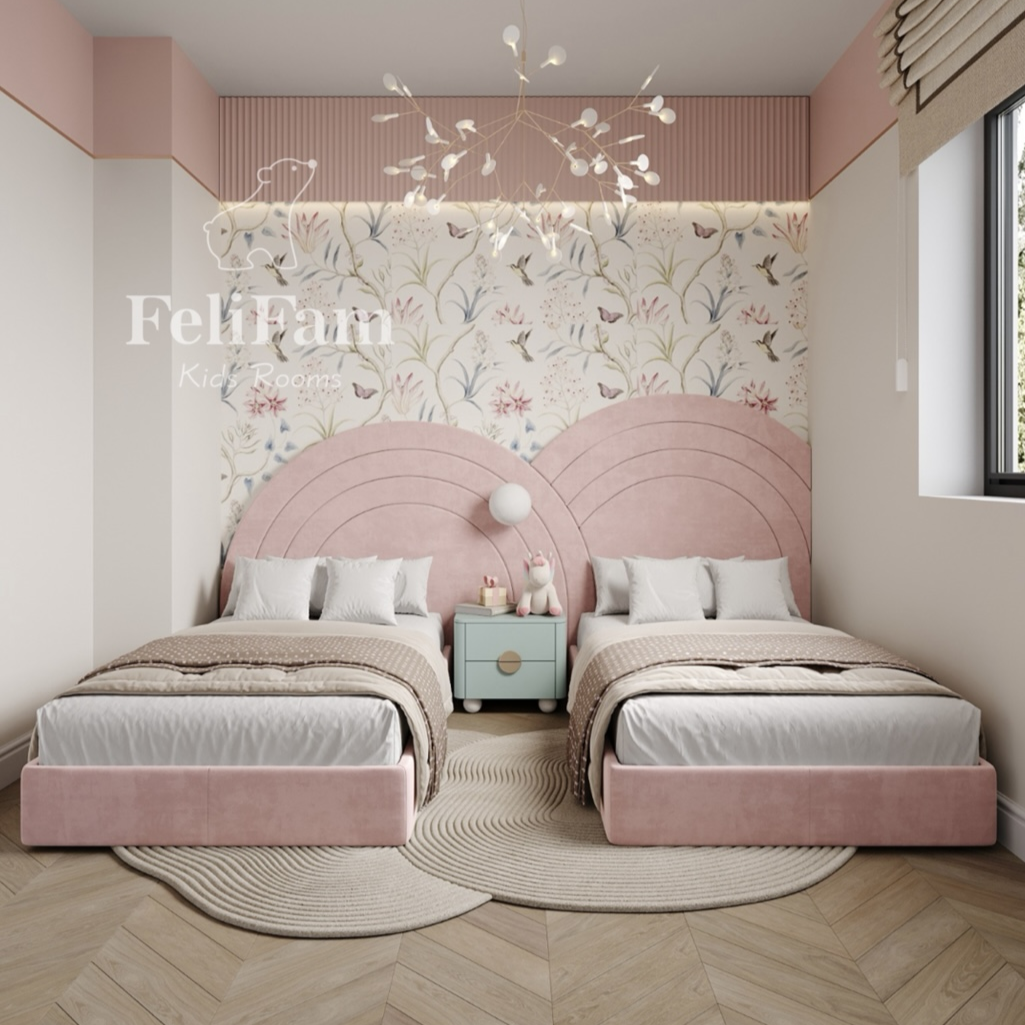
The choice of a bed for two children depends on the specifics of the room, the children’s ages, and your priorities. If the room is small, a bunk bed is an excellent solution as it saves space and allows more room for play and storage. For younger children or those who are afraid of heights, house-shaped beds or low models with pull-out sleeping areas are worth considering. If space allows, separate beds provide more personal space for the children and allow for individual zones.
At FeliFam, we will consider all the nuances of your children’s room to create a stylish, functional, and cozy space where your children will feel happy. Trust us with creating their dream room, and the result will exceed your expectations!

